
You’ve Mastered the Fundamentals.
Now Push Beyond Them.
There’s an inflection point in cognitive optimization that most guides never address. You’ve built the foundation — sleep is dialed, exercise is consistent, nutrition is strategic, your baseline nootropic stack is producing real results. You’ve taken the low-hanging fruit. The incremental gains from refining your existing protocols are diminishing. At this point, marginal improvement requires a fundamentally different approach.
This is where biohacking enters — not as a shortcut to avoid foundational work, but as the next layer of systematic optimization available only to those who’ve already done that work. In 18+ years of personal research and experimentation, I’ve tested this boundary extensively. The principles that separate effective advanced protocols from expensive, time-consuming dead ends are consistent: evidence first, single-variable testing, rigorous measurement, and conservative risk management.
⚠ Prerequisites: The advanced strategies on this page require established foundations. If you haven’t yet optimized sleep, exercise, nutrition, and a basic nootropic stack, start with Sleep & Recovery, Brain Health & Longevity, and the Nootropics & Supplements Guide first. Advanced techniques built on poor foundations produce poor results.
“Responsible biohacking is systematic self-experimentation using evidence-based interventions, rigorous tracking, and conservative risk management — to optimize beyond what standard protocols achieve. The word ‘systematic’ carries all the weight.”
What follows is the framework I’ve used personally to push beyond baseline: the four-layer advanced stack architecture, the self-experimentation methodology that separates real effects from placebo and noise, and an honest assessment of what the research actually supports — including where the hype significantly outpaces the evidence. This hub integrates everything from the other five pillars of this site and extends it into advanced territory.
What you’ll find in this guide:
- →The four-layer advanced stack architecture: metabolic, nootropic, hormetic, and pharmacological
- →Intermittent fasting protocols and what the clinical evidence actually shows for cognition
- →The nootropic stacking rules that determine whether combinations work or waste money
- →Cold, heat, and hormetic stress — separating the mechanism from the hype
- →The self-experimentation framework that makes your personal data actually meaningful
The Advanced Stack Architecture
Advanced cognitive optimization works in layers. Each layer assumes the previous ones are established and working. Adding Layer 3 interventions without Layer 1 and 2 foundations in place is like optimizing engine performance on a car that hasn’t had an oil change in years — the gains are theoretical and the risk of problems is real. Here is the architecture I’ve developed over 18 years of personal testing and research.
Layer 1: Metabolic Optimization — Intermittent Fasting
Research on intermittent fasting and brain health shows a cluster of interconnected mechanisms: the metabolic switch from glucose to ketone metabolism reduces oxidative stress and provides an alternative, more efficient fuel for neurons; upregulated BDNF expression supports neuroplasticity; enhanced autophagy clears accumulated cellular waste including misfolded proteins associated with neurodegeneration; and improved mitochondrial biogenesis increases the brain’s energy production capacity at the cellular level.
The most compelling clinical evidence: a 3-year progressive study in older adults with mild cognitive impairment found that 24.3% of subjects reverted to normal cognitive function, alongside significant reductions in oxidative stress markers and improvements in metabolic health. A recent clinical trial in insulin-resistant older adults found 5:2 intermittent fasting improved both executive function and the biological “brain age gap” marker. Important nuance: the evidence is strongest for individuals with metabolic dysfunction and older adults. For healthy young adults without metabolic issues, the cognitive benefits in short-term studies are less pronounced. I practice 16:8 (first meal at noon, last by 8 PM) and find it produces subjective improvements in morning mental clarity and stable energy — while acknowledging that placebo effects contribute to subjective assessments.
Layer 2: Nootropic Stacking — Three Rules That Matter
Individual nootropics produce modest effects. Strategic combinations — stacks — can produce synergistic results that exceed their individual components. But most stacking attempts fail because they violate basic principles. The three rules I apply to every stack I’ve built and tested: Mechanism Diversity (combine compounds with different mechanisms — stacking three cholinergics doesn’t triple the benefit, it risks imbalance); Conservative Addition (one new compound every 2–4 weeks, maintaining all other variables constant so you can actually isolate the effect); and Documented Synergies (prefer combinations with research support over speculative stacks).
The most reliable stack I’ve tested — and the one with the strongest research support — builds outward from the focus foundation: L-Theanine (200mg) + Caffeine (100mg) as the acute focus layer, Rhodiola Rosea (300mg standardized) for stress resilience and sustained performance, and L-Tyrosine (500–1000mg) during high-demand periods. The neuroplasticity layer adds Lion’s Mane (1000mg) + Bacopa Monnieri (300mg) + Creatine (5g) + Omega-3 (2000mg) as the structural foundation. This represents a complete, mechanism-diverse stack built up over approximately 12 weeks of systematic individual assessment. Full compound profiles in the Nootropics & Supplements Guide.
Layer 3: Hormesis — Strategic Stress Exposure
Hormesis is the biological principle that low-dose stressors trigger adaptive responses that enhance resilience and function — the same principle underlying exercise benefits. Cold exposure, sauna use, and periodized exercise all operate on hormetic principles, though the evidence quality varies significantly between them. Cold exposure produces acute norepinephrine release (genuine and measurable), enhanced vagal tone, and stress resilience adaptation — the cognitive benefits beyond these acute effects are largely anecdotal. Sauna use has stronger evidence for BDNF upregulation, heat shock protein expression, and cardiovascular benefits that translate to brain health. Exercise remains the most potent and best-evidenced hormetic stressor available, and is detailed thoroughly in Brain Health & Longevity.
The Self-Experimentation Framework
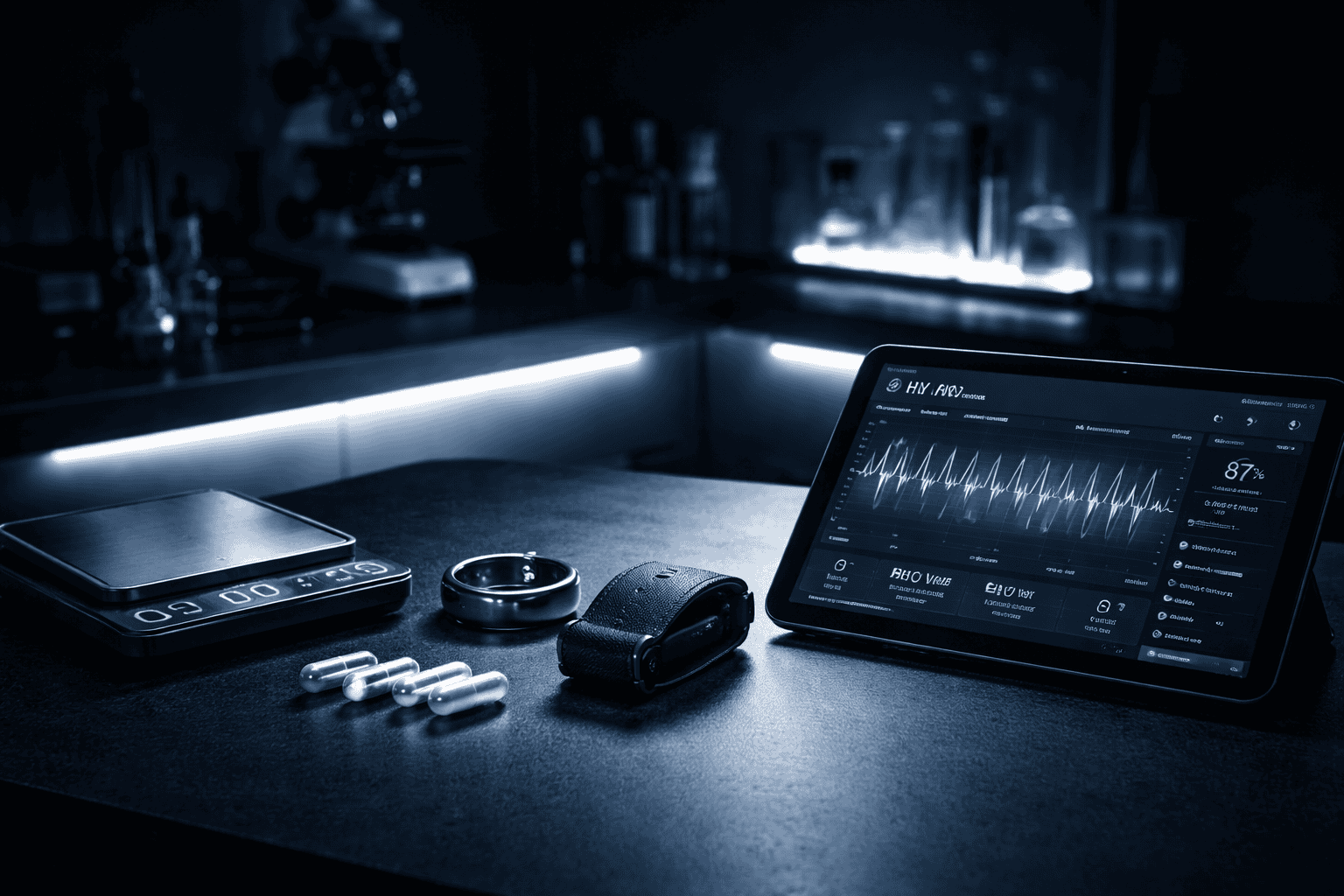
Most biohacking fails because people change multiple variables simultaneously, making it impossible to isolate what’s working. The methodology matters as much as the intervention. My framework: 2–4 weeks of baseline measurement (cognitive testing, sleep tracking, subjective ratings) before any change; single-variable testing for 4–12 weeks with all other protocols held constant; analysis comparing pre/post data with honest cost-benefit assessment; then integration or discontinuation based on evidence rather than expectation. The tools: Cambridge Brain Sciences or Dual N-Back for cognitive testing, an Oura Ring or WHOOP for sleep architecture and HRV, and a simple daily journal (1 minute) for subjective ratings. Statistical sophistication matters less than consistent methodology over time.
6 Key Concepts in Biohacking & Advanced Protocols
The advanced principles and protocols for practitioners who have mastered the fundamentals and are ready to push further.
Time-Restricted Eating for Brain Health
Clinical evidence demonstrates that time-restricted eating improves executive function, reduces biological brain aging markers, enhances neuronal insulin signaling, and decreases brain glucose metabolism — a metabolic shift that may be neuroprotective. The 16:8 protocol (16-hour fast, 8-hour eating window) is the best-studied and most practical for daily implementation. More intensive variants — 18:6, 5:2, or OMAD — show greater metabolic effects but require more careful management. Research on older adults with mild cognitive impairment found that regular IF practice reversed cognitive impairment in nearly 1 in 4 subjects over 3 years — the strongest human evidence available. The morning fasted state in particular is a potent window for deep focused work: ketones provide steady energy without the glucose fluctuations that disrupt sustained attention.
Implementation: begin with 12:12 (stop eating 3 hours before bed, delay breakfast 3 hours) and build gradually over 2–4 weeks. Electrolytes (sodium, potassium, magnesium) during the fast prevent the headaches and fatigue that discourage beginners. Avoid IF if you have a history of disordered eating, are pregnant, have diabetes, or take medications requiring food.
Nootropic Stacking Principles
The difference between an effective nootropic stack and an expensive failure almost always comes down to methodology, not compound selection. The three non-negotiable rules: mechanism diversity (combine compounds that work through different pathways — a cholinergic + adaptogen + NGF stimulator produces more complementary coverage than three compounds competing for the same receptor targets); conservative sequential addition (minimum 2 weeks between new additions to allow assessment — rushing this is the most common mistake I’ve observed); and synergy verification (the L-theanine + caffeine combination is the gold standard of documented synergy — the research clearly shows the combination outperforms either compound alone).
A practical full-spectrum stack built over 12 weeks: Base layer — Omega-3 (2000mg daily), Magnesium Glycinate (400mg evening). Acute focus — Caffeine (100mg) + L-Theanine (200mg) + Rhodiola (300mg). Neuroplasticity — Lion’s Mane (1000mg), Bacopa (300mg). Brain energy — Creatine (5g). Each layer added sequentially with 2-week assessment windows. For complete compound profiles and sourcing see the Nootropics & Supplements Guide.
Quantified Self & Biomarker Tracking
You cannot optimize what you don’t measure — and in biohacking, unmeasured “optimization” is indistinguishable from expensive placebo. The minimum measurement stack for meaningful self-experimentation: cognitive performance tests (Cambridge Brain Sciences provides a comprehensive battery, Dual N-Back specifically targets working memory), sleep architecture data (Oura Ring, WHOOP, or Garmin — tracking deep sleep %, REM %, HRV, and onset latency), and daily subjective ratings (1–10 scales for focus quality, mental clarity, afternoon energy, and mood — takes 60 seconds per day and catches effects that objective tests miss).
The tracking protocol that actually works: 2–4 weeks of stable baseline measurement before any intervention, then continue all measurements through the intervention period and for 2 weeks after cessation. Use simple before/after comparison rather than complex statistical analysis — the signal from effective interventions is usually clear enough to see without statistics. Be especially skeptical of improvements in the first 1–2 weeks of any new intervention, which often reflect novelty or expectation effects rather than genuine biological change.
Hormetic Stressors — Cold, Heat & Exercise
Hormesis — the principle that low-dose stressors trigger adaptive responses that enhance function — underlies some of the most interesting advanced protocols, but also some of the most overhyped. The honest breakdown: Cold exposure (cold showers, ice baths at 50–59°F) produces genuine acute norepinephrine release that translates to real, measurable alertness and mood elevation. Vagal tone enhancement and stress resilience adaptation are plausible mechanistic outcomes. Long-term cognitive benefits beyond these are largely anecdotal in current literature. My protocol: 60-second cold finish to morning shower — consistent, low friction, genuine acute effect.
Heat stress (sauna at 180–200°F, 20 minutes, 3–4x weekly) has stronger evidence: BDNF upregulation, heat shock protein expression (cellular protection), cardiovascular improvements that enhance cerebral blood flow, and observational data linking regular sauna use to reduced dementia risk. The combination protocol I tested — morning cold exposure, afternoon exercise, evening sauna, 3x weekly — produced subjective improvements in energy and stress resilience, though isolating individual contributions from the three interventions proved impossible without proper controls. See the exercise protocols in Brain Health & Longevity.
Advanced Sleep Architecture Optimization
Once you’ve mastered sleep consistency and duration, advanced optimization targets the architectural distribution of sleep stages. The goal is maximizing deep slow-wave sleep percentage (target: 20–25%) and REM percentage (target: 20–25%) within your total sleep time. These aren’t just theoretical numbers — deep sleep directly drives memory consolidation, glymphatic waste clearance, and growth hormone secretion; REM drives emotional integration, creative problem-solving, and procedural skill consolidation.
Advanced deep sleep enhancement: temperature optimization at 62–67°F (cooler than standard recommendations for deeper slow-wave sleep), Magnesium Glycinate (400mg) + Glycine (3g) before bed, morning aerobic exercise (increases deep sleep %), complete alcohol elimination (the single most impactful architecture intervention per my personal tracking). Advanced REM optimization: strict circadian consistency, elimination of THC (suppresses REM architecture significantly), and adequate total sleep duration since REM concentrates in later cycles. A professional-grade sleep tracker is required for architecture optimization — without objective data, you’re guessing. Full foundational sleep protocols at Sleep & Recovery Optimization.
Responsible Pharmacological Enhancement
This section covers territory that requires direct honesty rather than enthusiasm. Prescription cognitive enhancers exist, are used off-label by a significant portion of the high-performance community, and carry real risks that biohacking culture frequently minimizes. My position after 18 years of testing: pharmacological shortcuts rarely outperform comprehensive lifestyle optimization and carry substantially higher risk profiles.
Modafinil (prescription wakefulness agent): genuine utility in specific contexts — extreme fatigue states, shift work, jet lag recovery, occasional high-demand periods. Not a sustainable daily enhancement strategy; tolerance develops, sleep disruption if timed poorly, and the fundamentals it compensates for (sleep quality, exercise, nutrition) will outperform it when properly implemented. Methylphenidate and amphetamines: appropriate for diagnosed ADHD under medical supervision, not for off-label cognitive enhancement in healthy individuals — the risk-benefit calculus simply doesn’t support it. Nicotine via non-smoking routes (gum, patch): real cognitive effects on attention, working memory, and reaction time; real addiction risk that outweighs those benefits for most people. All pharmacological enhancement decisions require consultation with a licensed healthcare provider who understands your complete health picture. See the Nootropics & Supplements Guide for safer alternatives with comparable or better evidence.
Advanced Protocols Work. The Measurement Proves It.
Three practitioners who already had the fundamentals in place — and discovered that rigorous methodology revealed what was actually moving the needle.
6-Month Advanced Optimization Protocol
Prerequisites: consistent 7–8 hours quality sleep, 4–5x weekly aerobic exercise, optimized nutrition, and a working basic nootropic stack. If any of these aren’t in place, build them first.
Months 1–2 — Baseline & Time-Restricted Eating
Weeks 1–2: Establish comprehensive baseline — full Cambridge Brain Sciences cognitive battery, 14 nights minimum sleep tracking, daily subjective ratings (energy, focus, clarity on 1–10 scale). Weeks 3–8: Implement 16:8 TRE (first meal at noon, last meal by 8 PM). Maintain all existing protocols unchanged. Continue weekly cognitive testing. Assess at week 8 against baseline: continue if positive, modify if neutral. Electrolytes are essential during the adaptation period — sodium, potassium, and magnesium prevent the headaches that derail beginners.
Months 3–4 — Nootropic Stack Optimization
Weeks 9–12: Add Rhodiola Rosea (300mg standardized extract, morning with first meal). Assess anti-fatigue and focus effects over 4 weeks. Decision at week 12: integrate or discontinue. Weeks 13–16: Add either Bacopa Monnieri (300mg, for memory focus) or Lion’s Mane (1000mg, for neuroplasticity focus) based on your primary goals. Full effects require 8–12 weeks — extend assessment if needed before drawing conclusions. Detailed guidance in Memory & Learning Enhancement.
Months 5–6 — Hormetic Stress & Final Assessment
Weeks 17–20: Begin cold exposure — 30-second cold shower finish daily, progressing to 60–90 seconds by week 20. Optional: ice baths 3x weekly (3–5 minutes) if access permits. Track acute alertness and stress resilience specifically. Weeks 21–24: Add sauna (20 minutes, 180–200°F, 3–4x weekly, post-workout timing ideal). Month 6 end: run full cognitive battery and compare to 6-month baseline. Calculate cost-benefit for each intervention. Keep what produced clear, measurable improvement. Eliminate what didn’t. Expected range: 15–30% improvement in cognitive testing, though individual variation is significant.
The Unglamorous Truth About Advanced Biohacking
After 18 years of testing, the most effective advanced protocols I’ve personally validated are: time-restricted eating (16:8) for metabolic optimization and mental clarity; strategic nootropic stacking built over 12+ weeks; rigorous self-tracking that separates real effects from placebo; and hormetic stressors for resilience. The unglamorous truth: fundamentals consistently outperform advanced hacks. Perfect sleep beats any nootropic. Consistent exercise outperforms any supplement. Advanced protocols amplify a strong foundation — they don’t create one.
Important: This information is for educational purposes only and is not intended as medical advice. Advanced biohacking protocols carry risks and should only be attempted with appropriate medical supervision where indicated. Consult a qualified healthcare provider before implementing any significant dietary changes, extreme environmental stressors, or pharmacological compounds.
Frequently Asked Questions About Biohacking & Advanced Protocols
How do I know if I’m ready for advanced biohacking protocols?
Simple checklist: Are you sleeping 7–8 hours nightly with good quality? Are you exercising 4+ days per week? Is your nutrition optimized (Mediterranean-style, adequate protein, minimal processed food)? Are you using basic supplements appropriately? Can you commit to rigorous self-tracking for months at a time? If you answered “no” to any of these, focus on fundamentals first. Advanced protocols amplify a strong foundation — they don’t create one. The biggest mistake I see is people jumping to expensive, exotic interventions before basic optimization is in place.
Is intermittent fasting safe for everyone?
Research indicates that IF should be avoided or approached cautiously by: pregnant or nursing women, individuals with a history of eating disorders, those with diabetes on medication (medical supervision required), children and adolescents, and individuals who are significantly underweight. For healthy adults without these conditions, IF appears safe with appropriate implementation and gradual progression. Always consult your healthcare provider if you have any existing medical conditions before beginning.
Can I stack multiple nootropics safely?
Yes, with conservative methodology. Follow the three stacking principles: add one compound every 2–4 weeks; choose compounds with different mechanisms; start with research-supported combinations. Most problems arise from changing too many variables simultaneously — it becomes impossible to identify what’s causing benefits or problems. My personal stack includes 5–7 compounds, but it took 2+ years to build and refine through systematic individual assessment. See the Nootropics & Supplements Guide for specific combination guidance and safety protocols.
What’s the most effective advanced protocol you’ve personally tested?
Time-restricted eating (16:8) combined with strategic exercise timing — by a significant margin. This combination produces measurable improvements in mental clarity, focus duration, and energy stability that are consistent, sustainable long-term, and supported by substantial research. Cost: $0. Complexity: Low once habituated. Risk: Minimal with proper implementation. After 18 years of testing exotic supplements, peptides, and advanced stacks, this simple behavioral intervention outperforms virtually everything else I’ve tried for sustained daily cognitive performance.
How important is tracking and measurement for biohacking success?
Absolutely critical — without measurement, you’re guessing about what works. My own experience mirrors the research findings: subjective assessments are unreliable. Interventions I “felt” were working often showed no objective improvement in cognitive testing. Conversely, some interventions I barely noticed produced measurable 15–20% performance gains. Use objective cognitive testing (Cambridge Brain Sciences, Dual N-Back), sleep tracking (Oura, WHOOP), and systematic daily ratings. The measurement investment pays massive dividends by preventing you from spending months on interventions that aren’t producing real results for your specific physiology.
Start With the Foundation That Makes Advanced Protocols Work
Download “The 7-Day Optimize Your Brain in 7 Days” — the complete 7-day foundation protocol covering sleep, behavioral optimization, and your first strategic supplement stack.
Plus — automatically join “Get The Edge Weekly” — advanced nootropics, stacking protocols, and biohacking research every Thursday
One email gets you both. No spam, ever. Unsubscribe anytime.
Scientific References — Biohacking & Advanced Protocols
- Mattson, M.P., et al. (2021). “Intermittent Metabolic Switching, Neuroplasticity and Brain Health.” Frontiers in Aging Neuroscience, 13, 8470960. https://pmc.ncbi.nlm.nih.gov/articles/PMC8470960/
- Gudden, J., et al. (2021). “The Effects of Intermittent Fasting on Brain and Cognitive Function.” Nutrients, 13(9), 3275. https://pubmed.ncbi.nlm.nih.gov/34579042/
- Ooi, T.C., et al. (2020). “Intermittent Fasting Enhanced Cognitive Function in Older Adults with Mild Cognitive Impairment.” Nutrients, 12(9), 2644. https://pubmed.ncbi.nlm.nih.gov/32872655/
- Kapogiannis, D., et al. (2024). “Brain Responses to Intermittent Fasting and the Healthy Living Diet in Older Adults.” Cell Metabolism, 36(8), 1885–1904. https://pubmed.ncbi.nlm.nih.gov/38901423/
- Dong, T.A., et al. (2024). “Effect of Time-Restricted Eating and Intermittent Fasting on Cognitive Function.” Preventive Medicine Reports, 43, 102438. https://www.sciencedirect.com/science/article/pii/S2211335524001724
- Zhang, L., et al. (2025). “Effects of Intermittent Fasting on Brain Health via the Gut-Brain Axis.” Frontiers in Nutrition, 12, 1696733. https://www.frontiersin.org/journals/nutrition/articles/10.3389/fnut.2025.1696733/full
- Liang, J., et al. (2025). “Intermittent Fasting and Neurocognitive Disorders: Current Evidence.” Clinical Nutrition, 44(1), 120–135. https://www.sciencedirect.com/science/article/pii/S127977072500003X
- Owen, G.N., et al. (2008). “The Combined Effects of L-theanine and Caffeine on Cognitive Performance and Mood.” Nutritional Neuroscience, 11(4), 193–198. https://pubmed.ncbi.nlm.nih.gov/21040626/
- Liu, Y., et al. (2020). “Exercise, BDNF, and Neuroplasticity: A Systematic Review.” Frontiers in Cellular Neuroscience, 14, 2270. https://pmc.ncbi.nlm.nih.gov/articles/PMC7752270/
- Rasch, B., & Born, J. (2013). “About Sleep’s Role in Memory.” Physiological Reviews, 93(2), 681–766. https://pubmed.ncbi.nlm.nih.gov/23589831/