How to Fall Asleep Faster: Evidence-Based Techniques for Rapid Sleep Onset
Affiliate disclosure: This article contains affiliate links to products I personally use. If you buy through them, NeuroEdge Formula may earn a commission at no extra cost to you. I only link to things I’ve tested — and the highest-value fixes in this guide are behavioural and free.
⚕️ Educational Information, Not Medical Advice
This guide on how to fall asleep faster is educational, not medical advice. I’m a cognitive enhancement researcher, not a medical doctor. Chronic difficulty falling asleep can indicate insomnia disorder, sleep apnoea or another condition that needs professional evaluation — if it’s significantly affecting your daily function, or has persisted for months, see a qualified healthcare provider.
How to Fall Asleep Faster: The Neuroscience of Sleep Onset
By Peter Benson, Cognitive Enhancement Researcher | 18+ Years Independent Research · Last Updated: August 2026
Lying awake for 30–45 minutes waiting to fall asleep is one of the most frustrating experiences there is — and one with a clear biological explanation. Sleep onset isn’t something the brain does passively when you close your eyes; it’s an active process that requires three separate conditions to line up at once. Working out which condition is missing in your case is what turns a generic list of sleep tips into a targeted fix for the specific mechanism that’s failing. That diagnostic step is the whole point of this guide on how to fall asleep faster.
This article is specifically about sleep onset latency — the time between getting into bed and falling asleep. If you fall asleep easily but wake in the night, this isn’t your primary resource; the sleep tonight guide is. If the specific problem is taking too long to fall asleep despite being tired, this addresses that mechanism directly. For the stage-by-stage science, see the sleep architecture guide, and for the whole framework, the Sleep & Recovery hub.
Why you can’t fall asleep — the three-condition model
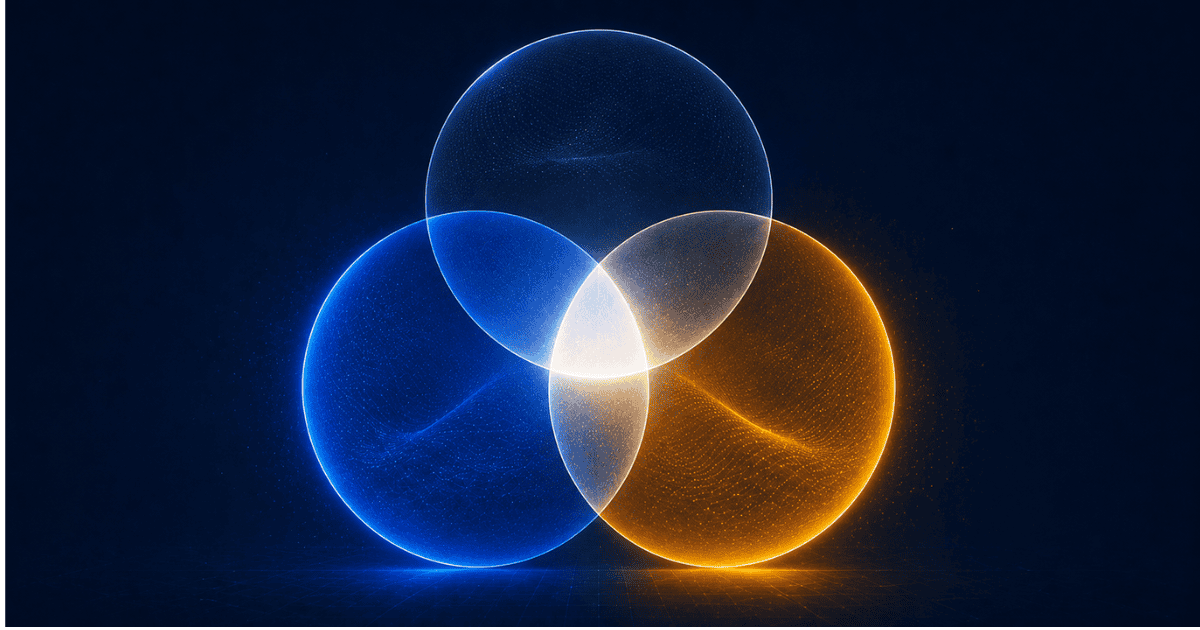
The classic framework is Borbély’s two-process model (1982): sleep is driven by Process S, the sleep pressure that builds from adenosine accumulating while you’re awake, and Process C, the circadian clock that sets when your body expects to sleep. Onset happens when pressure is high enough and the circadian phase permits it. To those two, add a third: the absence of active arousal signals that can override both. Delayed onset means one of these three is unmet — so the first move is always to work out which.
Condition 1 — not enough sleep pressure
Adenosine builds all day, raising the drive to sleep. Caffeine blocks adenosine receptors — so a coffee in the mid-afternoon (5–7 hour half-life) is still partly blocking those receptors at bedtime, lowering sleep pressure no matter how tired you feel. The other common culprit is a late or long nap clearing too much adenosine. The fix: move your caffeine cut-off earlier (early afternoon), and keep naps before mid-afternoon and under about 25 minutes. More on timing in caffeine and cognitive performance.
Condition 2 — the wrong circadian timing
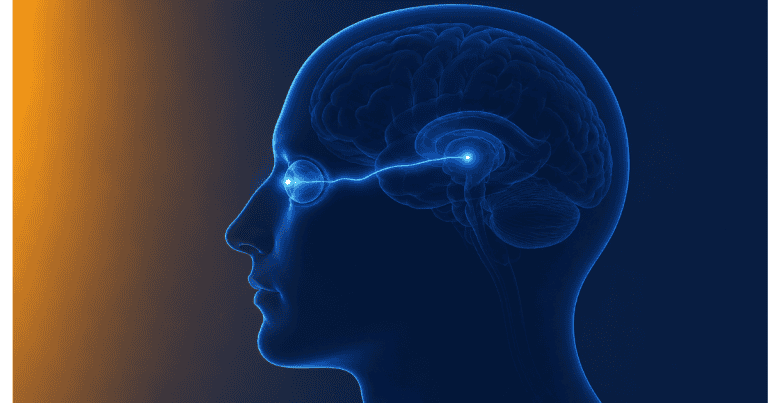
The circadian clock (run by the suprachiasmatic nucleus) releases melatonin roughly two hours before your habitual sleep time, signalling the approaching window. Bright, blue-spectrum light within about 90 minutes of bed suppresses that rise and pushes the clock later. People with a genuinely late chronotype, or who’ve drifted late, find their biological window simply doesn’t match their target bedtime. Low-dose melatonin (0.5–1mg) taken 1–2 hours before desired sleep can advance the phase by roughly 30–60 minutes — a timing tool, covered in depth in circadian rhythm optimisation.
Condition 3 — active arousal (the most common driver)
Even with adequate pressure and correct timing, arousal signals can override the sleep drive. Three sources dominate: thermal — a room above ~19°C prevents the core-temperature drop needed to initiate sleep; cortisol — from stress, late caffeine, or anxiety about sleep itself; and cognitive hyperarousal — the “can’t switch off” state where unresolved thoughts and tomorrow’s concerns keep the prefrontal cortex from quieting. This third category is the most common cause of long onset latency in otherwise healthy adults, and it has specific, evidence-based fixes.
Sleep-onset interventions, ranked by evidence
🟢 Strong | 🟡 Moderate | 🔴 Counterproductive.
The techniques that target cognitive arousal
Stimulus control — the strongest-evidenced behaviour
Stimulus control is the most evidence-supported behavioural sleep intervention, and a core component of cognitive behavioural therapy for insomnia (CBT-I). Its principle is simple: the bed must be associated almost exclusively with sleep. When you regularly lie awake for 20–45 minutes, the brain learns — through ordinary conditioning — to associate the bed with wakefulness and arousal, and that conditioned arousal becomes a primary driver of chronic onset difficulty in its own right. The correction: only get into bed when sleepy, and if you’re still awake after ~20 minutes, get up, do something calm and dim-lit, and return only when genuinely sleepy. It feels counterproductive short-term, but it’s among the best-supported rules in sleep medicine, and it typically takes 2–4 consistent weeks to reverse established conditioned arousal (Bootzin & Epstein, 2011).
Paradoxical intention — stop trying to fall asleep
Rather than trying to fall asleep, gently try to stay awake — lying still, no screens, just passively resting with the intention of remaining awake. The logic: the effort to fall asleep activates the prefrontal cortex’s monitoring functions (am I asleep yet? how much time is passing?), which generates arousal and blocks the cortical quieting sleep needs. Removing the effort removes that arousal. The honest evidence picture: a 2022 meta-analysis found paradoxical intention improved insomnia outcomes relative to passive comparators (Jansson-Fröjmark et al., 2022), but it rests on a small literature, and current clinical guidelines don’t yet recommend it as a standalone treatment. Treat it as a low-cost, mechanistically sensible option for the “trying too hard” pattern — not a guaranteed fix.
The cognitive shuffle — disrupting the racing mind
Developed by cognitive scientist Luc P. Beaudoin (Simon Fraser University), the cognitive shuffle — formally “serial diverse imagining” — has you generate a random sequence of unrelated, vivid, emotionally neutral images instead of the narrative, goal-directed thinking that keeps you awake. Pick a neutral word, picture it for a few seconds, then jump to an unrelated image, and keep going. The deliberately disjointed, sensory quality mimics the fragmented thinking of early sleep and crowds out coherent worrying. In Beaudoin and colleagues’ study of university students (2016), those using the technique reported improvements in falling asleep and reduced pre-sleep arousal. It’s simple, needs no equipment, and works best when the barrier is cognitive hyperarousal rather than timing or sleep pressure. Most people never finish a sequence.
The physiological sigh — a fast de-arousal breath
The physiological sigh — a double inhale through the nose followed by a long, slow exhale through the mouth — is one of the quickest ways to shift toward a calmer, lower-arousal state. A Stanford trial found that a brief daily cyclic-sighing practice emphasising the extended exhale reduced physiological arousal and improved mood, outperforming other short breathing patterns and mindfulness (Balban et al., 2023). The extended exhale promotes parasympathetic activation. It wasn’t tested as a sleep-onset treatment specifically, but as a general de-arousal tool it pairs naturally with the cognitive techniques above: two or three sighs address the physical side of arousal while the shuffle or paradoxical intention handles the mental side.
Worked example — diagnosing which condition is blocking you
The mistake most people make is grabbing a random technique. The model above lets you pick the right one. Here’s how to run the diagnosis on yourself in three questions.
Question 1 — “Am I actually sleepy, or just tired?” If you’re tired but not sleepy (heavy eyelids, drifting attention), suspect Condition 1: sleep pressure. Look at your caffeine timing and any late nap. The fix here isn’t a bedtime technique at all — it’s an earlier caffeine cut-off tomorrow. No breathing exercise fixes a receptor that’s still blocked.
Question 2 — “Could I fall asleep now if it were two hours later?” If your body just doesn’t feel ready until very late, and always has, that points to Condition 2: circadian timing. This is where morning light, an earlier wind-down, and possibly low-dose melatonin at the right time apply — not the cognitive techniques, which won’t move a misaligned clock.
Question 3 — “Is my mind racing, or am I lying here trying to sleep?” If you’re sleepy and the timing’s right but your mind won’t stop — or you’re straining to fall asleep — that’s Condition 3: arousal. Now the targeted techniques fit. Racing thoughts → cognitive shuffle or the to-do list. Straining/monitoring → paradoxical intention. Physically wired → a few physiological sighs first. And check the room temperature, because thermal arousal is the silent version of this condition.
The point: the three techniques everyone reaches for — shuffle, paradoxical intention, breathing — all target Condition 3. If your real blocker is caffeine (Condition 1) or a late clock (Condition 2), they’ll do almost nothing, and you’ll wrongly conclude “nothing works for me.” Diagnose first; the right fix is usually obvious once you know which condition is failing.
The NeuroEdge Protocol
The NeuroEdge Sleep-Onset Protocol
Addressing thermal, supplement, cognitive and behavioural arousal in order. Peter Benson’s current sequence.
T-90 — Thermal + light
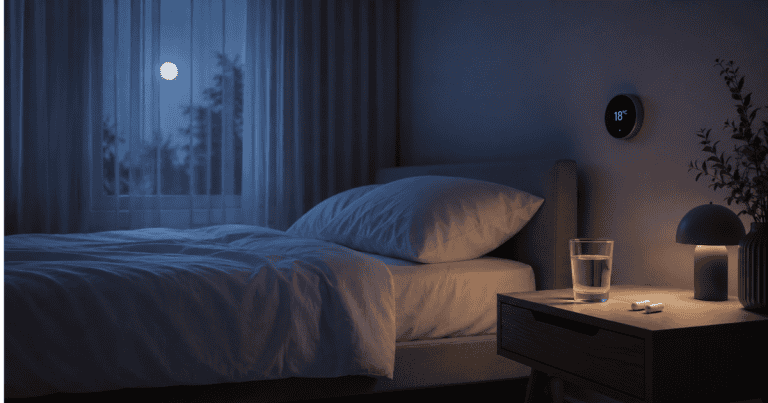
Bedroom to 18–19°C, lights low. A warm shower now (not right before bed) so the post-shower cooling drops your core temperature by lights-out. Free; acts the same night.
T-60 — Supplements (optional)
If you use them: glycine 3g (thermal onset), L-theanine 200mg (hyperarousal), magnesium glycinate 200–350mg elemental (cortisol) — kept under the 350mg/day magnesium ceiling.
T-5 — Cognitive unload
Write tomorrow’s specific to-do list (Scullin 2018) — the more specific, the larger the effect. Then two or three physiological sighs to settle the body.
In bed — don’t force it
Cognitive shuffle or paradoxical intention. No clock-watching, no effort to sleep. Still awake after ~20 minutes? Get up until genuinely sleepy, then return (stimulus control).
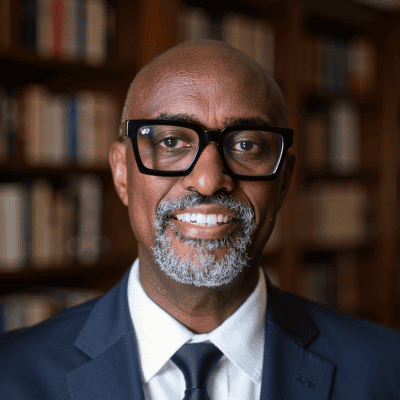
Peter’s Testing Notes — Sleep Onset
First-person, n=1 with an Oura Ring — reported honestly
Across my own tracked nights, the intervention that most reliably shortened my onset was the specific to-do list — of everything here, it produced the most consistent improvement on nights I actually did it versus nights I skipped it. That surprised me; I’d initially dismissed the Scullin finding as too simple to matter. The glycine effect is the one I feel most physically: a mild peripheral-warming sensation before sleep (which paradoxically reflects heat leaving the core), and on nights I skip it that thermal transition is noticeably absent and onset feels slower.
The physiological sigh is my fastest state-changer — a few rounds while lying in bed shifts me from a “wired” feeling toward something more neutral within a minute or two. And the single most useful behavioural change I’ve made is refusing to check the time once I’m in bed: in periods with a visible clock, my onset felt reliably worse, which fits the cortisol-of-calculating-lost-sleep mechanism exactly.
Usual caveats: this is n=1 with a consumer ring, not controlled data, and the placebo of deliberately working on sleep is real. I hold my impressions loosely — but the direction lines up with the literature, which is what makes me keep doing it. Cover the clock, phone face-down, and review onset in the morning from your wearable rather than monitoring it in real time.
Sourcing standards
If you use the optional supplement layer, the magnesium criteria are the usual three: chelated glycinate form, elemental magnesium declared on the label, and third-party testing with a certificate of analysis. Glycine and L-theanine are inexpensive standalone powders from any reputable tested brand.
Nootropics Depot — Magnesium Glycinate
Chelated bisglycinate, elemental dose clearly labelled, COA available — the magnesium in my own evening routine.
Performance Lab Sleep — pre-formulated option
A ready-made evening formula covering the magnesium mechanism plus Montmorency cherry as a natural melatonin source — the one I reach for on travel weeks when I can’t control the room.
⚠️ Before you supplement
Keep supplemental magnesium at or under 350mg/day (the NIH upper limit); over that, loose stools are the usual sign. Anyone with impaired kidney function can accumulate magnesium dangerously and shouldn’t supplement without medical supervision, and magnesium can bind some antibiotics and bisphosphonates (space them a few hours apart). If you take regular medication or have a health condition, check with your doctor or pharmacist first.
Key takeaways
| → | Diagnose before you treat: sleep onset needs sleep pressure, correct timing, and low arousal. Figure out which is missing — the right fix follows from that, and the wrong fix does nothing. |
| → | Temperature is the fastest physical lever — a room above 19°C blocks onset regardless of tiredness or supplements. Fix it before spending on anything. |
| → | Trying harder backfires. The effort to sleep drives arousal; stimulus control (get up if awake ~20 min) is the strongest-evidenced behaviour, with paradoxical intention and the cognitive shuffle as low-cost options for a racing mind. |
| → | Afternoon caffeine is the most overlooked onset-killer — a 5–7 hour half-life means it’s still blocking adenosine at bedtime even when you don’t feel wired. |
| → | A 5-minute specific to-do list is the most underused fix — zero cost, PSG-confirmed (Scullin 2018). Glycine adds a genuine thermal assist; see the best supplements for sleep guide. |
Frequently asked questions
Why can’t I fall asleep even when I’m tired?
Feeling tired and having enough sleep pressure aren’t the same. Three common reasons you can be exhausted yet unable to drop off: caffeine still blocking adenosine (late-afternoon coffee is active at bedtime even without the “wired” feeling); a bedroom above ~19°C holding your core temperature above the threshold for onset; and cognitive hyperarousal — a racing mind, or the very act of trying to fall asleep, keeping the prefrontal cortex active. Each needs a different fix, which is why identifying the specific cause matters more than any single technique.
How long should it take to fall asleep?
Around 10–20 minutes is typical and healthy. Falling asleep in under 5 minutes usually signals significant sleep deprivation — the pressure is so high that onset is nearly instant, which isn’t a good sign. Consistently taking more than 30 minutes despite a sensible bedtime is worth addressing with the interventions here. If it’s routinely over 45 minutes and has persisted for more than three months, that’s worth a conversation with a healthcare provider, as it can meet criteria for insomnia disorder.
Does melatonin help you fall asleep faster?
Only for a specific problem. At physiological doses (0.5–1mg) melatonin advances the circadian clock by roughly 30–60 minutes, which helps if your issue is a late set point — delayed sleep phase, jet lag, shift work. It does not raise sleep pressure or reduce cognitive arousal, so for a racing mind or a warm room it won’t do much. If you genuinely can’t fall asleep before 1am no matter what, low-dose melatonin 1–2 hours before your target time may help; for most onset difficulty, temperature, caffeine timing and arousal reduction are the more relevant levers.
What is the “military sleep method”?
It’s a structured relaxation routine: progressive muscle relaxation (tense and release from feet to face), then a peaceful mental image, then trying to hold the mind quiet. It works through the same mechanisms as the techniques here — lowering muscular tension (parasympathetic activation) and quieting cognitive activity (reducing prefrontal arousal). It’s a legitimate approach with the same basis as paradoxical intention and the cognitive shuffle, just more structured and slower to run through. If it works for you, it works; the mechanism is de-arousal either way.
Should I get out of bed if I can’t sleep?
Yes — after about 20 minutes of lying awake. This is the stimulus-control rule at the core of CBT-I, the most evidence-supported treatment for chronic insomnia. Every minute spent awake in bed strengthens the conditioned link between bed and wakefulness, which over time becomes a driver of onset difficulty in its own right. Get up, do something calm, dim and non-screen, and return only when genuinely sleepy. Repeated consistently over 2–4 weeks it reverses the conditioned arousal. It feels like you’re losing sleep opportunity short-term; long-term it produces shorter, more reliable onset.
Get “7 Days to a Sharper Brain” — Free
Peter Benson’s personal daily protocol, rebuilt from 18 years of testing.
✓ Day 1 — Sleep foundation + Magnesium Glycinate
✓ Day 2 — L-Theanine + Caffeine focus stack
✓ Day 3 — Brain nutrition timing for stable energy
✓ Day 4 — BDNF movement protocol
✓ Day 5 — 90-60-30 sleep environment sequence
✓ Day 6 — Stress resilience + cognitive load framework
✓ Day 7 — Neuroplasticity, Lion’s Mane + your complete assembled daily stack
Join 2,000+ readers optimising their cognitive performance. Unsubscribe anytime.
Scientific references
1. Borbély, A. A. (1982). A two process model of sleep regulation. Human Neurobiology, 1(3), 195–204. PMID 7185792
2. Scullin, M. K., et al. (2018). The effects of bedtime writing on difficulty falling asleep. Journal of Experimental Psychology: General, 147(1), 139–146. PMID 29058942
3. Yamadera, W., et al. (2007). Glycine ingestion improves subjective sleep quality in human volunteers, correlating with polysomnographic changes. Sleep and Biological Rhythms, 5(2), 126–131. DOI: 10.1111/j.1479-8425.2007.00262.x
4. Haghayegh, S., et al. (2019). Before-bedtime passive body heating by warm shower or bath to improve sleep: A systematic review and meta-analysis. Sleep Medicine Reviews, 46, 124–135. DOI: 10.1016/j.smrv.2019.04.008
5. Jansson-Fröjmark, M., et al. (2022). Paradoxical intention for insomnia: A systematic review and meta-analysis. Journal of Sleep Research, 31(2), e13464. DOI: 10.1111/jsr.13464
6. Beaudoin, L. P. (2013). The possibility of super-somnolent mentation: A new information-processing approach to sleep-onset acceleration (serial diverse imagining). Simon Fraser University. Later study: Beaudoin, Digdon, O’Neill & Rachor (2016).
7. Balban, M. Y., et al. (2023). Brief structured respiration practices enhance mood and reduce physiological arousal. Cell Reports Medicine, 4(1), 100895. PMID 36630953
8. Bootzin, R. R., & Epstein, D. R. (2011). Understanding and treating insomnia. Annual Review of Clinical Psychology, 7, 435–458. PMID 21166535
9. Abbasi, B., et al. (2012). The effect of magnesium supplementation on primary insomnia in elderly. Journal of Research in Medical Sciences, 17(12), 1161–1169. PMID 23853635
Peter Benson
Cognitive Enhancement Researcher | 18+ Years Independent Research
Peter has spent 18+ years researching cognitive enhancement through systematic self-experimentation, tracking sleep onset and recovery with an Oura Ring across hundreds of nights and applying the interventions in this guide with consistent data collection. NeuroEdge Formula is his platform for rigorous, evidence-first guidance.
Last reviewed: August 2026