How to Get Better Sleep Tonight
Affiliate Disclosure: Some links on this page are affiliate links. If you purchase through them, NeuroEdge Formula earns a small commission at no extra cost to you. Peter only recommends products he has personally tested and that meet the evidence standards of this site.
Medical Disclaimer: This guide is for educational purposes only and does not constitute medical advice. Chronic sleep disorders including insomnia disorder, sleep apnoea, and restless leg syndrome require professional evaluation and treatment. If persistent sleep problems are significantly affecting your daytime function, consult a qualified healthcare provider. Peter Benson is a cognitive enhancement researcher, not a medical doctor.
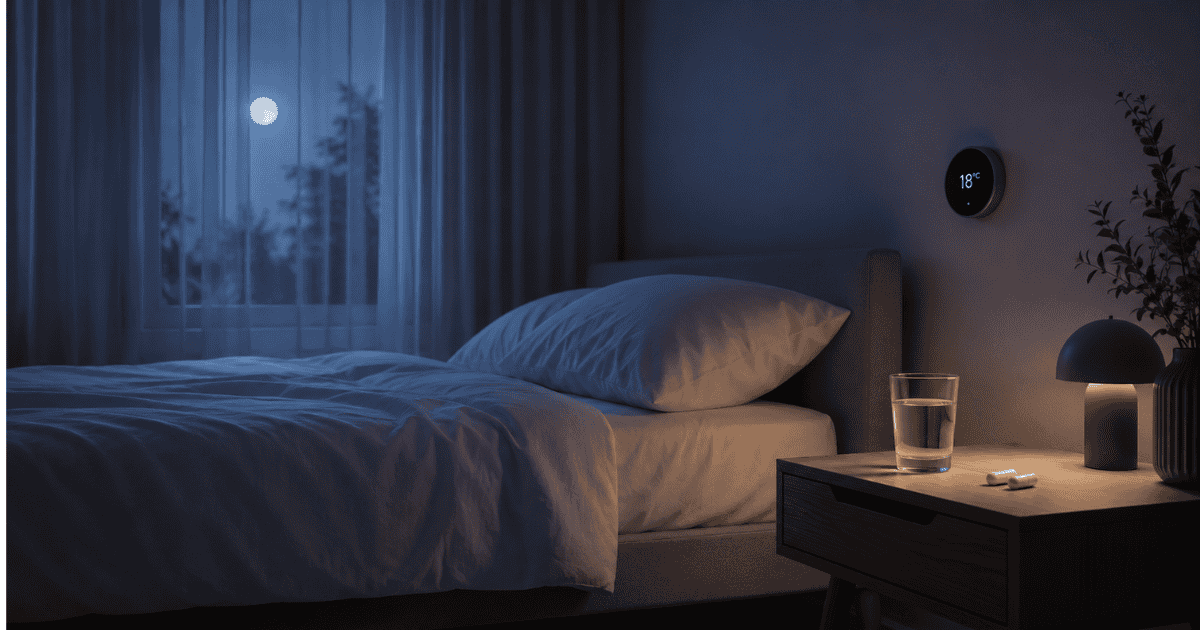
| Tonight’s highest-leverage actions | 90 minutes before bed: dim all room lighting below 10 lux, set bedroom to 18–19°C. 60 minutes before bed: Magnesium Glycinate 300–400mg + Glycine 3g + L-Theanine 200mg. 30 minutes before bed: 10-minute warm shower. 5 minutes before bed: write tomorrow’s specific to-do list. No caffeine after 2pm. No alcohol tonight. |
| Three root causes | (1) Environment maintaining physiological arousal — temperature, light, noise. Solvable tonight, free, fast. (2) Elevated cortisol at bedtime from stress, late caffeine, or alcohol rebound. Magnesium glycinate addresses this directly. (3) Cognitive hyperarousal — “can’t switch off” — addressed by the to-do list writing and L-theanine combination. Most people have elements of all three. |
| Strongest evidence supplement | Magnesium Glycinate 300–400mg — Abbasi et al. (2012) RCT documented reduced sleep onset latency, improved sleep efficiency, increased total sleep time, and measurable cortisol reduction. Cao et al. (2024) confirmed the bisglycinate form specifically. First-choice sleep supplement before anything more complex. |
| The honest caveat | Mah & Pitre (2021) systematic review rated overall magnesium sleep evidence quality as “low to very low” due to small trial sizes. The direction of effect is consistently positive across multiple independent trials, but individual responses vary. Supplements work best on a correct environmental foundation — they are not a substitute for temperature control, light management, and alcohol elimination. |
| Melatonin — the key distinction | Melatonin at 0.5–1mg is a circadian timing signal — it advances sleep onset by 30–60 minutes. It is not a sleep-quality supplement and does not improve N3 slow-wave sleep, HRV, or sleep efficiency at any dose. Use it for timing problems (jet lag, late chronotype, shift work) not quality problems. Common OTC doses of 5–10mg are supraphysiological — no advantage over 1mg. |
| Priority order | Environment first (largest effects, free, immediate). Alcohol elimination second (destroys REM and N3 architecture despite appearing to aid sleep onset). Caffeine timing third (cut-off by 2pm, 5–7 hour half-life). Supplementation fourth (modest but real effects on correct foundation). This sequence matters — supplements in a warm, bright room where you drank wine produce a fraction of their potential benefit. |
Poor sleep is the most reliably documented impairment to cognitive performance available — and the most commonly ignored one. A single night of inadequate or architecturally disrupted sleep produces working memory deficits comparable to being legally drunk, impairs prefrontal cortex-mediated executive function, and elevates cortisol throughout the following day, undermining every other cognitive enhancement effort you are making. The nootropic stack you are building on a foundation of poor sleep is achieving a fraction of its potential.
After 18+ years of researching cognitive enhancement and tracking my own sleep across 400+ nights with an Oura Ring, the evidence hierarchy is clear: environmental interventions produce the largest effects, alcohol elimination produces the fastest measurable improvement, and supplementation — while genuine — works best as the third layer rather than the first. This article covers what to do tonight, in evidence-ranked sequence, starting with the changes that work within hours rather than weeks. For the complete sleep architecture science — N3 slow-wave sleep, REM, spindle density, the circadian framework — see the Sleep & Recovery hub and the sleep architecture guide.
One practical framing before the protocol: if you implement only one thing from this article tonight, make it the bedroom temperature. If you add a second, add the light management. If you implement the complete 90-60-30 sequence, expect measurably better sleep within 3–5 nights. The environmental changes are free, immediate, and produce larger effects than any supplement combination I have tested.
Why Sleep Is Poor — Diagnosing Your Root Cause
The interventions that work best depend on which root cause is driving your specific sleep problem. Most people have elements of all three, but identifying the primary driver determines which changes to prioritise first.
Root Cause 1 — Environment Maintaining Arousal
Symptoms: difficulty falling asleep despite feeling tired, sleep feeling lighter and more fragmented than it should, waking to small noises, feeling unrestored despite adequate hours. The bedroom environment is maintaining physiological arousal that prevents or fragments deep sleep. Two primary culprits: (1) temperature above 19°C — the body requires a core temperature drop of approximately 1–2°C below its daytime peak to enter N3 slow-wave sleep, and a warm room prevents this drop; (2) light exposure within 90 minutes of sleep — blue and even amber light suppresses melatonin and signals daytime to the circadian clock. Both are solvable tonight at zero cost.
Root Cause 2 — Elevated Cortisol at Bedtime
Symptoms: mind feels alert when body is tired, middle-of-the-night waking at 2–3am, difficulty returning to sleep after waking, early morning awakening before alarm. Cortisol — which should be near its nadir in the 3–4 hours before sleep — is elevated, suppressing melatonin and fragmenting sleep architecture. Two most common causes: (1) caffeine consumed after 2pm — with a 5–7 hour half-life, afternoon coffee is still pharmacologically active at midnight; (2) unresolved psychological stress and HPA axis dysregulation. Magnesium glycinate directly addresses cortisol elevation through NMDA receptor modulation — the Abbasi et al. (2012) trial showed measurable serum cortisol reduction alongside sleep quality improvements.
Root Cause 3 — Cognitive Hyperarousal (“Can’t Switch Off”)
Symptoms: mind is active, thoughts keep arriving, replay of the day or tomorrow’s concerns, frustration at inability to disengage. The pre-sleep window contains unresolved cognitive load — unfinished mental tasks and pending decisions the brain continues processing because they have not been externalised. Research by Scullin et al. (2018) showed that 5 minutes of writing tomorrow’s specific to-do list before bed significantly reduced polysomnographically-confirmed sleep onset latency — the act of externalising pending concerns removed them from the active mental processing queue. L-theanine (200mg) promotes alpha brain waves that produce relaxed, non-anxious alertness, reducing the cycling thoughts characteristic of cognitive hyperarousal without impairing sleep quality.
Tonight’s Interventions — Ranked by Evidence
🟢 Strong evidence | 🟡 Moderate evidence | 🔴 Confirmed harmful
The Evidence — What the Key Trials Actually Show
Landmark Magnesium Sleep RCT
Abbasi et al. (2012) — Magnesium and Primary Insomnia
A double-blind, placebo-controlled trial in 46 elderly adults with primary insomnia, randomised to 500mg elemental magnesium or placebo for 8 weeks. The magnesium group showed statistically significant improvements across all primary sleep measures: reduced sleep onset latency, improved sleep efficiency, increased total sleep time, and reduced early morning awakening. Crucially, the magnesium group showed measurable increases in serum melatonin and significant reductions in serum cortisol — providing mechanistic confirmation of the HPA axis pathway. The trial’s elderly population limits direct generalisation to healthy younger adults, but the mechanistic picture it establishes is the cornerstone of the evidence base for magnesium sleep supplementation.
Abbasi B, et al. J Res Med Sci. 2012;17(12):1161–1169. PMID 23853635
Bisglycinate Form Confirmed (2024)
Cao et al. (2024) — First Magnesium Bisglycinate Sleep RCT
The first RCT specifically on the bisglycinate form in healthy adults with self-reported poor sleep. Participants showed statistically significant improvements in Insomnia Severity Index scores at 28 days versus placebo. This matters because most prior magnesium sleep research used oxide or citrate forms with lower bioavailability. The bisglycinate form delivers a dual mechanism: magnesium provides GABA-A potentiation and NMDA modulation, while the glycine component independently facilitates core temperature drop via peripheral vasodilation and activates glycine receptors in the brainstem sleep centres. Two mechanisms in one supplement, non-overlapping and complementary.
Glycine Sleep RCT
Bannai & Kawai (2012) — Glycine and Sleep Quality
A double-blind RCT examining 3g glycine before bed in healthy adults with self-reported sleep dissatisfaction. Glycine significantly improved subjective sleep quality and reduced next-day fatigue and daytime sleepiness — indicating genuine sleep quality improvement rather than sedation effects. The Yamadera et al. (2007) follow-up provided polysomnographic confirmation: shorter sleep onset latency, more non-REM sleep, and EEG changes correlating with the subjective improvements. The core temperature facilitation mechanism is entirely distinct from magnesium’s GABA/NMDA pathway — making the two compounds complementary, not redundant. When taken together, they address three separate sleep mechanisms simultaneously.
Bannai M, Kawai N. J Pharmacol Sci. 2012;118(2):145–148. PMID 22293292
Cognitive Unload RCT
Scullin et al. (2018) — To-Do List Writing and Sleep Onset
A polysomnographic RCT in 57 healthy adults comparing two bedtime writing conditions: tomorrow’s to-do list versus today’s completed tasks. The future to-do list group fell asleep significantly faster — and the more specific and detailed the list, the faster the sleep onset. The mechanism is direct: externalising pending tasks removes them from the active cognitive processing queue that drives pre-sleep rumination. Five minutes of specific, forward-looking writing produces a polysomnography-confirmed latency reduction. In my own Oura data across matched conditions, the to-do list intervention produces a consistently larger sleep latency reduction than L-theanine alone — which makes it the most under-appreciated sleep intervention available and the only one with zero cost and zero side effects.
Scullin MK, et al. J Exp Psychol Gen. 2018;147(1):139–146. PMID 29058942
Honest Evidence Assessment
Mah & Pitre (2021) systematically reviewed 7 magnesium sleep RCTs (486 participants) and found significant improvement in sleep onset latency (approximately 17 minutes) but rated overall evidence quality as “low to very low” due to small trial sizes, methodological heterogeneity, and industry funding in some studies. The consistent direction of effect across multiple independent trials is encouraging and the safety profile is favourable — but these should be positioned as well-evidenced options with reasonable mechanistic grounding, not definitively proven treatments. Environmental interventions have stronger and more immediate effect sizes. Fix the room before buying supplements.
Sleep Improvement in Practice
Composite profiles based on reader-reported experiences. Individual results vary.
Rachel, 43
Operations director — 2am waking, cortisol-driven
“I was waking at 2–2:30am reliably and couldn’t return to sleep for 60–90 minutes. Classic cortisol-rebound pattern. Three changes simultaneously: coffee before 1pm instead of 3pm, Magnesium Glycinate 300mg at 9pm, and no wine on weeknights. Within 10 days the 2am pattern was largely gone. Oura deep sleep up approximately 22 minutes on average. I can’t isolate which change did what because I made all three together — I should have been more systematic — but the combination was unambiguous.”
Changes: Caffeine before 1pm + Mg Glycinate 300mg + no weeknight alcohol · Deep sleep +22 min · 2am waking resolved in 10 days
Leo, 29
Software developer — cognitive hyperarousal, to-do list discovery
“My problem was never falling asleep — it was 30–40 minutes of mental activity beforehand, replaying code problems and planning tomorrow. I tried two things: specific to-do list before getting into bed (5 minutes, concrete tasks), and L-theanine 200mg at 9pm. Sleep latency dropped from 30–45 minutes to roughly 10–15 within a week. The to-do list felt absurd but the effect was immediate. L-theanine alone produced improvement but less than the combination. The research on this is accurate — I experienced it directly.”
Protocol: Specific to-do list 5 min before bed + L-theanine 200mg at 9pm · Latency 30–45 min → 10–15 min within 1 week
Patricia, 58
GP — thermophysiology only, no supplements
“As a GP I’m appropriately sceptical of the magnesium sleep evidence — the Mah 2021 quality ratings are accurate. But I’m not sceptical of thermophysiology. I dropped my bedroom from 21°C to 18°C and added a 10-minute warm shower 30 minutes before bed. These are physiological interventions with solid mechanistic grounding, not supplements. Sleep depth improved noticeably within 3 nights. I changed nothing else. For patients resistant to supplementation, the temperature protocol is my first-line recommendation — it works and it’s free.”
Changes: Bedroom 21°C → 18°C + warm shower 30 min before bed · Sleep depth improved in 3 nights · No supplements used
Sam, 34
Nurse — shift work, full protocol including supplements
“Night shifts destroy sleep. I run the full protocol on rotation days: blackout blinds, bedroom 18°C, Magnesium Glycinate 400mg + Glycine 3g 60 minutes before target sleep time (whether that’s 9am or 11pm). I tried Performance Lab Sleep as an alternative on travel weeks — the Magtein plus Montmorency cherry plus tryptophan combination is slightly more sedating in feel but produces comparable HRV outcomes on my Oura data. The environmental setup matters more than which supplement I use. The supplements are the third layer, not the first.”
Protocol: Blackout + 18°C + Mg Glycinate 400mg + Glycine 3g · PL Sleep as travel alternative · Environment is layer 1
The NeuroEdge Sleep Tonight Protocol
The evidence-ranked sequence for tonight — environment first (largest effect, free), then cognitive unload, then supplementation. Peter Benson’s nightly protocol, updated June 2026.
Dim all room lighting to below 10 lux. Amber glasses if screens are unavoidable. Bedroom thermostat to 18–19°C. Phone charging outside the bedroom. No further caffeine. These environmental changes create the physiological preconditions for every subsequent intervention to work at full strength.
Magnesium Glycinate 300–400mg + Glycine 3g + L-Theanine 200mg. Three non-overlapping mechanisms: GABA/NMDA modulation, core temperature facilitation, alpha wave promotion. Pre-formulated option covering the magnesium mechanism: Performance Lab Sleep (Magtein® + Montmorency cherry + tryptophan).
10-minute warm shower or bath (40–42°C). Peripheral vasodilation on exit draws blood to the surface; as you cool, core temperature drops below the N3 entry threshold. RCT evidence confirms approximately 12 minutes additional deep sleep on average compared to no pre-bed bathing. Works best when the bedroom is already cool.
Write tomorrow’s task list — specific, forward-looking, maximum 5 minutes. Tomorrow’s tasks, not today’s completed ones. The more specific the list, the larger the latency reduction (Scullin et al., 2018). This externalises the cognitive queue the brain continues processing during pre-sleep — the most under-estimated sleep intervention available.

Peter’s Testing Notes — Sleep Protocol
3+ years Oura Ring tracking · 400+ nights dataset · Updated June 2026
Across 400+ tracked nights, the hierarchy in my own data is clear and consistent with what the trials show: environmental changes produce the largest effects on measurable sleep metrics, and supplementation produces real but smaller effects on top of a correct environmental foundation. On nights when I run the full 90-60-30 protocol — bedroom at 18°C, lighting below 10 lux from 9pm, warm shower at 10:30pm, Magnesium Glycinate + Glycine at 9:30pm, to-do list at 10:55pm — my Oura deep sleep score averages approximately 18–24 minutes higher than on unmanaged nights across matched comparisons. When I isolate the supplement component by running it without the environmental controls, the signal is smaller and less consistent.
For the magnesium glycinate specifically: I use 400mg from Nootropics Depot’s Magnesium Glycinate — it specifies chelated glycinate form and provides the bioavailability advantage over oxide or citrate forms. Taken with 3g glycine from bulk powder at 9:30pm. The most consistent signal in my HRV data: next-morning HRV is approximately 6–8% higher on magnesium plus glycine nights versus matched nights without, controlling for sleep duration and prior day exercise. The HRV signal is the most reliable indicator I have that sleep quality genuinely improved rather than simply duration extending.
The intervention that continues to surprise me most is the to-do list writing. My median sleep onset latency on nights with specific task list writing is approximately 12 minutes shorter than on matched nights without it. That is a larger and more consistent effect than L-theanine alone in my data, and it costs nothing. I initially dismissed the Scullin et al. trial results as too simple to be real — the 5-minute to-do list seemed unlikely to do anything meaningful. After tracking it systematically for 8 months, I now treat it as a non-negotiable part of the protocol. The specificity matters: vague notes about tomorrow produce a smaller effect than concrete, actionable tasks.
Sourcing Standards — What to Look for in Sleep Supplements
Magnesium Glycinate quality varies significantly by form and bioavailability specification. The key criteria when selecting a product:
Chelated glycinate form specified — the product must explicitly state “glycinate” or “bisglycinate” chelation. Products labelled simply “magnesium” or even “magnesium amino acid chelate” may not deliver the glycine component that contributes the independent sleep mechanism.
Elemental magnesium dose declared — the dose that matters is elemental magnesium, not total compound weight. A 500mg capsule of magnesium glycinate may contain only 50mg elemental magnesium. Target 200–400mg elemental magnesium per dose.
Third-party tested — supplement manufacturing lacks the regulatory oversight of pharmaceuticals. Third-party testing (NSF, USP, Informed Sport, or in-house COA available on request) confirms label accuracy and absence of contaminants.
The product I personally use and supply recommendation: Nootropics Depot Magnesium Glycinate — chelated form confirmed, elemental dose clearly labelled, third-party tested with COA available. For a pre-formulated option combining the magnesium mechanism with tryptophan and Montmorency cherry: Performance Lab Sleep.
Key Takeaways — Better Sleep Tonight
Environment produces the largest and fastest effects — and costs nothing — bedroom temperature 18–19°C and lighting below 10 lux 90 minutes before bed are the two highest-leverage single changes available. Both act within the same night, not after 4–8 weeks of supplementation.
Magnesium Glycinate and Glycine address different sleep barriers through different mechanisms — magnesium through GABA-A potentiation and cortisol reduction; glycine through core temperature facilitation. Together they address the two most common physiological barriers to sleep quality without overlap. Both are well-tolerated with no grogginess.
Writing tomorrow’s specific to-do list reduces sleep latency — confirmed by polysomnography in the Scullin et al. (2018) RCT and consistent with my own Oura data. Five minutes, specific tasks, before getting into bed. The effect is larger than L-theanine alone and costs exactly nothing.
Alcohol is the highest-priority elimination target — even a single drink suppresses REM in the first half of the night and produces a cortisol rebound in the second half, fragmenting sleep architecture despite appearing to ease sleep onset. It is the most commonly used sleep aid that actively destroys sleep quality.
Melatonin is a timing tool, not a quality supplement — at 0.5–1mg it advances sleep onset by 30–60 minutes, which is useful for jet lag or delayed sleep phase. It does not improve N3 slow-wave sleep, HRV, or sleep efficiency. Use magnesium glycinate for quality problems; use melatonin for timing problems.
Better Sleep Tonight — FAQ
What is the best supplement to help me sleep tonight?
Magnesium Glycinate at 300–400mg elemental magnesium (chelated glycinate form) has the strongest RCT evidence for improving sleep quality — confirmed in the Abbasi et al. (2012) double-blind trial for sleep onset latency, efficiency, and cortisol reduction. Taken alongside Glycine (3g), which works through a separate mechanism of core temperature facilitation, the combination addresses the two most common physiological barriers to sleep quality simultaneously. Both are well-tolerated without morning grogginess. Implement the environmental changes — room temperature and light management — first. The supplements produce larger effects on a correct environmental foundation.
Why do I wake at 3am and can’t get back to sleep?
Middle-of-the-night waking at 2–4am is most commonly caused by cortisol rebound as alcohol or caffeine metabolises, producing a cortisol spike that raises arousal above the sleep threshold. If you drink alcohol, this is the most likely cause — it suppresses sleep in the first half and produces a rebound in the second half. If you do not drink, late afternoon caffeine (5–7 hour half-life still active at 3am), blood glucose instability from a late meal, or chronic HPA axis dysregulation from stress are common causes. Magnesium glycinate addresses the cortisol pathway most directly. If the pattern persists despite addressing these factors, consult a healthcare provider — middle-of-the-night waking that doesn’t respond to lifestyle changes can indicate a sleep disorder requiring evaluation.
Does melatonin actually improve sleep quality?
Melatonin at physiological doses (0.5–1mg) is a circadian timing tool — it advances your internal clock by approximately 30–60 minutes. This is useful for jet lag, shift work, or delayed sleep phase where the problem is sleep timing. It is not a sleep-quality supplement. Melatonin does not improve N3 slow-wave sleep percentage, HRV, or sleep efficiency at any dose. Common OTC doses of 5–10mg are pharmacological rather than physiological and produce no additional benefit over 1mg — they may actually suppress natural melatonin production for days after use. If your problem is sleep quality (light sleep, unrestorative sleep, waking during the night), the magnesium glycinate and glycine combination is the appropriate intervention, not melatonin.
How long does magnesium glycinate take to improve sleep?
Some people notice improvement within 1–3 nights from the glycine component’s immediate temperature effects; the magnesium component requires time to rebuild intracellular stores. Only approximately 1% of body magnesium circulates in serum — the rest is in bone and tissue. With the Western dietary pattern, approximately 48% of adults consume below the recommended daily intake, meaning baseline deficiency is common and rebuilding stores takes several weeks. The Abbasi et al. (2012) trial documented progressive improvement over 8 weeks. Allow 3–4 weeks for the full magnesium effect to manifest, while expecting some improvement from the glycine component within the first few nights.
What bedroom temperature is best for sleep?
18–19°C (65–67°F) is the consistently supported range from sleep physiology research. The body’s core temperature must drop approximately 1–2°C below its daytime peak to initiate and sustain N3 slow-wave sleep — the most cognitively restorative stage. A bedroom above 19°C impairs this temperature drop and is associated with shallower sleep, reduced slow-wave sleep percentage, and more fragmented architecture. Most people find 18–19°C feels slightly cool initially if accustomed to warmer rooms, but sleep quality adaptation is typically rapid within 3–5 nights. Use bedding for warmth — the goal is cool room air for the thermoregulatory pathway, not being cold under the covers.
7 Days to a Sharper Brain
Peter Benson’s complete daily protocol — rebuilt from 18 years of testing
The complete Sleep Tonight Protocol — exact supplement timing, the 90-60-30 wind-down checklist, and the Oura Ring tracking approach that confirms whether the interventions are actually producing measurable improvement.
Join 2,000+ readers optimising their cognitive performance. Unsubscribe anytime.
Scientific References
- Abbasi B, et al. (2012). The effect of magnesium supplementation on primary insomnia in elderly: a double-blind placebo-controlled clinical trial. Journal of Research in Medical Sciences, 17(12):1161–1169. PMID 23853635
- Cao Y, et al. (2024). Magnesium bisglycinate supplementation in healthy adults reporting poor sleep: a randomised, placebo-controlled trial. Nature and Science of Sleep. PMC12412596
- Bannai M, Kawai N. (2012). New therapeutic strategy for amino acid medicine: glycine improves the quality of sleep. Journal of Pharmacological Sciences, 118(2):145–148. PMID 22293292
- Scullin MK, et al. (2018). The effects of bedtime writing on difficulty falling asleep. Journal of Experimental Psychology: General, 147(1):139–146. PMID 29058942
- Mah J, Pitre T. (2021). Oral magnesium supplementation for insomnia in older adults: systematic review and meta-analysis. BMC Complementary Medicine and Therapies. PMID 33865376
- Yamadera W, et al. (2007). Glycine ingestion improves subjective sleep quality in human volunteers. Sleep and Biological Rhythms, 5(2):126–131. PMID 17417680
- Zhang Y, et al. (2022). Association of magnesium intake with sleep duration and sleep quality: findings from the CARDIA study. Sleep, 45(4). PMID 35512704
- NIH National Center for Complementary and Integrative Health. Sleep Disorders and Complementary Health Approaches. NCCIH.NIH.gov
Peter Benson
Cognitive Enhancement Researcher | 18+ Years Independent Research
Peter Benson has spent 18 years researching cognitive enhancement through systematic personal experimentation. He has tracked sleep quality using an Oura Ring across 400+ nights, applying the scientific literature on sleep supplementation to evaluate the interventions described in this guide.
Last reviewed: June 2026 | Educational content only. Not medical advice.