
Magnesium L-Threonate: Benefits, Dosage, and What the Research Actually Shows
⚕️ Educational Information, Not Medical Advice
This guide is educational and is not medical advice. I’m a cognitive enhancement researcher, not a medical doctor. If you have kidney disease, magnesium can accumulate to harmful levels — do not supplement without medical guidance. Magnesium can also reduce absorption of certain antibiotics and other medications. Consult a qualified healthcare provider before starting if you take prescription medication.
Magnesium L-Threonate: A Promising Compound, Honestly Assessed
By Peter Benson, Cognitive Enhancement Researcher | 18+ Years Independent Research · Last reviewed & citations re-verified: July 2026
Magnesium L-threonate is genuinely interesting, and it’s also the compound most often oversold in this category — so this guide tries to do both things at once: explain why it’s worth attention, and be honest about how thin the human evidence still is. The core idea is real. Most magnesium supplements raise blood magnesium easily but struggle to raise brain magnesium; L-threonate was engineered specifically to cross into the brain more effectively, and the animal work behind that is strong.
The gap is between that mechanism and proof it improves cognition in people. The human evidence amounts to two small trials — one in older adults with memory complaints, one in healthy adults — and both carry the same two asterisks: each was funded or run by parties commercially tied to the ingredient, and neither has been independently replicated. The healthy-adult trial carries a third and larger one: it combined L-threonate with phosphatidylserine, an ingredient with its own cognitive evidence, so it can’t tell you what the L-threonate did on its own. The older-adult trial is cleaner on that score — its formula added only trace vitamins the investigators deliberately kept too low to affect cognition. None of that makes the compound worthless; it makes it promising-but-unproven, which is a different and more honest claim than the marketing makes.
I take it myself, and I’ll explain on what basis. First, the mechanism and the dosing that actually matters — including the elemental-magnesium detail almost every label obscures. For the wider context, see the Nootropics & Supplements guide and, for the sleep-focused form, magnesium glycinate for sleep.
Magnesium L-Threonate: Dosage & Timing
The doses used in the trials — a starting reference, not a prescription. Read the elemental-magnesium row carefully; it’s the detail labels rely on you missing.
| Studied dose | ~2g magnesium L-threonate per day. The older-adult trial adjusted by weight (1.5g under 70kg, 2g over) to roughly 25 mg/kg/day; the healthy-adult trial used a flat 2g/day. |
| Elemental magnesium | ~144mg elemental per 2g. L-threonate is only ~7–8% magnesium by weight, so this is not a high-dose magnesium supplement — don’t count on it to correct a deficiency. A label boasting “2000mg” is describing the compound, not the magnesium. |
| Form to look for | Magnesium L-threonate (Magtein®) stated explicitly. The trials used the Magtein® form specifically. |
| When to take it | Often split, with an evening portion, since some people find it supports sleep. The full dose is commonly divided (e.g. two-thirds evening). Take consistently. |
| Time to effect | Not acute. The trials measured cognitive endpoints at 4–12 weeks. Judge it over a month or more, not a few doses. |
The mechanism: getting magnesium into the brain
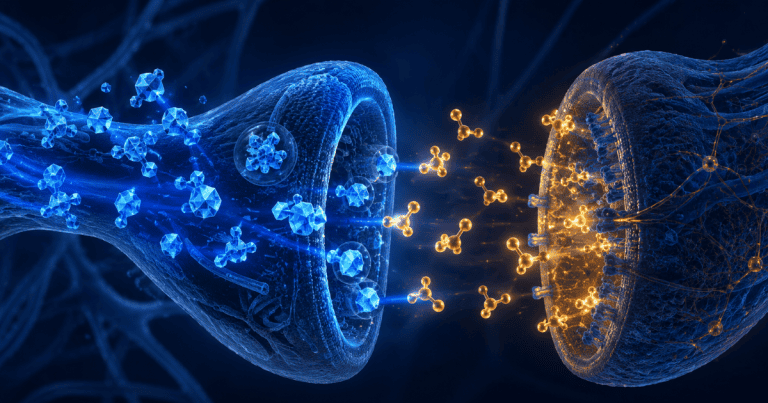
Magnesium is essential to brain function — it regulates NMDA receptors central to learning and memory, and supports synaptic plasticity. The problem the L-threonate form was built to solve is delivery. The blood-brain barrier tightly controls magnesium entry, so conventional supplements can raise blood magnesium substantially while brain and cerebrospinal-fluid magnesium barely move. L-threonate appears to raise brain magnesium more effectively than standard forms — that differential brain uptake is the entire rationale for the compound, and it’s the one claim the underlying science supports most clearly.
The foundational work is Slutsky and colleagues (2010) in Neuron, which showed that elevating brain magnesium in rodents increased synaptic density in the hippocampus and enhanced both short- and long-term memory (Slutsky et al., 2010). It’s elegant, mechanistically clear work — and it’s an animal study. Its senior author later co-founded the company that developed the Magtein® form, so while the science stands on its own, the commercial thread running through this entire evidence base is worth keeping in view as we move from rodents to people.
A note on precision: you’ll see specific figures quoted for exactly how much L-threonate raises brain magnesium versus how much conventional forms raise blood magnesium. The direction of that difference is well supported; the precise percentages circulating online are not consistently sourced, so this guide describes the effect qualitatively rather than repeating numbers it can’t stand behind.
Evidence hierarchy
🟢 Strong · 🟡 Promising / confounded · 🔴 Preclinical or commonly claimed but not supported
The two human trials — read them carefully
Liu et al. (2016) — the MMFS-01 trial
This is the study everything rests on, so it deserves precision. It was a randomised, double-blind, placebo-controlled trial in 44 older adults (aged 50–70) with cognitive complaints, given the MMFS-01 formula — magnesium L-threonate with small amounts of vitamin C and D — at a weight-adjusted 1.5–2g/day for 12 weeks. The treatment group improved on a composite of cognitive tests, with the clearest gains in executive function (Liu et al., 2016).
Where the “reverses nine years of ageing” claim comes from — and why to be careful with it. The study expressed its executive-function improvement on a modelled “brain age” scale, on which the gain corresponded to roughly nine years. That’s a striking way to present a real result, but it’s a derived figure, not a directly measured one, from a single trial of 44 people.
Three real caveats temper it — and one common criticism doesn’t apply. The sample was small and single-site. It was industry-funded — the senior author is the chief executive of Neurocentria, the company behind the Magtein®-based formula. And it has never been independently replicated. What doesn’t undermine it: although MMFS-01 also contained vitamins C and D, those were at deliberately low, nutritional doses the investigators stated were too small to affect cognition — included only to rule out vitamin-deficiency confounding — so this is, in effect, a magnesium-L-threonate result rather than a genuinely confounded one. Taken together, the real caveats place this firmly in “promising, needs independent replication,” not “proven.” That replication still hasn’t been published.
Zhang et al. (2022) — healthy adults, but a combination product
The more recent trial tested 109 healthy Chinese adults (18–65) at 2g/day for 30 days, and the treatment group improved across all five subcategories of a standard clinical memory test, with older participants improving most (Zhang et al., 2022). On its face this extends the benefit to a healthy population — welcome, given the first trial was in impaired older adults.
But the same funding caution applies, and one point is decisive: the intervention was Magtein®PS — magnesium L-threonate combined with phosphatidylserine plus vitamins C and D, not L-threonate alone. Unlike the trace vitamins in the older-adult trial, phosphatidylserine has its own real cognitive evidence, so this trial genuinely cannot tell you how much of the benefit came from the L-threonate. It’s supportive of the formula, not clean proof of the single ingredient — and, like the first trial, it’s connected to the ingredient’s commercial owner. A clean L-threonate trial in older adults plus a phosphatidylserine-confounded one in healthy adults is a real evidence base, but it is not the settled science the category’s marketing implies.
Who has the strongest case to try it
Following the evidence rather than the marketing: the group with the best case is older adults noticing early, age-related memory or executive-function slips, because that’s precisely who the main trial studied and where it found its clearest effect. If that’s you, L-threonate is a reasonable, low-risk thing to try for a few months and evaluate honestly.
For healthy younger adults the case is weaker — the one trial in that group can’t separate L-threonate from the phosphatidylserine it was combined with. It may still help; the point is you’d be trying it on thinner evidence, so keep expectations modest and be willing to conclude it does nothing for you. And a foundational check first: if your total magnesium intake is low, an ordinary well-absorbed form like glycinate corrects that far more cheaply, and fixing a genuine deficiency may do more for your brain than L-threonate’s specialised delivery. L-threonate is a targeted brain-magnesium tool, not a way to meet your daily magnesium needs — its elemental content is too low for that.
🧮 Worked example — reading a label so you actually get the studied dose
The single most common way people mis-dose L-threonate is by confusing the compound weight with the elemental magnesium, and labels are designed to encourage that. Here’s how to decode one:
Step 1 — find the L-threonate figure. The trials used ~2000mg of magnesium L-threonate (the compound) daily. So you want a product delivering about 2000mg of magnesium L-threonate per daily serving. Check the serving size — many products put ~1000mg per capsule, meaning two capsules make the studied dose, not one.
Step 2 — find the elemental magnesium figure. Roughly 2000mg of L-threonate yields about 144mg of elemental magnesium — about a third of a typical daily target. If a label shouts “2000mg” on the front but the supplement facts show ~144mg elemental, that’s correct and expected. If it shows a much higher elemental number, it’s blended with other magnesium forms — fine, but then it’s not a pure L-threonate product.
Worked case: a bottle says “Magtein® 2000mg” on the front. The facts panel lists “Magnesium L-Threonate 2000mg” and “Magnesium (elemental) 144mg” per two-capsule serving. That’s the real thing at the studied dose — and it tells you that you take two capsules, not one, and that this contributes only ~144mg toward your total magnesium, so you may still want a separate everyday magnesium source. A bottle showing “Magnesium 500mg” with no threonate figure at all is a different, cheaper product wearing similar packaging.
Named Protocol
The NeuroEdge Brain-Magnesium Protocol
A cautious, evidence-matched way to trial L-threonate — and to measure whether it’s doing anything for you.
Dose
~2000mg magnesium L-threonate (Magtein®) daily — the studied dose. Confirm the compound figure on the facts panel, not the front label.
Timing
Split the dose, weighting the evening portion, since many find it aids sleep. Consistency matters more than exact timing.
Trial length
Give it 8–12 weeks — the trials measured at 4–12 weeks — and track it properly. Anything shorter can’t tell you much either way.
Total magnesium
Remember this adds only ~144mg elemental. If your diet is low in magnesium, cover that separately rather than relying on L-threonate.

Peter’s Testing Notes
First-person, n=1 — reported honestly
I’ve run magnesium L-threonate in two extended blocks, at ~2000mg daily with the larger portion in the evening. The most reliable thing I can report isn’t cognitive at all — it’s that the evening dose seems to settle my sleep onset, and I’ve seen the vivid-dreams effect that other people describe. Whether that’s the L-threonate specifically or simply getting more bioavailable magnesium in the evening, I genuinely can’t say.
On cognition, I’ll be careful, because a previous version of these notes quoted a specific Creyos executive-function improvement percentage and I’ve removed it. I chose the on and off periods, I knew which block I was in, and I was actively hoping for the executive-function effect the MMFS-01 trial reports — which is exactly the setup that manufactures a positive result out of expectation. My honest read is a possible, modest sense of steadier focus during demanding weeks, entirely confounded, and nothing I’d present as a measured effect.
So my position is consistent with the evidence: I keep a bottle in rotation on the strength of a sound brain-delivery mechanism and a couple of promising-but-limited trials, plus a sleep effect I actually notice — not because I’ve proven anything about my own cognition. If you try it, I’d genuinely rather you treat it as a reasonable experiment than as a sure thing, and drop it without regret if a couple of months change nothing.
Sourcing: how to buy the right thing
This is where most of the money is wasted, in two directions. First, buying a general magnesium or “sleep” supplement that contains a cheaper form and assuming it delivers the brain-magnesium effect — it doesn’t, because the effect discussed here is specific to L-threonate. Second, overpaying for the L-threonate form when a standalone product would cost far less. The rule that avoids both:
Label check: the supplement facts must name magnesium L-threonate (Magtein® is the branded, trial-used form) · the compound figure should total ~2000mg per daily serving · expect ~144mg elemental magnesium — if the elemental figure is much higher, it’s blended with other forms · a third-party purity certificate is a plus. If a “brain” or “sleep” product doesn’t list L-threonate specifically, it is not this compound, whatever the front of the box implies.
No affiliate link in this section, on purpose. A standalone magnesium L-threonate (Magtein®) product from any reputable third-party-tested supplier is what matches the trials, and standalone is markedly cheaper than the multi-ingredient “brain” blends that fold in a token amount. Recommending a specific general magnesium or sleep product here would either misdirect you to something that doesn’t contain L-threonate at all, or upsell you into a formula you don’t need — so this guide points you at the label criterion instead of a checkout link. If you already take a broader stack, check whether its magnesium is actually L-threonate before assuming you’re covered.
How it tends to play out
Illustrative examples, not real individuals or testimonials. These are composite profiles built to show common usage patterns — they do not describe specific people and contain no invented outcomes presented as results. Individual responses vary; nothing here is a typical-results claim.
The older adult noticing slips
This is the profile the main trial matches most closely, so it’s the strongest case to try L-threonate for a few months and evaluate honestly. The realistic hope is a modest steadying of memory and focus — not a dramatic turnaround, and worth pairing with the basics of sleep and exercise that move cognition more.
The healthy optimiser
A younger, healthy person is trying it on thinner evidence, since the healthy-adult trial can’t isolate L-threonate from the phosphatidylserine it was combined with. Reasonable to experiment with, but with genuinely open expectations and a willingness to conclude it does nothing perceptible.
The one with low magnesium overall
Someone whose diet is genuinely low in magnesium may get more from correcting that with a cheap, well-absorbed everyday form than from L-threonate’s specialised delivery. L-threonate’s elemental content is too low to fix a deficiency — it’s the wrong tool for that job.
The one who bought the wrong bottle
Picking up a “brain sleep magnesium” product that turns out to contain glycinate or citrate — not L-threonate — is an easy way to conclude the compound doesn’t work when you never actually took it. The label check prevents it.
Cautions & Interactions
The stacking trap most people miss. Because L-threonate delivers so little elemental magnesium (~144mg per 2g), people often add it on top of another magnesium supplement — reasonable, but total elemental magnesium from supplements is what drives the main side effect. Add up every form you take: past roughly 350mg elemental from supplements, loose stools and cramping become likely. L-threonate alone rarely reaches that; L-threonate plus a separate 200–400mg magnesium can.
Kidney disease — the real contraindication. Healthy kidneys clear excess magnesium efficiently. Impaired kidneys don’t, so magnesium can build to dangerous levels. If you have any kidney condition, don’t supplement magnesium in any form without medical supervision.
Medication timing. Magnesium can reduce the absorption of certain antibiotics (quinolones and tetracyclines) and of bisphosphonates and some thyroid medication. Separate magnesium from these by at least a few hours. If you take sedatives or other central-nervous-system depressants, note L-threonate’s possible sleep effect and introduce it cautiously.
What to expect. Most people tolerate it well. Some report vivid dreams or mild grogginess with evening dosing, resolved by shifting more of the dose earlier. GI effects are dose-related and reversible.
This is not a complete list. If you take prescription medication or have a kidney or heart condition, check with your doctor or pharmacist before starting. See our nootropic safety guide for broader interaction principles.
Key takeaways
| → | The mechanism is real and distinctive — L-threonate raises brain magnesium where other forms mainly raise blood magnesium. That part is well supported (mostly in animals). |
| → | Human cognition evidence is two small, industry-connected trials, neither independently replicated — and the healthy-adult one combined L-threonate with phosphatidylserine, so its result can’t be pinned on the L-threonate. |
| → | The “reverses ~9 years of brain ageing” line is a modelled figure from one small trial — treat it as marketing, not established fact. |
| → | Dose ~2000mg L-threonate (Magtein®) daily — which is only ~144mg elemental magnesium, so it won’t fix a deficiency on its own. |
| → | Best case to try it: older adults with early memory complaints. Everyone else is experimenting on thinner evidence — which is fine, as long as you know it. |
Frequently asked questions
Is magnesium L-threonate actually proven to improve memory?
Not to a settled standard. The mechanism — raising brain magnesium — is well supported, mainly in animals. The human cognition evidence is two small trials: one in older adults with memory complaints, one in healthy adults. Both are promising and both are connected to the ingredient’s commercial owner, with no independent replication yet. The older-adult trial tested essentially L-threonate on its own — its added vitamins were deliberately too low to affect cognition — while the healthy-adult trial combined it with phosphatidylserine, so that one can’t isolate the L-threonate. The honest answer is “promising and mechanistically plausible, not proven.” That’s a reasonable basis to try it — it’s just not the certainty the marketing implies.
How is it different from magnesium glycinate or citrate?
They serve different purposes. Glycinate and citrate are well-absorbed everyday forms that efficiently raise body magnesium — good for correcting deficiency, muscle function, and (glycinate especially) sleep. L-threonate was engineered specifically to raise brain magnesium more effectively, which is why it’s the form discussed for cognition. But it carries little elemental magnesium, so it’s a poor choice for meeting daily requirements. Many people who care about both use glycinate for general magnesium and sleep, and consider L-threonate separately as a targeted cognitive experiment. See magnesium glycinate for sleep for that side.
Does the “2000mg” on the label mean 2000mg of magnesium?
No — and this is the most important label lesson. That figure refers to the magnesium L-threonate compound, not the magnesium in it. Magnesium L-threonate is only about 7–8% magnesium by weight, so 2000mg of the compound provides roughly 144mg of elemental magnesium. That’s the studied dose and it’s correct — but it means the product is not a high-dose magnesium supplement, and you shouldn’t rely on it to meet your daily magnesium needs. Always read the elemental magnesium line in the supplement facts, not the headline number on the front.
When should I take it, and will it affect my sleep?
Many people split the dose and take the larger portion in the evening, because magnesium can support relaxation and sleep onset. Some report vivid dreams or slight morning grogginess with evening dosing — if that happens, move more of the dose to earlier in the day. There’s no strict timing requirement for the cognitive angle, since it works through gradually raised brain magnesium rather than an acute effect, so consistency day to day matters more than the exact hour.
Can magnesium L-threonate prevent Alzheimer’s or dementia?
There’s no human evidence to support that, and it shouldn’t be taken or recommended as a dementia intervention. The interest comes from preclinical work on synaptic density and some observational associations between magnesium status and brain health generally — but that’s a long way from disease-prevention evidence in people, which does not exist for this compound. If dementia risk is your concern, the interventions with actual evidence are cardiovascular health, exercise, sleep, and social and cognitive engagement, covered in our cognitive decline prevention guide.
Get “7 Days to a Sharper Brain” — Free
Peter Benson’s personal daily protocol, rebuilt from 18 years of testing
Seven evidence-based interventions, in the exact order that makes each one more effective — from sleep foundation to your complete assembled daily stack.
Join 2,000+ readers optimising their cognitive performance. Unsubscribe anytime.
Scientific references
1. Slutsky, I., Abumaria, N., Wu, L. J., et al. (2010). Enhancement of learning and memory by elevating brain magnesium. Neuron, 65(2), 165–177. PMID: 20152124 (animal study)
2. Liu, G., Weinger, J. G., Lu, Z. L., Xue, F., & Sadeghpour, S. (2016). Efficacy and safety of MMFS-01, a synapse density enhancer, for treating cognitive impairment in older adults: A randomised, double-blind, placebo-controlled trial. Journal of Alzheimer’s Disease, 49(4), 971–990. PMID: 26519439 (industry-funded; MgT + low-dose vitamins C/D)
3. Zhang, C., Hu, Q., Li, S., et al. (2022). A Magtein®, magnesium L-threonate, -based formula improves brain cognitive functions in healthy Chinese adults. Nutrients, 14(24), 5235. PMID: 36558392 (tested Magtein + phosphatidylserine + vitamins; industry-connected)
4. Abbasi, B., Kimiagar, M., Sadeghniiat, K., et al. (2012). The effect of magnesium supplementation on primary insomnia in elderly. Journal of Research in Medical Sciences, 17(12), 1161–1169. PMID: 23853635
5. National Institutes of Health, Office of Dietary Supplements. Magnesium — Health Professional Fact Sheet. NIH ODS
Peter Benson
Cognitive Enhancement Researcher | 18+ Years Independent Research
Peter has trialled magnesium L-threonate across two extended periods. This guide was re-verified against source and revised to correct a mis-cited PMID and sample size, disclose the industry funding behind the key trials, and flag that the healthy-adult study combined L-threonate with phosphatidylserine. He is not a clinician; this is educational, not medical advice.
Last reviewed: July 2026