Sleep and Cognitive Performance: The Neuroscience of What Sleep Deprivation Does to Your Brain
Affiliate Disclosure: Some links on this page are affiliate links. If you purchase through them, NeuroEdge Formula earns a small commission at no extra cost to you. Peter only links products he has personally tested and that meet this site’s sourcing standards.
⚕️ Educational Information, Not Medical Advice
This guide to sleep and cognitive performance is educational and not medical advice. Persistent sleep problems that meaningfully affect your cognition or daily life warrant evaluation by a qualified healthcare provider — insomnia, sleep apnoea and other sleep disorders are treatable. Peter Benson is a cognitive enhancement researcher, not a medical doctor.
Sleep and Cognitive Performance: The Quantified Cost of Poor Sleep
By Peter Benson, Cognitive Enhancement Researcher | 18+ Years Independent Research · Last reviewed & citations verified: August 2026
The relationship between sleep and cognitive performance is not a soft wellness observation — it’s one of the most rigorously quantified cause-and-effect relationships in neuroscience. We have precise data on how specific sleep durations impair specific cognitive domains, how chronic restriction accumulates deficits invisibly, and how sleep extension improves measurable performance in ways no supplement has replicated. The through-line across all of it is uncomfortable: sleep is the foundation every other cognitive-enhancement intervention builds on, and the impairment from losing it is largely invisible to the person experiencing it.
This article covers the quantified costs of sleep loss, the brain mechanisms behind them, and the uplift data from sleep optimisation — the evidence-based case for treating sleep as a cognitive tool rather than a passive health behaviour. For the practical “what to do tonight” side, the companion pieces handle that: see the Sleep & Recovery hub for the full framework, and how to fall asleep faster for the techniques.
The cognitive cost — what the research actually shows
Sleep deprivation vs. alcohol
Williamson & Feyer (2000) — staying awake mimics intoxication
This study tested the same people’s cognitive and motor performance across 28 hours of wakefulness and after measured doses of alcohol. After 17–19 hours awake, performance on some tests was equivalent to or worse than a blood-alcohol concentration of 0.05% — response speeds up to 50% slower. By around 24 hours, impairment reached roughly 0.10% BAC, above the legal driving limit in most places. Critically, participants didn’t feel as impaired as their objective scores showed. That gap between perceived and actual impairment is the most practically dangerous finding in the field: sleep-deprived people routinely believe they’re functioning normally.
Williamson & Feyer. Occup Environ Med. 2000;57(10):649–655. PMID 10984335
Chronic restriction
Van Dongen et al. (2003) — 6 hours a night quietly compounds
Participants were assigned to 4, 6, or 8 hours in bed for 14 nights, with daily cognitive testing. The 6-hour group’s performance declined steadily across the two weeks, reaching deficits comparable to roughly two nights of total sleep deprivation; the 4-hour group fared worse. The alarming part was subjective: the 6-hour group’s sense of sleepiness levelled off after a few days — they stopped feeling worse — while their objective performance kept deteriorating. The distance between how impaired they felt and how impaired they were grew throughout. This is why so many capable people genuinely believe they thrive on 6 hours: the impairment is real and measurable, but the perception of it fades.
Van Dongen HP, et al. Sleep. 2003;26(2):117–126. PMID 12683469
Performance uplift
Mah et al. (2011) — sleep extension raised elite performance
Eleven Stanford varsity basketball players extended their sleep (aiming for ~10 hours in bed) for 5–7 weeks after a baseline period, adding about 111 minutes of actual sleep a night. Against their own baseline, free-throw accuracy improved 9% and three-point accuracy 9.2%; their timed sprint dropped from 16.2 to 15.5 seconds (about 0.7 seconds faster); and reaction time and mood both improved. These were already-trained elite athletes — the gains came from sleep alone, no extra training or supplementation. It’s the clearest demonstration that many high performers sit well below their ceiling on accumulated sleep debt, and that restoring sleep produces measurable uplift with no other change.
Emotional regulation
Yoo et al. (2007) — one bad night, a ~60% more reactive amygdala
Using fMRI, this study found that after one night of sleep deprivation, the amygdala showed about 60% greater activation to negative images than in rested controls. At the same time, functional connectivity between the amygdala and the medial prefrontal cortex — the top-down pathway that lets reason override emotional reactivity — was reduced. So sleep loss both amplifies emotional reactivity and weakens the cortical brake on it. This helps explain why sleep-deprived people make more reactive decisions and judge situations less well — deficits that stack on top of the attention and working-memory costs, degrading complex performance at several levels at once. (For the memory side of this, see sleep and memory consolidation.)
Yoo SS, et al. Curr Biol. 2007;17(20):R877–R878. PMID 17956744
Which domains take the biggest hit
🔴 Severely impaired | 🟡 Moderately impaired | 🟢 Relatively spared.
Ratings reflect the general direction and relative severity across the cited literature, not a single fixed effect size — magnitudes vary by task, individual and exact protocol.
Worked example — detecting sleep debt you can’t feel
The Van Dongen finding has a sharp practical consequence: your own sense of how sharp you are becomes unreliable exactly when you most need it. So the method here isn’t “notice you’re tired” — it’s building a measurement you can trust more than your feelings.
Step 1 — Establish an objective baseline while well-rested. For a week of consistent 7.5–8 hour nights, take a short daily objective measure at the same time each morning — a reaction-time / working-memory task (Creyos or similar), or even a consistent timed task you already do. This is your reference, taken when you know you’re recovered.
Step 2 — Log sleep and score together. Keep tracking the same measure through normal life, alongside your actual sleep (a wearable helps, but a written log works). You’re building a personal dataset that pairs sleep with next-day performance.
Step 3 — Watch the trend during a busy stretch. When a high-load period pushes your sleep down, don’t ask “do I feel okay?” — check whether your objective score is drifting below baseline. That drift is the signal self-report will miss. This is the whole point: catching the decline before it produces a costly error.
Step 4 — Act on the number, not the feeling. If the trend is down, protect sleep the way you’d protect any other input to your work — and remember recovery is slow (Cohen et al., 2010), so treat it as a floor to defend rather than a debt to repay later. The tool isn’t the tracker; it’s the decision to trust the measurement over the mood.
The NeuroEdge Protocol
The NeuroEdge Sleep Performance Protocol
Treating sleep as a cognitive-performance intervention — from the non-negotiable floor to pre-event extension. Peter Benson’s active protocol, updated August 2026.
Non-negotiable floor
7–9 hours, with a consistent wake time. The threshold that avoids the deficits in Van Dongen (2003) and Williamson & Feyer (2000). A steady wake time matters more than a steady bedtime — vary bedtime by up to ~30 min, not wake time.
Quality layer
Cool, dark room; consistent wind-down. A bedroom around 18–19°C, genuine darkness, and a repeatable pre-sleep routine do more for deep-sleep quality than any pill. See the sleep-tonight guide for the full sequence; magnesium sourcing is below.
Pre-event extension
Extend sleep for weeks before big events. The Mah (2011) approach applied to cognition: bank extra sleep in the weeks before major presentations, negotiations or decisions. The uplift is real, but it builds — it isn’t a one-night fix.
Debt detection
Measure, don’t self-assess. Because subjective judgement fails (Van Dongen), track an objective score against your baseline (see the worked example) and pair it with HRV trends as a recovery proxy.
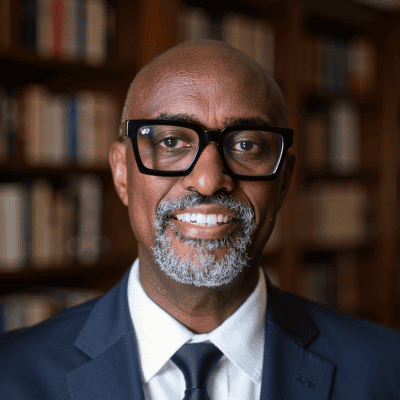
Peter’s Testing Notes — sleep & cognition
26+ months Oura · Creyos since 2022 · first-person, n=1
The most consistent relationship in my own paired Oura/Creyos data is between deep-sleep duration and next-morning working memory: on my low deep-sleep nights, my working-memory scores tend to run clearly below my personal baseline; on high deep-sleep nights, at or above it. I’m reporting direction rather than fixed percentages — the exact numbers are personal, and I’d rather you build your own baseline than anchor to mine. What makes it convincing to me is that it’s a within-subject effect across a lot of nights: same brain, same test, same morning routine, with sleep as the main thing that varies.
On the quality layer, the environmental basics — a cool, dark room and a consistent wind-down — move my deep-sleep numbers more reliably than anything I take. Magnesium glycinate before bed seems to help at the margin (sourcing below), but I treat it as a minor support, not the mechanism. The heavy lifting is duration and consistency.
The single most useful thing I’ve internalised is the Van Dongen point about subjective adaptation. During deadline stretches on short sleep I’ve felt alert and capable while my objective scores said otherwise. Knowing that my self-assessment gets less reliable as debt accumulates is what pushed me toward external measurement instead of “how do I feel?” as the basis for sleep decisions. (Direction-only notes — no fixed figures; specific logged numbers only if I publish the underlying data.)
Sourcing standards
To be clear about the hierarchy: duration and consistency do the work here, and no supplement substitutes for them. If you do use magnesium as a quality aid, the criteria that matter are the chelated glycinate form (not oxide or citrate), elemental magnesium declared separately from compound weight, and third-party testing. This is the only section of the article with a product link.
Magnesium glycinate — quality aid, not the foundation
Keep to 200–350 mg of elemental magnesium (supplemental magnesium above ~350 mg/day is where loose stools and other effects appear; it can also interact with some antibiotics and bisphosphonates and needs care in kidney impairment). The one I use is Nootropics Depot Magnesium Glycinate — chelated form, elemental dose labelled, COA available.
Key takeaways
| → | 17 hours awake impairs you to roughly a 0.05% blood-alcohol level (Williamson & Feyer, 2000) — and the impaired person can’t accurately gauge their own state. The perceived-vs-actual gap is the most dangerous feature for high performers. |
| → | Six hours a night for two weeks produced deficits comparable to roughly two nights of total sleep deprivation — while subjective sleepiness adapted away (Van Dongen et al., 2003). Feeling fine on 6 hours is a symptom, not a defence. |
| → | Sleep extension produced measurable uplift in trained athletes from sleep alone — free-throw +9%, three-point +9.2%, faster sprints and reaction times (Mah et al., 2011). The same logic applies to knowledge work. |
| → | One poor night raises amygdala reactivity ~60% while weakening prefrontal control (Yoo et al., 2007). Sleep-deprived decisions aren’t just slower — they’re more emotionally biased. And recovery from chronic debt is slow and incomplete (Cohen et al., 2010). |
| → | No nootropic compensates for inadequate sleep. Caffeine masks sleepiness without restoring higher cognition. Sleep is the non-negotiable foundation everything else builds on. |
Frequently asked questions
How does lack of sleep affect cognitive performance?
Across multiple domains at once. Sustained attention degrades first and most severely; working memory and executive function follow; emotional regulation is disrupted, with amygdala reactivity rising about 60% after one poor night while prefrontal control drops (Yoo et al., 2007). Processing speed slows and new-learning consolidation suffers. The headline from Williamson & Feyer (2000): 17–19 hours awake produces impairment equivalent to a 0.05% blood-alcohol level — and the impaired person can’t reliably self-assess.
Can you really function well on 6 hours of sleep?
For almost everyone, no. Van Dongen et al. (2003) found 6 hours a night for two weeks produced deficits comparable to roughly two nights of total sleep deprivation — and, crucially, the 6-hour group stopped feeling sleepy after a few days while their performance kept declining. The belief that you’re fine on 6 hours is often a symptom of the impairment: the awareness that would flag it is itself impaired. A rare genetic minority — a fraction of a percent of people — carry short-sleep gene variants; for essentially everyone else, 6 hours produces measurable, cumulative deficits.
Does sleep deprivation affect decision-making?
Yes, through several mechanisms at once. Prefrontal hypometabolism reduces the executive control that governs complex, multi-step analysis. Reduced prefrontal–amygdala connectivity (Yoo et al., 2007) means emotional inputs to decisions are amplified while the cognitive override is weakened — producing choices that are more reactive and less well-calibrated to actual risk. Sleep-deprived people also tend toward short-term reward over long-term outcomes. The result is decision-making that’s qualitatively different, not just slower.
How much sleep do you need for optimal cognitive performance?
For most adults, 7–9 hours — the range where working memory, executive function and emotional regulation operate without accumulating the deficits seen in restriction studies. Individual variation within that band is real; some do best at 7, others at 9. The most reliable way to find yours is to track cognitive performance objectively at different durations over several weeks (see the worked example above), rather than trusting how rested you feel — which the Van Dongen research shows is unreliable.
Can caffeine compensate for poor sleep?
Only partly, and not where it matters most. Caffeine blocks adenosine, which reduces the feeling of sleepiness and can partly restore simple vigilance — but it doesn’t restore working memory and executive function to rested levels. A sleep-deprived person on caffeine feels less tired while still performing below their rested baseline on higher-order tasks. It’s a useful tool for managing acute alertness in an unavoidable pinch, not a substitute for sleep, and it shouldn’t become a chronic compensatory crutch. Best used as an enhancer on top of adequate sleep, not a replacement for it.
Get “7 Days to a Sharper Brain” — Free
Peter Benson’s personal daily protocol, rebuilt from 18 years of testing.
✓ Day 1 — Sleep foundation + Magnesium Glycinate
✓ Day 2 — L-Theanine + Caffeine focus stack
✓ Day 3 — Brain nutrition timing for stable energy
✓ Day 4 — BDNF movement protocol
✓ Day 5 — 90-60-30 sleep environment sequence
✓ Day 6 — Stress resilience + cognitive load framework
✓ Day 7 — Neuroplasticity, Lion’s Mane + your complete assembled daily stack
Join 2,000+ readers optimising their cognitive performance. Unsubscribe anytime.
Scientific references
1. Williamson, A. M., & Feyer, A. M. (2000). Moderate sleep deprivation produces impairments in cognitive and motor performance equivalent to legally prescribed levels of alcohol intoxication. Occupational and Environmental Medicine, 57(10), 649–655. PMID 10984335
2. Van Dongen, H. P., Maislin, G., Mullington, J. M., & Dinges, D. F. (2003). The cumulative cost of additional wakefulness: dose-response effects on neurobehavioral functions and sleep physiology from chronic sleep restriction and total sleep deprivation. Sleep, 26(2), 117–126. PMID 12683469
3. Mah, C. D., Mah, K. E., Kezirian, E. J., & Dement, W. C. (2011). The effects of sleep extension on the athletic performance of collegiate basketball players. Sleep, 34(7), 943–950. PMID 21731144
4. Yoo, S. S., Gujar, N., Hu, P., Jolesz, F. A., & Walker, M. P. (2007). The human emotional brain without sleep — a prefrontal amygdala disconnect. Current Biology, 17(20), R877–R878. PMID 17956744
5. Cohen, D. A., Wang, W., Wyatt, J. K., Kronauer, R. E., Dijk, D. J., Czeisler, C. A., & Klerman, E. B. (2010). Uncovering residual effects of chronic sleep loss on human performance. Science Translational Medicine, 2(14), 14ra3. PMID 20371466
Peter Benson
Cognitive Enhancement Researcher | 18+ Years Independent Research
Peter has tracked sleep with an Oura Ring for 26+ months and cognition via Creyos since 2022, building a paired dataset that mirrors the sleep–cognition relationships in the research cited here. The personal findings are from his own data, reported as direction rather than fixed figures.
Last reviewed: August 2026 | Educational content only. Not medical advice.