
Best Nootropics for Beginners — NeuroEdge Formula
Medical Disclaimer: The information on this page is for educational purposes only and does not constitute medical advice. Consult a qualified healthcare provider before beginning any supplement regimen, especially if you have pre-existing conditions or take medications. Start with the lowest recommended dose, introduce compounds one at a time, and source exclusively from third-party tested suppliers.
🧠 Nootropics & Supplements Guide
Most Nootropics Fail Because People Skip the Science Behind How They Work.
The nootropics market is flooded with products making extraordinary claims backed by little more than marketing copy. After 18+ years of personally researching, testing, and tracking cognitive enhancement compounds — with documented before-and-after measurements across hundreds of self-experiments — I can tell you with confidence: the gap between what most nootropics claim and what the research actually supports is substantial. But the compounds that do work, used correctly, produce real and measurable results.
The problem isn’t that nootropics don’t work — it’s that most people approach them backwards. They start with the latest trending compound instead of the most-researched ones. They stack multiple new compounds simultaneously and can’t isolate what’s doing what. They expect immediate effects from compounds that require weeks of consistent use to produce results. And they skip the fundamentals — sleep quality, exercise, and nutrition — that determine whether any nootropic has a foundation to build on.
“A nootropic doesn’t replace the cognitive capacity you should have. It amplifies the cognitive capacity you’ve already built. The compounds that produce the most reliable results in my testing are the ones with the clearest research mechanisms — and those are rarely the most marketed ones.”
This guide covers what I consider the evidence hierarchy for nootropics: which compounds have the strongest research support, how they work mechanistically, realistic expectations for each one, and how to build a personal stack systematically rather than haphazardly. If you’re looking for the advanced stacking and biohacking protocols that go beyond foundational supplementation, that’s covered in the Biohacking & Advanced Protocols hub. Here, we start with the compounds that have earned their place through evidence, not hype.
What you’ll find in this guide:
- How nootropics actually work — the neurotransmitter and neuroplasticity mechanisms that matter
- The six best-evidenced nootropics with realistic expectations and dosing protocols
- Why the L-Theanine + Caffeine stack remains the most reliable cognitive intervention available
- How to evaluate supplement quality and avoid the sourcing mistakes that render compounds useless
- A 12-week beginner stack protocol built on single-variable testing methodology
How Nootropics Actually Work
The term “nootropic” was coined in 1972 by Romanian psychologist Dr. Corneliu Giurgea, who defined specific criteria: the compound must enhance learning and memory, protect the brain under disruptive conditions, facilitate inter-hemispheric transfer of information, increase cortical control of subcortical activity, and exhibit low toxicity. That’s a high bar — and most compounds marketed as nootropics today don’t fully meet it. Understanding the mechanisms that do work is the foundation of intelligent supplementation.
The Three Mechanisms That Matter
Mechanism 1 — Neurotransmitter Modulation
Acetylcholine (learning/memory), dopamine (motivation/drive), serotonin (mood/cognition), GABA (calm focus)
Mechanism 2 — Neuroplasticity Support
BDNF production, NGF synthesis, neurogenesis support, synaptic density — the long-game compounds
Mechanism 3 — Neuroprotection & Brain Energy
Oxidative stress reduction, mitochondrial ATP production, cerebral blood flow, anti-inflammatory action
The Evidence Hierarchy
Not all research is equal. A single rat study showing memory improvement tells us far less than a double-blind, placebo-controlled human trial with objective cognitive testing. After years of reading the literature, I apply a simple hierarchy: randomized controlled trials in humans with validated cognitive tests at the top; mechanistic human studies with biomarker outcomes in the middle; animal and in vitro studies as hypothesis-generators only at the bottom. Most nootropic marketing leans heavily on the third category while implying the first. The compounds covered in this guide have human RCT evidence — that’s the filter that matters.
One more principle before diving into compounds: nootropics are amplifiers, not foundations. In my own testing and in the research, the cognitive enhancement from even the best nootropics — perhaps 10–20% above your baseline — is consistently smaller than the improvement available from fixing poor sleep, inconsistent exercise, or chronic dehydration. The stack protocols here assume you’re already working on those foundations. If you’re not, start there. The Brain Health & Longevity hub covers the behavioral foundation in full.
Quality: Where Most Protocols Fail Before They Start
Supplement quality varies more dramatically than most people realize. The FDA does not evaluate dietary supplements for efficacy before sale, and third-party testing consistently reveals significant discrepancies between label claims and actual contents — including under-dosing, contamination, and in some cases complete absence of the listed compound. The standard I apply to everything I use personally: third-party Certificate of Analysis (COA) available on request; standardized extracts with specific active compounds listed (not just total extract weight); no proprietary blends hiding individual ingredient amounts; and established suppliers with transparent sourcing (Nootropics Depot, NSF- or USP-certified manufacturers).
🧠 6 Key Concepts in Nootropics & Supplements
The evidence-backed compounds and principles that separate real cognitive enhancement from expensive placebos.
01 / Stack Guide
L-Theanine + Caffeine — The Gold Standard Stack
If I could recommend only one nootropic intervention to every person asking where to start, it would be this combination. Research consistently demonstrates that L-Theanine (an amino acid found naturally in tea) combined with caffeine produces synergistic improvements in attention, focus, and reaction time that neither compound achieves alone. Studies show the combination improves attention switching and reduces susceptibility to distracting stimuli — real outcomes on validated cognitive tests, not subjective ratings. The mechanism: caffeine blocks adenosine receptors for wakefulness and focus; L-Theanine increases alpha brainwave activity (associated with calm, alert focus) and dampens the anxiety and jitteriness that caffeine alone produces.
Protocol: 100mg caffeine + 200mg L-Theanine (1:2 ratio), taken 90–180 minutes after waking (after morning cortisol has peaked). Effects within 30–60 minutes. This is also the most cost-effective nootropic intervention I’ve tested across 18+ years — roughly $0.20–0.40 per dose from bulk suppliers.
Deep Dive: L-Theanine + Caffeine Stack Guide →02 / Research Review
Lion’s Mane Mushroom — The Neuroplasticity Compound
Lion’s Mane (Hericium erinaceus) is the most compelling neuroplasticity compound in the nootropics research literature. Its active compounds — hericenones and erinacines — stimulate Nerve Growth Factor (NGF) synthesis, a protein essential for the growth, maintenance, and survival of neurons. Research demonstrates NGF synthesis stimulation with regular use, supporting hippocampal neurogenesis and myelination (the protective sheath around nerve fibers). A 2023 RCT in young adults showed acute and chronic cognitive improvements in working memory and stress markers at 1.8g daily. Additional research confirms both neurotrophic and neuroprotective effects.
The critical timing expectation: Lion’s Mane is not an acute cognitive booster. Effects build progressively over 8–16 weeks of consistent daily use. Protocol: 1000mg daily standardized extract with breakfast. Source matters enormously — choose products with verified beta-glucan content from third-party tested suppliers.
Deep Dive: Lion’s Mane Complete Research Review →03 / Dosage & Research Guide
Bacopa Monnieri — Memory & Long-Term Learning
Bacopa Monnieri has the strongest body of evidence of any herbal nootropic for memory enhancement in humans. Used in Ayurvedic medicine for centuries, it’s now backed by multiple meta-analyses of randomized controlled trials showing significant improvements in memory acquisition and retention. The active compounds (bacosides) enhance synaptic communication by supporting acetylcholine synthesis and reducing acetylcholinesterase activity — the enzyme that breaks down acetylcholine. Trials in older adults show particular benefit for memory formation and anxiety reduction.
Protocol: 300mg daily of standardized extract (45% bacosides) taken with a meal containing fat. Minimum 8 weeks before evaluating effect; 12 weeks for full assessment. One side effect worth noting: Bacopa can cause GI discomfort in some people, particularly on an empty stomach. Taking it with food essentially eliminates this. For strategies to maximize what Bacopa supports, see the Memory & Learning Enhancement hub.
Deep Dive: Bacopa Monnieri Dosage & Research Guide →04 / Complete Guide
Omega-3 DHA/EPA — Structural Brain Nutrition
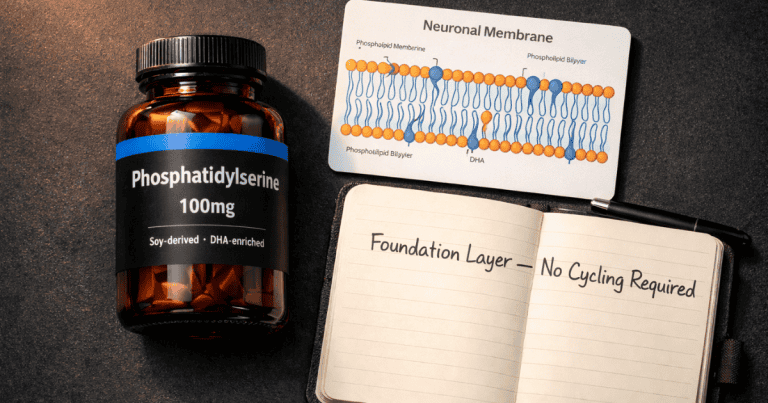
I categorize Omega-3s separately from most nootropics because they’re less an enhancement and more an essential nutrient that the brain structurally requires. DHA (docosahexaenoic acid) makes up 30–40% of the brain’s gray matter fatty acid content — it’s a literal building material for neuronal membranes. Inadequate DHA produces measurably less fluid, less responsive neuron membranes, impairing neurotransmitter receptor function and synaptic plasticity. EPA provides the anti-inflammatory benefit, reducing neuroinflammation that impairs cognitive function. Systematic reviews demonstrate improvements in executive function, processing speed, and cerebral blood flow with consistent supplementation.
Protocol: 2000mg combined EPA+DHA daily, taken with the largest meal of the day to improve absorption. Quality is non-negotiable — fish oil oxidizes easily, and oxidized fish oil is worse than no supplementation. Choose pharmaceutical-grade, third-party tested products. For the complete neuroprotection context, see Brain Health & Longevity.
Deep Dive: Complete Omega-3 Guide for Brain Health →05 / Research Review
Creatine — Brain Energy & Working Memory
Creatine is widely known as a sport performance supplement, but its cognitive benefits are supported by a growing body of evidence that makes it one of the most underrated nootropics available. The mechanism is direct: the brain relies heavily on ATP (cellular energy currency), and creatine supplementation increases phosphocreatine stores in the brain, enhancing ATP availability for demanding cognitive tasks. A 2023 meta-analysis confirmed statistically significant improvements in memory performance (SMD = 0.29, p = 0.02), with particularly pronounced effects in older adults (SMD = 0.88) and during mentally fatiguing tasks.
Protocol: 3–5g of creatine monohydrate daily, taken consistently with water — timing is not critical for cognitive benefits. No loading phase required; steady daily intake produces the same brain creatine saturation over 2–4 weeks. Creatine monohydrate is the best-studied form; more expensive variants have no proven advantage for cognitive outcomes. The memory implications are covered in depth in Memory & Learning Enhancement.
Deep Dive: Creatine for Cognitive Performance →06 / Stack Guide
Alpha-GPC & Rhodiola — The Intermediate Tier
Once you’ve assessed the foundational compounds individually (typically at 8–12 weeks), these two represent the logical next layer for most cognitive optimizers. Alpha-GPC (glycerophosphocholine) is a highly bioavailable choline source that crosses the blood-brain barrier and directly supports acetylcholine synthesis — the neurotransmitter most associated with learning, memory formation, and sustained attention. Dosage: 300–600mg, 30–60 minutes before cognitively demanding work. It pairs particularly well with the L-Theanine + Caffeine stack, as caffeine increases acetylcholine demand and Alpha-GPC ensures the precursor supply is adequate.
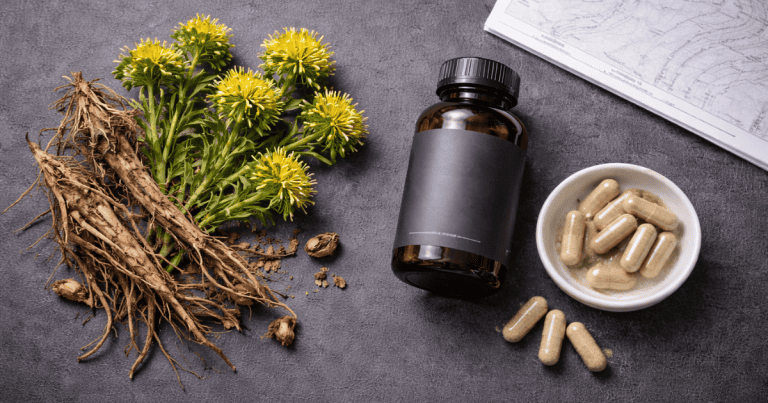
Rhodiola Rosea is an adaptogenic herb with consistent evidence for reducing mental fatigue during sustained cognitive work and improving performance under stress. Studies in fatigued professionals show meaningful improvements in sustained attention and mental performance. Dosage: 300–500mg standardized to 3% rosavins and 1% salidroside, taken in the morning. For focus-specific stacking see the Focus & Productivity Optimization hub.
Deep Dive: Alpha-GPC & Rhodiola Stack Guide →Your First 12 Weeks — Beginner Stack Protocol
One compound at a time. One variable at a time. No shortcuts on the assessment windows.
Step 1 — Weeks 1–2: Baseline Measurement & Foundations
Before adding anything, establish your baseline. Take a cognitive assessment (Cambridge Brain Sciences is free and comprehensive, or use Dual N-Back for working memory focus). Rate your daily focus quality, mental clarity, afternoon energy, and mood on a 1–10 scale each morning. Track sleep quality. This data is what makes subsequent changes meaningful. Without baseline, you’re guessing. Simultaneously: ensure sleep is 7–8 hours and consistent, exercise is happening at least 3× per week, and hydration is adequate (16oz water upon waking).
Step 2 — Weeks 3–4: Introduce L-Theanine + Caffeine
Start with 100mg caffeine + 200mg L-Theanine, taken 90–180 minutes post-waking on days when you have cognitively demanding work. Continue daily tracking and weekly cognitive testing. This is the fastest feedback compound — most people notice a real effect within the first use. The two-week window lets you assess whether it produces consistent improvements across different days and contexts rather than just first-use novelty. Adjust caffeine down to 50mg if you’re sensitive.
Step 3 — Weeks 5–6: Add Omega-3 & Creatine
Add Omega-3 (2000mg combined EPA+DHA) and Creatine (5g monohydrate) simultaneously — both can be introduced together because they work through distinct, non-interacting mechanisms and neither produces acute effects that would be hard to distinguish from each other. Both are taken with breakfast. Don’t expect acute cognitive effects from either — these are foundational, structural compounds whose full benefits emerge over 4–8 weeks.
Step 4 — Weeks 7–10: Introduce Lion’s Mane & Bacopa
Add Lion’s Mane (1000mg at breakfast) in Week 7, then Bacopa (300mg at breakfast with fat) in Week 9. Give each compound 2 weeks of solo observation before adding the next. These are the compounds that require the most patience — and where most people make the mistake of quitting too early. Neither produces a clearly felt acute effect. Track your weekly cognitive test scores specifically; these are the metrics where gradual improvements from Lion’s Mane and Bacopa first show up.
Step 5 — Weeks 11–12: Full Stack Assessment & Refinement
Compare Week 12 cognitive test scores, subjective ratings, and sleep metrics against your Week 1–2 baseline. The complete stack at this point: Omega-3 (2000mg) + Creatine (5g) + Lion’s Mane (1000mg) + Bacopa (300mg) daily with breakfast, plus L-Theanine (200mg) + Caffeine (100mg) on-demand before focused work. This is a complete, well-researched, mechanism-diverse beginner stack. If specific metrics haven’t improved, consider whether that compound is earning its place. For more advanced stacking, see Biohacking & Advanced Protocols.
⬇ Free Download
Start Your Stack the Right Way
Download “The 7-Day Brain Optimization Protocol” — the complete 7-day protocol including your first strategic nootropic stack, safety protocols, and quality sourcing guide.
- ✓ 7-Day Diet Protocol — foods and nutrients that directly support brain performance
- ✓ Safety Checklist — avoid the most costly beginner mistakes
- ✓ Quality Source Guide — where to buy supplements you can trust
- ✓ 12-Week Implementation Protocol — step-by-step single variable system
- ✓ Baseline Tracking Templates — measure real results, not guesses
One email gets you both. No spam, ever. Unsubscribe anytime.
Frequently Asked Questions About Nootropics
What exactly is a nootropic — does anything qualify?
The term was coined by Dr. Corneliu Giurgea in 1972 with specific criteria: enhance learning and memory, protect the brain under disruptive conditions, show low toxicity, and have minimal side effects. By this strict definition, most products marketed as nootropics don’t qualify. In common usage, the term broadly covers any substance that may enhance cognitive function. My working definition: a nootropic is a compound with human RCT evidence for at least one measurable cognitive outcome, with an acceptable safety profile. That filter narrows the field considerably but points directly to compounds that actually work.
What’s the best nootropic for beginners?
L-Theanine + Caffeine (100mg caffeine, 200mg L-Theanine) is the best starting point for most people — it has the strongest human evidence, produces noticeable effects within a single dose, and costs almost nothing. If you’re caffeine-sensitive, start with L-Theanine alone (200mg). For those who want to begin building the long-term neuroplasticity layer simultaneously, adding Lion’s Mane (1000mg daily) from the start is reasonable — just don’t expect Lion’s Mane to produce effects in the first few weeks. These two tiers together — one acute, one long-term — cover the most evidence-backed ground available at a beginner level.
How long before I see results from nootropics?
It depends entirely on the compound. Acute effects compounds (L-Theanine + Caffeine, Rhodiola): within 30–90 minutes of the first dose. Neuroplasticity compounds (Lion’s Mane, Bacopa): 6–12 weeks minimum for measurable effects. Structural nutrients (Omega-3, Creatine): Creatine brain saturation takes 2–4 weeks; Omega-3 structural effects are months-long and measured against long-term cognitive trajectory. The most common mistake is discontinuing a compound in the first 2–3 weeks because “nothing is happening” — for most compounds, nothing is supposed to feel dramatically different immediately.
How do I know if a supplement is high quality?
Four non-negotiables: (1) Third-party Certificate of Analysis (COA) available — this verifies the product contains what it claims, at the stated amount, without contaminants. (2) Standardized extracts with active compound percentages listed. (3) No proprietary blends — these hide individual ingredient amounts behind a total blend weight, making dosing impossible. (4) Established suppliers with transparent manufacturing practices — Nootropics Depot, NSF-certified manufacturers, and companies that publish their testing data publicly.
Is it safe to combine nootropics into a stack?
Yes — with a methodology-first approach. The rule that matters most: introduce one compound at a time with a minimum 10–14 days before adding the next. This isolates each compound’s effect and any side effects, so you know what’s doing what. The compounds in the beginner stack outlined above have no known adverse interactions with each other at standard doses. Where stacking becomes problematic is when people add multiple stimulants or multiple cholinergics simultaneously — stacking three compounds that all raise acetylcholine doesn’t triple the benefit. For systematic stacking principles see Biohacking & Advanced Protocols.
Scientific References — Nootropics & Supplements Guide
- Nobre, A.C., et al. (2008). L-theanine, a natural constituent in tea, and its effect on mental state. Asia Pacific Journal of Clinical Nutrition, 17(S1), 167–168. PMC
- Haskell, C.F., et al. (2008). The effects of L-theanine, caffeine and their combination on cognition and mood. Biological Psychology, 77(2), 113–122. PubMed
- Owen, G.N., et al. (2008). The combined effects of L-theanine and caffeine on cognitive performance and mood. Nutritional Neuroscience, 11(4), 193–198. PubMed
- Mori, K., et al. (2013). Effects of Hericium erinaceus on Nerve Growth Factor Synthesis. Biomedical Research, 34(6), 293–298. PubMed
- Docherty, S., et al. (2023). The acute and chronic effects of Lion’s Mane mushroom on cognitive function. Nutrients, 15(22), 4842. PMC
- Ryu, S., et al. (2024). Neurotrophic and Neuroprotective Effects of Lion’s Mane Mushroom. Nutrients, 16(20). PMC
- Kongkeaw, C., et al. (2014). Meta-analysis of randomized controlled trials on cognitive effects of Bacopa monnieri. Journal of Ethnopharmacology, 151(1), 528–535. PubMed
- Morgan, A., & Stevens, J. (2010). Does Bacopa monnieri improve memory performance in older persons? Journal of Alternative and Complementary Medicine, 16(7), 753–759. PubMed
- Hosseini, M., et al. (2022). Effects of Omega-3 Polyunsaturated Fatty Acids on Brain Functions. Cureus, 14(10). PMC
- Gordji-Nejad, A., et al. (2023). Single dose creatine improves cognitive performance. Scientific Reports, 13(1). PubMed
- Sagaro, G.G., et al. (2024). Alpha-GPC supplementation and cognitive performance: systematic review. Journal of Clinical Medicine. PubMed
- Darbinyan, V., et al. (2000). Rhodiola rosea in stress-induced fatigue. Phytomedicine, 7(5), 365–371. PubMed
- U.S. Food & Drug Administration. (2023). Dietary Supplements — Consumer Information. FDA.gov