How to Track Nootropic Effectiveness: A Self-Testing Method
By Peter Benson, Cognitive Enhancement Researcher · Updated October 2026 · Citations re-verified
Short answer: Don’t rely on how you feel. Take four baseline measurements on a simple objective test, change one thing, and treat a change as a signal only if your scores move clearly outside your baseline range. Fast-acting compounds can be compared on and off over two weeks; slow ones need 8 to 12 weeks and then a period without them.
⚕️ Educational information, not medical advice — full disclaimer. This page contains no affiliate links.
Most people never measure whether a supplement works. They take something for a fortnight, notice a good Tuesday and conclude it helps, or notice nothing and move on to the next one. Both conclusions come from the same source: a vague impression of how the last few weeks felt.
That impression is unreliable, and there is good research on why. This article explains what goes wrong and sets out a method anyone can run at home. It is not as strong as a clinical trial, and it says where it falls short. For which compounds are worth testing, see the Nootropics & Supplements guide and best nootropics for beginners.
Why “I feel sharper” is weak evidence
Winkler and Hermann (2019) gave 75 healthy adults an inert nasal spray. One group was told it was a performance-enhancing drug, another that it was a substance that would impair them, and a third group received nothing. Those expecting enhancement rated their own performance as far more improved than those expecting impairment, a large effect (d = 1.16), and reported feeling less tired (d = 0.96).
Their measured performance did not change. The authors had predicted that expectation would shift scores on tests of alertness, working memory and sustained and divided attention. It did not, in either direction.
In practice: belief moves how you rate yourself and leaves your test scores alone. If self-rating is your only measure, you are measuring what you hoped for when you took the capsule.
Feelings also miss real impairment
The error runs the other way too. Van Dongen and colleagues (2003) restricted 48 healthy adults to four, six or eight hours in bed for 14 nights. Performance in the restricted groups fell steadily. Sleepiness ratings rose at first, then showed only small further increases, and did not separate the six-hour group from the four-hour group. People who were measurably getting worse felt much the same. That is also why sleep has to be logged during any test you run; see sleep and cognitive performance.
Four things that create a false result
Switching to an objective test is necessary and not sufficient. Four things can still produce an improvement that has nothing to do with what you are taking.
1. Practice effects
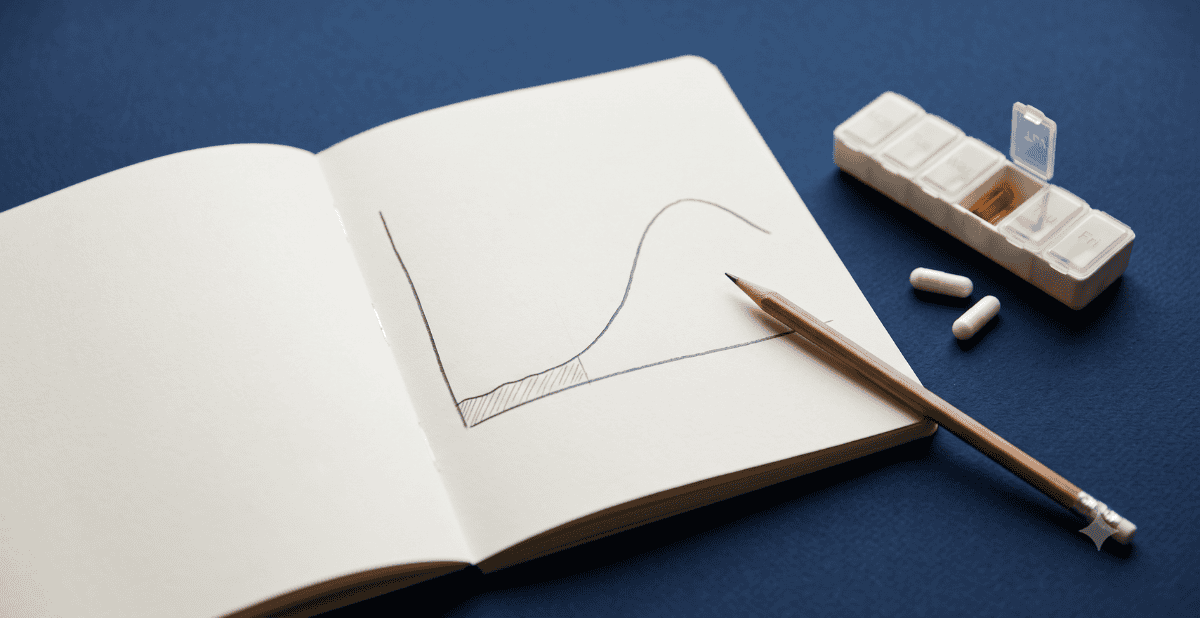
You get better at cognitive tests by taking them. Bartels and colleagues (2010) tested 36 healthy adults seven times over a year with no intervention. The largest gains came between the first and second sessions, two to three weeks apart: about 14% in executive function, 13% in learning and memory and 12% in attention. Scores kept improving while testing was frequent, through the third month, and then levelled off.
The gains do not go away. Rijnen and colleagues (2018) tested 158 healthy adults on a computerised battery and retested them at three and twelve months. Cognitive flexibility, processing speed and reaction time were higher at three months, and there was no significant change between three and twelve. Scores settle at a new, higher level.
How large the effect is, and how long it lasts, varies from test to test. The Bartels authors recommend choosing tests that are less prone to it.
In practice: an improvement in your first few sessions is the expected result of repetition. Several baseline sessions before you start absorb the steepest part of it. Where a test offers different versions, such as a fresh word list each time, use them, so that you are not simply learning the material. That reduces the problem without removing it.
2. Regression to the mean
People tend to start a supplement when they feel at their worst. Unusually bad measurements are usually followed by ones closer to average, whatever you do. Barnett, van der Pols and Dobson (2005) describe how this makes natural variation look like real change, and recommend taking several baseline measurements to reduce it.
In practice: build your baseline from measurements spread over two weeks, not from the bad week that prompted the purchase.
3. Other changes you did not record
Sleep, alcohol, illness, workload and stress all move test scores. If you are not recording them, any one can pass for the effect of your supplement. A minimum log is hours slept, caffeine amount and timing, alcohol, and a 1–10 stress rating. Change one thing at a time, the same rule that governs sensible stacking.
4. Expectation
Covered above, and the hardest to remove, because you know what you took. An objective test reduces its influence. Blinding removes it, and for fast-acting compounds blinding is achievable at home.
What counts as a real change?
Clinical psychology has a formal answer. The Reliable Change Index, introduced by Jacobson and Truax (1991), divides the difference between two scores by the standard error of that difference; a value beyond about 1.96 indicates a change unlikely to be measurement error alone. The Rijnen study above published formulae of this kind for exactly this reason: without them, a change in one person’s score cannot be interpreted.
Home tests rarely publish the figures needed for that calculation, so the practical substitute is a personal baseline band: the lowest and highest of your baseline scores. Be clear about what this is. Four measurements give a rough band that would shift if you took four more, and it takes no account of how reliable the test is. A score outside the band is a screening signal that deserves a closer look. It is not statistical evidence of reliable change.
Decide what “working” means before you start
Choose one main outcome in advance. If you are testing Bacopa for memory, a memory test decides the result, not whichever of several scores happens to rise. Record other measures if you like, but do not promote one to the headline after seeing the data. A review behind the reporting guideline for N-of-1 trials found that 79% of published reports did not say which outcome was the primary one (Vohra et al., 2015).
Decide the second number too: how much improvement would make this supplement worth its cost, the daily habit and any side effects? A change can be real and still too small to matter to you.
Worked example — turning your baseline range into a verdict
The numbers below are invented to show the reasoning.
Step 1: Four baseline sessions. Say your scores on a processing-speed test are 96, 104, 109 and 112. Your baseline band is 96 to 112.
Step 2: Read new scores against the range. A score of 114 while taking the supplement is not a result; it sits at the edge of your normal variation. A score of 128 that repeats at the next session is worth taking seriously.
Step 3: Stop and re-test. If the 128 drifts back toward 96–112 after you have been off it long enough, that strengthens the case that the supplement contributed. If it stays at 128 with nothing taken, practice is the likelier explanation, though staying up does not prove it.
Step 4: Check the log. If your sleep improved over the same weeks, you cannot credit the supplement. This rule is strict and will miss small real effects. The alternative is paying for years for something that does nothing.
Choose your design by how fast the compound acts
A before-and-after comparison is not an N-of-1 trial. Zenner, Böttinger and Konigorski (2022) define N-of-1 trials as “multi-crossover self-experiments”: you switch between conditions several times, which is what separates an effect from a trend over time. Whether you can do that depends on how quickly the compound acts and wears off.
Fast-acting compounds: on and off, over days to two weeks
If the effect appears within an hour or two and is gone by the next day, as with L-theanine and caffeine, you can alternate. Take it on some mornings and not on others, test each time, and compare the two sets across ten or more mornings. Do not simply alternate day by day. Set the order at random before you start, for example by tossing a coin for each pair of days to decide which comes first, so that a pattern in your week cannot line up with the pattern of dosing.
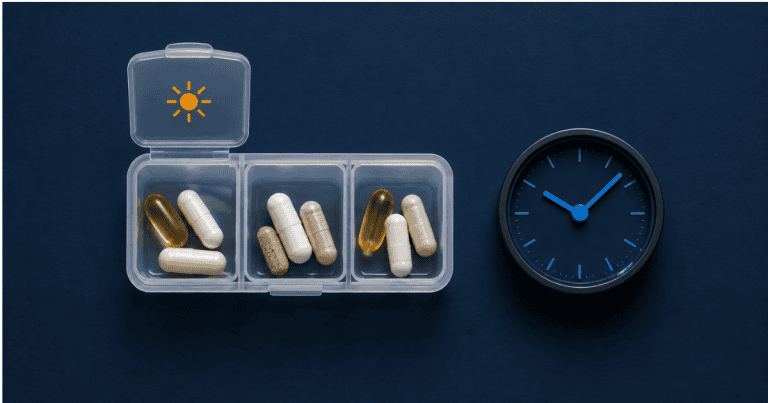
You can also blind yourself. Buy empty capsules, fill half with the compound and half with something inert, and ask someone else to load them into a pill organiser in the random order and keep that order written down. Open the record only when all testing is finished. This step removes expectation, and very few people do it.
Slow compounds: baseline, 8 to 12 weeks, then withdrawal
Compounds such as Bacopa monnieri were tested over 12 weeks in their trials and cannot be switched on and off. The best available design is a reversal: baseline, 8 to 12 weeks of daily use, then several weeks without it, testing throughout.
This is stronger than before-and-after. For an effect you would expect to be reversible, a move back toward baseline after you have been off the compound long enough strengthens the case that it contributed. The reverse does not hold: scores that stay up do not prove the earlier gain was practice, since some effects may persist and a short break may not be long enough. It is much weaker than a blinded comparison. You know what you are taking, there is one reversal instead of several, and a change in season or workload across three months can still mislead you. Treat its results as suggestive.
Self-testing methods ranked by strength
Named Framework
The NeuroEdge Formula Self-Testing Framework
Four phases, for one compound at a time. The length of the test follows the compound, not the calendar. It is a way to test, not a recommendation to take anything.
1. Baseline: two weeks
Choose one main outcome first. Then four test sessions at the same time of day, a few days apart, taking nothing new. Log sleep, caffeine, alcohol and a stress rating. Your lowest and highest scores are your baseline band.
2. Change one thing
Fast-acting compound: on and off mornings in a random order over days to two weeks, blinded if you can. Slow compound: daily for 8 to 12 weeks, testing every week or two.
3. Withdrawal
For slow compounds, stop and keep everything else the same for several weeks. Test at least twice. A move back toward baseline supports a real effect.
4. Verdict
A strong candidate signal needs all three: scores clearly outside your baseline band, a decline after stopping (or a clear on-versus-off difference), and nothing in your log that explains it. If they do not agree, call it inconclusive and stop or repeat.
New to this? The Getting Started roadmap puts these steps in order.
Peter’s Testing Notes
A personal impression, not tracked data
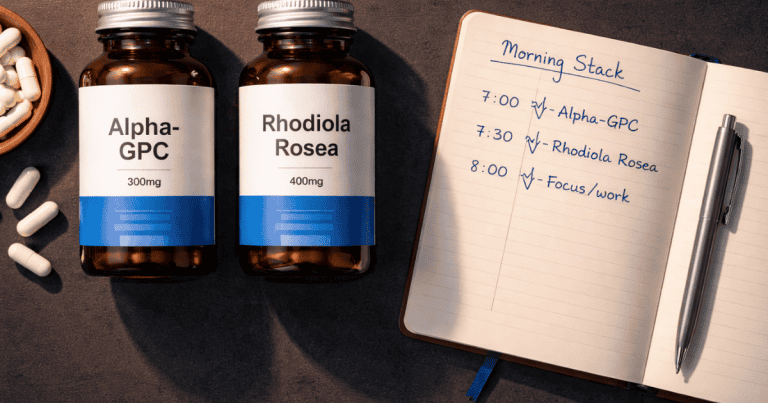
I learned why this method matters by not following it. I started with caffeine and L-theanine in the morning, then added Bacopa, Rhodiola and magnesium glycinate. I kept notes, but I ran no tests and had no baseline.
The notes read the way you would expect. A few work sessions felt smoother. After several weeks on Bacopa I thought I might be recalling details more easily. Rhodiola felt subtle and inconsistent. Magnesium became part of my bedtime routine without reliably improving my sleep.
Because I had introduced several supplements, I could not tell which, if any, made a difference. The experience was mixed, not transformative, and every improvement I thought I saw could have been expectation. Notes alone were not enough. The framework above is what I should have done.
Key takeaways
| → | Expectation changes how you rate yourself and leaves measured performance unchanged. |
| → | Feelings also miss real decline. Sleep-restricted people felt much the same while their performance kept falling. |
| → | Practice raises scores on its own, often most in the early sessions. How much varies by test. |
| → | Take four baseline measurements and pick one outcome in advance. A score outside your baseline band is a signal to examine, not proof. |
| → | Match the design to the compound: random on and off days over days to two weeks for fast ones; 8 to 12 weeks and then withdrawal for slow ones. |
| → | Blind yourself when you can, and call an unblinded result suggestive. |
Frequently asked questions
How long does it take to know if a nootropic is working?
It depends on the compound. After a two-week baseline, a fast-acting compound such as L-theanine with caffeine can be judged over days to two weeks of on and off mornings. A slow one such as Bacopa needs 8 to 12 weeks of daily use, followed by several weeks without it.
Which test should I use?
Any test that gives a number, takes a few minutes and can be repeated the same way each time. A free online reaction-time test is a reasonable start, because attention is sensitive to sleep and other everyday influences. Use the same test, device and time of day throughout. Brain-training games that get harder as you improve are poor choices, because the score partly reflects practice and changing difficulty.
Is this an N-of-1 trial?
Only the on-and-off version is. An N-of-1 trial switches between conditions several times. The baseline, use and withdrawal sequence for slow compounds has a single reversal and no blinding, so it is weaker and should not be described as one.
What if my scores improve and stay improved after I stop?
The most likely explanation is practice. Scores in untreated adults rise with repeated testing and then hold at the new level. A lasting effect of the supplement is possible but cannot be told apart from practice with this design.
Get “7 Days to a Sharper Brain” — Free
Peter Benson’s evidence-first starting framework
The habits with the strongest evidence first — sleep, movement, stress and learning — then how to add a single supplement and test whether it actually works for you.
No spam. Unsubscribe anytime.
⚕️ Educational Information, Not Medical Advice
This article describes a self-tracking method and is not medical advice. I’m a cognitive enhancement researcher, not a medical doctor. The method does not diagnose, treat or assess any condition, and a home test is not a clinical assessment. Consult a qualified healthcare provider before starting or stopping any supplement, particularly if you have a health condition or take prescription medication. Never stop a prescribed medicine to run a test.
Scientific references
1. Winkler, A., & Hermann, C. (2019). Placebo- and nocebo-effects in cognitive neuroenhancement: when expectation shapes perception. Frontiers in Psychiatry, 10, 498. Link
2. Van Dongen, H. P. A., Maislin, G., Mullington, J. M., & Dinges, D. F. (2003). The cumulative cost of additional wakefulness: dose-response effects on neurobehavioral functions and sleep physiology from chronic sleep restriction and total sleep deprivation. Sleep, 26(2), 117–126. Link
3. Bartels, C., Wegrzyn, M., Wiedl, A., Ackermann, V., & Ehrenreich, H. (2010). Practice effects in healthy adults: a longitudinal study on frequent repetitive cognitive testing. BMC Neuroscience, 11, 118. Link
4. Rijnen, S. J. M., van der Linden, S. D., Emons, W. H. M., Sitskoorn, M. M., & Gehring, K. (2018). Test-retest reliability and practice effects of a computerized neuropsychological battery: a solution-oriented approach. Psychological Assessment, 30(12), 1652–1662. Link
5. Barnett, A. G., van der Pols, J. C., & Dobson, A. J. (2005). Regression to the mean: what it is and how to deal with it. International Journal of Epidemiology, 34(1), 215–220. PMID: 15333621
6. Jacobson, N. S., & Truax, P. (1991). Clinical significance: a statistical approach to defining meaningful change in psychotherapy research. Journal of Consulting and Clinical Psychology, 59(1), 12–19. Full text (PDF)
7. Zenner, A. M., Böttinger, E., & Konigorski, S. (2022). StudyMe: a new mobile app for user-centric N-of-1 trials. Trials, 23, 1045. Link
8. Vohra, S., Shamseer, L., Sampson, M., et al. (2015). CONSORT extension for reporting N-of-1 trials (CENT) 2015 Statement. BMJ, 350, h1738. Link
Cognitive Enhancement Researcher | 18+ Years Independent Research
Peter is not a clinician; this guide is educational, not medical advice. It was rewritten in October 2026 from published research on expectation, practice effects and self-experiment design. Read about how NeuroEdge Formula evaluates research.
Last reviewed: October 2026 | Educational content only. Not medical advice.