
Nootropic Stacking Guide — NeuroEdge Formula
Medical Disclaimer: The information in this article is for educational purposes only and does not constitute medical advice. Always consult a qualified healthcare provider before beginning any supplement regimen. Individual responses to nootropics vary significantly. This guide reflects personal research and is not a substitute for professional medical guidance.
After nearly two decades of researching cognitive enhancement, the question I hear most often from readers is not “which nootropic should I take?” — it’s “how do I combine them?”
Nootropic stacking — the practice of combining two or more cognitive enhancers for synergistic effect — is where beginners make their most costly mistakes. Too many compounds introduced too quickly. Interactions not researched. Effects not properly tracked. The result is either no meaningful improvement or, worse, unwanted side effects that put people off cognitive enhancement entirely.
Done correctly, stacking is also where the most significant and measurable cognitive improvements occur. A well-designed stack produces effects that no single compound can replicate alone — sustained focus, enhanced memory consolidation, reduced mental fatigue, and improved stress resilience working together as a system.
In this guide I’m going to walk you through everything I’ve learned about building nootropic stacks — from the safest beginner combinations to the advanced protocols I’ve refined through years of systematic self-experimentation. We’ll cover mechanisms, timing, dosing, safety protocols, and how to assess whether a stack is actually working for you.
If you haven’t already read my article on the 5 best nootropics for beginners, I’d recommend starting there first. Understanding individual compounds before combining them is a foundational principle of safe stacking — and one I’ll return to throughout this guide.
What Is Nootropic Stacking?
A nootropic stack is a combination of two or more cognitive-enhancing compounds used together to achieve a specific cognitive outcome. The concept was formalized alongside the original nootropic criteria established by Dr. Corneliu Giurgea in 1972, who defined true nootropics as compounds that enhance cognition, protect the brain, and carry minimal toxicity — criteria that remain the gold standard for evaluating any compound worth stacking today.
The logic behind stacking is straightforward: different nootropics work through different biological pathways. L-theanine, for example, promotes alpha brain wave activity and modulates GABA receptors. Caffeine blocks adenosine receptors. When combined, research published in Biological Psychology confirms that L-theanine smooths out caffeine’s stimulatory effects while caffeine amplifies L-theanine’s calm focus — producing outcomes meaningfully better than either compound alone.
This synergy is the goal of every well-designed stack. Not just adding compounds, but selecting compounds whose mechanisms interact in ways that produce measurably better outcomes than any single nootropic could deliver.
Pre-Made Stacks vs. Custom Stacks
The supplement market is full of pre-formulated nootropic stacks — products that combine multiple compounds in proprietary blends. Many are legitimately effective, but they carry a significant disadvantage for anyone serious about cognitive optimization: you can’t isolate what’s working.
If you take a 12-ingredient pre-made stack and feel improved focus, you have no idea which compounds are responsible. If you experience a headache or sleep disruption, you can’t identify the cause. The FDA’s dietary supplement framework also means that proprietary blends are not required to disclose individual ingredient amounts — a significant transparency problem when you’re trying to optimize dosing.
My strong recommendation — especially for beginners — is to build custom stacks from individual compounds. It requires more research upfront, but the knowledge you develop about your own neurochemistry is invaluable and cannot be shortcut.
The Golden Rule of Nootropic Stacking
Before we go any further, one principle needs to be stated clearly because violating it is responsible for the majority of bad experiences people have with nootropics:
Never add a new compound to a stack until you fully understand the effects of each existing compound individually.
This is not overly cautious advice. It is the difference between systematic optimization and guesswork. Each new compound introduces new variables. If you add three new compounds simultaneously and something goes wrong — or right — you have no idea which compound is responsible and no basis for adjusting intelligently.
The protocol I recommend is simple: introduce one compound at a time, run it for at least two to three weeks at a consistent dose, track your response, and only then consider adding the next element. It feels slow. It is the only approach that actually works.
Understanding Stack Categories and Goals
Not all stacks serve the same purpose. Before building a stack, define your primary cognitive objective. The most common categories are:
Focus and Productivity Stacks
Designed to extend attention span, reduce distraction, and improve output during demanding cognitive work. These typically target dopamine, acetylcholine, and adenosine pathways. Research from the National Institutes of Health on attention and executive function underscores how neurotransmitter balance — particularly dopaminergic and cholinergic activity — underpins sustained cognitive performance. If this is your primary goal, my guide on focus and productivity optimization covers the foundational strategies that complement any supplement approach.
Memory and Learning Stacks
Designed to improve information encoding, retention, and recall. These typically target acetylcholine synthesis, BDNF production, and hippocampal function. Research on neuroplasticity and memory consolidation confirms that compounds supporting BDNF — brain-derived neurotrophic factor — have some of the most significant long-term cognitive benefits, particularly for learning speed and retention. Nootropics in this category often require longer cycling periods — four to twelve weeks — before full effects are measurable. See my overview of memory and learning enhancement for the non-supplement strategies that dramatically improve what any memory stack can accomplish.
Energy and Mental Stamina Stacks
Designed to combat mental fatigue, brain fog, and the cognitive decline that occurs during long work sessions. These target mitochondrial function, adenosine receptors, and cortisol management. Studies on mental fatigue and cognitive performance consistently show that even mild fatigue significantly impairs working memory, decision-making speed, and attention accuracy — making fatigue management one of the highest-leverage targets for cognitive enhancement.
Stress Resilience and Mood Stacks
Designed to reduce anxiety, improve stress response, and stabilize mood — all of which have significant downstream effects on cognitive performance. These target cortisol regulation, GABA activity, and serotonin balance. The relationship between chronic stress and cognitive impairment is well-established: research published in Frontiers in Aging Neuroscience demonstrates that sustained cortisol elevation directly impairs hippocampal volume and memory function over time, making stress management a non-optional component of any serious cognitive optimization strategy.
Beginner Nootropic Stacks: Start Here
If you are new to nootropic stacking, the following combinations are your starting point. Each has extensive research backing, minimal side effect profiles when used correctly, and produces reliably noticeable effects — making it easy to assess whether the stack is working for you.
Stack 1: The Classic Foundation — Caffeine + L-Theanine
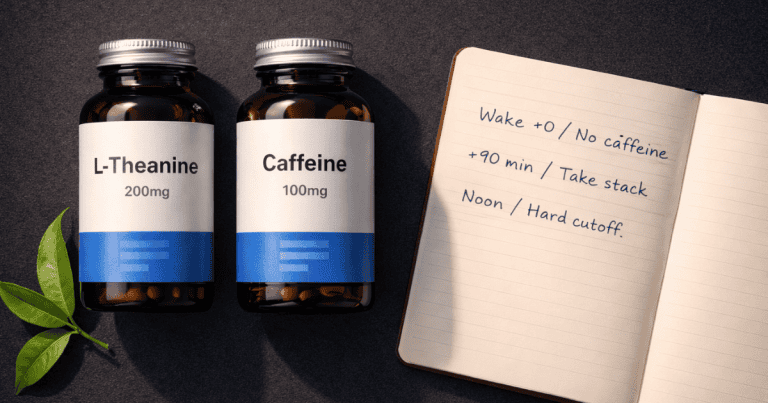
This is the most well-researched nootropic stack in existence and the one I recommend to every beginner without exception. It is simple, safe, inexpensive, and produces measurable improvements in focus, attention, and mental clarity within thirty to sixty minutes of ingestion.
How it works: Caffeine blocks adenosine receptors, reducing mental fatigue and increasing alertness. A 2010 review in Nutritional Neuroscience confirms caffeine’s well-established mechanism of action on adenosine A1 and A2A receptors, producing both cognitive and physical performance benefits. However, caffeine alone frequently produces jitteriness, elevated anxiety, and an energy crash approximately four to six hours post-ingestion.
L-theanine — a naturally occurring amino acid found in green tea — promotes alpha brain wave activity associated with calm, relaxed alertness. A landmark study published in Asia Pacific Journal of Clinical Nutrition confirmed L-theanine’s ability to increase alpha wave activity within forty minutes of ingestion, producing measurable relaxation without sedation. The combined effect, as demonstrated in a double-blind, placebo-controlled study in Biological Psychology, produces what researchers describe as “alert calmness” — the cognitive sweet spot where you are fully engaged and energized without the restlessness or anxiety that caffeine alone often creates.
Recommended doses:
- Caffeine: 100mg (approximately one standard cup of coffee)
- L-Theanine: 200mg (2:1 ratio to caffeine)
Timing: Take together in the morning, 90 to 120 minutes after waking. This timing aligns with the natural decline of cortisol after its morning peak — a principle supported by research on the cortisol awakening response — and prevents the afternoon crash that comes from early stimulant use. Avoid taking after 2pm if you are sensitive to caffeine’s effects on sleep.
Cycling: Most people can use this stack daily without significant tolerance buildup, though I recommend taking one to two caffeine-free days per week to prevent adenosine receptor downregulation, a mechanism documented in receptor adaptation research from the Journal of Pharmacology and Experimental Therapeutics.
What to expect: Smoother, more sustained focus. Reduced coffee-related anxiety. Cleaner energy without the mid-morning spike and afternoon collapse. Effects are noticeable within the first use. Consistent use over two to three weeks produces the clearest assessment of benefit.
Stack 2: The Memory Foundation — Lion’s Mane + Bacopa Monnieri
Where the caffeine-theanine stack addresses acute focus, this combination targets the deeper neurological processes that support memory formation, retention, and long-term brain health. It is the beginner memory stack I’ve recommended for years, and the research backing it has only grown stronger.
How it works: Lion’s Mane mushroom stimulates the production of Nerve Growth Factor (NGF) — a protein that supports the growth, maintenance, and survival of neurons. A study published in Biological and Pharmaceutical Bulletin confirmed Lion’s Mane’s ability to induce NGF synthesis in human astrocytoma cells, and a double-blind, placebo-controlled clinical trial in Phytotherapy Research demonstrated significant improvements in cognitive function scores in adults with mild cognitive impairment after sixteen weeks of supplementation with 1,000mg daily.
Bacopa Monnieri, an Ayurvedic herb with over forty years of clinical research, enhances memory consolidation by supporting acetylcholine function and reducing the oxidative stress that impairs memory encoding. A meta-analysis of randomized controlled trials published in Journal of Ethnopharmacology — analyzing nine studies involving 518 participants — confirmed statistically significant improvements in memory free recall across multiple Bacopa trials, establishing it as one of the most evidence-backed herbal cognitive enhancers available.
Recommended doses:
- Lion’s Mane: 1,000mg daily (standardized extract, minimum 30% beta-glucans)
- Bacopa Monnieri: 300mg daily (standardized to 45% bacosides)
Timing: Both compounds can be taken together with breakfast. Bacopa in particular should always be taken with food — fat-soluble bacosides are better absorbed in the presence of dietary fat, as noted in clinical protocol documentation from Bacopa research, and some users experience mild nausea when taking it on an empty stomach.
Cycling: This stack requires consistent use. Unlike the caffeine-theanine stack, effects from Lion’s Mane and Bacopa accumulate over weeks rather than appearing acutely. Most research protocols run twelve weeks of continuous use before measuring outcomes. Plan for a minimum of eight weeks before evaluating whether this stack is working for you.
What to expect: Improved memory retention and recall. Enhanced learning speed. Reduced mental fatigue during prolonged study or work sessions. Subtle improvements in dream vividness (common with Bacopa, related to acetylcholine activity). Do not expect dramatic acute effects — this stack works over time, not overnight.
Intermediate Nootropic Stacks
Once you have run each beginner stack for a minimum of eight weeks and understand your individual response to each compound, you can begin combining elements from both stacks and introducing targeted additions. These are the intermediate protocols I typically recommend after the first three months of systematic stacking.
Stack 3: The Full-Day Focus Protocol
This stack combines the acute effects of the caffeine-theanine foundation with the sustained cognitive support of a cholinergic compound — specifically Alpha-GPC, a highly bioavailable form of choline that supports acetylcholine synthesis.
Compounds and doses:
- Caffeine: 100mg
- L-Theanine: 200mg
- Alpha-GPC: 300mg
Why Alpha-GPC: Acetylcholine is the neurotransmitter most closely associated with learning, memory, and sustained attention. Alpha-GPC crosses the blood-brain barrier efficiently and provides the raw material for acetylcholine synthesis. A clinical study published in Dementia confirmed Alpha-GPC’s ability to significantly improve cognitive function compared to placebo, and research on choline’s role in attention and memory establishes the mechanistic basis for its inclusion in any serious focus stack. Adding it to the caffeine-theanine stack extends the focus window from three to four hours to five to six hours in most users and adds a notable enhancement in working memory — the ability to hold and manipulate information in real time.
Timing: Take the full stack together in the morning. A second dose of Alpha-GPC alone (150mg) can be taken early afternoon if you are engaged in demanding cognitive work, but avoid late afternoon use as it may interfere with sleep in some individuals.
Important note: Some individuals experience headaches when adding choline sources. If this occurs, reduce Alpha-GPC to 150mg and assess tolerance before increasing. This is a known response documented in examine.com’s comprehensive Alpha-GPC analysis and typically resolves with dose adjustment.
Stack 4: The Memory and Learning Stack
This protocol builds on the Lion’s Mane and Bacopa foundation by adding Omega-3 fatty acids (specifically DHA) and Phosphatidylserine — a phospholipid critical to neuronal membrane integrity with one of the strongest evidence bases of any cognitive supplement.
Compounds and doses:
- Lion’s Mane: 1,000mg
- Bacopa Monnieri: 300mg
- DHA (Omega-3): 1,000mg
- Phosphatidylserine: 100mg
Why DHA: DHA (docosahexaenoic acid) is the primary structural fatty acid in the brain, comprising approximately 97% of all omega-3 fatty acids in neural tissue. A review in Advances in Nutrition confirms DHA’s essential role in neuronal membrane fluidity, synaptic transmission, and neuroprotection — making adequate DHA intake a fundamental prerequisite for optimal cognitive performance at any age.
Why Phosphatidylserine: Phosphatidylserine (PS) has such robust clinical evidence that the FDA issued a qualified health claim acknowledging that PS may reduce the risk of cognitive dysfunction in the elderly. A randomized controlled trial in Nutrition demonstrated significant improvements in memory and learning in healthy adults after twelve weeks of PS supplementation at 300mg daily.
Timing: Take the full stack with your largest meal of the day. All four compounds are fat-soluble and absorb significantly better in the presence of dietary fat. If you practice intermittent fasting or OMAD, take this stack with your eating window.
What to expect: After eight to twelve weeks of consistent use, most users report noticeably faster recall, improved retention of new information, enhanced performance under cognitive pressure, and a general reduction in afternoon brain fog. This is the stack I consider the most important long-term investment in brain health for anyone over thirty-five.
Advanced Nootropic Stacking Protocols
Advanced stacks are for those who have spent a minimum of six months working through beginner and intermediate protocols, have a thorough understanding of their individual responses to each compound, and are prepared to track outcomes rigorously.
I want to be direct: most people do not need advanced stacks to achieve meaningful cognitive enhancement. The beginner and intermediate protocols, combined with solid sleep optimization and consistent training, produce results that advanced stacking adds only incrementally to. Advanced protocols are for those who have genuinely optimized the fundamentals and are seeking the next level of performance.
Stack 5: The Full Cognitive Enhancement Protocol
This is the protocol I use during periods of high cognitive demand — extended research sessions, intensive writing projects, or complex analytical work. It combines acute focus enhancement, sustained cholinergic support, adaptogenic stress resilience, and neuroprotection in a single daily protocol.
Morning Stack:
- Caffeine: 100mg
- L-Theanine: 200mg
- Alpha-GPC: 300mg
- Rhodiola Rosea: 200mg (3% rosavins, 1% salidroside)
With Breakfast:
- Lion’s Mane: 1,000mg
- Bacopa Monnieri: 300mg
- Phosphatidylserine: 100mg
- DHA: 1,000mg
Why Rhodiola Rosea: Rhodiola is an adaptogenic herb with one of the strongest evidence bases for reducing mental fatigue and improving performance under stress. A double-blind crossover study published in Phytomedicine found that Rhodiola SHR-5 extract significantly reduced mental fatigue in physicians during night duty compared to placebo. A subsequent randomized controlled trial in Nordic Journal of Psychiatry confirmed statistically significant improvements in mental fatigue, attention, and stress response in students during examination periods. Rhodiola works acutely — effects appear within one to two hours — making it an excellent morning addition that complements the caffeine-theanine base without overstimulation.
Cycling this protocol: Run the full protocol for eight weeks, then take two weeks off all stimulatory compounds (caffeine, Rhodiola) while continuing the breakfast stack. This prevents tolerance buildup and maintains sensitivity to the acute compounds. Research on adaptogen cycling protocols supports periodic breaks from stimulatory adaptogens to preserve their efficacy. The neuroplasticity stack (Lion’s Mane, Bacopa, PS, DHA) can be used continuously without cycling.
Safety Protocols and Tracking Your Stack
No guide on nootropic stacking is complete without a thorough discussion of safety. The compounds discussed in this article have strong safety profiles when used correctly. “Used correctly” is the critical qualifier.
Interactions to Research Before Stacking
Before adding any compound to your protocol, research its interactions with any medications you are currently taking. Key areas of concern include blood thinning effects — studies confirm that fish oil at doses above 3g daily can potentiate anticoagulant medications such as warfarin — blood pressure effects from certain adaptogens, and serotonergic activity. The NIH MedlinePlus database provides reliable interaction data for most widely-used supplements and is a useful first-check resource before introducing any new compound.
Certain compounds, particularly 5-HTP, should never be combined with SSRIs or MAOIs without medical supervision due to risk of serotonin syndrome — a potentially serious condition documented extensively in clinical pharmacology literature. If you take any prescription medications, consult your healthcare provider before beginning a stacking protocol. This is not cautious boilerplate — it is genuinely important.
How to Track Stack Effectiveness
Subjective feelings are an unreliable measure of nootropic effectiveness. Research on placebo response in cognitive enhancement studies consistently demonstrates that expectation effects can produce measurable performance improvements of 10–20% above baseline without any active compound — a finding that makes rigorous personal tracking essential for any honest self-experimentation.
Track the following daily while running a new stack: morning mental clarity on a 1–10 scale, focus duration during your most demanding work session, quality of output produced (not just time spent), afternoon energy levels, and sleep quality and duration. Maintain this tracking log for the full assessment period before drawing any conclusions. At the end of each assessment period, compare your tracked data to your pre-stack baseline — the difference in averages, not single-day impressions, is your real result.
Recognizing When to Adjust or Stop
Stop any compound immediately and reassess if you experience persistent headaches, significant sleep disruption, increased anxiety or irritability, digestive disturbances that don’t resolve within the first week, or any other symptoms that emerge after introducing a new compound. These are signals that either the dose is too high, the timing is wrong, an interaction is occurring, or that particular compound is not compatible with your individual neurochemistry.
Not every nootropic works for every person. Research on pharmacogenomics and individual variation in supplement response confirms that genetic differences in enzyme activity, receptor density, and neurotransmitter baseline levels produce significantly different outcomes from the same compound across individuals. This is not failure — it is useful information that guides your personalized protocol.
Where to Source Your Stack: Quality Matters
Supplement quality is not a secondary concern in nootropic stacking — it is foundational. A study analyzing 44 herbal supplements purchased in the US found that a significant proportion contained substituted, diluted, or mislabeled ingredients — meaning the label made claims the product couldn’t support. A Bacopa Monnieri product with inaccurate bacosides content or an underdosed Lion’s Mane extract will produce no meaningful effects regardless of how well your stack is designed.
Always purchase from suppliers who provide third-party testing certificates (Certificate of Analysis, or COA) for every product. The COA confirms that the product contains what the label claims at the concentration stated. Organizations like NSF International and United States Pharmacopeia (USP) provide independent supplement verification programs — products carrying their seals have been independently tested for label accuracy and contaminant absence.
Trusted sources I have used consistently over many years include Nootropics Depot, Double Wood Supplements, and Nordic Naturals for Omega-3s. These are not paid endorsements — they are suppliers who have earned trust in the research community through consistent quality and transparent third-party testing practices. Always verify current COA availability before purchasing from any supplier.
Frequently Asked Questions About Nootropic Stacking
What is the best nootropic stack for beginners?
The best nootropic stack for beginners is caffeine (100mg) combined with L-theanine (200mg). This combination is the most well-researched nootropic stack available, with multiple double-blind studies confirming its safety and efficacy. It has an excellent safety profile, produces reliably noticeable improvements in focus and mental clarity within thirty to sixty minutes, and is inexpensive and widely available. Master this stack before adding any additional compounds.
How many nootropics can I safely stack at once?
There is no universal limit, but the practical answer for most people is three to five compounds per protocol. Beyond that, it becomes increasingly difficult to identify what is working, assess interactions, and troubleshoot problems. More compounds does not mean better results — the quality of compound selection and the precision of dosing matter far more than quantity.
Do I need to cycle nootropic stacks?
It depends on the compounds involved. Stimulatory compounds like caffeine and Rhodiola Rosea benefit from periodic cycling to prevent tolerance buildup — typically five days on, two days off, or eight weeks on, two weeks off. Neuroplasticity compounds like Lion’s Mane, Bacopa Monnieri, and DHA can be used continuously without cycling and actually produce better results with consistent long-term use.
How long does it take for a nootropic stack to work?
It depends entirely on the compounds in the stack. Caffeine, L-theanine, and Rhodiola Rosea produce acute effects within thirty to ninety minutes of ingestion. Lion’s Mane, Bacopa Monnieri, and Phosphatidylserine require consistent use over four to twelve weeks before their full benefits are measurable. Most effective stacks combine both acute and cumulative compounds to produce both immediate and long-term cognitive improvements.
Can I stack nootropics with prescription medications?
Some nootropics interact with prescription medications, and certain combinations can be dangerous. Fish oil and Ginkgo Biloba can potentiate blood-thinning medications. Some adaptogens affect blood pressure regulation. Serotonergic compounds should never be combined with SSRIs or MAOIs without medical supervision due to risk of serotonin syndrome. Always consult your healthcare provider and research specific interactions through reliable sources such as the NIH MedlinePlus database before adding any nootropic to a protocol that includes prescription medications.
Building Your Stack: The Path Forward
Nootropic stacking is not complicated — but it requires patience, systematic thinking, and a willingness to invest time in understanding your individual neurochemistry rather than jumping to whatever stack promises the most dramatic results.
The framework is simple. Start with the caffeine-theanine foundation. Run it for three weeks and track your response. Add Lion’s Mane and Bacopa as your neuroplasticity layer and run them for eight to twelve weeks. Then, with a solid understanding of how each compound affects you individually, begin building toward the intermediate and advanced protocols.
The cognitive improvements that come from a well-designed, systematically developed stacking protocol are real and measurable. The research is consistent. But the results compound over months, not days. The readers I’ve worked with who have seen the most significant outcomes are those who approached this process with the same rigor they would bring to any serious research project — because that is exactly what personal cognitive optimization is.
For the foundational supplements this stacking guide builds on, see my complete review of the 5 best nootropics for beginners. And if you are ready to go deeper into the science of memory enhancement specifically, my guide on memory and learning optimization covers the non-supplement strategies that dramatically amplify what any stack can accomplish.
References
- Haskell, C.F., et al. (2008). The effects of L-theanine, caffeine and their combination on cognition and mood. Biological Psychology, 77(2), 113–122. PubMed
- Nobre, A.C., et al. (2008). L-theanine, a natural constituent in tea, and its effect on mental state. Asia Pacific Journal of Clinical Nutrition, 17(S1), 167–168. PMC
- Mori, K., et al. (2009). Nerve growth factor-inducing activity of Hericium erinaceus. Biological and Pharmaceutical Bulletin, 31(9), 1727–1732. PubMed
- Mori, K., et al. (2009). Improving effects of the mushroom Yamabushitake on mild cognitive impairment. Phytotherapy Research, 23(3), 367–372. PubMed
- Kongkeaw, C., et al. (2014). Meta-analysis of randomized controlled trials on cognitive effects of Bacopa monnieri extract. Journal of Ethnopharmacology, 151(1), 528–535. PubMed
- Richter, Y., et al. (2010). The effect of phosphatidylserine-containing omega-3 fatty acids on memory abilities. Clinical Interventions in Aging, 5, 313–316. PubMed
- Darbinyan, V., et al. (2000). Rhodiola rosea in stress induced fatigue — a double blind cross-over study. Phytomedicine, 7(5), 365–371. PubMed
- Spasov, A.A., et al. (2000). A double-blind, placebo-controlled pilot study of the stimulating and adaptogenic effect of Rhodiola rosea SHR-5 extract on the fatigue of students. Phytomedicine, 7(2), 85–89. PubMed
- FDA. (2023). Qualified health claim: Phosphatidylserine and cognitive dysfunction. FDA.gov
- NSF International. (2024). Dietary supplement certification. NSF.org
Tags: nootropic stack, nootropic stacking guide, best nootropic stacks, beginner nootropic stack, nootropic combinations, stacking nootropics safely, cognitive enhancement stack, nootropic synergy, nootropic protocols, Lions Mane stack, caffeine L-theanine stack, focus stack, memory stack, nootropic guide, brain optimization stack
About Peter Benson
Peter Benson is a cognitive enhancement researcher with 18+ years of personal and professional experience in nootropics, neuroplasticity, and brain optimization protocols. He has personally helped hundreds of individuals improve their mental performance through evidence-based supplementation and lifestyle strategies. NeuroEdge Formula is his platform for sharing rigorous, safety-first cognitive enhancement guidance.