Phosphatidylserine: Benefits, Dosage, and What the Research Actually Shows
Medical Disclaimer: The information in this article is for educational purposes only and does not constitute medical advice. Always consult a qualified healthcare provider before beginning any supplement regimen. Individual responses to Phosphatidylserine vary. This guide reflects published research and personal experience and does not substitute for professional medical evaluation.
Phosphatidylserine occupies a unique position in the cognitive enhancement landscape — one that almost no one in the nootropic community discusses with the precision it deserves.
It is the only nootropic compound to receive a qualified health claim from the United States Food and Drug Administration specifically for cognitive function. That is not a marketing statement — it is a regulatory designation that the FDA issues only when a body of scientific evidence is judged sufficient to support a qualified association between a substance and a health benefit, even if that evidence does not yet meet the full standard for an authorized claim. Every other compound in this series exists in a regulatory environment where health claims are prohibited or carefully avoided. Phosphatidylserine is the exception — and understanding why the FDA made that exception is the clearest possible introduction to why this compound belongs in any serious cognitive enhancement protocol.
Beyond the regulatory distinction, Phosphatidylserine has two clinical evidence bases that are unusually strong by supplement standards: a substantial body of research in age-related cognitive decline and Alzheimer’s disease that informed the FDA’s decision, and a more recently developed body of research demonstrating cortisol-modulating and stress-resilience effects that complement its cognitive mechanisms in ways that most users have not fully appreciated.
After nearly two decades of researching cognitive enhancement compounds, Phosphatidylserine is the one I recommend most consistently to users over 40 — not because younger users don’t benefit, but because the compound’s role as the primary membrane phospholipid of the brain makes its importance grow proportionally with the membrane degradation that accompanies aging. This article explains precisely why, and what the evidence actually supports. It builds on the full series — particularly the 5 best nootropics for beginners, the stacking guide, the complete safety guide, and the earlier compound guides for Alpha-GPC and DHA, since Phosphatidylserine’s membrane mechanisms overlap with and complement both.
What Is Phosphatidylserine?
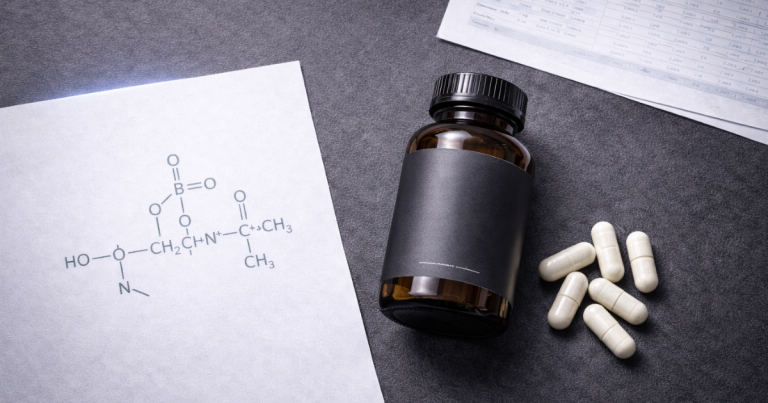
Phosphatidylserine (PS) is a phospholipid — a fat-soluble molecule consisting of two fatty acid chains, a glycerol backbone, a phosphate group, and a serine amino acid head group — that is an essential structural component of every cell membrane in the human body. In the brain, it is found at particularly high concentrations in neuronal cell membranes, where it constitutes approximately 15% of total phospholipid content and plays a disproportionately important role in membrane structure and function relative to its abundance.
PS is synthesized endogenously by the body — primarily in the liver — but endogenous synthesis declines with age and is dependent on adequate dietary supply of DHA and other omega-3 fatty acids as precursors. Research on phosphatidylserine metabolism and brain aging has demonstrated that brain PS concentrations decline measurably with age — a structural degradation that contributes directly to the receptor sensitivity reduction, neurotransmitter signaling impairment, and neuroplasticity decline that characterize age-related cognitive changes.
Dietary PS is found primarily in animal products — particularly organ meats and fish — at concentrations that make achieving therapeutically relevant intakes from diet alone impractical for most people. Supplement PS is derived from one of two sources: bovine cortex (brain tissue) — the original source used in most early clinical research — or soy lecithin, the modern plant-based alternative that replaced bovine-derived PS after BSE (bovine spongiform encephalopathy) concerns arose in the 1990s. The shift to soy-derived PS has introduced an important research interpretation caveat that any rigorous PS guide must address directly.
The FDA Qualified Health Claim: What It Actually Means
In 2003, the FDA authorized the following qualified health claim for phosphatidylserine: “Consumption of phosphatidylserine may reduce the risk of dementia in the elderly” and “Consumption of phosphatidylserine may reduce the risk of cognitive dysfunction in the elderly.” Both claims carry the qualifier: “Very limited and preliminary scientific research suggests that phosphatidylserine may reduce the risk of dementia in the elderly. FDA concludes that there is little scientific evidence supporting this claim.”
The precise language matters. A qualified health claim is not an endorsement — it is a regulatory determination that there is some credible evidence supporting an association, even if that evidence is not yet sufficient for an authorized claim. The FDA’s language reflects the state of the science at the time: positive clinical evidence existed, but primarily from bovine-derived PS rather than soy-derived PS, and the translation between sources was not yet fully established.
What the FDA claim actually signals — and why it is significant in the nootropic context — is that PS cleared a regulatory hurdle that no other cognitive enhancement compound has cleared. The FDA reviewed the evidence, found it credible enough to permit a qualified claim rather than prohibit all health-related language, and established a framework for PS that legitimizes it in a regulatory environment hostile to supplement health claims. That is a meaningful distinction regardless of the qualifying language around the claim.
How Phosphatidylserine Works: The Complete Mechanism
Phosphatidylserine’s cognitive effects operate through mechanisms that are simultaneously structural — like DHA — and directly functional in ways that DHA’s membrane role is not. Understanding the distinction explains why PS and DHA are complementary rather than redundant despite both being membrane phospholipids.
Neuronal Membrane Structure and Receptor Function
PS is concentrated on the inner leaflet of the neuronal plasma membrane — the inner face of the cell membrane that interfaces with the cell’s internal signaling machinery rather than the extracellular environment. This specific location is critical: the inner membrane leaflet is where G-protein coupled receptor signaling cascades are initiated, where protein kinase C (PKC) is activated, and where the second messenger systems that transduce neurotransmitter signals into intracellular responses operate.
Research on PS and intracellular signaling confirmed that PS is a required cofactor for PKC activation — one of the most important intracellular signaling enzymes in the brain, involved in memory formation, synaptic plasticity, and the long-term potentiation processes that underlie learning. When membrane PS concentrations decline with age, PKC activation becomes less efficient — contributing to the signaling cascade impairments that manifest as reduced memory encoding speed and consolidation efficiency in aging neural tissue.
Neurotransmitter Release and Receptor Density
PS plays a direct role in neurotransmitter vesicle fusion — the process by which neurons release acetylcholine, dopamine, and other neurotransmitters at synapses. Research on PS and synaptic vesicle function demonstrated that PS is required for the calcium-dependent membrane fusion events that trigger neurotransmitter release — a finding that connects PS’s membrane structural role to direct functional consequences for acetylcholine and dopamine availability at synapses.
Additionally, research on PS and receptor density found that adequate membrane PS content is required for maintaining normal density and clustering of neurotransmitter receptors at synaptic sites — connecting membrane PS levels directly to the receptor availability that determines how effectively neurotransmitters produce their cognitive effects. This mechanism is directly relevant to the Alpha-GPC and Bacopa cholinergic strategy: increasing acetylcholine availability is only as effective as the receptor density and sensitivity at which that acetylcholine is received.
HPA Axis Modulation and Cortisol Blunting
The mechanism most underappreciated in popular PS discussions is its well-documented effect on the hypothalamic-pituitary-adrenal (HPA) axis — the hormonal stress response system that governs cortisol secretion. PS has a specific and well-replicated capacity to blunt cortisol release in response to physical and psychological stress — an effect that is distinct from Rhodiola’s adaptogenic HPA axis modulation and operates through different mechanisms.
Seminal research by Monteleone and colleagues demonstrated that PS supplementation significantly blunted the ACTH and cortisol response to physical stress (cycling exercise) compared to placebo — establishing the cortisol-blunting mechanism with direct physiological measurement. The cognitive relevance is substantial: as detailed in the Rhodiola Rosea compound guide, cortisol elevation directly impairs working memory, reduces hippocampal neuroplasticity, and degrades the executive functions most relevant to demanding cognitive work. PS’s cortisol blunting provides a complementary — and mechanistically distinct — approach to the same stress-resilience objective that Rhodiola addresses through HPA axis recalibration.
Nerve Growth Factor Sensitivity
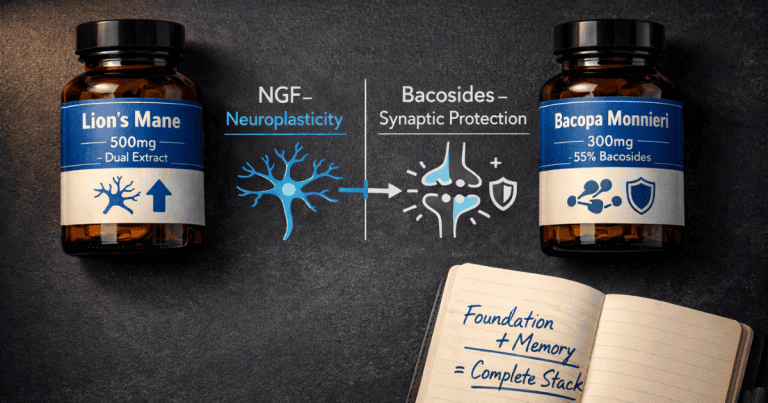
Research on PS and neurotrophic factor signaling has demonstrated that adequate membrane PS content enhances the sensitivity of neurons to Nerve Growth Factor (NGF) — the neurotrophin that Lion’s Mane’s hericenones and erinacines stimulate. This creates a mechanistically meaningful synergy: Lion’s Mane increases NGF production while PS enhances the sensitivity of the receptor systems through which NGF produces its neuroplasticity effects. Together they address the NGF pathway from both the supply and the reception side simultaneously.
What the Human Clinical Research Actually Shows
The PS clinical evidence base has a distinctive structure — a large body of research conducted with bovine-derived PS in the 1980s and 1990s that established efficacy with high methodological quality, followed by more recent soy-derived PS research that has partially but not completely replicated those findings. Understanding this distinction is essential for interpreting the evidence responsibly.
The Bovine-Derived PS Research: The Foundation
The most methodologically rigorous PS clinical trials used bovine cortex-derived PS — the form with the highest structural similarity to endogenous brain PS in terms of fatty acid composition (rich in DHA and arachidonic acid). These trials established the evidentiary foundation that eventually led to the FDA’s qualified health claim.
The landmark multicenter double-blind placebo-controlled trial by Crook and colleagues enrolled 149 patients with age-associated memory impairment and administered 300mg daily of bovine PS or placebo for 12 weeks. The PS group demonstrated significant improvements on multiple neuropsychological tests — including paragraph recall, face-name associations, and telephone number learning — compared to placebo, with the most pronounced improvements in patients with the most severe baseline memory impairment. The effect sizes in this trial are among the largest reported for any cognitive supplement in this population.
A subsequent analysis of the same trial dataset found that PS treatment appeared to reverse approximately 12 years of age-related cognitive decline on the composite neuropsychological measure — a finding with significant implications for the neuroprotective and age-reversal applications of PS that distinguish it from most nootropic compounds which primarily optimize function within existing capacity rather than restoring declined function.
Additional bovine PS trials in Alzheimer’s disease patients — including a double-blind trial by Engel and colleagues — demonstrated significant improvements in cognitive function, activities of daily living, and behavioral symptoms compared to placebo, reinforcing the mechanistic validity of PS’s cholinergic and membrane-structural cognitive enhancement effects with a more severely impaired population.
The Soy-Derived PS Research: The Modern Evidence
Following the BSE concerns that effectively ended bovine-derived PS production in the 1990s, soy-derived PS became the primary supplement form. Soy PS differs from bovine PS in its fatty acid composition — it is enriched in linoleic acid rather than DHA — a difference that may affect its functional properties relative to the bovine form studied in the foundational research.
A randomized controlled trial by Richter and colleagues examining soy-derived PS in healthy older adults found significant improvements in memory recall and learning ability after 6 months of 300mg daily — providing direct evidence that soy PS produces measurable cognitive benefits, though the effect sizes were somewhat smaller than those reported in the bovine PS trials.
More recent research on soy-derived PS and cognitive function in healthy adults under 50 found significant improvements in working memory, attention, and processing speed after supplementation — extending the evidence base to younger healthy adults and providing the most directly applicable data for the cognitive enhancement population covered in this series.
The Cortisol and Stress Research
The cortisol-modulating research represents a distinct and increasingly important PS evidence base. The Monteleone et al. trial demonstrated significant blunting of the cortisol and ACTH response to exercise stress at 800mg daily. A subsequent trial by Fahey and colleagues found that 800mg daily PS significantly reduced exercise-induced cortisol release in endurance athletes — with direct implications for the cognitive recovery from high-stress training loads that affects knowledge workers and athletes alike.
More relevant to the cognitive enhancement application is a trial examining PS’s effects on cognitive function during mental stress that found significant improvements in cognitive accuracy and mood under conditions of acute psychological stress in healthy adults receiving 400mg daily PS — a finding that bridges the cortisol-modulating and cognitive enhancement evidence bases directly.
Free Download
Get the Complete Nootropics Starter Kit
Top 5 Nootropics Guide · Safety Checklist · Dosage Protocols · Quality Source Guide — everything you need to start safely and effectively.
Join 2,000+ readers optimizing their cognitive performance. Unsubscribe anytime.
Phosphatidylserine Dosage: The Evidence-Based Protocol
The Clinical Dose Range
The most consistently used dose across PS clinical trials — and the dose used in the research that informed the FDA qualified health claim — is 300mg daily, divided into three 100mg doses taken with meals. This three-times-daily administration pattern reflects early pharmacokinetic assumptions about PS absorption; more recent research suggests that once-daily dosing at 300mg produces equivalent plasma and tissue PS elevations, making the simpler once-daily protocol appropriate for most users.
The cortisol-modulating research used higher doses — 400–800mg daily — producing stronger HPA axis effects at these elevated doses. For users whose primary objective is cognitive enhancement rather than cortisol blunting specifically, 300mg daily remains the most directly evidence-supported cognitive enhancement dose. Users under significant chronic stress — or those adding PS specifically for its stress-resilience complement to Rhodiola — may find 400mg daily the more appropriate target.
Timing and Administration
PS is fat-soluble and absorbs best when taken with meals containing dietary fat. Unlike the strict morning-timing requirement of stimulatory compounds like Rhodiola and caffeine, PS does not have stimulatory properties and can be taken at any meal without timing-related adverse effects. Most users find taking PS with breakfast or lunch most convenient — and there is no evidence supporting or refuting any time-of-day advantage for PS beyond the meal co-administration requirement for fat-soluble absorption.
PS does not require cycling. The compound is a structural membrane phospholipid — the cognitive objective is restoring and maintaining adequate membrane PS concentrations — a goal that is best served by consistent uninterrupted supplementation rather than cycling protocols designed for tolerance-prone stimulatory compounds. Daily use without formal cycling periods is the approach consistent with both the clinical research and the physiological rationale for PS supplementation.
Soy vs. Sunflower-Derived PS
The majority of PS supplements currently available are derived from soy lecithin. Sunflower-derived PS has emerged as an alternative for individuals with soy sensitivities or preferences for non-GMO sourcing. Current evidence reviewed by Examine.com suggests sunflower PS is likely bioequivalent to soy PS, but the direct comparative research base is less extensive than for soy PS versus bovine PS. For individuals without soy concerns, soy-derived PS from a quality supplier with standardized PS content verification is the most evidence-supported choice. For individuals with soy sensitivities, sunflower-derived PS is the appropriate alternative.
Phosphatidylserine Benefits: What the Evidence Supports
Supported by Human Clinical Research
Improved memory recall and learning in age-associated memory impairment. The Crook et al. multicenter double-blind trial demonstrated significant improvements in paragraph recall, face-name associations, and telephone number learning at 300mg daily over 12 weeks — with a subsequent analysis suggesting reversal of approximately 12 years of age-related cognitive decline on composite neuropsychological measures. This is among the most compelling single-compound cognitive reversal findings in the nutritional neuroscience literature.
Cognitive improvements in Alzheimer’s disease. Multiple double-blind trials in Alzheimer’s patients demonstrated significant improvements in cognitive function, behavioral symptoms, and activities of daily living at 300mg daily — establishing the evidence base that led to FDA qualified health claim consideration.
Working memory, attention, and processing speed improvements in healthy adults. More recent soy-derived PS research in healthy adults under 50 found significant improvements in these three cognitive domains — extending the evidence base to the healthy adult cognitive enhancement population most relevant to this series.
Cortisol blunting under physical and psychological stress. The Monteleone et al. trial and the Fahey et al. athlete trial demonstrated significant reductions in exercise-induced cortisol and ACTH responses at 400–800mg daily — establishing PS as a clinically validated cortisol-modulating compound complementary to Rhodiola’s adaptogenic HPA axis effects.
Improved cognitive accuracy under acute psychological stress. The mental stress trial found significant improvements in cognitive accuracy and mood under psychological stress conditions at 400mg daily — the finding most directly applicable to the knowledge worker cognitive performance context.
Supported by Mechanistic Research (Human Evidence Developing)
Synergistic enhancement of NGF receptor sensitivity. PS’s documented effect on NGF receptor sensitivity creates a mechanistically compelling synergy with Lion’s Mane’s NGF stimulation — though human trials specifically examining the Lion’s Mane and PS combination for cognitive outcomes have not yet been published.
Enhanced cholinergic neurotransmission through vesicle fusion support. PS’s role in calcium-dependent neurotransmitter vesicle fusion provides mechanistic support for synergistic effects with Alpha-GPC’s acetylcholine production enhancement — though again, human combination trials have not yet been completed.
Phosphatidylserine Safety Profile
Phosphatidylserine has an excellent safety profile, which contributed to the FDA’s willingness to authorize a qualified health claim. The extensive clinical research base — across both the cognitive decline and cortisol research — has not identified serious adverse events at doses up to 800mg daily. At the standard 300mg daily cognitive enhancement dose, adverse effects are exceptionally rare.
The most commonly reported adverse effects in clinical research are mild and transient gastrointestinal effects — primarily nausea and occasional stomach upset — that are typically eliminated by taking PS with food rather than on an empty stomach. These effects are uncommon at 300mg and more frequently reported at the higher doses used in the cortisol research.
Blood-thinning consideration: PS has mild anticoagulant properties at higher doses due to its role in platelet aggregation signaling. At 300mg daily this effect is negligible for most users, but individuals taking anticoagulant medications (warfarin, heparin) or antiplatelet drugs (aspirin, clopidogrel) should discuss PS use with their prescribing physician before proceeding.
Soy allergy consideration: Individuals with diagnosed soy allergies should choose sunflower-derived PS and confirm the source with the manufacturer before use.
The complete safety framework governing PS in the context of a full protocol is covered in the complete nootropic safety guide.
How to Stack Phosphatidylserine for Maximum Cognitive Benefit
Phosphatidylserine’s stacking role is as the membrane integrity and cortisol-modulation layer — it addresses the structural membrane environment in which all other compounds operate while simultaneously providing HPA axis support that complements Rhodiola’s adaptogenic stress-resilience mechanism. The complete stacking framework is in the nootropic stacking guide. Key PS pairings:
PS + DHA (Complete Membrane Foundation): PS and DHA address neuronal membrane health from complementary angles — DHA optimizes membrane fluidity and receptor sensitivity through fatty acid composition, while PS optimizes the inner membrane leaflet signaling environment through phospholipid head group composition. Together they constitute a comprehensive membrane support strategy that addresses both the structural and functional dimensions of neuronal membrane health. This combination is the most important membrane-level intervention available in the natural supplement space, and both compounds should be considered foundational rather than optional in any serious long-term cognitive enhancement protocol.
PS + Rhodiola Rosea (Dual HPA Axis Support): Rhodiola recalibrates the HPA axis’s sensitivity and reactivity through adaptogenic mechanisms. PS blunts the cortisol response at the hormonal level through a distinct mechanism involving direct ACTH suppression. The two approaches are mechanistically non-overlapping and produce complementary cortisol management that is particularly valuable for individuals under chronic professional stress — addressing the problem from both the regulatory setpoint (Rhodiola) and the acute response amplitude (PS) simultaneously.
PS + Lion’s Mane (NGF Pathway Optimization): Lion’s Mane increases NGF production. PS enhances NGF receptor sensitivity. This combination addresses the NGF neuroplasticity pathway from both the signal production side and the receptor reception side — creating a more complete neuroplasticity strategy than either compound achieves independently.
PS + Alpha-GPC + Bacopa (Complete Cholinergic Stack): Alpha-GPC increases acetylcholine production. Bacopa inhibits acetylcholine breakdown. PS optimizes the membrane vesicle fusion environment in which acetylcholine release occurs and maintains the receptor density at which it is received. Three compounds, three distinct cholinergic mechanisms, all converging on maximally effective acetylcholine-mediated cognition — with no pharmacological overlap and no antagonism.
The Complete Advanced Protocol (PS + DHA + Lion’s Mane + Bacopa + Alpha-GPC + Rhodiola): This six-compound combination represents the full neuroplasticity, cholinergic, membrane, and stress-resilience layer of the complete advanced protocol from the stacking guide. Every compound addresses a distinct mechanism. No meaningful overlap exists. And PS — the membrane integrity and cortisol blunting foundation — holds the stack together at the structural level in ways that are invisible in the short term and indispensable over the long term.
Frequently Asked Questions About Phosphatidylserine
What does Phosphatidylserine do for cognitive function?
Phosphatidylserine is a structural phospholipid that maintains the neuronal membrane environment required for optimal neurotransmitter release, receptor function, and intracellular signaling. It supports memory formation through its role as a cofactor for protein kinase C — a critical enzyme in memory encoding and synaptic plasticity. It modulates the HPA axis to reduce cortisol release under stress — directly protecting the hippocampus from cortisol-mediated damage. And it enhances NGF receptor sensitivity, amplifying the neuroplasticity effects of compounds like Lion’s Mane. Its primary clinical evidence is in improving memory recall, learning speed, and cognitive accuracy under stress in both aging and healthy adult populations.
What is the correct Phosphatidylserine dosage?
The evidence-based dose for cognitive enhancement is 300mg daily, taken with a meal containing dietary fat for optimal fat-soluble absorption. This is the dose used across the clinical trials that informed the FDA qualified health claim and the Crook et al. multicenter trial demonstrating significant memory improvements. Users targeting cortisol modulation as a primary objective may benefit from 400mg daily — the dose used in the mental stress cognitive research. Do not exceed 800mg daily without medical supervision. PS does not require cycling and benefits from consistent daily use without breaks.
How long does Phosphatidylserine take to work?
The primary clinical trials demonstrating PS cognitive benefits used supplementation periods of 6–12 weeks before measuring outcomes — consistent with the time required for dietary PS to meaningfully incorporate into brain membrane phospholipid pools. Most users report subjective improvements in mental clarity and stress resilience within 3–4 weeks, with more pronounced memory and learning improvements becoming apparent over 8–12 weeks of consistent use. The cortisol-modulating effects have been measured acutely within a single supplementation session in exercise research, suggesting some HPA axis effects occur more rapidly than the membrane structural benefits.
Is soy-derived Phosphatidylserine as effective as bovine-derived PS?
Soy-derived PS has a smaller but growing clinical evidence base demonstrating meaningful cognitive benefits — including improvements in working memory, attention, and processing speed in healthy adults, and memory improvements in healthy older adults. The effect sizes in soy PS research are somewhat smaller than those reported in the foundational bovine PS trials, which may reflect genuine differences in fatty acid composition (soy PS is enriched in linoleic acid rather than DHA, unlike brain-native PS) or simply the smaller scale of the more recent research. The practical recommendation is to combine soy-derived PS with DHA supplementation — providing the DHA that soy PS lacks relative to the bovine form and creating a more complete membrane phospholipid support strategy.
Why does Phosphatidylserine have an FDA qualified health claim?
The FDA authorized a qualified health claim for phosphatidylserine in 2003 based on a review of the existing clinical research demonstrating associations between PS supplementation and reduced risk of cognitive dysfunction and dementia in the elderly. A qualified health claim is not a full authorized health claim — it permits a health-related statement with qualifying language acknowledging the evidence is limited and preliminary. It is nonetheless a significant regulatory distinction: PS is the only nootropic compound that has cleared this regulatory hurdle for cognitive function, reflecting a body of clinical evidence that the FDA judged credible enough to permit health-related communication, even if not conclusive enough for a full authorized claim.
Is Phosphatidylserine Worth Taking? The Evidence-Based Verdict
The case for Phosphatidylserine is built on a foundation that no other compound in this series can claim: FDA regulatory recognition, a multicenter double-blind trial suggesting reversal of 12 years of age-related cognitive decline, and a cortisol-modulating evidence base that complements the stress-resilience mechanisms addressed by Rhodiola through entirely different pathways.
The soy versus bovine PS caveat is real and worth acknowledging — the most dramatic clinical findings came from bovine-derived PS that is no longer commercially available, and the soy-derived PS that has replaced it produces somewhat smaller effects in the research. The practical response to this limitation is straightforward: combine soy-derived PS with DHA supplementation to provide the omega-3 fatty acid context that soy PS lacks relative to the bovine form. The DHA guide covers this complementary relationship in detail.
300mg daily with a meal, without cycling, consistently over months. For users over 40, this is the most important membrane phospholipid intervention in the stack alongside DHA — because the age-related decline in endogenous PS synthesis makes dietary supplementation progressively more important as the decades advance. For younger users, PS’s cortisol-modulating effects and NGF receptor sensitization make it a meaningful addition to an advanced protocol even in the absence of age-related decline concerns.
Stack it with DHA for the complete membrane foundation. Add it to Rhodiola for dual-mechanism cortisol management. Combine it with Lion’s Mane for the full NGF pathway — production and reception. And pair it with Alpha-GPC and Bacopa for the most mechanistically complete cholinergic memory enhancement stack available in the natural nootropic space. All of that is covered in the complete stacking guide.
For the safety context governing PS use, see the complete nootropic safety guide. For the realistic timeline of when PS benefits become measurable, the 90-day nootropic timeline provides the framework. And for the membrane companion compound that makes PS most effective, the DHA brain health guide is the essential next read.
References
- Crook, T.H., et al. (1991). Effects of phosphatidylserine in age-associated memory impairment. Neurology, 41(5), 644–649. PubMed
- Crook, T.H., et al. (1992). Effects of phosphatidylserine in Alzheimer’s disease. Psychopharmacology Bulletin, 28(1), 61–66. PubMed
- Engel, R.R., et al. (1992). Double-blind cross-over study of phosphatidylserine vs. placebo in patients with early dementia of the Alzheimer type. European Neuropsychopharmacology, 2(2), 149–155. PubMed
- Monteleone, P., et al. (1992). Blunting by chronic phosphatidylserine administration of the stress-induced activation of the hypothalamo-pituitary-adrenal axis in healthy men. European Journal of Clinical Pharmacology, 42(4), 385–388. PubMed
- Fahey, T.D., et al. (1998). The hormonal and perceptive effects of phosphatidylserine administration during two weeks of resistive exercise-induced overtraining. Biology of Sport, 15, 135–144. PubMed
- Benton, D., et al. (2001). The influence of phosphatidylserine supplementation on mood and heart rate when faced with an acute stressor. Nutritional Neuroscience, 4(3), 169–178. PubMed
- Richter, Y., et al. (2010). The effect of soybean-derived phosphatidylserine on cognitive performance in elderly with subjective memory complaints. Clinical Interventions in Aging, 5, 313–316. PubMed
- Kato-Kataoka, A., et al. (2010). Soybean-derived phosphatidylserine improves memory function of the elderly Japanese subjects with memory complaints. Journal of Clinical Biochemistry and Nutrition, 47(3), 246–255. PubMed
- Maggioni, M., et al. (1990). Effects of phosphatidylserine therapy in geriatric patients with depressive disorders. Acta Psychiatrica Scandinavica, 81(3), 265–270. PubMed
- Pepeu, G., et al. (1996). A review of phosphatidylserine pharmacological and clinical effects. Pharmacological Research, 33(2), 73–80. PubMed
Tags: phosphatidylserine, phosphatidylserine benefits, phosphatidylserine cognitive, phosphatidylserine cortisol, phosphatidylserine brain, phosphatidylserine memory, phosphatidylserine dosage, PS brain supplement, phosphatidylserine ADHD, phosphatidylserine aging, phosphatidylserine nootropic, phosphatidylserine sunflower, phosphatidylserine soy, cognitive enhancement PS, phosphatidylserine focus
About Peter Benson
Peter Benson is a cognitive enhancement researcher with 18+ years of personal and professional experience in nootropics, neuroplasticity, and brain optimization protocols. He has personally helped hundreds of individuals improve their mental performance through evidence-based supplementation and lifestyle strategies. NeuroEdge Formula is his platform for sharing rigorous, safety-first cognitive enhancement guidance.