Phosphatidylserine Complete Research Review
Affiliate disclosure: The Sourcing section contains affiliate links to products I use. If you buy through them, NeuroEdge Formula earns a commission at no extra cost to you. Only products I’ve personally used and that meet the site’s evidence standards are recommended.
⚕️ Educational Information, Not Medical Advice
This guide is educational and is not medical advice. Phosphatidylserine has mild blood-thinning activity and may potentiate anticoagulant or antiplatelet medications (warfarin, aspirin, and others) — if you take any, speak to your doctor before starting. Peter Benson is a cognitive enhancement researcher, not a medical doctor.
Phosphatidylserine: Strong Evidence, With One Big Caveat
By Peter Benson, Cognitive Enhancement Researcher | 18+ Years Independent Research · Last reviewed & citations re-verified: July 2026
Phosphatidylserine (PS) is often described as the best-evidenced nootropic, and it’s the only one carrying an FDA qualified health claim for cognition. Both of those things are true, and both are more complicated than they sound — which is what this guide is really about. PS is genuinely interesting: it isn’t a compound that acts on the brain from the outside, it’s a structural component of neuronal membranes themselves, making up around 13–15% of the brain’s phospholipid content.
But the headline evidence hides a catch that most PS write-ups skate past, so I’ll put it up front: the strong clinical trials that built PS’s reputation used bovine-brain-derived PS — a form that’s no longer sold. The soy- and sunflower-derived PS you can actually buy today has a thinner and more mixed evidence base, including trials that found no benefit. That doesn’t make PS a bad compound. It means the confident “clinically proven” framing you’ll see elsewhere is doing some quiet work papering over the gap between the PS that was studied and the PS on the shelf.
I take PS daily and think it’s reasonable — on honest grounds, which I’ll lay out: the mechanism, what the trials actually showed and in which form, the real meaning of that FDA claim, the dosing the research supports, and how it fits alongside Alpha-GPC. For the wider context, see the Nootropics & Supplements guide.
Phosphatidylserine: Dosage & Timing
The dose used in the cognitive trials — a starting reference, not a prescription. Note the form row: it’s where the evidence caveat lives.
| Studied dose | 300mg daily, divided as 3×100mg with meals. That divided-with-food schedule is what the successful trials used — not a single daily dose. |
| Form to look for | Soy- or sunflower-derived PS with a stated PS content (not a vague “phospholipid complex”). Never bovine-brain PS — the trial form, but withdrawn over prion-risk history. Be aware the modern forms have weaker evidence than that original bovine PS. |
| When to take it | With meals — PS is fat-soluble, and food meaningfully improves absorption. Spread across breakfast, lunch and dinner. |
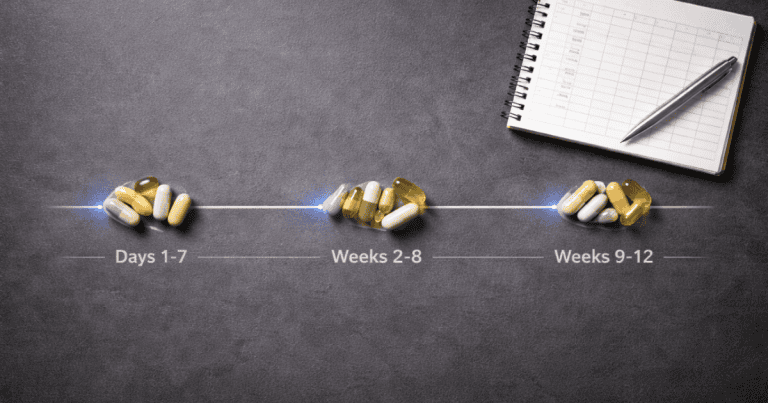
| Time to effect | 8–12 weeks minimum. This is structural, not acute — judging it after a few days or weeks is the main reason people wrongly conclude it does nothing. |
| Cycling | Not needed. There’s no tolerance mechanism; PS integrates into membranes over time, so consistent daily use is the point. |
What PS is, and what it plausibly does
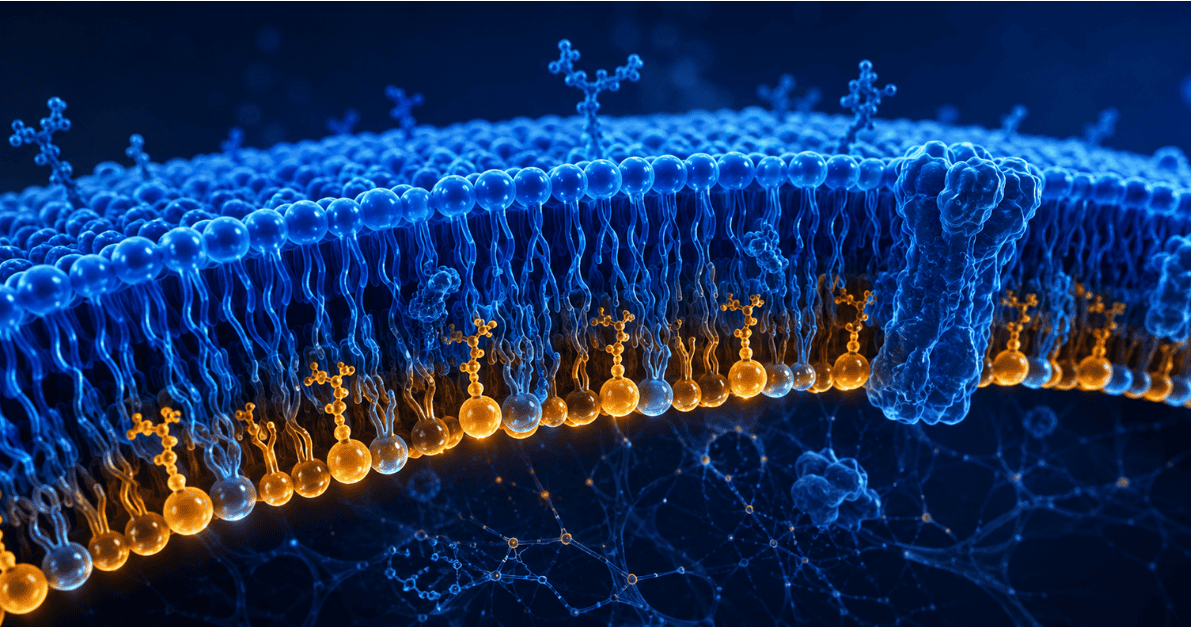
PS is a phospholipid concentrated in the inner leaflet of neuronal cell membranes, where it contributes to membrane integrity, fluidity and charge. Those physical properties genuinely matter — they influence ion-channel function, receptor behaviour and neurotransmitter release. Brain PS content tends to decline with age, and the core hypothesis is that restoring it supports membrane function. This structural role is PS’s best-supported and most distinctive mechanism.
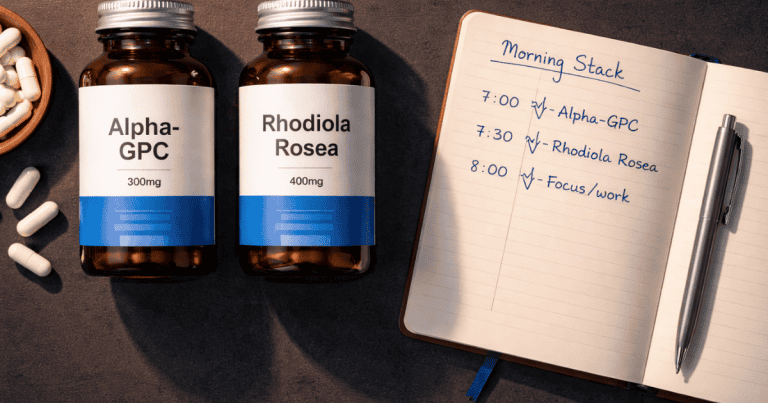
PS is also involved in the release of neurotransmitters — including acetylcholine — at the presynaptic membrane, which is why it’s sometimes framed as a companion to a choline donor like Alpha-GPC: one supplies the raw material for acetylcholine, the other supports the membrane environment for its release. That pairing is mechanistically reasonable, but worth labelling honestly as a plausible framework rather than a proven synergy — no trial has tested the specific combination for cognitive outcomes.
The mechanism with the most concrete human data is unexpected: PS blunts the cortisol and ACTH response to physical stress. Chronic oral PS has been shown to dampen the HPA-axis response to exercise in healthy men, and because sustained high cortisol impairs working memory and is unkind to the hippocampus, that stress-buffering effect is a plausible indirect cognitive benefit — one that operates separately from the membrane story. It’s a real effect, though the studies are small and some used doses above the 300mg cognitive protocol.
The clinical evidence — and which PS it used
The FDA “qualified health claim” — read the small print
In 2003 the FDA permitted a qualified health claim that consuming PS “may reduce the risk of dementia” and “cognitive dysfunction in the elderly.” That’s often cited as if the FDA endorsed PS. It didn’t. A qualified claim is one the FDA allows a marketer to make provided it’s accompanied by the agency’s own disclaimer — and here the required disclaimer states the research is “very limited and preliminary” and that “there is little scientific evidence supporting this claim.”
So the honest reading is the opposite of the usual spin: the qualified claim exists precisely because the FDA judged the evidence too weak for an unqualified one. It’s a genuine regulatory footnote — PS is the only nootropic with even this status — but it is not proof of efficacy, and it certainly isn’t the ringing endorsement it’s marketed as.
Landmark RCT — bovine PS
Crook et al. (1991)
The defining trial: 149 adults aged 50–75 with age-associated memory impairment, double-blind and placebo-controlled, 300mg PS daily for 12 weeks, with significant gains across memory tasks — name recall, telephone numbers, paragraph recall — and the largest gains in those most impaired at baseline (Crook et al., 1991). It’s a good study. The critical detail the marketing omits: it used bovine-cortex PS, not the soy or sunflower PS you can buy now.
Large replication — bovine PS
Cenacchi et al. (1993)
One of the largest PS trials: 494 elderly patients with cognitive decline, 300mg PS daily for six months, double-blind and multicentre, with improvements in cognitive and behavioural measures versus placebo (Cenacchi et al., 1993). The six-month duration is a genuine strength. But again — bovine-cortex PS. Together, Crook and Cenacchi are the backbone of PS’s reputation, and together they studied a form no longer on the market.
The gap that matters: bovine vs soy/sunflower PS
Bovine-brain PS was withdrawn after the BSE (“mad cow”) era over theoretical prion-transmission risk — the right call for safety, but it left the strongest efficacy data attached to a product nobody sells. Manufacturers switched to soy- and sunflower-derived PS, which differ from bovine PS in their fatty-acid composition, not just their source.
The honest state of play: the evidence for the plant-derived PS actually sold today is weaker and more mixed than the bovine-PS record — some trials of soy-PS in age-related memory complaints have shown benefit, others little or none. It’s reasonable to expect some transfer of effect, since the active phospholipid is the same class, but you should not assume the soy or sunflower capsule in your hand delivers the effect sizes Crook and Cenacchi reported with bovine PS. Anyone selling you PS on the strength of those trials, using a plant-derived product, is quietly relying on a substitution the evidence doesn’t fully justify.
Cortisol / HPA axis
Monteleone and the stress-buffering line of work
Separate from the memory trials, a line of research has shown PS blunting the cortisol and ACTH response to physical stress — chronic oral PS dampened the HPA-axis response to exercise in healthy men (Monteleone et al., 1992), with later work in athletes pointing the same way at doses around 600mg. These are small studies, and several used higher doses than the cognitive protocol, so treat the cortisol effect as real-but-modest rather than a headline benefit. It’s the mechanism most likely to be behind any “calmer under pressure” feeling people report.
Evidence hierarchy
Regraded to separate the bovine-PS record from the plant-derived PS actually sold. 🟢 Strong · 🟡 Moderate / form-dependent · 🔴 Limited
Dosing: what the trials actually used
The trials showing cognitive benefit used 300mg daily, split into three 100mg doses with meals. This isn’t arbitrary — PS is fat-soluble, so taking it with food improves absorption, and divided dosing is what the successful studies did. A single 300mg dose is less well-matched to the evidence. For healthy adults experimenting on the thinner evidence base, 100–200mg daily is a sensible entry point; there’s no signal that doses above 300mg add cognitive benefit.
The timeline matters more than the dose for setting expectations. PS is not an acute enhancer — the trials ran 8–12 weeks minimum, because the proposed mechanism is the gradual restoration of membrane phospholipid content, not a same-day pharmacological effect. If you evaluate PS after a fortnight and feel nothing, that’s expected, not a verdict. Give it a proper 10–12 week trial or don’t bother starting.
🧮 Worked example — running a fair 12-week PS trial on yourself
Because PS is slow and subtle, an honest self-test needs structure, or you’ll just measure your own expectations. Here’s how to do it in a way that could actually detect a real effect:
Pick one outcome that matters to you, before you start. PS’s evidence is strongest for memory in older adults, so choose something concrete — say, a short weekly name-and-face recall task, or a standardised memory test — rather than a vague “feel sharper.” Decide the measure first so you can’t move the goalposts later.
Baseline for two weeks before dosing. Run your chosen measure several times with no PS, to capture your normal range and its week-to-week wobble. A single “before” score is nearly useless — you need to know how much you naturally vary.
Dose correctly for the full window. 100mg with each of three meals, every day, for at least 10–12 weeks. Track adherence honestly — missed doses are the commonest reason a fair trial turns into a muddle.
Worked judgement: if by week 12 your memory scores sit clearly and consistently above the range you established at baseline — not just above a single low day — that’s a signal worth acting on. If they sit inside your normal variation, the honest conclusion is “no detectable effect for me,” and the right move is to stop, since the cost of an inert daily supplement adds up. Note the built-in humility: you can’t blind yourself, so even a positive result carries some expectation effect. What this structure buys you is the ability to rule out the most obvious way of fooling yourself.
Named Protocol
The NeuroEdge Cholinergic-Support Protocol — PS Layer
PS as the membrane-support layer alongside a choline donor. A reasonable framework — not a trial-proven synergy — so treat it as structured experimentation.
PS dosing
100mg with each main meal — 300mg total daily, taken with food. Soy- or sunflower-derived only. Consistent daily use, no cycling.
Pair with a choline donor
The membrane-support rationale pairs PS with a choline source such as Alpha-GPC. Mechanistic, not trial-proven — see that guide for its own evidence.
Timeline
Evaluate over 10–12 weeks against a proper baseline — track it properly rather than by feel.
Honest expectation
Strongest case if you’re older with memory complaints. If you’re young and healthy, expect little — and be willing to stop.

Peter’s Testing Notes
First-person, n=1 — reported honestly
I added PS to my protocol in 2020 at 300mg daily, split across three meals, and I’ve kept it there for four years. I use a soy-derived softgel at 100mg per capsule — soy-PS has the larger evidence base of the plant-derived forms, and the softgel format suits a fat-soluble compound. My reason for adding it was mechanistic: I’d been using a choline donor and wanted the membrane-support side of the picture as well. I went in knowing the honest limitation that the strongest PS trials used the bovine form I wasn’t taking.
On what I actually observed, I’ll be careful, because a previous version of these notes quoted specific Creyos percentages and I’ve removed them. I ran the additions unblinded, chose my own testing windows, and was looking for the memory effect the literature predicts — which is precisely the recipe for reading a real-looking signal out of noise. My honest summary is a possible, modest sense of steadier recall over long working days, fully confounded, and nothing I’d present as a measured number.
The one thing I’d stand behind more firmly is subjective: I notice less of the stress-driven fog on high-pressure days, which is at least consistent with PS’s cortisol-blunting evidence — though I can’t separate it from the rest of my routine. So I keep PS on the strength of a sound mechanism, a genuine (if form-caveated) trial record, and a plausible stress effect I actually feel — not because I’ve proven anything about my own cognition. If you’re young and healthy, I’d temper your expectations well below the marketing.
Sourcing standards for phosphatidylserine
Three decisions matter: source, dose per capsule, and manufacturing quality. On source — soy-derived PS has the larger plant-derived evidence base (and was used in later soy-PS trials), while sunflower-derived (Sharp-PS Green) is the soy-free alternative; for most people without a soy sensitivity, either is reasonable, and neither carries the prion-risk history of bovine PS, which you should avoid entirely. On dose, a 100mg-per-softgel product maps cleanly onto the 3×100mg clinical schedule. On quality, look for a stated PS content on the label rather than a vague “phospholipid complex,” third-party testing, and softgel delivery for a fat-soluble compound.
Label check: soy- or sunflower-derived (never bovine) · a stated PS content in mg (not just “phospholipid complex”) · softgel format · third-party testing. And keep the honest expectation in mind — plant-derived PS has weaker evidence than the bovine PS in the landmark trials.
Jarrow Formulas PS 100 — what I use
Soy-derived PS at 100mg per softgel — three daily maps directly onto the 3×100mg clinical schedule. Clear PS-content declaration (not a generic complex), third-party tested, softgel delivery, and among the more cost-effective ways to reach 300mg/day. This is the product I’ve used for four years.
Mind Lab Pro — all-in-one option
Includes Sharp-PS Green (sunflower-derived, soy-free) at 100mg per serving alongside Citicoline, Bacopa, Lion’s Mane and Rhodiola. Convenient if you’d rather not assemble compounds individually — but note its 100mg PS is a third of the 300mg clinical dose, so it’s a broad daily base rather than a full PS protocol.
Who has the strongest case
Illustrative examples, not real individuals or testimonials. These are composite profiles built to show common usage patterns — they do not describe specific people and contain no invented outcomes presented as results. Individual responses vary; nothing here is a typical-results claim.
The older adult with memory complaints
The population the trials matched — the strongest case to try PS for a proper 10–12 week window. The realistic hope is a modest steadying of memory, kept in perspective by the bovine-vs-plant evidence gap, and paired with the sleep and exercise basics that move cognition more.
The high-stress performer
Someone whose main problem is performing under pressure has a plausible case via PS’s cortisol-blunting effect — the best-evidenced mechanism here — though the studies are small and some used higher doses. A reasonable experiment, judged over weeks, not days.
The healthy young optimiser
Has the weakest case — little direct evidence in healthy young adults, and the plant-PS caveat on top. Not unreasonable to try, but with genuinely low expectations and a readiness to conclude it does nothing perceptible and stop.
Cautions & Interactions
Blood thinners — the interaction to take seriously. PS has mild anticoagulant activity and may add to the effect of warfarin, aspirin at therapeutic doses, and other anticoagulant or antiplatelet drugs, raising bleeding risk. If you take any of these, don’t start PS without your prescribing doctor’s input. This is the most important item on the list, which is why it’s first.
Never buy bovine-derived PS. The original trial form was withdrawn over theoretical prion-transmission risk in the BSE era. Modern soy- and sunflower-derived PS carry no such concern — but if a product lists bovine brain as a source, do not buy it.
Side effects and timing. PS is generally well tolerated; the most common complaint is mild stomach upset, usually resolved by taking it with food — which is the correct protocol anyway. A minority report trouble sleeping if a dose lands too close to bedtime; keep the last dose to dinner rather than later.
Pregnancy and breastfeeding. Not recommended, due to insufficient safety data in these populations rather than any specific known harm.
This is not a complete list. PS at 300mg daily has a good tolerability record in healthy adults, but the blood-thinner interaction is real — if you take any prescription medication, particularly anticoagulants, check with your doctor or pharmacist first. See our nootropic safety guide for broader principles.
Key takeaways
| → | The strong trials used bovine PS, which isn’t sold anymore. The soy/sunflower PS you can buy has weaker, mixed evidence — the most important thing to know about PS. |
| → | The FDA qualified health claim came with the FDA’s own disclaimer that the evidence is “very limited and preliminary” — it’s a footnote, not an endorsement. |
| → | Dose 300mg daily, 3×100mg with meals, and give it 8–12 weeks — it’s structural and slow, not acute. |
| → | The cortisol/stress-blunting effect is PS’s most concrete human mechanism — real but small. Best case overall: older adults with memory complaints. |
| → | Mind the blood-thinner interaction, and never buy bovine-derived PS. |
Frequently asked questions
Does the FDA claim mean phosphatidylserine is proven to work?
No — and this is widely misunderstood. In 2003 the FDA permitted a qualified health claim that PS “may reduce the risk of dementia and cognitive dysfunction in the elderly.” But a qualified claim must be published alongside the FDA’s own disclaimer, and here that disclaimer states the research is “very limited and preliminary” and that “there is little scientific evidence supporting this claim.” In other words, the qualified claim exists because the FDA judged the evidence too weak for an unqualified one. It’s a genuine distinction — no other nootropic has even this — but it is not proof of efficacy, and it shouldn’t be read as an FDA endorsement.
Is soy-derived or sunflower-derived PS better — and does it matter that the old studies used bovine?
Both soy and sunflower PS are fine choices; soy has the larger plant-derived evidence base, sunflower (Sharp-PS Green) is the soy-free alternative. The bigger point is the one the marketing skips: the landmark trials (Crook, Cenacchi) used bovine-brain PS, which was withdrawn over prion-risk history and is no longer sold. Soy and sunflower PS differ from bovine PS in fatty-acid composition, and the evidence for the plant-derived forms is weaker and more mixed. So choose soy or sunflower for safety and availability — just don’t assume they replicate the bovine-PS effect sizes, because the evidence doesn’t clearly show that they do.
How long does phosphatidylserine take to work?
The trials showing cognitive benefit ran 8–12 weeks or longer. PS is thought to work by gradually supporting neuronal membrane composition, which is a slow, structural process rather than an acute pharmacological one. It is not something you’ll feel within hours or days, and evaluating it on that basis is the most common reason people wrongly conclude it “doesn’t work.” Commit to a consistent 10–12 week trial at 300mg daily before judging it, ideally against a measured baseline rather than by feel.
Can I take phosphatidylserine with other nootropics?
Generally yes — PS has no known adverse interactions with common nootropic compounds at standard doses, and it’s often paired with a choline donor such as Alpha-GPC on the membrane-support rationale. Bear in mind that pairing is mechanistic reasoning, not a trial-proven combination. The one genuine interaction to respect is with blood-thinning medication, given PS’s mild anticoagulant activity — that’s a medical conversation, not a nootropic-stacking one. See the stacking guide for combining compounds sensibly.
Does phosphatidylserine need to be cycled?
No. Unlike compounds that build tolerance, PS is a structural phospholipid that integrates into cell membranes over time, so there’s no receptor downregulation to reset and no reason to cycle. Continuous daily use at 300mg is the intended pattern, and the six-month Cenacchi trial supported both efficacy and tolerability over that duration. If you stop, you simply lose whatever benefit the supplementation was providing — cycling offers no advantage here.
Get “7 Days to a Sharper Brain” — Free
Peter Benson’s personal daily protocol, rebuilt from 18 years of testing
Seven evidence-based interventions, in the exact order that makes each one more effective — from sleep foundation to your complete assembled daily stack.
Join 2,000+ readers optimising their cognitive performance. Unsubscribe anytime.
Scientific references
1. Crook, T. H., Tinklenberg, J., Yesavage, J., Petrie, W., Nunzi, M. G., & Massari, D. C. (1991). Effects of phosphatidylserine in age-associated memory impairment. Neurology, 41(5), 644–649. PMID: 2027477 (bovine-cortex PS)
2. Cenacchi, T., Bertoldin, T., Farina, C., Fiori, M. G., & Crepaldi, G. (1993). Cognitive decline in the elderly: a double-blind, placebo-controlled multicenter study on efficacy of phosphatidylserine administration. Aging (Milano), 5(2), 123–133. PMID: 8323999 (bovine-cortex PS)
3. Monteleone, P., Maj, M., Beinat, L., Natale, M., & Kemali, D. (1992). Blunting by chronic phosphatidylserine administration of the stress-induced activation of the hypothalamo-pituitary-adrenal axis in healthy men. European Journal of Clinical Pharmacology, 42(4), 385–388. DOI: 10.1007/BF00280123
4. Glade, M. J., & Smith, K. (2015). Phosphatidylserine and the human brain. Nutrition, 31(6), 781–786. PMID: 25933483 (review)
5. Richter, Y., Herzog, Y., Lifshitz, Y., Hayun, R., & Zchut, S. (2013). The effect of soybean-derived phosphatidylserine on cognitive performance in elderly with subjective memory complaints: a pilot study. Clinical Interventions in Aging, 8, 557–563. DOI: 10.2147/CIA.S40348 (soy-derived PS)
6. U.S. Food and Drug Administration. (2003). Qualified Health Claims: Letter of Enforcement Discretion — Phosphatidylserine and Cognitive Dysfunction and Dementia (Docket No. 02P-0413).
Peter Benson
Cognitive Enhancement Researcher | 18+ Years Independent Research
Peter has used phosphatidylserine daily for four years. This guide was re-verified against source and revised to surface the bovine-vs-plant PS evidence gap, present the FDA qualified health claim in its true (heavily qualified) context, and correct two mis-numbered trial citations. He is not a clinician; this is educational, not medical advice.
Last reviewed: July 2026