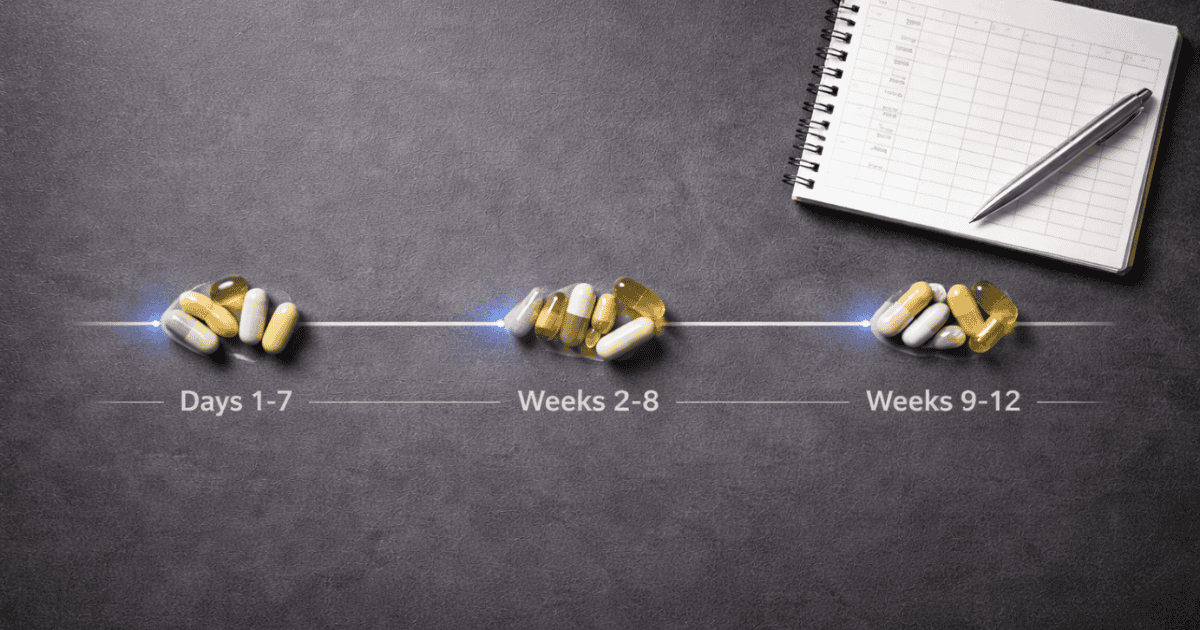
What to Expect from Nootropics: A Realistic 90-Day Timeline
Medical Disclaimer: The information in this article is for educational purposes only and does not constitute medical advice. Always consult a qualified healthcare provider before beginning any supplement regimen. Individual responses to nootropics vary significantly. Results described in this guide reflect averages across research populations and personal experience — your individual timeline may differ.
The most damaging thing the nootropics industry does is sell unrealistic expectations. Products promise razor-sharp focus within minutes, photographic memory within days, and profound cognitive transformation within weeks. The reality — backed by nearly two decades of my own research and the clinical literature — is more nuanced, more honest, and ultimately more useful.
Nootropics work. The evidence is clear and growing. But they work on biological timelines that the marketing industry consistently misrepresents. Some compounds deliver noticeable effects within an hour. Others require eight to twelve weeks of consistent use before their benefits become measurable. Many produce their most significant results only after several months of systematic protocol adherence combined with the lifestyle fundamentals that no supplement can replace.
Understanding what to expect from nootropics — and precisely when to expect it — is the difference between a successful, sustainable cognitive enhancement practice and a cycle of disappointment, abandoned protocols, and wasted investment. This guide gives you the honest 90-day timeline that the supplement industry won’t.
If you haven’t yet established your compound selection and protocol, I recommend starting with my guides on the 5 best nootropics for beginners, the nootropic stacking guide, and the evidence-based dosing and timing protocols before using this timeline as your reference point. This article is most useful once you have a protocol in place and need to know what a realistic success trajectory actually looks like.
Why Setting Realistic Expectations Is the Foundation of Success
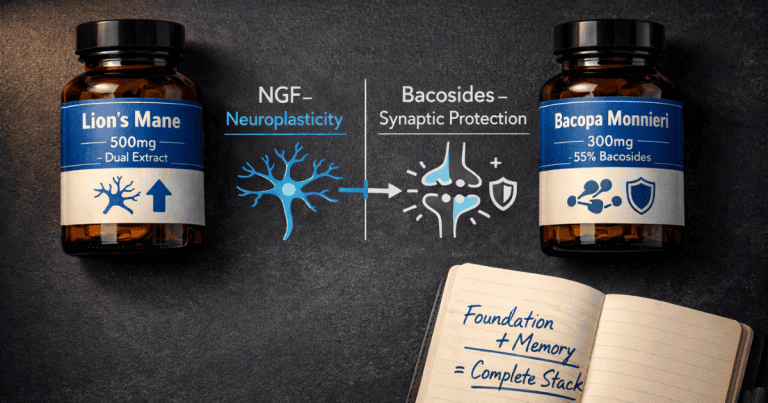
The number one reason people abandon nootropic protocols that would eventually work is premature evaluation. They start Lion’s Mane, feel no dramatic effect after two weeks, conclude it is ineffective, and stop — three to four weeks before the neuroplasticity mechanisms that make Lion’s Mane valuable would have begun producing measurable results.
This pattern is well-documented in supplement research. The meta-analysis of Bacopa Monnieri clinical trials — the most comprehensive review of Bacopa’s cognitive effects — found that statistically significant memory improvements consistently emerged between weeks 8 and 12 of continuous use. Trials measuring outcomes at 4 weeks showed minimal effects. The same compound, at the same dose, produced dramatically different results depending on how long it was given to work.
Unrealistic expectations also create a more subtle problem: they cause people to misattribute normal daily variation to nootropic failure. Research on cognitive performance variability confirms that focus, memory, and mental energy fluctuate significantly day-to-day based on sleep quality, hydration, stress, and dozens of other variables. Someone assessing their nootropic on a high-stress Monday after poor sleep will reach very different conclusions than someone assessing it on a well-rested, low-stress day — neither assessment reflects the compound’s actual effect.
Systematic tracking over time eliminates this noise. The 90-day framework in this article gives you the structure to do that effectively.
Before the Clock Starts: Establishing Your Baseline (Week 0)
The most important step in any nootropic protocol happens before you take a single supplement. Establishing a clear cognitive baseline — a documented record of your normal mental performance — is what makes it possible to measure real improvement versus placebo response or natural daily variation.
Spend two weeks before starting any new compound tracking the following metrics daily:
Morning mental clarity: Rate on a 1–10 scale within 30 minutes of waking, before caffeine. This captures your baseline cognitive readiness and tracks improvements in overnight recovery and neurological repair over time.
Focus duration: How long can you maintain unbroken concentration on a demanding task before needing a break? Track this in minutes during your primary work session. Research on sustained attention and cognitive performance confirms that focus duration is one of the most sensitive and reliable self-measurable proxies for overall cognitive function.
Memory performance: A simple daily test — review five to ten new pieces of information (vocabulary words, names, concepts from reading) and test your recall 24 hours later. Track percentage recalled. This gives you a concrete, objective memory baseline that is not subject to the mood biases that affect subjective ratings.
Afternoon energy and mental stamina: Rate on a 1–10 scale at 3pm. The afternoon represents the natural cognitive trough of the day — improvements here are often the first and most noticeable sign that a protocol is working.
Sleep quality: Rate on a 1–10 scale immediately upon waking. Sleep quality is both a baseline metric and a critical variable that interacts with every nootropic in your protocol. Research published in Nature and Science of Sleep consistently demonstrates that cognitive performance is more sensitive to sleep quality than to any supplement intervention — making sleep tracking non-negotiable in any serious self-experimentation protocol.
Two weeks of daily tracking produces a reliable average across each metric. This is your baseline. Every assessment going forward compares to these averages, not to individual good or bad days.
Free Download
Get the Complete Nootropics Starter Kit
Top 5 Nootropics Guide · Safety Checklist · Dosage Protocols · Quality Source Guide — everything you need to start safely and effectively.
Join 2,000+ readers optimizing their cognitive performance. Unsubscribe anytime.
The Realistic 90-Day Nootropic Timeline
The following timeline applies to a beginner protocol built around the compounds covered in my foundational guides — the caffeine-theanine focus stack combined with the Lion’s Mane, Bacopa, and DHA neuroplasticity stack. This is the most evidence-supported starting protocol and the one with the most predictable timeline of effects.
Days 1–7: The Acute Response Window
What you will notice: The caffeine-theanine combination produces its characteristic effects from day one — smoother focus, reduced coffee-related anxiety, more sustained energy without the mid-morning spike and crash. This is not placebo. The double-blind research confirming the caffeine-theanine synergy found measurable improvements in sustained attention and alertness within 60–90 minutes of ingestion.
What you will not notice yet: Any effects from Lion’s Mane, Bacopa Monnieri, or DHA. These compounds work through mechanisms — NGF stimulation, synaptic remodeling, membrane fluidity optimization — that require consistent accumulation over weeks. Expecting to feel them in week one is equivalent to expecting visible muscle growth after your first gym session.
What to track: Record your focus duration, afternoon energy, and morning clarity daily. Note how the caffeine-theanine combination compares to your baseline caffeine experience. Most people report a 20–30% improvement in focus duration and a significant reduction in post-caffeine anxiety within the first week.
Common mistake to avoid: Do not add new compounds during this window. Let your body establish a clear baseline response to the initial stack before introducing additional variables.
Weeks 2–4: Protocol Stabilization
What you will notice: The acute effects of the caffeine-theanine stack become more consistent and predictable as your body adapts to the protocol rhythm. Morning mental clarity ratings should begin trending slightly upward even before your first dose — this reflects the cumulative benefit of more consistent sleep and the gradual anti-inflammatory effects of DHA accumulating in neural tissue.
Early DHA effects: Research on DHA supplementation timelines suggests that plasma DHA levels begin rising within two weeks of consistent supplementation, with neural tissue levels following over subsequent weeks. You are unlikely to notice acute cognitive effects from DHA this early, but the biological foundation for later improvements is being laid during this period.
Lion’s Mane early phase: Some users report subtle improvements in mental clarity and word retrieval during weeks three and four. These early effects are real but modest — the clinical research on Lion’s Mane suggests that NGF levels begin responding to consistent supplementation within 2–3 weeks, though the downstream cognitive effects of elevated NGF take considerably longer to manifest.
What to track: Continue daily metric tracking. Compare your week 3–4 averages to your baseline. Focus duration improvements of 15–25% above baseline are common at this stage — primarily attributable to the caffeine-theanine stack and improved protocol consistency.
Adjustment window: If you are experiencing any negative effects — headaches, sleep disruption, digestive discomfort — this is the window to identify and address them. Refer to the dosing and timing principles in my evidence-based dosing guide to troubleshoot before abandoning a compound.
Weeks 5–8: The Neuroplasticity Window Opens
What you will notice: This is where the protocol begins delivering its most interesting results. By weeks five through eight, consistent Lion’s Mane supplementation has produced meaningful elevations in NGF production, and the downstream effects on neuronal connectivity begin becoming perceptible. Most users in this window report improvements in learning speed — new information feels easier to absorb and connect to existing knowledge — and a subtle but noticeable improvement in creative thinking and mental flexibility.
Research on NGF and neuroplasticity confirms that sustained NGF elevation over this timeframe produces measurable changes in synaptic density and connectivity — biological changes that manifest as the cognitive improvements users begin reporting during this window.
Bacopa early effects: By week six to eight, some users begin noticing the first signs of Bacopa’s memory-enhancing effects — slightly faster recall of recently learned information, improved retention across sleep cycles, and a subtle but consistent reduction in the tip-of-the-tongue phenomenon that many people experience during periods of high mental load. These effects will continue developing through week twelve.
Sleep quality improvements: If you are using L-theanine in the evening (200–400mg, 60 minutes before bed), most users report measurable improvements in sleep quality by weeks six to eight. Research on L-theanine and sleep architecture demonstrates improvements in sleep efficiency and reduction in sleep latency — benefits that compound over time as better sleep reinforces the cognitive gains from your daytime protocol.
What to track: Add a memory recall test to your daily tracking if you haven’t already. Compare your week 6–8 averages to your baseline across all metrics. Most users at this stage show 25–40% improvements in focus duration, 15–20% improvements in morning clarity, and the first measurable improvements in memory recall performance above baseline.
Weeks 9–12: Peak Initial Protocol Effects
What you will notice: Weeks nine through twelve represent the peak of initial protocol effects for most users. Bacopa Monnieri reaches its primary window of efficacy during this period — the meta-analysis of nine clinical trials found that the most statistically significant memory improvements consistently emerged between weeks eight and twelve. Memory recall, information retention, and learning speed improvements should be clearly measurable against your baseline by week twelve.
Compounding neuroplasticity effects: Lion’s Mane has now been working for ten to twelve weeks. The cumulative NGF elevation over this period has produced meaningful structural changes in neural connectivity that go beyond the acute focus benefits of the caffeine-theanine stack. Many users report improvements in creative problem-solving, the ability to hold and manipulate complex information in working memory, and a general sense of cognitive fluency — ideas connect more readily, language comes more easily, and complex tasks feel less effortful.
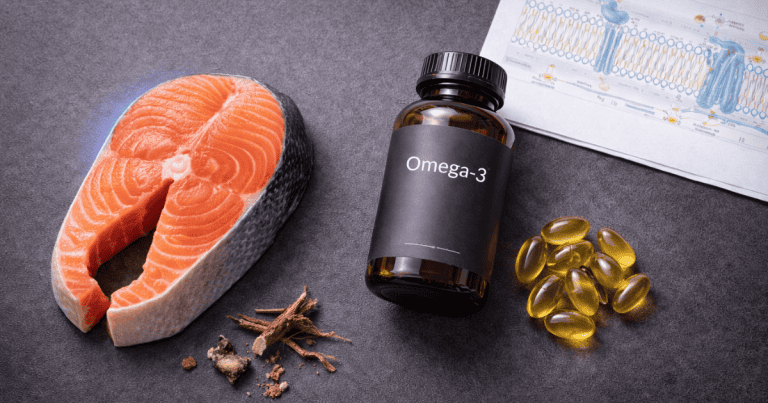
DHA structural contribution: After twelve weeks of consistent DHA supplementation, research on omega-3 tissue incorporation suggests that neural membrane DHA levels have increased meaningfully from baseline, improving neuronal membrane fluidity and synaptic transmission efficiency. These structural improvements form the biological substrate that makes all other cognitive enhancement more effective — DHA is not a cognitive enhancer in the acute sense, but it makes your brain more responsive to everything else in your protocol.
Formal 90-day assessment: At week twelve, conduct a full comparison of your current averages across all tracked metrics versus your pre-protocol baseline. A well-implemented beginner protocol should show focus duration improvements of 30–50% above baseline, memory recall improvements of 20–35% above baseline, morning clarity improvements of 15–25% above baseline, and meaningful reductions in afternoon mental fatigue. These are the ranges reported in clinical research and consistent with what I have observed in practice across hundreds of people.
What to do with the data: If your results fall clearly within these ranges, your protocol is working — continue it. If results are below this range, review the quality of your compounds (standardization, sourcing), your consistency of use, and the lifestyle fundamentals that amplify or undermine any protocol. My guide on sleep and recovery optimization addresses the single most common lifestyle factor that limits nootropic effectiveness.
Beyond 90 Days: What Continued Use Delivers
The 90-day mark is not a finish line — it is the point at which the foundation is established and the more significant long-term benefits become accessible. Here is what continued protocol adherence delivers beyond the initial ninety days.
Months 4–6: Deepening Cognitive Baseline
The distinction between acute nootropic effects and a genuinely elevated cognitive baseline becomes clearest during this period. Users who have maintained consistent protocols for four to six months often report that their normal cognitive performance — without any acute nootropic in their system — feels meaningfully higher than it did before they started. This reflects the structural neuroplasticity changes that Lion’s Mane and DHA have produced over months of consistent use: more dendritic connections, better membrane function, improved synaptic efficiency.
Neuroplasticity research confirms that structural brain changes from sustained NGF elevation and membrane optimization are durable — they persist even during protocol breaks, which is why long-term consistent use produces qualitatively different outcomes than short-term supplementation.
Months 6–12: Protocol Refinement and Advanced Progression
By six months, you have enough personal data to make genuinely informed decisions about protocol refinement. You know which compounds produce the clearest benefits for your specific neurochemistry, which timing windows work best with your schedule, and which metrics respond most sensitively to your protocol. This is the foundation from which the intermediate and advanced stacking protocols in my stacking guide can be introduced systematically and evaluated accurately.
Factors That Affect Your Personal Timeline
The timeline above reflects averages. Individual variation is significant, and several factors will accelerate or slow your personal results relative to those averages.
Baseline Cognitive Status
People with lower baseline cognitive performance — due to chronic sleep deprivation, nutritional deficiencies, high chronic stress, or sedentary lifestyle — often see the most dramatic early improvements because they have the most room to improve. People who already optimize sleep, exercise regularly, and eat well may see more modest percentage improvements from the same protocol, though their absolute cognitive performance will be higher throughout.
Sleep Quality
This is the single largest modifier of nootropic effectiveness. Research on sleep deprivation and cognitive performance confirms that even one night of reduced sleep quality impairs working memory, attention, and executive function more than most nootropics can compensate for. A person sleeping seven to nine hours of quality sleep will get dramatically more from their nootropic protocol than a person sleeping five to six hours regardless of how perfectly they dose and time their compounds.
Compound and Extract Quality
A study analyzing herbal supplement quality found that a significant proportion of products contained less active ingredient than labeled — sometimes dramatically less. If your Lion’s Mane product is not standardized to beta-glucan content from the fruiting body, or your Bacopa is not standardized to 45% bacosides, your timeline will be longer and your results less predictable than what the research suggests. Source quality is not a secondary consideration.
Protocol Consistency
Missing doses has a disproportionate impact on cumulative-effect compounds like Bacopa and Lion’s Mane. Missing even 20–30% of doses can extend the timeline to noticeable effects by several weeks and reduce peak benefit. Consistency is not perfectionism — it is the basic requirement for the biological mechanisms to accumulate as the research predicts.
Age and Baseline Neuroplasticity
Younger individuals (under 35) typically have higher baseline neuroplasticity and may notice Lion’s Mane effects somewhat more quickly. Older individuals (over 45) often experience more dramatic long-term benefits from consistent neuroplasticity support, as their baseline NGF production and neuroplasticity are lower and the relative improvement from supplementation is greater. Research on age-related neuroplasticity decline supports this pattern and underscores why long-term consistent use of neuroplasticity-supporting compounds is particularly valuable as a preventive strategy.
What Nootropics Will Not Do: Setting Honest Limits
Honest guidance requires addressing what nootropics cannot deliver as clearly as what they can. The following are common misexpectations that set people up for disappointment.
Nootropics will not compensate for poor fundamentals. No stack produces cognitive enhancement equivalent to what seven to nine hours of quality sleep, regular aerobic exercise, and adequate nutrition deliver. Research on exercise and cognitive function confirms that consistent aerobic exercise produces BDNF increases comparable to some of the most potent neuroplasticity-supporting supplements — and the two are synergistic, not interchangeable.
Nootropics will not create abilities that aren’t there. They enhance what exists — they sharpen focus that is already present, improve memory that is already functional, reduce fatigue that is already manageable. They do not produce superhuman cognition in people with normal cognitive function. Improvements of 20–50% above your personal baseline are realistic and meaningful. Triple-digit performance gains are not.
Nootropics will not work instantly for cumulative compounds. If you take Bacopa for four weeks and feel nothing, that is expected. If you take it for twelve weeks at the clinical dose from a standardized extract and feel nothing, that is useful data about your individual response — but four weeks is not a fair assessment of a compound that requires twelve.
Nootropics are not a substitute for addressing underlying health issues. Chronic brain fog, persistent fatigue, significant memory impairment, or severe difficulty concentrating warrant evaluation by a healthcare provider. Nootropics are optimization tools for healthy cognitive function — not treatments for medical conditions.
Frequently Asked Questions About Nootropic Timelines
How long does it take for nootropics to work?
It depends entirely on the compound. Caffeine and L-theanine produce noticeable effects within 30–90 minutes of ingestion from day one. Rhodiola Rosea acts within 1–2 hours. Lion’s Mane requires 4–8 weeks of consistent daily use before most users notice cognitive improvements, and its full effects develop over 8–12 weeks. Bacopa Monnieri requires a minimum of 8 weeks and produces its most significant memory improvements between weeks 8–12. DHA works as a structural nutrient and produces cumulative benefits over months of consistent use.
What cognitive improvements can I realistically expect from nootropics?
Realistic improvements from a well-implemented beginner protocol over 90 days include focus duration improvements of 30–50% above your personal baseline, memory recall improvements of 20–35% above baseline, measurable reductions in afternoon mental fatigue, and improved learning speed — the ability to absorb and retain new information more efficiently. These figures reflect averages from clinical research and real-world protocol adherence. Individual results vary based on sleep quality, compound sourcing, consistency of use, and baseline cognitive status.
Why am I not feeling any effects from my nootropics?
The most common reasons for not noticing nootropic effects are: under-dosing relative to the clinical research dose, using unstandardized or low-quality extracts, evaluating slow-acting compounds (Lion’s Mane, Bacopa) before 8 weeks of consistent use, taking fat-soluble compounds without food, taking stimulatory compounds at the wrong time, or having lifestyle factors — particularly poor sleep — that override the compounds’ effects. Review your protocol against the evidence-based dosing and timing guide before concluding a compound is ineffective for you.
Should I take a break from nootropics?
For stimulatory compounds like caffeine and Rhodiola Rosea, periodic breaks are recommended to maintain receptor sensitivity — typically 1–2 days per week for caffeine, or 2-week breaks every 8 weeks for Rhodiola. For neuroplasticity compounds like Lion’s Mane, Bacopa Monnieri, Phosphatidylserine, and DHA, breaks are not recommended and counterproductive — these compounds produce their best results with uninterrupted long-term consistent use, and breaks reset the accumulation process.
How do I know if my nootropic protocol is actually working?
The only reliable way to assess nootropic effectiveness is systematic tracking compared to a documented pre-protocol baseline. Establish a two-week baseline measuring morning mental clarity, focus duration, memory recall accuracy, afternoon energy, and sleep quality — all on consistent numerical scales. After 8–12 weeks of protocol adherence, compare your current averages to your baseline averages. The difference in averages across the full tracking period is your real result — not how you felt on any individual day.
Your 90-Day Commitment: What It Delivers
The honest promise of a well-implemented nootropic protocol is not dramatic transformation. It is a meaningful, measurable, and durable elevation of your cognitive baseline — better focus, better memory, better mental stamina, and a brain that is structurally healthier than it was ninety days ago.
That is worth the patience the timeline requires. The readers I have worked with who commit fully to a ninety-day protocol — correct doses, quality compounds, consistent timing, daily tracking, and the sleep and lifestyle fundamentals that amplify everything — consistently report that it is among the most valuable personal investments they have made in their long-term cognitive performance.
The compounds work. The mechanisms are documented. The timeline is predictable. What is required from you is patience, consistency, and the discipline to track your results rather than relying on how you feel on any given day.
Start with the right compounds — my guide to the 5 best nootropics for beginners covers the foundational selections. Combine them intelligently using the stacking guide. Dose and time them correctly with the evidence-based dosing protocols. Then give the timeline the respect it deserves.
References
- Kongkeaw, C., et al. (2014). Meta-analysis of randomized controlled trials on cognitive effects of Bacopa monnieri extract. Journal of Ethnopharmacology, 151(1), 528–535. PubMed
- Mori, K., et al. (2009). Improving effects of the mushroom Yamabushitake on mild cognitive impairment. Phytotherapy Research, 23(3), 367–372. PubMed
- Mori, K., et al. (2009). Nerve growth factor-inducing activity of Hericium erinaceus. Biological and Pharmaceutical Bulletin, 31(9), 1727–1732. PubMed
- Haskell, C.F., et al. (2008). The effects of L-theanine, caffeine and their combination on cognition and mood. Biological Psychology, 77(2), 113–122. PubMed
- Lanni, C., et al. (2008). Cognition enhancers between treating and doping the mind. Pharmacological Research, 57(3), 196–213. PubMed
- Drake, C., et al. (2013). Caffeine effects on sleep taken 0, 3, or 6 hours before going to bed. Journal of Clinical Sleep Medicine, 9(11), 1195–1200. PubMed
- Gomez-Pinilla, F. (2008). Brain foods: the effects of nutrients on brain function. Nature Reviews Neuroscience, 9(7), 568–578. PubMed
- Bhattacharya, S.K., et al. (2000). Anxiolytic-antidepressant activity of Withania somnifera glycowithanolides. Phytomedicine, 7(6), 463–469. PMC
- Hillman, C.H., et al. (2008). Be smart, exercise your heart: exercise effects on brain and cognition. Nature Reviews Neuroscience, 9(1), 58–65. PMC
- Cotman, C.W., et al. (2007). Exercise builds brain health: key roles of growth factor cascades and inflammation. Trends in Neurosciences, 30(9), 464–472. PubMed
Tags: what to expect from nootropics, nootropic timeline, nootropic results, how long nootropics take, nootropic expectations, nootropic effects timeline, 90-day nootropic, nootropic placebo, realistic nootropic benefits, nootropic cognitive enhancement, nootropic first week, nootropic beginner guide, cognitive enhancement timeline, nootropic patience, nootropic progress
About Peter Benson
Peter Benson is a cognitive enhancement researcher with 18+ years of personal and professional experience in nootropics, neuroplasticity, and brain optimization protocols. He has personally helped hundreds of individuals improve their mental performance through evidence-based supplementation and lifestyle strategies. NeuroEdge Formula is his platform for sharing rigorous, safety-first cognitive enhancement guidance.