Optimal Nootropic Dosing and Timing Protocols: Evidence-Based Guide
Medical Disclaimer: This guide is for educational purposes only and does not constitute medical advice. Always consult a qualified healthcare provider before beginning any supplement regimen. Individual responses to dose and timing vary significantly, and some compounds discussed here interact with medications. Peter Benson is a cognitive enhancement researcher, not a medical doctor.
| Why this matters as much as compound choice | The right compound at the wrong dose or wrong time produces unreliable, disappointing or misleading results. Dosing precision and timing are variables in their own right, not afterthoughts. |
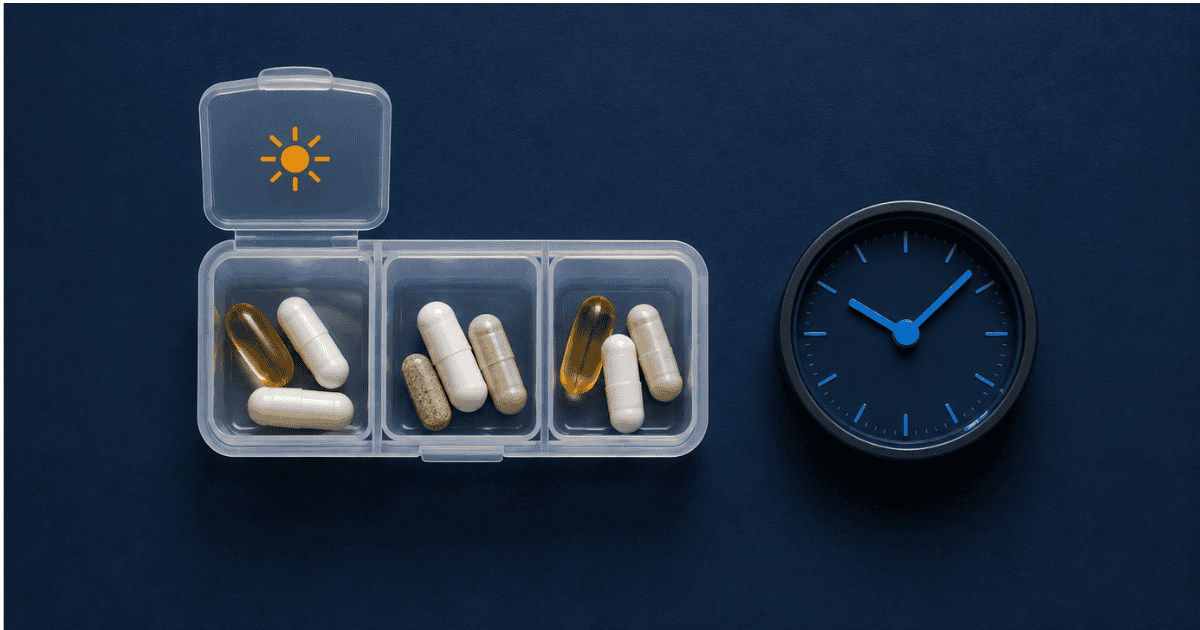
| The four timing windows | Morning (roughly 60–120 min post-waking) for stimulatory compounds; midday with food for the fat-associated ones; early afternoon sparingly; evening for sleep-supporting compounds only. |
| The most common dosing error | Taking a fraction of the clinically studied dose, then concluding the compound doesn’t work — you can’t judge a full protocol by a quarter of it. |
| The most common timing error | Taking stimulatory compounds during the natural cortisol peak (the first 30–45 minutes after waking), which tends to blunt the effect rather than add to it. |
| Why “with food” matters — and for which compounds | DHA (and phosphatidylserine) absorb better with dietary fat. Bacopa and Lion’s Mane are taken with food mainly to avoid nausea. Caffeine and L-theanine need no food. |
| Peter’s take | Treats dosing and timing as seriously as compound selection — a well-chosen compound taken wrong is functionally a wasted purchase. |
Getting your nootropic dosing and timing right is often the difference between a protocol that works and one that wastes your money, disrupts your sleep, or produces no measurable effect at all. In nearly two decades of researching cognitive enhancement, I’ve watched intelligent, well-intentioned people make the same handful of mistakes repeatedly — taking the right compounds at the wrong time, under-dosing and concluding a compound doesn’t work, or ignoring the relationship between timing and their body’s natural rhythms entirely.
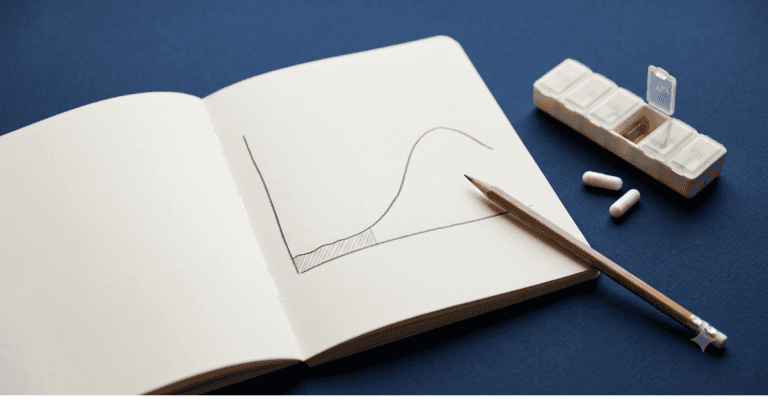
Dosing and timing are not secondary considerations. A Lion’s Mane supplement taken at a quarter of the research dose will underdeliver regardless of how good the underlying compound is. This guide covers the evidence-based dosing and timing principles for the most widely used nootropics on this site — and, just as importantly, where the evidence is firm and where it’s a reasonable convention.
For the broader picture of where these compounds fit, my complete Nootropics & Supplements guide is the place to start, and my stacking guide covers how these individual doses combine into a coherent daily protocol.
A Practical Timing Framework
Your body runs on predictable hormonal and neurochemical rhythms, and working with them rather than against them changes what a nootropic can deliver. The morning window — roughly 60 to 120 minutes after waking — suits stimulatory compounds like caffeine, L-theanine and Rhodiola. The rationale is that cortisol has begun its natural decline from the waking peak by then, so a stimulant adds to a falling curve rather than piling onto a rising one. I should be straight that this cortisol-timing logic is mechanistically plausible rather than settled by trials, and the exact awakening rhythm varies between people — so treat “60 to 120 minutes” as a sensible default to test on yourself, not a universal constant.
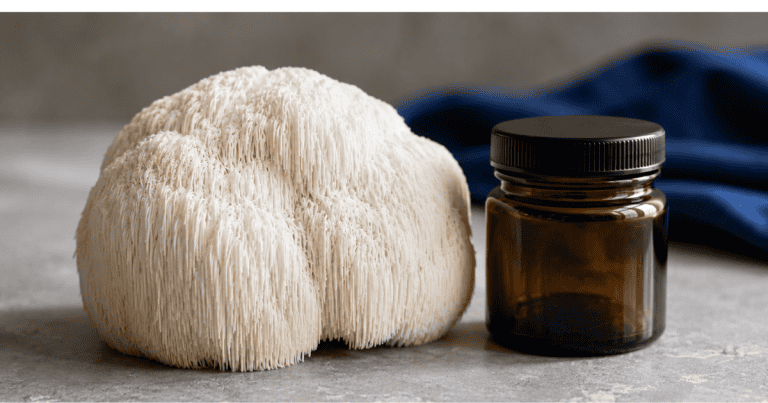
The midday window, taken with a meal, suits the compounds that are best consumed with food. That “with food” advice covers two different situations worth separating. DHA is itself a fat and absorbs markedly better alongside a fat-containing meal — a well-established principle noted by the NIH Office of Dietary Supplements; phosphatidylserine, a phospholipid, is similarly best with meals. Bacopa and Lion’s Mane are also taken with food, but there the main reason is tolerability — Bacopa in particular commonly causes nausea on an empty stomach.
The early-afternoon window (roughly 1–3pm) is a legitimate second slot for non-stimulatory top-ups, but anything with stimulatory properties taken after about 2pm risks interfering with sleep — which can negate the very cognitive benefit it was meant to provide. The evening window is reserved for compounds that support sleep and overnight recovery. No stimulatory compound belongs there.
Dosing and Timing by Compound
These reflect the doses used in the published clinical research — a reference point, not a prescription. Start at the low end, and see each compound’s own article and a qualified clinician before building a protocol around it.
Compound-specific detail and the evidence behind each dose lives in the individual guides — for example L-theanine and caffeine, Alpha-GPC, Rhodiola and phosphatidylserine.
The Five Most Common Dosing Mistakes
The first is under-dosing, then concluding the compound doesn’t work. Someone takes 250mg of Lion’s Mane — a quarter of the gram-scale research dose — feels nothing, and writes it off, having tested a quarter protocol and judged the full one by it. The second is ignoring extract standardisation: “Bacopa Monnieri 500mg” with no bacoside percentage stated tells you very little about what you’re actually taking relative to the roughly 50%-bacoside extracts used in the trials.
The third is taking stimulatory compounds too early — caffeine or Rhodiola during the cortisol peak, which tends to blunt the effect and build tolerance faster. The fourth is skipping food where it matters: DHA absorbs better with dietary fat, and Bacopa on an empty stomach is a common, avoidable cause of nausea that gets misread as intolerance.
The fifth is assessing slow-acting compounds too early. Bacopa’s trials run twelve weeks or longer, and judging it at two or three weeks is judging it before the timeframe any of those trials used. Patience is part of the protocol.
🧮 Worked example — before you conclude “it doesn’t work”
Say you tried Bacopa for a month and felt nothing. Before writing it off, run the three checks this guide is built around, in order — because each one can produce a false negative on its own.
Dose. Was it ~300mg of a standardised extract (around 50% bacosides), or an unstandardised “500mg” capsule that could contain a fraction of the active compound? If you can’t confirm the standardisation, you haven’t actually tested the research dose.
Duration. Bacopa’s trials ran twelve weeks or longer. One month is roughly a third of that. You may simply be reading the result before the compound’s timeframe has elapsed.
Food. If you took it on an empty stomach and quietly stopped because of nausea, adherence — not the compound — is the variable that failed. Moving it to a meal often resolves that.
Only once dose, duration and food are all correct can you fairly judge whether Bacopa does anything for you. The same three-step check applies to any slow-build compound — and it’s the single habit that prevents the most wasted money and wrong conclusions.
Clinical Evidence: The Key Trials
Randomised Trial — Timing, Not Just Dose
Drake et al. (2013) — Why “Before 2pm” Is a Real Rule
This randomised, double-blind, placebo-controlled trial gave 12 healthy sleepers a fixed 400mg caffeine dose at 0, 3, or 6 hours before their habitual bedtime, measuring sleep disruption both subjectively and with an objective sleep monitor. Even the dose taken a full six hours before bed produced measurable disruption to total sleep time. That is the direct evidence behind treating caffeine timing as seriously as caffeine dose: a compound taken at the right dose but the wrong time can undermine the very performance it was meant to support, by degrading the sleep that performance depends on. It is a high dose in a small sample, so read the six-hour figure as a floor to protect against, not an exact personal threshold.
Journal of Clinical Sleep Medicine 2013;9(11):1195–1200 · PMID 24235903
Landmark RCT — Combination, and the Ratio Myth
Haskell et al. (2008) — What the “2:1 Ratio” Actually Rests On
This double-blind, placebo-controlled trial tested L-theanine and caffeine alone and combined, and found the combination produced benefits — faster reaction time, better sentence-verification accuracy — that neither compound reached alone. Worth being precise about the doses, though: Haskell used 250mg L-theanine with 150mg caffeine, not the 200mg-to-100mg pairing you’ll often see quoted. The popular “2:1 theanine-to-caffeine” convention traces more to the 100mg-to-50mg ratio used by Owen et al. (2008) and to general practice than to any study that compared ratios head-to-head. No trial has established an optimum ratio — so 2:1 is a reasonable default drawn from the doses that happened to be tested, not a validated one.
Meta-Analysis — Why the Timeline Isn’t Optional
Kongkeaw et al. (2014) — The Bacopa Timeline, Honestly
This meta-analysis pooled nine randomised, placebo-controlled Bacopa trials covering 518 participants, all using standardised extract (most around 300mg, ~50% bacosides) — and, by design, all dosed for twelve weeks or longer. Two honest points follow. First, because the review only included trials of twelve weeks or more, it sets the studied treatment duration rather than proving nothing happens sooner; a couple of trials elsewhere have reported effects by around six weeks. Second, the pooled benefit was modest and concentrated — clearest on speed of attention and reaction time, with many cognitive measures unaffected. The practical takeaway is sound: assess Bacopa at around twelve weeks, not two or three, because that is the timeframe the evidence actually covers.
Journal of Ethnopharmacology 2014;151(1):528–535 · PMID 24252493
Together these trials support the guide’s core argument from three angles: timing errors carry measurable downstream costs even when the dose is right (Drake); dose ratios are conventions drawn from what was tested, not validated optima, so precision matters more than confident round numbers (Haskell and Owen); and onset timelines reflect the timeframe the trials actually used, not individual impatience (Kongkeaw).
Dosing and Timing Claims — Ranked
🟢 Strong evidence | 🟡 Moderate / convention | 🔴 Overstated / individual
The NeuroEdge Daily Timing Protocol
A foundation-level daily schedule applying the framework above. A structure to adapt, not a prescription.
Caffeine 100mg with L-theanine 200mg, once the waking cortisol peak has passed. See the stack guide for the evidence and dosing detail.
Bacopa (~300mg) and DHA (1,000mg) with food — DHA for absorption, Bacopa for tolerability. Add Lion’s Mane here if it’s in your stack.
No caffeine or Rhodiola after about 2pm. The evidence on caffeine disrupting sleep even six hours before bed makes this a firm rule rather than a soft guideline.
Judge acute compounds within days; judge Bacopa no sooner than about twelve weeks. The full testing protocol covers how.

Peter’s Testing Notes — Dosing and Timing
18+ years personal research · Updated August 2026
Early in my own testing I made almost every mistake described here, usually in combination. I ran Bacopa at a dose I now know was below the research range, judged it after three weeks and moved on — a pattern I only recognised as a mistake years later when I re-ran it properly at ~300mg for a full twelve weeks and got a genuinely different result.
The timing change that mattered most for me personally was the caffeine delay. I’d taken caffeine immediately on waking for years out of pure habit and simply accepted a predictable mid-afternoon crash as normal. Delaying it to roughly 90 minutes post-waking, tracked against my own afternoon Creyos scores, softened that crash within a couple of weeks — a bigger change than any compound swap I’d tried before it. I’ll be honest that this is my own n=1 and the cortisol rationale behind it is mechanistic rather than proven, so I’d treat it as a thing to test rather than a law.
I now keep a simple written log of exactly what I take and when, precisely because I’ve been burned before by assuming I remembered my own protocol accurately. Small drift — caffeine creeping earlier, Bacopa skipped without food on a rushed morning — happens gradually enough that you notice only that results have got less consistent, not that the protocol changed.
Key Takeaways — Nootropic Dosing and Timing
Under-dosing is the single most common reason people wrongly conclude a compound doesn’t work — verify your dose matches the research before judging efficacy.
Caffeine timing has measurable downstream effects even when you can’t feel them — objective monitoring shows sleep disruption up to six hours before bed.
“With food” means different things: DHA and PS for absorption, Bacopa and Lion’s Mane mainly for tolerability. Only DHA has a strong fat-absorption case.
Slow-build compounds have a real timeline — Bacopa’s trials run twelve weeks or longer, so that’s the window to assess it over.
The “2:1 ratio” and “90-minute delay” are useful conventions, not proven optima — good starting points to test on yourself, not fixed laws.
Dosing and Timing — FAQ
What’s the best time of day to take nootropics?
It depends on the compound. Stimulatory nootropics generally suit the window 60–120 minutes after waking, once cortisol has begun its natural decline. Compounds best taken with food go with a meal. Nothing stimulatory should be taken after about 2pm. The exact morning window varies between individuals, so treat it as a default to test.
How long does it take for nootropics to work?
Acute compounds like caffeine and L-theanine act within 30–60 minutes. Rhodiola acts within a couple of hours. Bacopa is the classic slow-build: its trials run twelve weeks or longer, so that’s the timeframe to judge it over. Lion’s Mane’s human cognitive evidence is more limited, but it too is a build-over-weeks compound rather than an acute one.
Should I take nootropics with or without food?
Caffeine and L-theanine can go either way. DHA absorbs better with a fat-containing meal, and phosphatidylserine is also best with food. Bacopa and Lion’s Mane are usually taken with food too — but there the main reason is avoiding nausea, not fat absorption. Bacopa on an empty stomach is a common, avoidable cause of GI upset.
How do I know if my dose is too high?
Persistent headaches, increased anxiety, jitteriness, sleep difficulty or digestive discomfort that consistently follows a compound are signs to reduce the dose by 25–50% and reassess. Start at the low end of the research range and titrate up only after assessing tolerance.
Do I need to cycle nootropics to prevent tolerance?
Stimulatory compounds like caffeine and Rhodiola benefit from cycling — five days on, two off, or similar. Bacopa, phosphatidylserine and DHA don’t require cycling and generally perform better with consistent, uninterrupted use.
Get “7 Days to a Sharper Brain” — Free
Peter Benson’s personal daily protocol, rebuilt from 18 years of testing
Seven evidence-based interventions, in the exact order that makes each one more effective — from sleep foundation to your complete assembled daily stack.
Join 2,000+ readers optimising their cognitive performance. Unsubscribe anytime.
Scientific References
- Drake C, Roehrs T, Shambroom J, Roth T. Caffeine effects on sleep taken 0, 3, or 6 hours before going to bed. Journal of Clinical Sleep Medicine. 2013;9(11):1195–1200. PMID 24235903
- Owen GN, Parnell H, De Bruin EA, Rycroft JA. The combined effects of L-theanine and caffeine on cognitive performance and mood. Nutritional Neuroscience. 2008;11(4):193–198. PMID 18681988
- Haskell CF, Kennedy DO, Milne AL, Wesnes KA, Scholey AB. The effects of L-theanine, caffeine and their combination on cognition and mood. Biological Psychology. 2008;77(2):113–122. PMID 18006208
- Kongkeaw C, Dilokthornsakul P, Thanarangsarit P, Limpeanchob N, Scholfield CN. Meta-analysis of randomized controlled trials on cognitive effects of Bacopa monnieri extract. Journal of Ethnopharmacology. 2014;151(1):528–535. PMID 24252493
- NIH Office of Dietary Supplements. Omega-3 Fatty Acids: Fact Sheet for Health Professionals. ods.od.nih.gov
Peter Benson
Cognitive Enhancement Researcher | 18+ Years Independent Research
Peter Benson has refined his own dosing and timing protocols across 18+ years of testing, tracking outcomes with Creyos cognitive assessment rather than relying on subjective impression alone. Every study cited here was verified against source. He is not a clinician — this guide is educational, not medical advice.
Last reviewed: August 2026 | Educational content only. Not medical advice. Not a substitute for professional evaluation.