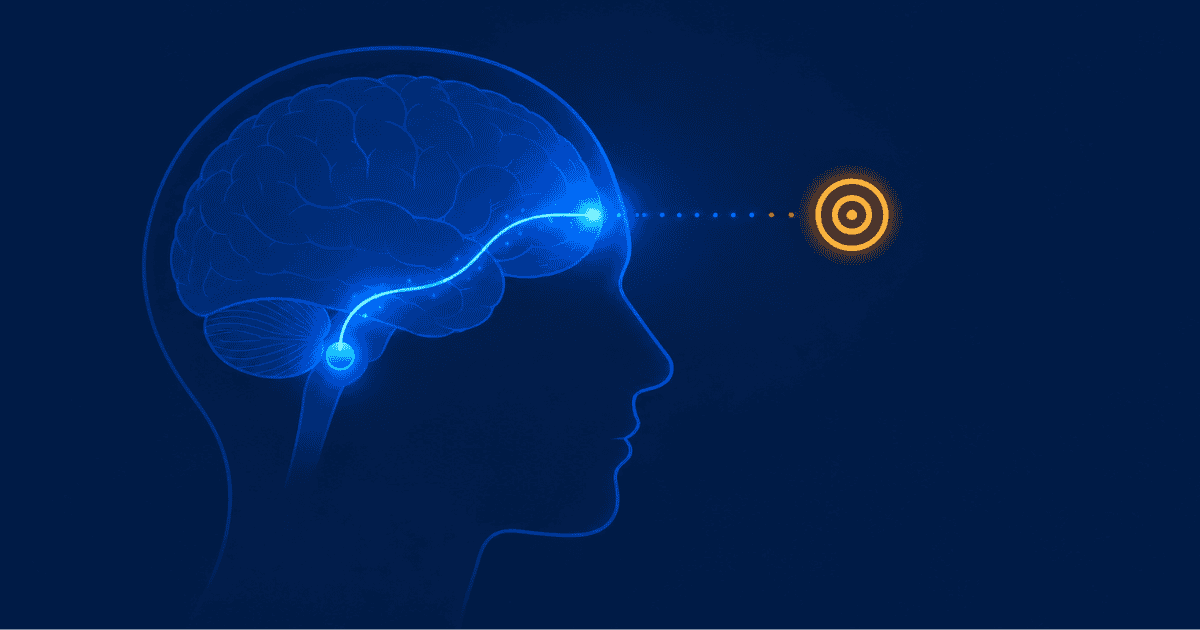
The Dopamine-Motivation Connection: Why Will Power Isn’t the Problem
Educational Disclaimer: This article is for educational purposes only and is not medical advice. Persistent motivation problems, low mood, or attention difficulties can have medical causes that deserve proper assessment. If these issues are significantly affecting your life, consult a qualified healthcare provider. Peter Benson is a cognitive enhancement researcher, not a medical doctor.
| What dopamine actually does | Dopamine is not the “pleasure chemical.” It drives wanting and pursuit — the motivation to go after a reward — which is neurologically separate from the liking you feel when you get it. Motivation problems are dopamine-signalling problems, not character flaws. |
| Why willpower is the wrong frame | The popular “willpower is a fuel tank that runs dry” model failed to replicate in a 23-lab, 2,141-participant preregistered study. What actually predicts follow-through is motivation and whether the behaviour is automatic — not raw grit. |
| The anticipation mechanism | Dopamine neurons fire for the prediction of reward, not the reward itself. This is why starting is the hard part, why streaks are motivating, and why unpredictable phone notifications are so compelling. |
| The real drain | Constant high-stimulation, low-effort rewards (endless feeds, easy dopamine) make ordinary effortful tasks feel flat by comparison. The problem is rarely too little willpower — it’s a reward environment that has made real work uncompetitive. |
| What actually helps | Engineer the reward-prediction environment: make starting trivially easy, attach effort to reward rather than reward to nothing, protect morning light and movement, and reduce the supernormal stimuli that flatten baseline motivation. |
| The “dopamine detox” caveat | You cannot “reset” or “detox” dopamine — that pop-science framing is inaccurate. What has a real basis is temporarily reducing supernormal stimuli so ordinary rewards regain their pull. The mechanism is real; the marketing language is not. |
The Dopamine-Motivation Connection: Why Willpower Isn’t the Problem
By Peter Benson, Cognitive Enhancement Researcher | 18+ Years Independent Research · Last reviewed & citations verified: August 2026
You know exactly what you should be doing. The task is right there. It matters. And yet you cannot make yourself start — so you reach for your phone, feel a flicker of guilt, and conclude that the problem is you: your discipline, your willpower, your character. Almost everyone frames it this way, and almost everyone is wrong. Motivation is not a moral quality you either have or lack. It is a neurochemical signal — dopamine motivation — and once you understand how that signal actually works, the entire problem looks different, and far more solvable.
In 18+ years of researching cognitive performance and testing interventions on myself, the single most useful reframe I have found is this: stop treating motivation as willpower and start treating it as a system you can engineer. This article covers what dopamine genuinely does (it is not what most people think), why the “willpower runs out” model collapsed under rigorous testing, what actually drains your drive, and a specific protocol to rebuild it. It fits within the broader Focus & Productivity Optimisation framework, and it pairs with the companion piece on the neuroscience of procrastination — where motivation is the pull toward a reward, procrastination is the push away from a feeling.
One clarification before we start: this article is about ordinary, healthy motivation. Persistent, severe motivation problems can reflect depression, ADHD, or other conditions that deserve proper clinical assessment — those are distinct from what is covered here, and I will point to where that line sits.
What Dopamine Actually Does (It’s Not Pleasure)
The most persistent myth in popular neuroscience is that dopamine is the “pleasure chemical.” It is not. Decades of research separate two processes that feel like one: wanting a reward and liking it. In a landmark line of work, Berridge and Robinson showed that mesolimbic dopamine generates “wanting” — the motivational pull toward a reward — while “liking,” the actual pleasure of consuming it, is produced by separate, smaller systems that do not depend on dopamine. Animals with dopamine systems disrupted still show pleasure reactions to a sweet taste; they simply stop being motivated to pursue it. Dopamine is the go and get it signal, not the enjoyment.
This distinction matters enormously for motivation. When you cannot make yourself start a task, you are not experiencing a failure of pleasure or discipline — you are experiencing insufficient “wanting,” a dopamine-signalling issue. The task might be genuinely rewarding once you are in it (high “liking”), but if the anticipatory “wanting” signal is weak, you never get there.
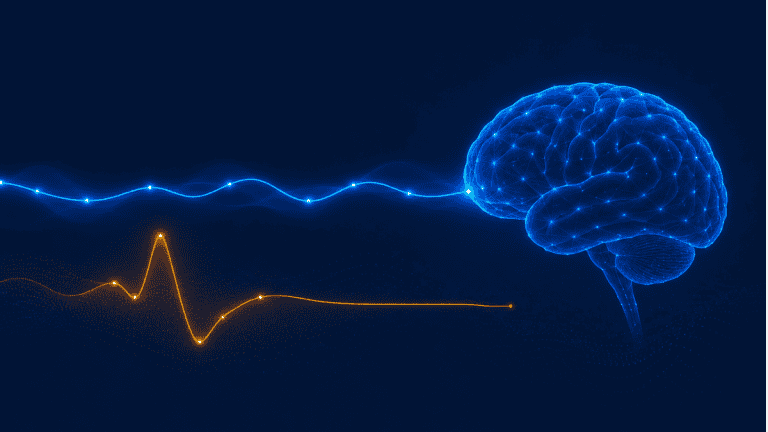
The second key finding explains when dopamine fires. In the work that reshaped the field, Schultz and colleagues found that dopamine neurons signal a reward prediction error — they fire for the unexpected cue that predicts a reward, not for the fully expected reward itself. Once an animal learns that a light means juice is coming, the dopamine burst shifts from the juice to the light. Anticipation, not receipt, drives the signal. This is why the hardest part of any task is starting: before you begin, there is no established cue predicting reward, so there is little dopamine to pull you in. It is also why streaks, progress bars, and “I’m on a roll” feel so motivating — each one is a cue predicting more reward ahead.
Why “Willpower” Is the Wrong Frame
For two decades, the dominant model of self-control was “ego depletion” — the idea that willpower is a finite resource that drains with use, like fuel in a tank, so that resisting temptation early in the day leaves you weaker later. It was intuitive, widely taught, and it shaped countless productivity systems built around “protecting your willpower.”
Then it was tested properly. A preregistered replication run across 23 laboratories with 2,141 participants failed to reproduce the ego-depletion effect — a design where the analysis is locked in before data collection, so results cannot be cherry-picked. The pooled effect was essentially zero. A related, influential claim — that your belief about whether willpower is limited determines whether you deplete — also failed a careful preregistered replication. The simple fuel-tank story did not survive scrutiny.
I want to be honest about the nuance here, because this is a topic the internet loves to oversimplify into “willpower is a myth.” That is not quite right either. Researchers have since refined the model toward a conservation account — your brain does not literally run out of a willpower fuel, but under sustained demand it starts reallocating priority toward rest and reward. The headline that survives is this: raw grit is a poor predictor of whether you follow through. What predicts it far better is your motivation to do the thing and whether the behaviour is automatic in the first place.
The practical upshot: if you keep “failing” at something through lack of willpower, the fix is almost never to summon more willpower. It is to increase the dopamine-driven motivation for the task, or to make the behaviour automatic enough that it no longer requires much motivation at all. Both are engineering problems, not character problems.
What Actually Drains Your Drive
If motivation is a dopamine signal responsive to anticipated reward, then anything that reshapes your reward landscape reshapes your motivation. The modern environment does exactly that. Social feeds, short-form video, and games deliver frequent, variable, high-stimulation rewards for almost no effort — precisely the profile of reward-prediction cues that the dopamine system finds most compelling. The problem is not that these are “high dopamine” in some toxic sense. The problem is comparison: after hours of effortless, unpredictable reward, an ordinary effortful task — writing the report, studying the chapter — offers a slow, uncertain, low-intensity payoff that simply cannot compete for your “wanting.”
This is the genuine mechanism behind the popular “dopamine detox” idea — and also where that idea goes wrong. You cannot detox, reset, or deplete dopamine; it is a neurotransmitter your brain produces continuously, and the pop-science framing of “fasting” from it is inaccurate. What is real is that reducing the supernormal, low-effort rewards for a period lets ordinary rewards regain their relative pull. The effect is about restoring contrast, not cleansing a chemical. I go deeper into the attentional side of this in the guide on digital distraction and the brain.
A crucial boundary: persistently flat motivation across nearly everything you used to enjoy is different from “I can’t get started on this boring task.” A pervasive, lasting loss of drive can be a feature of depression, and difficulty with motivation and task initiation is also a recognised part of ADHD, which involves differences in dopamine signalling. Those are clinical matters, not willpower matters — if that description fits, the right step is a proper assessment, and the guide on focus problems and ADHD covers where that line sits.
Engineering Motivation: The Mechanism-Based Fixes
Every effective motivation strategy works by manipulating the same two levers the research points to: the reward-prediction signal that drives “wanting,” and the automaticity that removes the need for motivation altogether. Here is how to use each deliberately.
Make starting trivially easy. Because dopamine fires for the cue that predicts reward, the entire battle is at the threshold of starting. Shrink the first action until it is almost impossible to refuse — open the document and write one sentence, put on the running shoes, read one paragraph. Once you are moving, progress itself becomes a stream of reward-prediction cues that carry you forward. This is not a motivation trick; it is working with how the signal is generated.
Attach effort to reward, not reward to nothing. The healthiest dopamine relationship pairs effort with the payoff that follows it, so your brain learns that work predicts reward. The modern failure mode is the opposite — large rewards (scrolling, snacks) available for zero effort, which trains the system that reward is decoupled from work. Deliberately place small rewards after effort, not before or during it.
Protect morning light and movement. Early daylight exposure and physical activity are both linked to healthier dopaminergic function and baseline drive — the evidence is more indirect than the mechanisms above, so treat it as a sensible default rather than a proven lever. It is one of several reasons a structured start to the day pays off far beyond the tasks themselves, a theme covered in the morning routine for productivity guide.
Reduce supernormal stimuli during work windows. You do not need a dramatic “detox.” You need your effortful task to be the most rewarding option available in that window. Removing the phone from the room during focused work is not about willpower — it is about removing a competitor that will always win the “wanting” contest if it is present.
🧮 Worked example — engineering a task you keep skipping
Take the workout you keep meaning to do and keep not doing. Rather than waiting to feel motivated — which is waiting for a “wanting” signal that isn’t coming — you rearrange the reward landscape so the workout can win.
Shrink the start. The task is not “do a 45-minute session.” It’s “put your shoes on and step outside.” That first action needs almost no “wanting,” so the weak anticipatory signal is no longer the obstacle.
Manufacture the cue. Once you’re moving, the first easy minute feels marginally good — and that becomes a reward-prediction cue signalling more reward ahead. The dopamine that wouldn’t show up beforehand starts arriving because you began.
Remove the competitor. Leave the phone at home or in a drawer. Otherwise the effortless-reward option is sitting in your pocket, and it will win the “wanting” contest against a workout every time.
Reward after, not during. The coffee or the podcast episode comes after the session, so your brain relearns the link that modern life keeps breaking: effort predicts reward.
The worked judgement: notice you never summoned willpower. You diagnosed why the workout kept losing — a too-big first step and an ever-present competitor — and changed those two things. On the days it still doesn’t happen, the useful question isn’t “why am I so undisciplined?” It’s “which lever slipped?” — usually the phone came along, or the first step quietly grew back to forty-five minutes.
How Strong Is Each Claim?
🟢 Strong | 🟡 Moderate / indirect | 🔴 Commonly claimed, not supported
The NeuroEdge Motivation-Restoration Protocol
A four-part daily structure that engineers the reward-prediction environment rather than relying on willpower. Run it for two weeks before judging it — you are retraining a signal, not flipping a switch.
Light + movement before the phone
10 min of outdoor light and light movement before any feed or notification, to support baseline drive and avoid front-loading effortless reward.
The two-minute threshold
Define the first action of any resisted task as something achievable in two minutes. Start there and only there. Momentum generates its own reward-prediction cues.
Phone out of the room
Remove the highest-reward competitor during focused work so the task itself wins the “wanting” contest. Not willpower — competitor removal.
Reward follows effort
Place the enjoyable reward after the work block, not before or during it, so your brain relearns that effort predicts reward.

Peter’s Testing Notes — Motivation as a System
18+ years testing cognitive protocols · Updated August 2026
For years I treated my own motivation as a discipline problem, and I spent a lot of energy trying to out-willpower slow mornings and resisted tasks. It never worked reliably, because it was the wrong model. The shift that actually changed my output was giving up on willpower entirely and treating motivation as an environment I could engineer. The single highest-leverage change was the phone: on the days I leave it in another room during a focused block, my start-up friction drops so sharply that “willpower” barely enters the picture. The task wins by default because nothing is competing.
The two-minute threshold is the other one I rely on most. When I catch myself avoiding something, I stop trying to feel motivated to do the whole task and instead define a first action so small it feels faintly ridiculous — open the file, write one sentence. In my experience the resistance lives almost entirely at the threshold; once I am a few minutes in, the momentum carries. This lines up with the reward-prediction picture: before I start there is no cue predicting reward, so there is nothing pulling me in. Creating the first small win manufactures that cue.
The honest caveat: this system handles ordinary task-initiation friction well. It does not fix genuinely flat, pervasive low motivation — I have had periods where the flatness was really about poor sleep or accumulated stress, and no amount of clever reward engineering substitutes for fixing those upstream. Motivation engineering works best on a rested, well-regulated system, not as a patch over one that is running on empty.
What About Supplements?
Because dopamine is built from the amino acid tyrosine, L-tyrosine supplements are often marketed as motivation boosters. The honest evidence is narrower than the marketing. A review of tyrosine supplementation concluded it helps cognitive performance only when the neurotransmitter system is temporarily depleted — under acute stress or heavy cognitive demand — and not as a general daily lift in a well-functioning system. In other words, tyrosine may help you hold performance under a stressful, demanding stretch, but it will not manufacture baseline motivation you otherwise lack. It is a buffer for demanding conditions, not a drive switch.
Adaptogens like Rhodiola Rosea sit in a similar place — more relevant to protecting performance against stress and fatigue than to raising motivation directly. If you want to think about compounds properly rather than piecemeal, the nootropic stacking guide covers how they fit together. But the honest hierarchy is clear: the behavioural and environmental levers above do far more for everyday motivation than any supplement, and no capsule substitutes for the reward-environment engineering that actually drives “wanting.”
Key Takeaways — Dopamine & Motivation
Dopamine drives “wanting,” not “liking.” Motivation problems are weak-pursuit-signal problems, not failures of pleasure or character. The task can be enjoyable once started and still be hard to start.
The “willpower fuel-tank” failed a 23-lab replication. Grit is a weak predictor of follow-through. Motivation and automaticity predict it far better — both of which you can engineer.
Anticipation drives the signal, so starting is the battle. Shrink the first action to two minutes; momentum then generates its own reward-prediction cues.
You can’t “detox” dopamine — but reducing effortless rewards restores contrast. Remove the highest-reward competitor (usually the phone) during work windows so real tasks can compete.
Pervasive, lasting loss of drive is a clinical matter, not a willpower one. If motivation is flat across nearly everything you used to enjoy, seek a proper assessment rather than a productivity hack.
Dopamine & Motivation — FAQ
Is low motivation a dopamine problem or a willpower problem?
For everyday task-initiation difficulty, it is better understood as a dopamine-signalling issue than a willpower failure. Dopamine drives “wanting” — the anticipatory pull toward a reward — and when that signal is weak for a given task, you struggle to start regardless of how disciplined you are. The popular “willpower is a limited fuel” model failed to replicate in a large preregistered study, so framing motivation as a resource you run out of is not well supported. Engineering the reward environment and making the first action tiny are more effective than trying to force more willpower.
Does a “dopamine detox” actually work?
Not in the way it is usually described. You cannot detox, fast from, or reset dopamine — it is a neurotransmitter your brain produces continuously, and the “cleanse” framing is inaccurate. What has a real mechanistic basis is temporarily reducing supernormal, low-effort rewards (endless feeds, short-form video) so that ordinary, effortful rewards regain their relative pull. The benefit comes from restoring contrast between easy and effortful rewards, not from cleansing a chemical. So a “low-stimulation” period can genuinely help motivation return — just not for the reason the popular name implies.
Why is starting a task so much harder than continuing it?
Because dopamine fires for the anticipation of reward, not the reward itself. Before you begin a task, there is no established cue predicting a payoff, so there is little dopamine to pull you in — the “wanting” signal is at its weakest exactly when you need it most. Once you start and make visible progress, each small step becomes a cue predicting further reward, and the signal builds, which is why momentum feels self-sustaining. The practical fix is to shrink the starting action until it is almost effortless, manufacturing that first reward-prediction cue so the rest can follow.
Do L-tyrosine supplements increase motivation?
Only in specific conditions, not as a general motivation booster. L-tyrosine is a building block for dopamine, and a review of the research found it can support cognitive performance when the neurotransmitter system is temporarily depleted — under acute stress or heavy cognitive demand — but not in a well-functioning, rested system. So tyrosine may help you hold performance during a demanding, stressful stretch, but it will not manufacture baseline drive you otherwise lack. Behavioural and environmental strategies do far more for everyday motivation, and anyone taking medication should consult a healthcare provider before adding it.
When is low motivation a sign of something medical?
When it is pervasive and persistent rather than task-specific. Difficulty starting a boring task is normal; a lasting, broad loss of drive and pleasure across activities you used to enjoy can be a feature of depression, and ongoing problems with motivation and task initiation are also part of ADHD, which involves differences in dopamine signalling. These are clinical matters that deserve proper assessment, not productivity hacks. If the description fits your experience, speaking with a qualified healthcare provider is the appropriate step.
Get “7 Days to a Sharper Brain” — Free
Peter Benson’s personal daily protocol, rebuilt from 18 years of testing
Seven evidence-based interventions, in the exact order that makes each one more effective — from sleep foundation to your complete assembled daily stack.
Join 2,000+ readers optimising their cognitive performance. Unsubscribe anytime.
Scientific References
- Berridge KC, Robinson TE. (2016). Liking, wanting, and the incentive-sensitization theory of addiction. American Psychologist, 71(8):670–679. PMC5171207
- Schultz W, Dayan P, Montague PR. (1997). A neural substrate of prediction and reward. Science, 275(5306):1593–1599. PMID 9054347
- Hagger MS, Chatzisarantis NLD, et al. (2016). A multilab preregistered replication of the ego-depletion effect. Perspectives on Psychological Science, 11(4):546–573. PMID 27474142
- Carruth NP, Ramos JA, Miyake A. (2023). Does willpower mindset really moderate the ego-depletion effect? A preregistered replication of Job, Dweck, and Walton (2010). PLOS ONE, 18(6):e0287911. PLOS ONE
- Jongkees BJ, Hommel B, Kühn S, Colzato LS. (2015). Effect of tyrosine supplementation on clinical and healthy populations under stress or cognitive demands — a review. Journal of Psychiatric Research, 70:50–57. PMID 26424423
- Society for Neuroscience — BrainFacts. Discovering dopamine’s role in reward prediction error. BrainFacts.org
Peter Benson
Cognitive Enhancement Researcher | 18+ Years Independent Research
Peter Benson has spent 18+ years researching cognitive performance and testing motivation, focus, and productivity interventions through systematic self-experimentation. He writes about the mechanisms behind cognitive performance rather than the myths that surround them. Every study cited here was checked against source.
Last reviewed: August 2026 | Educational content only. Not medical advice.