
How to improve memory naturally
Affiliate Disclosure: Some links on this page are affiliate links. If you purchase through them, NeuroEdge Formula earns a small commission at no extra cost to you. Peter only recommends products he has personally tested and that meet the evidence standards of this site.
Medical Disclaimer: This guide is for educational purposes only and does not constitute medical advice. Persistent or worsening memory problems may indicate an underlying medical condition requiring evaluation. If you are experiencing significant memory decline affecting daily function, consult a qualified healthcare provider. Peter Benson is a cognitive enhancement researcher, not a medical doctor.
| Four intervention categories | (1) Behavioural foundations — aerobic exercise, sleep, stress management. Largest effects, free, address the biological substrate. (2) Learning techniques — spaced repetition, active recall, elaborative encoding. Largest effects on retention of new material. (3) Supplementation — Bacopa, Alpha-GPC, Lion’s Mane, DHA. Cholinergic and structural support; effects modest and slow (8–16 weeks). (4) Lifestyle nutrition — Mediterranean pattern, glucose stability. Modest but cumulative over months. |
| Highest single lever | Aerobic exercise — the Erickson et al. (2011) randomised trial documented a 2% increase in hippocampal volume from a year of walking, reversing roughly one to two years of age-related loss. Hippocampal volume underlies episodic memory capacity, and no memory supplement has been shown to produce a structural change of this kind. 150 minutes per week of moderate aerobic activity is the evidence threshold. |
| Most effective technique | Active recall combined with spaced repetition. Cepeda et al. (2006), a meta-analysis of 317 experiments, established that spacing reliably and substantially outperforms massed practice for long-term retention; Karpicke & Blunt (2011) showed retrieval practice produces markedly more durable learning than restudying. Together they are the single largest available gain in learning efficiency — and free. |
| Best-evidenced memory supplement | Bacopa Monnieri (300mg, standardised extract) has the strongest human RCT evidence for memory specifically — Roodenrys et al. (2002) and Morgan & Stevens (2010) both found improved retention of new information at ~12 weeks. Alpha-GPC, Lion’s Mane and DHA have supporting mechanisms but weaker or more limited human memory data. All act slowly (allow 8–12 weeks) and work best on a foundation of exercise and sleep. |
| Sleep’s role | Sleep is not a passive state — it is when memory consolidation occurs. N3 slow-wave sleep transfers newly encoded memories from hippocampal short-term storage toward stable cortical networks; REM integrates and abstracts. Missing adequate sleep after a learning session markedly reduces how much of that session is retained, regardless of what else you did. |
| Biggest mistake | Starting with supplements before establishing the behavioural foundations. Bacopa and Alpha-GPC support the cholinergic encoding system — but that system operates on a substrate built by exercise and consolidated by sleep. Optimising the third layer without the first two gets partial value from an expensive protocol. Exercise and sleep first, always. |
How to Improve Memory Naturally: An Evidence-Ranked Guide
By Peter Benson — Cognitive Enhancement Researcher | 18+ Years Independent Research · Last reviewed: June 2026
Memory is not a fixed capacity. The most important insight from 18+ years of researching cognitive enhancement is that memory performance is modifiable — not through mysterious supplements or brain-training games, but through specific, evidence-ranked interventions that address the biological mechanisms underlying how memories are formed, consolidated and retrieved. Most people who want to improve their memory start at the wrong end of the hierarchy: they reach for a supplement while continuing to under-sleep, under-exercise, and use passive study methods that feel productive but do not build durable memory.
This guide structures memory improvement as a four-layer system — behavioural foundations, learning techniques, supplementation, and lifestyle nutrition — with honest effect sizes for each layer and a clear priority order. The sequence matters: each layer builds on the one below it. For the complete framework, see the Memory & Learning hub. For the single most powerful technique, see the spaced repetition guide and its companion, active recall. For the nootropics with genuine memory RCT evidence, see nootropics for memory.
One framing note before the protocol: “natural” memory improvement is not a softer, less effective version of pharmaceutical enhancement. The behavioural interventions in this guide produce structural brain changes — measurable hippocampal volume increases among them — that exceed what memory supplements have been shown to achieve. Natural is not the compromise option; for most people it is the most potent option available.
Memory Interventions — Ranked by Evidence and Effect Size
🟢 Strong human evidence | 🟡 Moderate or limited evidence | 🔴 Weak or no evidence
The Four-Layer Memory Improvement System
Behavioural Foundations — The Substrate Layer
This layer determines the quality of the biological substrate on which every other memory intervention operates. Aerobic exercise is the non-negotiable centrepiece: Erickson et al. (2011) documented a 2% hippocampal volume increase in older adults following a year of aerobic walking — a structural brain change that directly supports episodic memory capacity, reversing roughly one to two years of age-related loss. Acute aerobic exercise also raises BDNF, a key driver of neuroplasticity. No memory supplement has been shown to produce hippocampal volume increases of this kind.
Sleep is the second behavioural foundation — the window during which encoded memories are consolidated from hippocampal short-term storage toward stable cortical representation. Missing adequate slow-wave sleep after a learning session partially negates the encoding benefit of that session, regardless of what supplements were taken. Stress management completes the layer: chronic cortisol suppresses BDNF expression and hippocampal neurogenesis. All three foundations are free and produce the largest effects available.
Learning Techniques — The Encoding Layer
The technique used to encode information determines how strongly the memory trace forms and how accessible it stays. Spaced repetition with active recall is the most powerful available. Cepeda et al.’s (2006) meta-analysis of 317 experiments established that spacing reliably and substantially outperforms massed practice on the same material, and Karpicke & Blunt (2011) showed retrieval practice produces markedly more durable learning than restudying: the act of pulling information from memory strengthens the pathway to it, while re-reading provides little additional signal. For implementation see the spaced repetition guide.
Supporting techniques: elaborative interrogation (asking “why does this work?” during encoding creates additional semantic pathways); dual coding (engaging verbal and visual channels together creates more retrievable traces); and the Method of Loci (linking information to imagined physical locations — exceptionally powerful for ordered sequences). The principle across all of them: make encoding active and generative. Passive re-reading and highlighting are rated “low utility” by the most comprehensive systematic review of study techniques available (Dunlosky et al., 2013).
Supplementation — The Enhancement Layer
Supplements act on the substrate and encoding created by the first two layers. Bacopa Monnieri (300mg standardised extract) has the strongest RCT evidence for memory specifically — Roodenrys et al. (2002) and Morgan & Stevens (2010) both found improved retention of new information at around 12 weeks, in middle-aged and older adults respectively. Pairing it with Alpha-GPC (300mg) is mechanistically complementary — Alpha-GPC supplies acetylcholine substrate while Bacopa is thought to extend cholinergic signalling — though I should be clear that the pairing itself has not been tested in a memory RCT, so that rationale is mechanistic rather than proven. Lion’s Mane (1,000mg) is included for its NGF-related neuroplasticity mechanism, and DHA (1–2g) for membrane and consolidation support — both with more limited human memory evidence than Bacopa.
The critical caveat: memory-relevant supplements have 8–16 week onset timelines. Expecting drug-like immediacy from Bacopa at week 2 and concluding it does not work is the most common failure mode in this category. Allow 12 weeks minimum before assessing any cholinergic or neuroplasticity supplement. For the complete ranked comparison, see nootropics for memory.
Lifestyle Nutrition — The Long-Term Protection Layer
The Mediterranean dietary pattern — high in oily fish, olive oil, vegetables, legumes and whole grains; low in processed food, refined carbohydrate and saturated fat — is associated with slower cognitive decline and reduced dementia risk in epidemiological research. The MIND diet, designed specifically for brain health, showed reduced Alzheimer’s risk in longitudinal studies. Blood-glucose stability is the most actionable day-to-day lever: large carbohydrate-dominant meals produce glucose spikes and crashes that impair cognitive performance acutely. A protein-forward breakfast, moderate complex-carbohydrate lunch, and avoiding refined sugar before demanding cognitive work are the practical implementation. This layer’s effects are modest individually but cumulative over months and years.
Sequencing the four layers for a real goal
Suppose your goal is to retain far more of what you read for work. Here’s how the priority order turns into a concrete sequence — the point being what you do first, not doing everything at once.
Month 1 — build the substrate. Before changing anything about how you study, put in 150 minutes a week of brisk walking and fix the obvious sleep leaks (consistent wake time, cool dark room, no late alcohol). This is deliberately the unglamorous part, and it is the part with the largest effect.
Month 2 — change the technique. Now attack the reading itself. After each article or chapter, close it and write down what you remember before checking — active recall — then schedule a couple of spaced re-tests over the following week rather than re-reading. This single change usually does more for retention than any capsule.
Month 3 — add the best-evidenced supplement. Only now, with the foundation and technique in place, add Bacopa 300mg with breakfast. Set a calendar reminder for week 12 to evaluate it — not week 2, when you’ll feel nothing and be tempted to quit.
Notice the logic: if you had started at Month 3, you’d be paying for a supplement to enhance a cholinergic system running on a poor substrate and being poorly consolidated overnight — partial value from the expensive layer. Sequencing is the whole point.
Memory Improvement in Practice
Illustrative examples, not real individuals or testimonials. The following are common composite patterns drawn from the mechanisms above, written to show how the priority order plays out. They are not accounts of specific people, contain no real quotes or outcomes, and individual results vary and are not typical.
The “it was exercise all along” pattern
A common pattern: someone in midlife worried about word-finding and forgotten names, cleared of anything pathological by a doctor, who takes up regular brisk walking and finds the everyday lapses ease over a few months — before adding any supplement. It illustrates the central claim: the behavioural foundation is doing the heavy lifting, and it’s easy to miss because it isn’t sold in a bottle.
The technique-switch pattern
A student who has read everything several times yet recalls little switches to active recall — read once, close the book, write from memory — then spaces the reviews. Retention improves substantially on the same, or less, total study time, with no supplements involved. It illustrates that the technique, not the hours, is usually the limiting variable.
The supplement-patience pattern
Someone starts Bacopa expecting a quick effect, notices nothing by week 8, and is tempted to stop — then finds a genuine change emerging around weeks 12–14. It illustrates the single most important thing to know about this category: the timeline is slow and real, and stopping early produces a false negative.
The sleep-was-the-missing-variable pattern
A person taking memory supplements for months sees only modest results, discovers via tracking that their sleep is far shorter than assumed, fixes it — and the same supplements suddenly seem to work better. It illustrates why consolidation (sleep) sits beneath supplementation in the hierarchy: without it, the encoding gains never fully stick.
The NeuroEdge Memory Improvement Protocol
The four-layer system implemented sequentially — one layer per month, with consistent tracking. Peter Benson’s active protocol, updated June 2026.
150 min/week aerobic exercise + sleep optimisation. Begin with 30-minute walks five days a week. Implement the sleep protocol: cool dark bedroom, dim light 90 minutes before bed, Magnesium Glycinate. Nothing else until both are established.
Install a spaced-repetition app. Start daily 15-minute reviews. Make your own cards from material you need to retain, and combine with active recall: close the source and write from memory before reviewing. See the spaced repetition guide for the complete system.
Bacopa 300mg (standardised) with breakfast daily. Source: Nootropics Depot Bacopa. Begin at month 3, not before — let the exercise and sleep foundation establish first. Assess at 12–14 weeks minimum. Do not stop at week 8.
Alpha-GPC 300mg added to Bacopa. Source: Nootropics Depot Alpha-GPC. A mechanistically complementary pairing. Assess after 4 weeks, then optionally add Lion’s Mane 1,000mg at month 5.

Peter’s Testing Notes — Memory Improvement
18+ years personal research · Creyos tracking since 2022 · Updated June 2026
The most important finding from years of tracking my own memory performance is about sequencing. When I put the behavioural foundations in place first — consistent aerobic exercise and better sleep — my Creyos memory scores improved before I changed anything in my supplement protocol. When I later added Bacopa and Alpha-GPC from Nootropics Depot on top of that foundation, the combined effect felt clearly greater than supplements had during earlier periods when my sleep was poor and I was sedentary. The supplements didn’t change — the substrate they were operating on did.
For memory specifically, the Bacopa + Alpha-GPC pairing produces the most clearly measurable signal in my Creyos data. The subjective experience is different from the numbers: it’s less about remembering more and more about remembering faster and more completely. Details that used to take a couple of attempts to retrieve surface more readily, and word-finding — which had begun to feel slower in my mid-40s — feels closer to how it did in my 30s.
The Mandarin Chinese study I began at 42 is the most meaningful test of this system for me. Adult language learning at that age is genuinely hard — the implicit systems that make it easy in childhood are less efficient, so you have to compensate with deliberate strategy. The combination of spaced repetition, the cholinergic pairing, Lion’s Mane, and consistent exercise and sleep is what got me to a functional vocabulary I wouldn’t have believed achievable at 42 without the whole protocol working together.
Key Takeaways — How to Improve Memory Naturally
Aerobic exercise is the single most powerful memory intervention available — it produces measurable hippocampal volume increases that support episodic memory capacity, an effect no memory supplement has been shown to match. 150 minutes per week is the evidence threshold; 30 minutes of walking five days a week is the minimum viable start.
Active recall outperforms re-reading — and costs nothing — retrieval practice produces markedly more durable learning than restudying on the same time investment. Combined with spaced repetition, it’s the largest single improvement in learning efficiency available. The technique, not the hours, is the variable.
Sleep is when consolidation happens — fix it before adding supplements — the traces created during learning are transferred to stable cortical networks during slow-wave sleep. Poor sleep partially negates the benefit of any encoding intervention, regardless of what supplements were taken.
Bacopa Monnieri requires 12 weeks minimum — do not assess before then — the most common failure mode in this category is quitting at week 8, before the effect emerges around weeks 12–14. It’s also the best-evidenced memory supplement; the others have weaker human data. Set a 12-week reminder before evaluating.
Brain-training games do not improve general memory — they improve the specific trained task without generalising to real-world performance. That time is better invested in aerobic exercise, which produces the structural changes the games never do.
Memory Improvement — FAQ
What is the fastest way to improve memory naturally?
The fastest-acting change is switching from passive re-reading to active recall during study — this improves retention within the first week and needs no supplements or equipment. For the biological substrate, aerobic exercise raises BDNF acutely and produces measurable memory improvements within a few weeks of consistent 150-minute-per-week practice. Those two changes together — technique and exercise — produce the largest and fastest natural gains available, and neither requires anything you have to buy.
Why do I keep forgetting things I just learned?
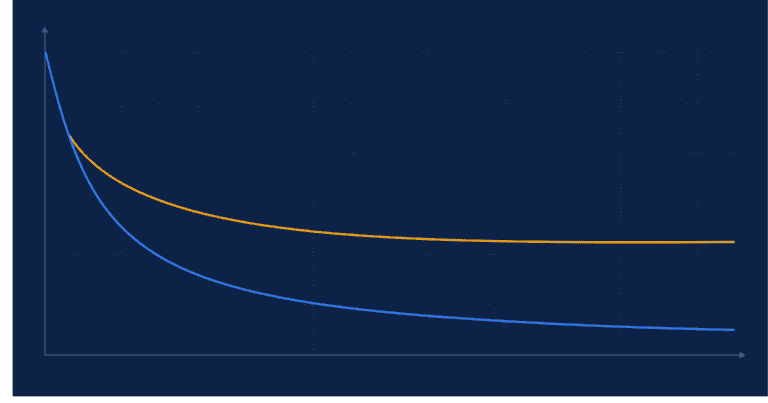
The most common cause is encoding method: passive exposure (reading, listening, watching) without active retrieval creates weak traces that decay quickly — the steep early part of the forgetting curve. The fix is active recall right after encoding (close the resource and write what you can remember), then spaced review at increasing intervals. The second most common cause is inadequate sleep after learning: slow-wave sleep is the consolidation window, and without it the traces stay in fragile short-term storage. Fixing both produces the largest improvement in what you retain.
Can you actually improve memory as an adult?
Yes — through both structural brain changes and technique-driven gains. Erickson et al. (2011) demonstrated it directly in older adults: a year of aerobic walking increased hippocampal volume by 2%, reversing roughly one to two years of age-related loss and improving spatial memory. Adult hippocampal plasticity continues throughout life and is stimulated by exercise, sleep and learning challenge — at a lower rate than in childhood, but present. Spaced repetition and active recall also improve retention at any age by working with how consolidation actually functions.
Which supplement is best for memory?
Bacopa Monnieri (300mg standardised extract) has the strongest RCT evidence specifically for memory — Roodenrys et al. (2002) and Morgan & Stevens (2010) both found improved retention of new information at ~12 weeks. It is often paired with Alpha-GPC (300mg) on cholinergic grounds, though that combination hasn’t itself been tested in a memory trial. Lion’s Mane and DHA are included for their mechanisms but have more limited human memory evidence. All act slowly (allow 8–12 weeks), and all work best on a foundation of adequate exercise and sleep rather than as standalone fixes.
Does exercise really improve memory?
Yes — with structural neuroimaging confirmation. The Erickson et al. (2011) randomised trial is the landmark: 120 older adults assigned to aerobic walking versus stretching for a year. The walking group’s hippocampus grew by 2% while the stretching group’s declined by roughly 1.4% — the typical age-related trajectory. A 2% increase isn’t a subjective “feeling sharper” outcome; it’s a structural change visible on MRI, associated with better spatial memory in the same trial. The mechanism involves raised BDNF, neurogenesis and improved cerebral blood flow. 150 minutes per week of moderate aerobic activity is the supported threshold.
7 Days to a Sharper Brain
Peter Benson’s personal daily protocol, rebuilt from 18 years of testing
Seven evidence-based interventions, in the exact order that makes each one more effective — from sleep foundation to neuroplasticity and Lion’s Mane.
Join 2,000+ readers optimising their cognitive performance. Unsubscribe anytime.
Scientific References
- Erickson KI, et al. (2011). Exercise training increases size of hippocampus and improves memory. Proceedings of the National Academy of Sciences, 108(7):3017–3022. PMID 21282661
- Cepeda NJ, et al. (2006). Distributed practice in verbal recall tasks: a review and quantitative synthesis. Psychological Bulletin, 132(3):354–380. DOI
- Karpicke JD, Blunt JR. (2011). Retrieval practice produces more learning than elaborative studying with concept mapping. Science, 331(6018):772–775. PMID 21252317
- Roodenrys S, et al. (2002). Chronic effects of Brahmi (Bacopa monnieri) on human memory. Neuropsychopharmacology, 27(2):279–281. PMID 12093601
- Morgan A, Stevens J. (2010). Does Bacopa monnieri improve memory performance in older persons? Journal of Alternative and Complementary Medicine, 16(7):753–759. PMID 20590480
- Dunlosky J, et al. (2013). Improving students’ learning with effective learning techniques. Psychological Science in the Public Interest, 14(1):4–58. DOI
- Mori K, et al. (2009). Improving effects of the mushroom Yamabushitake (Hericium erinaceus) on mild cognitive impairment. Phytotherapy Research, 23(3):367–372. PMID 18844328
Peter Benson
Cognitive Enhancement Researcher | 18+ Years Independent Research
Peter Benson has spent 18+ years researching memory and cognitive performance through systematic personal experimentation. He has tracked cognitive performance via Creyos since 2022 and applies the four-layer memory improvement protocol described in this guide daily, including Mandarin Chinese study begun at age 42.
Last reviewed: June 2026 | Educational content only. Not medical advice.