Alpha-GPC & Rhodiola: The Stress-Performance Stack
Medical Disclaimer: The information in this article is for educational purposes only and does not constitute medical advice. Alpha-GPC may interact with scopolamine and other anticholinergic medications. Rhodiola Rosea may interact with antidepressants, stimulants, and blood-thinning medications. Individuals with bipolar disorder should exercise caution with Rhodiola due to its potential activating effects. Always consult a qualified healthcare provider before beginning any supplement regimen.
Alpha-GPC and Rhodiola Rosea address the two most common failure modes of sustained high cognitive performance: cholinergic substrate depletion and adaptogenic stress erosion. Used individually, each produces meaningful cognitive performance enhancement through well-characterized mechanisms. Used together — the Alpha-GPC cholinergic foundation supporting peak acetylcholine-dependent cognitive output, with Rhodiola’s HPA normalization preventing the stress-driven cortisol erosion that progressively degrades it — they form a stack whose combined effect on sustained cognitive performance under real-world demands is substantially greater than either produces alone.
Alpha-GPC (L-alpha-glycerylphosphorylcholine) is the most bioavailable choline source available — crossing the blood-brain barrier efficiently and delivering choline directly to neurons for acetylcholine synthesis. Acetylcholine governs the attentional system, working memory gating, hippocampal LTP induction, and the sustained focused state that demanding cognitive work requires. As cognitive demand increases — with prolonged high-intensity mental work, caffeine-augmented catecholamine activation, or any state that drives high acetylcholine demand — the cholinergic system’s performance is limited by choline precursor availability in a way that Alpha-GPC directly addresses.
Rhodiola Rosea is the adaptogen with the strongest evidence base for cognitive performance under stress — specifically for the reduction of mental fatigue, the maintenance of sustained attention under prolonged cognitive load, and the normalization of the HPA axis dysregulation that chronic stress produces. Where Alpha-GPC addresses the neurochemical substrate of peak cognitive output, Rhodiola addresses the regulatory system that determines how long that peak can be sustained before stress-driven cortisol elevation, adenosine accumulation, and HPA dysfunction erode it. This is the complementarity that makes the stack more than the sum of its parts.
Part 1: Alpha-GPC — The Cholinergic Performance Compound
The Acetylcholine System and Cognitive Performance
Acetylcholine (ACh) is the neurotransmitter most directly associated with the attentional system’s capacity for sustained, focused performance — governing the cholinergic modulation of cortical arousal that determines signal-to-noise ratio in sensory processing, the hippocampal ACh release that gates LTP induction during learning, and the prefrontal ACh that maintains working memory representations across delay periods. The basal forebrain cholinergic system projects throughout the cortex and hippocampus, and its integrity is so central to cognitive function that its degeneration is the primary neurochemical signature of Alzheimer’s disease — the condition that most directly demonstrates what a compromised cholinergic system produces at an extreme.
The functional constraint on cholinergic performance in healthy brains is choline availability — the rate-limiting precursor for ACh synthesis that neurons cannot synthesize de novo and must import from circulation. During periods of high cognitive demand — sustained focused work, caffeinated performance states, learning-intensive tasks — ACh synthesis and release rates increase substantially, increasing choline demand beyond what typical dietary intake alone maintains. Cognitive fatigue experienced after prolonged intense mental work has a cholinergic depletion component: the progressive reduction in ACh synthesis rate as choline availability becomes limiting contributes to the mental fatigue and attentional degradation that characterized “brain fog” after long intense work sessions.
Why Alpha-GPC Outperforms Other Choline Sources
The choline compounds available for supplementation vary substantially in their blood-brain barrier permeability and conversion efficiency to brain ACh. Choline bitartrate — the most commonly used and cheapest choline supplement — crosses the blood-brain barrier poorly and requires multiple metabolic conversions before contributing to ACh synthesis. CDP-choline (citicoline) is more bioavailable and crosses the BBB reasonably well, with the additional benefit of providing cytidine for uridine synthesis — a related cognitive enhancement pathway. Alpha-GPC has the highest bioavailability and most direct conversion pathway of the choline supplements: it is already in the glycerophosphocholine form that neurons can directly use for both membrane phospholipid synthesis and ACh production, with BBB permeability confirmed by multiple pharmacokinetic studies.
A 2024 systematic review by Sagaro and colleagues synthesizing the clinical evidence for Alpha-GPC and cognitive performance found consistent improvements in attention, working memory, and episodic memory across studies — with the largest effects in populations with cholinergic deficiency (older adults, those with mild cognitive impairment) and meaningful effects in healthy younger adults engaged in demanding cognitive tasks. The review confirmed that Alpha-GPC’s combination of high BBB permeability and direct cholinergic substrate delivery makes it the most effective choline supplement for acute cognitive performance enhancement.
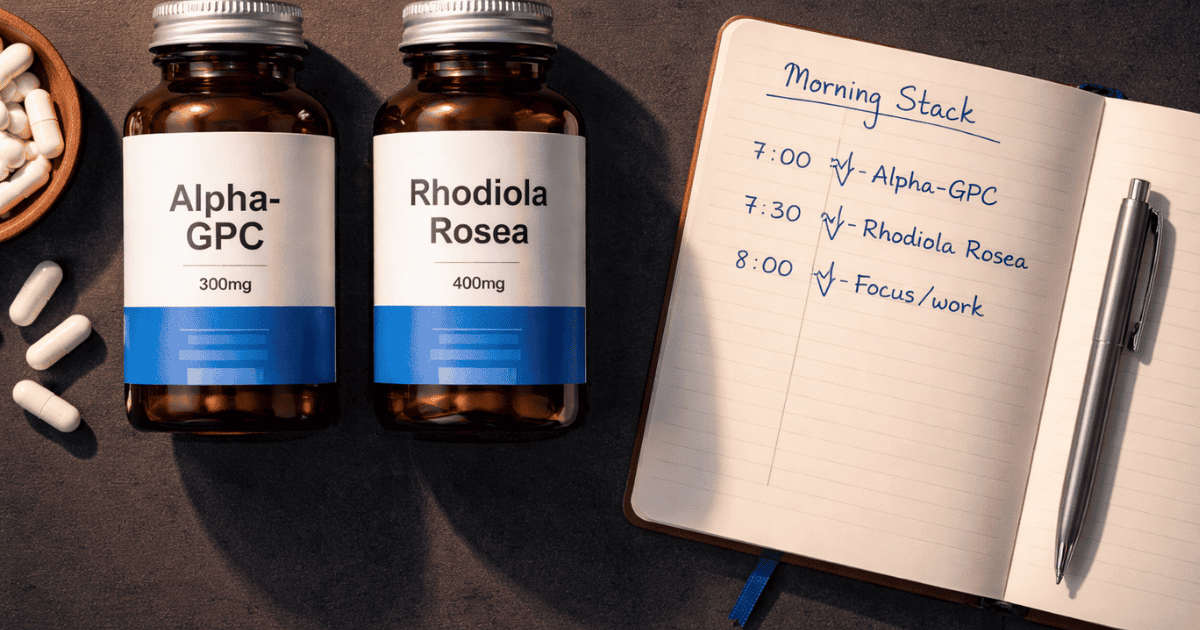
Protocol: 300–600mg Alpha-GPC taken 30–60 minutes before cognitively demanding work. Effects are partially acute (within the dosing window, as brain choline levels rise) and partially cumulative (as consistent supplementation maintains adequate cholinergic substrate availability across sustained high-demand periods). The lower 300mg dose is appropriate for most individuals; 600mg is reserved for particularly demanding work sessions or those with confirmed high cholinergic demand from combined caffeine + intense cognitive work. Alpha-GPC pairs synergistically with the L-Theanine + Caffeine stack from the L-Theanine + Caffeine guide — caffeine’s adenosine blockade and catecholamine amplification increase ACh demand, which Alpha-GPC’s substrate provision satisfies.
Part 2: Rhodiola Rosea — The Adaptogenic Stress Buffer
The Stress-Performance Erosion Problem
High cognitive performance is not merely a neurochemical state to achieve — it is a regulatory state to maintain against the continuous physiological pressures that chronic stress applies. The HPA axis response to chronic psychological stress — sustained cortisol elevation, HPA hyperreactivity, progressive dysregulation of the diurnal cortisol rhythm — produces a cascade of cognitive performance degradation that operates through multiple simultaneous pathways: cortisol-driven hippocampal dendritic retraction reducing memory formation capacity, prefrontal cortex suppression reducing working memory and executive function, BDNF suppression impairing neuroplasticity, and the general energetic depletion that prolonged HPA activation produces. This is the mechanism of chronic stress cognitive erosion — and it is the specific target of adaptogenic compounds that work by normalizing HPA axis function rather than producing acute neurochemical effects.
Rhodiola Rosea is the adaptogen with the most consistent human evidence for this regulatory normalization — specifically for the cognitive performance maintenance under prolonged mental work and psychological stress that the HPA modulation mechanism predicts. Its active compounds — rosavins (rosavin, rosarin, rosin) and salidroside — modulate the HPA axis through effects on corticotropin-releasing hormone (CRH) signaling and glucocorticoid receptor sensitivity, producing the HPA normalization that reduces cortisol’s progressive cognitive performance erosion without the sedation or HPA suppression that pharmacological cortisol reduction would produce.
The Research Evidence
Research by Darbinyan and colleagues — a randomized, double-blind, placebo-controlled trial in physicians performing stressful night duty — found that Rhodiola supplementation significantly improved sustained attention, associative thinking, and short-term memory during the 2-week trial period, with the most pronounced effects on the cognitive performance metrics most sensitive to fatigue-driven degradation. This study is particularly useful for understanding Rhodiola’s cognitive effects because the night-duty population provides a real-world model of sustained cognitive demand under stress and sleep deprivation — the conditions where Rhodiola’s HPA normalization and anti-fatigue effects are most clinically relevant.
Research by Shevtsov and colleagues in fatigued professionals found that a single dose of Rhodiola extract produced significant improvements in mental performance, fatigue reduction, and stress tolerance compared to placebo — with an effect profile characterized by improved sustained attention and reduced error rate on demanding cognitive tasks rather than the acute alertness increase of stimulants. This distinction is important: Rhodiola does not produce the norepinephrine-driven alertness of cold exposure or caffeine but rather reduces the fatigue-driven performance degradation that allows high cognitive performance to be maintained for longer before declining.
Protocol: 300–500mg of Rhodiola Rosea standardized to 3% rosavins and 1% salidroside, taken in the morning on an empty stomach for maximum absorption. Rhodiola should be taken with a 2–4 week break after every 8–12 weeks of continuous use — consistent with adaptogen usage principles that prevent tolerance development and maintain the HPA sensitivity that underlies the adaptogenic mechanism. Rhodiola has an activating effect profile for most users (mild energy and mood improvement without sedation) that makes morning dosing appropriate and evening dosing inadvisable for sleep-sensitive individuals.
Free Download
Get the 7-Day Brain Optimization Protocol
The evidence-based diet, sleep, and supplement framework for your first week of cognitive enhancement — completely free.
Join 2,000+ readers optimizing their cognitive performance. Unsubscribe anytime.
Part 3: The Combined Stack — Integration and Timing
Alpha-GPC and Rhodiola address cognitive performance through mechanisms that are not only complementary but specifically synergistic in the context of sustained high-demand work under stress — the most common real-world performance scenario where both limitations operate simultaneously.
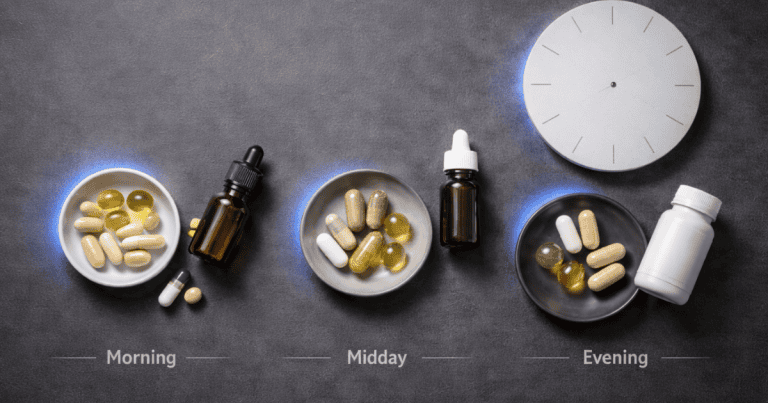
Full Morning Performance Stack — Timing Protocol
On waking: Rhodiola Rosea 300–500mg on empty stomach
90 min after waking: Caffeine 100mg + L-Theanine 200mg
30 min before focused work: Alpha-GPC 300–600mg
With breakfast: Lion’s Mane 1000mg + Bacopa 300mg + DHA 1000–2000mg + Creatine 5g
Evening: Ashwagandha 300–600mg + Magnesium L-Threonate 1500–2000mg
This integrated stack connects the acute cognitive performance layer (Alpha-GPC + L-Theanine + Caffeine), the stress resilience layer (Rhodiola + Ashwagandha), and the long-term neuroprotective foundation (Lion’s Mane + Bacopa + DHA + Creatine + MgT) into a coherent protocol where each component amplifies the others. The Alpha-GPC + L-Theanine + Caffeine combination is the most important acute interaction: caffeine’s adenosine blockade increases ACh demand, L-Theanine’s alpha-wave induction and GABA enhancement buffer the sympathetic activation into optimal moderate range, and Alpha-GPC’s choline delivery ensures ACh synthesis keeps pace with the increased demand — producing a focused, alert, cholinergically supported cognitive state that neither caffeine alone nor Alpha-GPC alone achieves with the same clarity and sustainability.
Frequently Asked Questions About Alpha-GPC and Rhodiola
What does Alpha-GPC do for cognitive performance?
Alpha-GPC (L-alpha-glycerylphosphorylcholine) is a highly bioavailable choline compound that crosses the blood-brain barrier and provides neurons with the direct cholinergic substrate for acetylcholine synthesis. Acetylcholine governs the attentional system, working memory maintenance, hippocampal LTP induction during learning, and the sustained focused state that demanding cognitive work requires. Alpha-GPC’s primary cognitive performance effect is ensuring that cholinergic substrate availability does not become the limiting factor for peak cognitive output — particularly during prolonged high-intensity mental work or when combined with caffeine, which increases ACh demand through its catecholamine effects. Research including a 2024 systematic review confirms consistent improvements in attention, working memory, and episodic memory from Alpha-GPC supplementation, with the most pronounced effects in populations with high cholinergic demand and those performing sustained demanding cognitive tasks. The practical experience is one of supported, sustained attentional clarity rather than the acute stimulant alertness of caffeine — Alpha-GPC provides the neurochemical substrate that keeps focused cognitive performance from degrading as cholinergic demand accumulates through a work session.
What is Rhodiola Rosea good for?
Rhodiola Rosea is best supported by evidence for mental fatigue reduction, cognitive performance maintenance under prolonged stress, and HPA axis normalization in individuals with stress-driven performance degradation. Its active compounds (rosavins and salidroside) modulate the HPA axis’s cortisol stress response, reducing the HPA hyperreactivity that chronic psychological stress produces — and thereby reducing the cortisol-driven cognitive performance erosion (impaired prefrontal function, reduced working memory, BDNF suppression) that characterizes stress-driven cognitive decline. In controlled research, Rhodiola’s cognitive effects are characterized by reduced mental fatigue, improved sustained attention and error rate on demanding tasks, and better cognitive performance maintenance under load — not the acute alertness increase of stimulants but the sustained performance quality that distinguishes Rhodiola from more commonly discussed cognitive compounds. It is particularly useful for individuals in high-stress professional contexts (the original research populations — physicians during night duty and military cadets under stress), those who notice that their cognitive performance degrades more rapidly than it should under pressure, and anyone whose cognitive performance trajectory under chronic stress follows the pattern of progressive erosion rather than consistent output.
Can I take Alpha-GPC and Rhodiola together?
Yes — Alpha-GPC and Rhodiola can be taken together and are specifically designed to work synergistically in this stack. They operate through entirely different mechanisms with no known adverse interactions: Alpha-GPC works through cholinergic substrate provision and ACh synthesis support, while Rhodiola works through HPA axis modulation and adaptogenic stress normalization. There is no pharmacokinetic interaction between the two compounds at standard doses. The combined stack timing: Rhodiola in the morning on an empty stomach (for maximum absorption and its activating HPA effects early in the day), with Alpha-GPC taken 30–60 minutes before the primary focused work session (to ensure peak brain choline availability coincides with peak cognitive demand). The combination addresses the two primary limitations on sustained high-demand cognitive performance — cholinergic substrate (Alpha-GPC) and stress-driven HPA erosion (Rhodiola) — simultaneously, which is why the stack produces effects not achievable from either compound alone.
Is Alpha-GPC better than choline bitartrate?
For cognitive performance applications, yes — Alpha-GPC is substantially more effective than choline bitartrate as a brain choline source. The difference is bioavailability and BBB permeability: choline bitartrate is primarily absorbed into peripheral tissues with limited blood-brain barrier penetration, providing minimal direct increase in brain choline levels at standard doses. Alpha-GPC crosses the blood-brain barrier efficiently in its intact form and is directly converted to choline and glycerophosphate in neurons — with pharmacokinetic studies confirming meaningful increases in brain choline levels following Alpha-GPC supplementation. The practical implication: choline bitartrate at 500–1000mg produces much less brain ACh elevation than Alpha-GPC at 300mg — making Alpha-GPC the appropriate choice for cognitive applications despite its higher cost. CDP-choline (citicoline) is an intermediate option with good BBB permeability and the additional benefit of providing cytidine for uridine synthesis — a useful cognitive enhancement pathway in its own right — but Alpha-GPC’s direct cholinergic delivery makes it the most efficient option specifically for the ACh synthesis support that cognitive performance under load requires.
The Intermediate Stack: Performance That Holds Under Pressure
Alpha-GPC and Rhodiola represent the cognitive enhancement layer that activates after the foundational stack (DHA, Creatine, Lion’s Mane, Bacopa) has been established and assessed — compounds with strong evidence bases and specific cognitive performance targets that complement the foundational neuroplasticity and structural layer rather than replacing it.
The practical value proposition of this stack is specific: it is most useful for individuals who have established the foundational supplements, confirmed their cognitive performance baseline, and identified that their primary performance limitations are sustained attention degradation under prolonged work, cholinergic fatigue after intense cognitive sessions, or stress-driven performance erosion during high-demand periods. Those who identify with all three of these patterns — which describes most professionals working in cognitively demanding roles — are the population for whom the Alpha-GPC + Rhodiola combination produces the most consistent and significant practical benefit.
For the complete beginner stack and 12-week introduction protocol, see the nootropics hub guide. For advanced stacking protocols that build on this intermediate tier, see the biohacking hub.
References
- Sagaro, G.G., et al. (2024). Alpha-GPC supplementation and cognitive performance: a systematic review. Journal of Clinical Medicine. PubMed
- Darbinyan, V., et al. (2000). Rhodiola rosea in stress-induced fatigue — a double blind cross-over study of a standardized extract. Phytomedicine, 7(5), 365–371. PubMed
- Shevtsov, V.A., et al. (2003). A randomized trial of two different doses of a SHR-5 Rhodiola rosea extract versus placebo and control of capacity for mental work. Phytomedicine, 10(2–3), 95–105. PubMed
- De Jesus Moreno Moreno, M. (2003). Cognitive improvement in mild to moderate Alzheimer’s dementia after treatment with acetylcholine precursor. Neuropsychiatric Disease and Treatment. PubMed
- Spasov, A.A., et al. (2000). A double-blind, placebo-controlled pilot study of the stimulating and adaptogenic effect of Rhodiola rosea on students during an examination period. Phytomedicine, 7(2), 85–89. PubMed
- Kosari, M., et al. (2021). Effects of alpha GPC on cognitive function of patients with mild to moderate Alzheimer’s disease. International Journal of Molecular Sciences. PubMed
- Panossian, A., & Wikman, G. (2010). Effects of adaptogens on the central nervous system and the molecular mechanisms associated with their stress-protective activity. Pharmaceuticals, 3(1), 188–224. PubMed
Tags: alpha-gpc rhodiola stack, alpha-gpc cognitive performance, rhodiola rosea cognitive performance, cholinergic nootropic stack, alpha-gpc acetylcholine, rhodiola mental fatigue, alpha-gpc working memory, rhodiola HPA adaptogen, alpha-gpc dose, rhodiola stress performance, choline nootropic, adaptogen cognitive performance, alpha-gpc vs choline, rhodiola rosavins salidroside, stress-performance stack
About Peter Benson
Peter Benson is a cognitive enhancement researcher and certified mindfulness coach with 18+ years of personal and professional experience in nootropics, neuroplasticity, and brain health optimization. NeuroEdge Formula is his platform for sharing rigorous, safety-first cognitive enhancement guidance.