Ashwagandha (KSM-66): Benefits, Dosage, and What the Research Actually Shows
Medical Disclaimer: The information in this article is for educational purposes only and does not constitute medical advice. Always consult a qualified healthcare provider before beginning any supplement regimen. Individual responses to Ashwagandha vary. This guide reflects published research and personal experience and does not substitute for professional medical evaluation.
Ashwagandha is the supplement that almost everyone has heard of, a significant number of people have tried, and very few have used with the precision the evidence actually supports.
The popular narrative around Ashwagandha tends toward the vague: it reduces stress, it improves sleep, it might help with energy. All of that is directionally accurate — but it undersells both the specificity of what Ashwagandha does at the neurochemical and endocrine level and the quality of the clinical evidence behind it. In the last five years, KSM-66 Ashwagandha — a root extract standardized to a minimum of 5% withanolides using a proprietary full-spectrum extraction process — has accumulated one of the most rigorous clinical evidence bases of any herbal supplement in the cognitive enhancement space, including randomized controlled trials that used direct cortisol measurement, validated cognitive assessment batteries, and structural brain imaging.
Ashwagandha occupies a distinct position in the protocol covered in this series. It is not primarily a cognitive enhancement compound in the direct sense that Alpha-GPC or Bacopa Monnieri are — it does not primarily enhance acetylcholine synthesis or drive dendritic branching. Its primary contribution is what might be called the cognitive performance substrate: the HPA axis regulation, cortisol reduction, sleep architecture improvement, and anxiolytic effects that create the neurobiological conditions in which every other compound in the protocol can perform at its ceiling. After nearly two decades of researching cognitive enhancement, I consider it the most important stress-management compound available — more consistent in its cortisol-reducing effects than Rhodiola, more structurally impactful than Phosphatidylserine, and with a growing cognitive enhancement evidence base in healthy adults that makes it valuable well beyond its traditional stress-relief application.
This article builds on the full series — particularly the 5 best nootropics for beginners, the stacking guide, the Rhodiola Rosea compound guide, and the Phosphatidylserine guide, since Ashwagandha’s cortisol-modulating and stress-resilience mechanisms are most valuable when understood in relation to the complementary approaches those compounds provide.
What Is Ashwagandha?
Ashwagandha (Withania somnifera) is a small woody shrub native to India, North Africa, and the Mediterranean whose root has been used in Ayurvedic medicine for over 3,000 years. Its Sanskrit name — ashwagandha — translates roughly as “smell of horse,” a reference to both the root’s distinctive aroma and the traditional belief that its consumption conferred the strength and vitality of a horse. In Ayurvedic classification, it is categorized as a rasayana — a rejuvenating tonic compound — and specifically as a medhya rasayana, indicating traditional use for cognitive and neurological enhancement alongside its physical adaptogenic applications.
The active compounds primarily responsible for Ashwagandha’s biological effects are withanolides — a class of steroidal lactones unique to the Withania genus — along with alkaloids, sitoindosides, and glycowithanolides. Research characterizing Ashwagandha’s bioactive compound profile has established that withanolide content varies significantly between preparations — from negligible concentrations in crude powders to standardized concentrations in quality extracts — making extract standardization the most important quality variable in Ashwagandha supplementation.
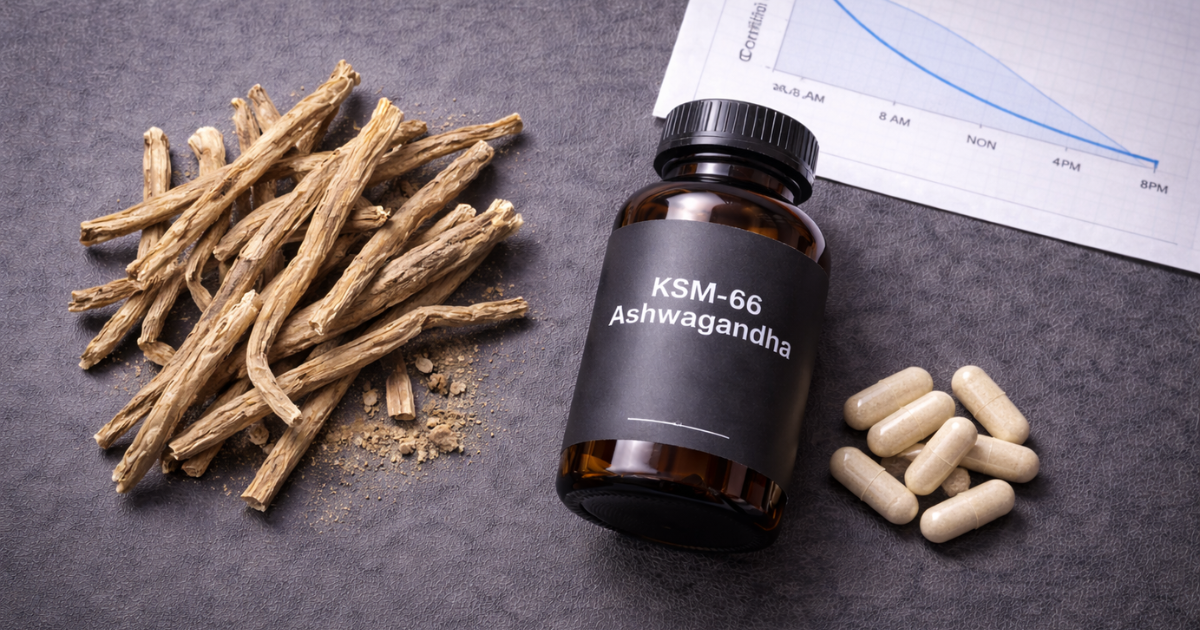
KSM-66 is a full-spectrum root extract produced by Ixoreal Biomed using a proprietary milk extraction process that preserves the full range of withanolides and other bioactive compounds in proportions consistent with the whole root, standardized to a minimum of 5% withanolides. It is the most extensively studied Ashwagandha extract in human clinical trials — the majority of the trials discussed in this article used KSM-66 specifically — and its standardization provides a level of between-study consistency that makes the evidence base more internally coherent than studies using different preparations.
How Ashwagandha Works: The Complete Mechanism
HPA Axis Regulation and Cortisol Reduction
The primary mechanism through which Ashwagandha produces its stress-protective and cognitive effects is modulation of the hypothalamic-pituitary-adrenal axis — the hormonal cascade that governs cortisol secretion in response to psychological and physiological stress. Ashwagandha’s withanolides appear to modulate glucocorticoid receptor sensitivity and ACTH signaling, reducing the amplitude and duration of cortisol responses to stressors without eliminating the cortisol response entirely. Research directly measuring cortisol in Ashwagandha clinical trials has confirmed significant serum cortisol reductions — in some trials exceeding 27% reduction from baseline. The cognitive relevance is substantial: as detailed in the Rhodiola compound guide, chronic cortisol elevation is one of the most damaging inhibitors of hippocampal neuroplasticity, working memory function, and the cognitive flexibility that underlies complex reasoning. Ashwagandha’s cortisol-reducing effects are not merely stress management — they are direct hippocampal neuroprotection.
GABA-Mimetic and Anxiolytic Mechanisms
Ashwagandha’s withanolides — particularly withaferin A and withanolide D — have demonstrated GABA-A receptor modulating activity in neuropharmacological research. Research on Ashwagandha’s GABAergic mechanisms found that Ashwagandha root extract significantly enhanced GABA-A receptor activity and reduced anxiety behaviors through a mechanism distinct from benzodiazepine binding — producing anxiolytic effects without the sedation, tolerance development, or dependence associated with pharmaceutical GABA-A modulators. This mechanism explains Ashwagandha’s anxiolytic effects in clinical research and distinguishes them from the cortisol-reducing HPA axis mechanism — two complementary anxiolytic pathways that together produce the consistent reduction in perceived stress and anxiety documented across the clinical evidence base.
Acetylcholine System Preservation
Ashwagandha has documented cholinergic neuroprotective effects — specifically, inhibition of acetylcholinesterase and protection of basal forebrain cholinergic neurons from oxidative stress and neuroinflammatory damage. Research on Ashwagandha and cholinergic neuroprotection found that withanolides promote the growth and survival of cholinergic neurons and axons — the same neuron type that Lion’s Mane’s NGF stimulation supports and that Alpha-GPC’s acetylcholine production depends upon. This cholinergic neuroprotective mechanism creates a meaningful synergy with the cholinergic stack described throughout this series — Ashwagandha helps preserve the cholinergic neurons that Alpha-GPC supplies with precursor and Bacopa protects from acetylcholinesterase-mediated depletion, adding a structural preservation layer to the acute cholinergic enhancement strategy.
BDNF Upregulation and Neuroplasticity
Research on Ashwagandha and neurotrophic factors has demonstrated that Ashwagandha supplementation significantly increases BDNF expression in the hippocampus — the same neuroplasticity pathway that DHA’s structural support and Lion’s Mane’s NGF stimulation target through complementary mechanisms. Ashwagandha’s BDNF upregulation provides neuroplasticity support that complements its cortisol-reducing neuroprotective effects — addressing both the threat to hippocampal integrity (cortisol) and the growth signal that counters it (BDNF) simultaneously.
Thyroid Hormone Modulation
Clinical research on Ashwagandha and thyroid function found that KSM-66 supplementation significantly increased T3 and T4 levels in individuals with subclinical hypothyroidism — a finding with cognitive relevance given the well-established relationship between thyroid function and cognitive performance. This mechanism represents both a potential benefit for individuals with suboptimal thyroid function and a firm safety consideration for individuals on thyroid medications — discussed in full below.
What the Human Clinical Research Actually Shows
The Choudhary Cognitive Enhancement Trial
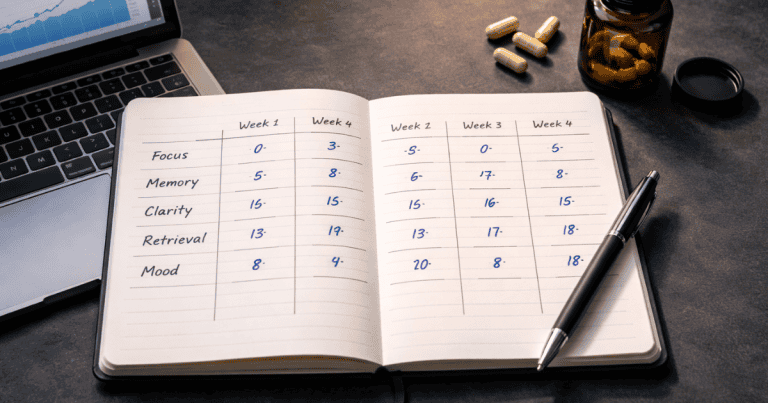
The most directly applicable cognitive enhancement research is the randomized, double-blind, placebo-controlled trial by Choudhary and colleagues, published in the Journal of Dietary Supplements in 2017. This trial enrolled 50 healthy adults and administered 300mg KSM-66 twice daily (600mg total) or placebo for 8 weeks, measuring cognitive function using a comprehensive validated battery. The KSM-66 group demonstrated statistically significant improvements across all cognitive domains measured — immediate memory, general memory, executive function, sustained attention, and information processing speed — compared to placebo. The across-the-board improvements across multiple cognitive domains rather than a single measure provide strong confidence in the compound’s general cognitive enhancement effect rather than a narrowly specific one.
The Chandrasekhar Stress and Cortisol Trial
The landmark stress and cortisol research is the randomized, double-blind, placebo-controlled trial by Chandrasekhar and colleagues, published in the Indian Journal of Psychological Medicine in 2012. This trial enrolled 64 adults with chronic stress and administered 300mg KSM-66 twice daily or placebo for 60 days, measuring serum cortisol, Perceived Stress Scale scores, and multiple stress-related biomarkers. The KSM-66 group demonstrated a 27.9% reduction in serum cortisol compared to placebo — a direct biochemical measurement that is the most compelling single piece of evidence for Ashwagandha’s HPA axis modulating effects. Perceived Stress Scale scores improved by 44% in the KSM-66 group versus 5.5% in placebo — a clinical effect size among the largest for any non-pharmacological stress intervention in the published literature.
The Sleep Quality Research
A randomized, double-blind, placebo-controlled trial examining KSM-66’s effects on sleep quality enrolled 150 healthy adults and administered KSM-66 or placebo for 6 weeks using validated sleep quality questionnaires and actigraphy. The KSM-66 group demonstrated significant improvements in sleep onset latency, total sleep time, sleep efficiency, and sleep quality scores compared to placebo. The cognitive significance of this sleep improvement cannot be overstated: sleep is the biological process through which the neuroplasticity compounds in this protocol — Lion’s Mane, Bacopa, DHA — produce their most critical effects. Memory consolidation occurs during slow-wave sleep. NGF and BDNF expression peak during sleep. An intervention that reliably improves sleep quality simultaneously improves the conditions under which every neuroplasticity compound in the protocol does its most important work.
The Pratte Systematic Review
A systematic review examining five randomized controlled trials of Ashwagandha for stress and anxiety found that all five trials reported significant improvements in anxiety or stress measures compared to placebo, with no serious adverse events across the reviewed population — a consistency of effect across independent trials that substantially strengthens confidence in the compound’s stress-protective efficacy.
The Physical Performance Research
A randomized controlled trial examining KSM-66’s effects on physical performance found significant improvements in muscle strength, recovery, and testosterone levels in healthy men after 8 weeks of 300mg twice daily — findings with indirect cognitive relevance through the well-established relationship between testosterone, BDNF, and hippocampal neuroplasticity.
Free Download
Get the Free 7-Day Brain Optimization Protocol
The evidence-based diet, sleep, and supplement framework for your first week of cognitive enhancement — completely free.
Join 2,000+ readers optimizing their cognitive performance. Unsubscribe anytime.
Ashwagandha Dosage: The Evidence-Based Protocol
The Clinical Dose Range
The most consistently used dose across KSM-66 clinical trials is 300mg twice daily — 600mg total daily dose — taken with meals. This dose was used in both the Choudhary cognitive enhancement trial and the Chandrasekhar cortisol trial, providing direct replication across the two most important outcome categories for cognitive enhancement purposes. A single daily dose of 300–600mg has also shown efficacy in some trials. For cognitive enhancement as the primary objective, the 600mg daily dose represents the most directly evidence-supported approach. Users whose primary objective is sleep improvement may find 300mg in the evening alone sufficient and preferable for circadian timing reasons.
Timing and Administration
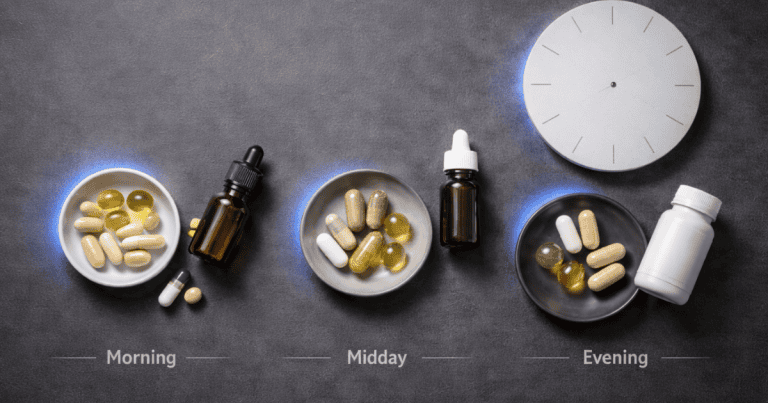
Ashwagandha is fat-soluble and absorbs best when taken with meals. Unlike stimulatory compounds where time-of-day precision is critical for sleep protection, Ashwagandha’s primary mechanisms do not have sharp circadian timing requirements. The standard approach — 300mg with breakfast and 300mg with dinner — is appropriate for most users and ensures consistent plasma concentrations throughout the day. Ashwagandha does not have a documented tolerance development mechanism at standard doses — continuous daily use without formal cycling is the approach used in the clinical research.
KSM-66 vs. Other Ashwagandha Extracts
KSM-66 uses a full-spectrum root-only extraction standardized to minimum 5% withanolides. It is used in the majority of high-quality cognitive and stress clinical trials and represents the most evidence-backed extract for these applications. Sensoril uses a root and leaf extraction standardized to minimum 10% withanolides — a legitimate alternative with its own clinical evidence base but a distinct bioactive profile from KSM-66. Crude Ashwagandha powder has highly variable withanolide content and cannot be reliably matched to clinical research doses. For cognitive enhancement applications, KSM-66 at 300–600mg daily with third-party testing verification is the only preparation that can be confidently matched to the published human clinical evidence.
Ashwagandha KSM-66 Benefits: What the Evidence Supports
Supported by Human Clinical Research
Improved cognitive function across multiple domains in healthy adults. The Choudhary et al. double-blind trial demonstrated statistically significant improvements in immediate memory, general memory, executive function, sustained attention, and information processing speed at 600mg KSM-66 daily over 8 weeks — the most comprehensive single-trial cognitive enhancement evidence for Ashwagandha in healthy adults.
27.9% reduction in serum cortisol under chronic stress. The Chandrasekhar et al. double-blind trial demonstrated a 27.9% reduction in directly measured serum cortisol at 600mg KSM-66 daily over 60 days — the strongest direct cortisol measurement in the Ashwagandha clinical literature.
44% improvement in Perceived Stress Scale scores. The same Chandrasekhar trial found a 44% improvement in validated perceived stress scores — one of the largest effect sizes for any non-pharmacological stress intervention in published research at the relevant dose.
Significant improvements in sleep quality, onset latency, and total sleep time. The sleep quality randomized trial demonstrated significant improvements across all validated sleep quality measures — findings with cascading cognitive benefits through sleep-dependent memory consolidation and neuroplasticity processes.
Consistent anxiety reductions across multiple validated measures. All five trials in the Pratte et al. systematic review found significant anxiety reductions — establishing this as the most consistently replicated clinical effect of KSM-66 Ashwagandha.
Supported by Mechanistic Research (Human Evidence Developing)
Cholinergic neuroprotection and neurite outgrowth. Ashwagandha withanolides promote the growth and survival of cholinergic neurons and axons through nerve growth factor sensitization and direct neurotrophic activity — providing strong mechanistic support for long-term neuroprotective effects that extend beyond the stress and cortisol applications.
BDNF upregulation and hippocampal neuroplasticity support. Ashwagandha’s documented BDNF-increasing effects provide a compelling basis for neuroplasticity benefits complementary to those produced by Lion’s Mane and DHA — though human trials specifically examining BDNF changes with Ashwagandha supplementation remain limited.
Ashwagandha Safety Profile
Ashwagandha has a well-established safety profile at cognitive enhancement doses, supported by multiple clinical trials and a 3,000-year history of Ayurvedic use. The most commonly reported adverse effects in clinical research are mild gastrointestinal effects — nausea and stomach upset — that are typically eliminated by taking Ashwagandha with food rather than on an empty stomach.
Thyroid medication interaction: Ashwagandha’s documented thyroid hormone-modulating effects create a clinically meaningful interaction risk with thyroid medications — both levothyroxine and antithyroid drugs. Research on Ashwagandha and thyroid function found significant increases in T3 and T4 levels. This is a firm interaction requiring medical evaluation — do not use Ashwagandha if you take any thyroid medication without explicit discussion with your prescribing physician.
Autoimmune conditions: Ashwagandha has immune-modulating properties and may theoretically exacerbate autoimmune conditions. Individuals with autoimmune diagnoses — including rheumatoid arthritis, lupus, multiple sclerosis, and Hashimoto’s thyroiditis — should discuss Ashwagandha use with their specialist before proceeding.
Pregnancy and breastfeeding: Traditional Ayurvedic use in high doses as an abortifacient creates a precautionary contraindication. Avoid use during pregnancy and breastfeeding unless specifically approved by a healthcare provider.
Benzodiazepine and CNS depressant interactions: Ashwagandha’s GABA-A modulating anxiolytic effects may theoretically potentiate the effects of benzodiazepines, barbiturates, and other CNS depressants. Use with caution if taking any sedative or anxiolytic medication and discuss with your prescribing physician.
The complete safety framework is covered in the complete nootropic safety guide.
How to Stack Ashwagandha for Maximum Cognitive Benefit
Ashwagandha + Rhodiola Rosea (Comprehensive Stress Resilience): Rhodiola and Ashwagandha address stress resilience through complementary mechanisms with no pharmacological overlap. Rhodiola’s primary mechanism is adaptogenic HPA axis recalibration and monoamine preservation — best for acute stress resilience and anti-fatigue during high-demand cognitive sessions. Ashwagandha’s primary mechanisms are cortisol reduction, GABA-A anxiolysis, and sleep improvement — best for chronic stress load reduction and the structural cognitive benefits of sustained cortisol normalization. Together they constitute the most comprehensive stress resilience strategy in the natural supplement space. Note that Rhodiola requires cycling (5 days on, 2 days off) while Ashwagandha does not — Ashwagandha can be continued through Rhodiola’s off days without modification.
Ashwagandha + Lion’s Mane + DHA (Neuroplasticity Foundation): Ashwagandha’s cortisol reduction and BDNF upregulation complement Lion’s Mane’s NGF stimulation and DHA’s membrane structural support — addressing neuroplasticity from three complementary angles simultaneously. Chronic cortisol elevation is one of the primary inhibitors of NGF- and BDNF-driven neuroplasticity; Ashwagandha’s cortisol reduction removes this inhibitory signal while Lion’s Mane increases the positive neuroplasticity drive and DHA provides the membrane substrate for structural changes to manifest.
Ashwagandha + Bacopa Monnieri (Ayurvedic Cognitive Foundation): Both compounds are medhya rasayanas in Ayurvedic classification. The modern mechanistic evidence explains why they were traditionally paired: Ashwagandha’s cholinergic neuroprotection and cortisol reduction create a favorable environment for Bacopa’s dendritic branching and cholinergic enhancement to produce their most significant effects. Both compounds require 8–12 weeks minimum assessment periods and are appropriate to introduce simultaneously.
Ashwagandha + Alpha-GPC (Cholinergic Support Stack): Ashwagandha’s cholinergic neuroprotective effects — preserving the basal forebrain cholinergic neurons that acetylcholine production depends upon — complement Alpha-GPC’s role as an acetylcholine precursor. Ashwagandha helps maintain the structural integrity of the cholinergic system that Alpha-GPC supplies with substrate — addressing the cholinergic pathway from both the structural (neuron preservation) and the functional (precursor supply) angles.
The Complete Advanced Protocol Integration: Ashwagandha enters the protocol as the cortisol-management and sleep-optimization anchor — the compound whose effects on the stress substrate create the conditions under which the neuroplasticity compounds and cholinergic compounds perform at their ceiling. When added to the existing protocol of caffeine + L-theanine + Rhodiola + Lion’s Mane + Bacopa + DHA + PS + Alpha-GPC, Ashwagandha completes the stress and sleep layer while adding the Ayurvedic cognitive enhancement tradition’s most well-evidenced compound to the neuroplasticity foundation.
Frequently Asked Questions About Ashwagandha KSM-66
What does Ashwagandha KSM-66 do for cognitive function?
KSM-66 Ashwagandha improves cognitive function through multiple complementary mechanisms: it reduces serum cortisol by up to 27.9% — directly protecting hippocampal neurons from cortisol-mediated damage and reducing the working memory and executive function impairments that chronic stress produces. It modulates GABA-A receptors to reduce anxiety — removing a major inhibitor of focused cognitive performance. It improves sleep quality — enhancing the sleep-dependent memory consolidation and neuroplasticity processes through which other compounds in the protocol produce their cumulative effects. And it upregulates BDNF — directly supporting the hippocampal neuroplasticity that underlies memory formation and learning. A clinical trial in healthy adults found statistically significant improvements across immediate memory, general memory, executive function, sustained attention, and information processing speed at 600mg daily for 8 weeks.
What is the best Ashwagandha dosage for cognitive enhancement?
The evidence-based dose for cognitive enhancement and stress reduction is 600mg daily of KSM-66 extract, divided as 300mg with breakfast and 300mg with dinner. This is the dose used in both the Choudhary cognitive enhancement trial and the Chandrasekhar cortisol reduction trial — the two most directly relevant clinical studies for cognitive enhancement applications. Both preparations should use KSM-66 specifically, standardized to a minimum of 5% withanolides, with third-party testing verification. Ashwagandha does not require cycling — continuous daily use is the approach used in the clinical research.
How long does Ashwagandha take to work?
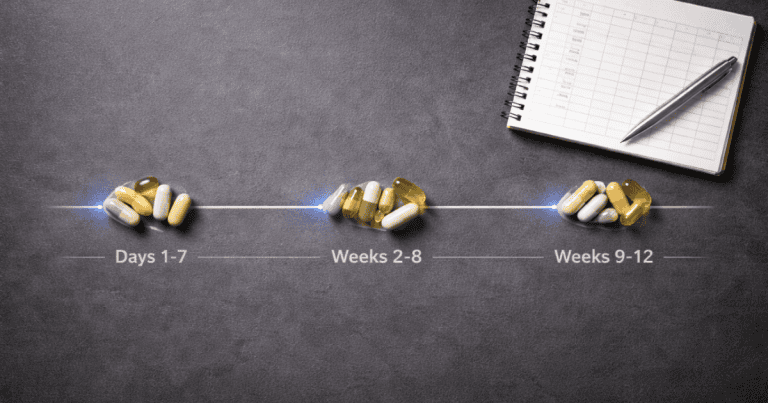
The primary cognitive enhancement trial measured outcomes at 8 weeks of supplementation. The cortisol reduction trial measured significant outcomes at 60 days. Sleep quality improvements have been documented at 6 weeks. Most users report subjective improvements in stress tolerance and anxiety within 2–4 weeks of consistent use, with more pronounced cognitive improvements in memory and executive function becoming apparent over 8–12 weeks. Unlike acute compounds such as caffeine that produce effects within hours, Ashwagandha’s primary mechanisms — HPA axis recalibration, BDNF upregulation, and the cognitive improvements that follow from sustained cortisol normalization — operate on a cumulative timeline requiring consistent daily use over weeks to months.
Is KSM-66 better than other Ashwagandha extracts?
KSM-66 is the most extensively studied Ashwagandha extract in human clinical trials for cognitive enhancement and stress reduction — meaning it has the most directly applicable evidence base for these applications. Sensoril is a legitimate alternative with its own clinical evidence base but a distinct bioactive profile. Crude Ashwagandha powder has highly variable withanolide content and cannot be reliably matched to clinical research doses. For cognitive enhancement and cortisol reduction specifically, KSM-66 is the most evidence-backed choice. The key quality requirement for any Ashwagandha product is explicit standardization to a stated withanolide percentage with third-party testing verification of that content.
Can I take Ashwagandha with Rhodiola Rosea?
Yes — Ashwagandha and Rhodiola Rosea are mechanistically complementary with no pharmacological overlap and no documented interaction. Rhodiola addresses stress resilience through adaptogenic HPA axis recalibration and monoamine preservation — best for acute anti-fatigue and performance under stress. Ashwagandha addresses stress through cortisol reduction, GABA-A anxiolysis, and sleep improvement — best for chronic stress load reduction and the structural cognitive benefits of sustained cortisol normalization. Together they constitute the most comprehensive stress resilience strategy in the natural supplement space. Note that Rhodiola requires cycling (5 days on, 2 days off) while Ashwagandha does not — Ashwagandha can be continued through Rhodiola’s off days without modification.
Is Ashwagandha KSM-66 Worth Taking? The Evidence-Based Verdict
The case for KSM-66 Ashwagandha in a cognitive enhancement protocol rests on a clinical evidence base that is more directly applicable to the healthy adult cognitive enhancement population than most people realize. A randomized controlled trial showing improvements across five distinct cognitive domains in healthy adults at 8 weeks. A cortisol reduction exceeding 27% with direct serum measurement. A stress reduction effect size among the largest for any non-pharmacological intervention. And consistent sleep quality improvements that create the biological conditions in which every other neuroplasticity compound in the protocol does its most important work.
The contraindications are real and must be taken seriously — thyroid medication interaction is a firm clinical concern requiring physician discussion, and autoimmune conditions require specialist evaluation. For the healthy adult without these risk factors, however, Ashwagandha’s safety record across clinical trials and its 3,000-year traditional use history provide substantial confidence.
600mg KSM-66 daily — 300mg with breakfast, 300mg with dinner — without cycling, consistently over a minimum of 8 weeks before assessing cognitive outcomes. Stack it with Rhodiola for the most comprehensive stress resilience architecture in the natural supplement space. Add it to the neuroplasticity foundation of Lion’s Mane and DHA to remove the cortisol inhibition that limits those compounds’ ceiling effects. And recognize that its most important contribution to the protocol may be the sleep quality improvement that converts every night’s sleep into a more effective neuroplasticity window — an effect that compounds in value with every day of consistent supplementation.
For the complete beginner protocol that precedes Ashwagandha’s introduction, see the 5 best nootropics for beginners. For the stress-resilience stacking framework that Ashwagandha anchors, see the complete stacking guide. For the complementary adaptogen that pairs most powerfully with Ashwagandha’s stress mechanisms, see the Rhodiola Rosea compound guide. And for the realistic timeline of when Ashwagandha’s cognitive benefits become measurable, the 90-day nootropic timeline provides the framework.
References
- Choudhary, D., et al. (2017). Efficacy and safety of Ashwagandha (Withania somnifera) root extract in improving memory and cognitive functions. Journal of Dietary Supplements, 14(6), 599–612. PubMed
- Chandrasekhar, K., et al. (2012). A prospective, randomized double-blind, placebo-controlled study of safety and efficacy of a high-concentration full-spectrum extract of Ashwagandha root in reducing stress and anxiety. Indian Journal of Psychological Medicine, 34(3), 255–262. PubMed
- Langade, D., et al. (2019). Efficacy and safety of Ashwagandha (Withania somnifera) root extract in insomnia and anxiety. Cureus, 11(9), e5797. PubMed
- Wankhede, S., et al. (2015). Examining the effect of Withania somnifera supplementation on muscle strength and recovery. Journal of the International Society of Sports Nutrition, 12, 43. PubMed
- Panda, S., & Kar, A. (1998). Changes in thyroid hormone concentrations after administration of Ashwagandha root extract. Journal of Pharmacy and Pharmacology, 50(9), 1065–1068. PubMed
- Bhattacharya, S.K., et al. (2000). Anxiolytic-antidepressant activity of Withania somnifera glycowithanolides. Phytomedicine, 7(6), 463–469. PubMed
- Kuboyama, T., et al. (2005). Neuritic regeneration and synaptic reconstruction induced by withanolide A. British Journal of Pharmacology, 144(7), 961–971. PubMed
- Pratte, M.A., et al. (2014). An alternative treatment for anxiety: a systematic review of human trial results reported for the Ayurvedic herb Ashwagandha. Journal of Alternative and Complementary Medicine, 20(12), 901–908. PubMed
- Candelario, M., et al. (2015). Direct evidence for GABAergic activity of Withania somnifera. Journal of Ethnopharmacology, 171, 264–272. PubMed
- Singh, N., et al. (2011). An overview of Ashwagandha: a Rasayana (rejuvenator) of Ayurveda. African Journal of Traditional and Complementary Medicine, 8(5S), 208–213. PubMed
About Peter Benson
Peter Benson is a cognitive enhancement researcher with 18+ years of personal and professional experience in nootropics, neuroplasticity, and brain optimization protocols. He has personally helped hundreds of individuals improve their mental performance through evidence-based supplementation and lifestyle strategies. NeuroEdge Formula is his platform for sharing rigorous, safety-first cognitive enhancement guidance.