The Complete Guide to Brain Health and Longevity: Evidence-Based Neuroprotectio
Medical Disclaimer: The information in this article is for educational purposes only and does not constitute medical advice. Cognitive decline, dementia, and neurological conditions require professional evaluation and treatment. Nothing in this guide substitutes for consultation with a qualified healthcare provider. Supplement interactions with medications require professional review. Individual responses vary significantly.
Most people think about brain health the way they think about their car’s engine: it runs until it doesn’t, and if something goes wrong you take it to a specialist. The brain, in this mental model, is something that happens to you — aging, declining, or breaking down through processes outside your control, addressable only after symptoms appear. The neuroscience says something completely different.
The brain is one of the most neuroplastic, most responsive, most directly modifiable organs in the human body. Across a lifetime, the same variables that determine the rate of cognitive aging — neuroinflammation, amyloid-beta accumulation, hippocampal neurogenesis rate, synaptic density, mitochondrial function, vascular integrity — are directly and meaningfully influenced by diet, exercise, sleep, stress management, and targeted supplementation. The difference between a brain that maintains cognitive sharpness into the 80s and one that begins declining in the 50s is not primarily genetic. It is primarily behavioral and neurochemical — which means it is primarily within your control.
After 18+ years researching cognitive enhancement and working with clients across a wide age range, the most consistent pattern I observe is that the people whose long-term brain health outcomes are best are not those who took the most supplements or ran the most cognitive training programs. They are those who understood the underlying biology early enough and consistently applied the interventions that address it — before symptoms appeared, as a daily practice rather than a crisis response.
This is the pillar guide for the Brain Health hub — covering the neuroscience of cognitive aging, the primary modifiable mechanisms through which decline occurs, and the complete evidence-based protocol for protecting and enhancing brain function across a lifetime. It connects to the detailed guides throughout the hub and to the supplementation protocols in the Nootropics hub, the sleep protocols in the Sleep hub, and the focus and memory protocols throughout NeuroEdge Formula.
Part 1: The Neuroscience of Brain Aging — What Actually Happens and Why
Cognitive aging is not a single process. It is the cumulative result of several distinct neurobiological mechanisms — each independently modifiable — that interact and compound across decades. Understanding which mechanisms are operating in your brain at any given time is what makes neuroprotection a targeted practice rather than generic advice.
Neuroinflammation: The Slow Burn That Precedes Decline
Chronic low-grade neuroinflammation — persistent activation of the brain’s immune cells (microglia) in the absence of acute infection or injury — is now recognized as the central mechanism underlying most forms of age-related cognitive decline, including Alzheimer’s disease, vascular dementia, and the diffuse cognitive slowing that most adults experience beginning in their 40s and 50s. Research on neuroinflammation and cognitive aging found that chronically activated microglia produce pro-inflammatory cytokines — TNF-alpha, IL-1beta, IL-6 — that directly impair synaptic plasticity, reduce hippocampal neurogenesis, disrupt the blood-brain barrier, and accelerate amyloid-beta accumulation.
The key insight is that neuroinflammation is not an inevitable consequence of aging — it is a consequence of the chronic systemic inflammation, sleep deprivation, poor diet, physical inactivity, and chronic stress that characterize modern lifestyle, applied over decades. The same behaviors that produce metabolic syndrome and cardiovascular disease produce neuroinflammation — and the same interventions that reverse metabolic inflammation (anti-inflammatory diet, aerobic exercise, adequate sleep, stress management) reduce neuroinflammatory signaling with directly measurable cognitive consequences.
Amyloid-Beta Accumulation and Tau Pathology
Amyloid-beta plaques and tau neurofibrillary tangles are the pathological hallmarks of Alzheimer’s disease — but they accumulate over decades before clinical symptoms appear. The amyloid cascade hypothesis positions amyloid-beta accumulation as an early trigger that initiates a downstream cascade of tau pathology, synaptic loss, and neuronal death. Critically, amyloid-beta accumulation begins 15–20 years before cognitive symptoms emerge — meaning the neuroprotective interventions that matter most are those applied during the asymptomatic phase of early accumulation, not after diagnosis.
The most direct connection between lifestyle and amyloid-beta accumulation is sleep. As established in the sleep and memory guide, the glymphatic system — the brain’s waste clearance mechanism — operates primarily during slow wave sleep, actively clearing amyloid-beta from the brain’s interstitial space. Research by Xie and colleagues found that the glymphatic system is approximately 10 times more active during sleep than wakefulness — making SWS quality a direct amyloid clearance variable. Chronic sleep restriction accumulates amyloid-beta progressively in ways that single nights of recovery cannot reverse, connecting the sleep deprivation epidemic directly to the Alzheimer’s epidemic through a specific, well-characterized mechanism.
Hippocampal Neurogenesis: The Brain’s Self-Renewal Capacity
The hippocampus — the brain’s primary memory encoding structure — is one of the few brain regions that continues generating new neurons throughout adulthood through a process called adult neurogenesis. Hippocampal neurogenesis is critical for memory formation, pattern separation (distinguishing similar memories), and emotional regulation — and its rate declines with age, chronic stress, sleep deprivation, physical inactivity, and poor diet in ways that are directly causally connected to cognitive decline.
The most powerful known stimulator of hippocampal neurogenesis is aerobic exercise — specifically through BDNF (brain-derived neurotrophic factor) elevation, which acts as the primary signal for new neuron growth, survival, and integration into existing circuits. Research by Erickson and colleagues found that aerobic exercise increased hippocampal volume by 2% in older adults over 12 months — a reversal of the 1–2% annual hippocampal shrinkage that characterizes normal aging — with direct improvements in spatial memory and cognitive function. This is not a metaphor for brain health: it is a measurable structural change in the primary memory structure, produced by a behavioral intervention accessible to virtually everyone.
Synaptic Density and Connectivity: Use It or Lose It, Precisely
Synaptic density — the number and strength of connections between neurons — determines the brain’s functional reserve: its capacity to perform cognitive tasks and its resilience to pathological damage. The brain with higher synaptic density can sustain more amyloid-beta accumulation, more vascular damage, and more neuronal loss before cognitive symptoms emerge — which is the mechanism through which higher education, lifelong cognitive engagement, and physical fitness provide protection against dementia even in the presence of significant pathological burden.
Synaptic density is actively maintained by use — cognitive engagement, learning, and physical exercise preserve it — and actively reduced by disuse, chronic stress (glucocorticoid-driven dendritic retraction), and inflammatory signaling. The interventions that protect synaptic density most effectively are the same ones that appear throughout NeuroEdge Formula: aerobic exercise, continuous learning, sleep quality, stress management, and the targeted supplementation that directly supports synaptic growth (Lion’s Mane NGF, MgT synaptic density, Bacopa dendritic branching).
Part 2: The Complete Brain Health and Longevity Protocol
The brain health protocol operates across four domains — each addressing a distinct mechanism of cognitive aging — with specific, evidence-based interventions in each domain. Applied consistently over years, this protocol does not merely slow cognitive aging. It produces a trajectory of brain health that most people over 40 have already diverged from — and can diverge back toward through the same neuroplasticity that makes the decline possible in the first place.
Domain 1: Aerobic Exercise — The Single Most Neuroprotective Intervention
If one intervention had to be chosen from everything in this guide, it would be aerobic exercise — not because it is the most interesting finding in neuroscience, but because its neuroprotective evidence base is broader, deeper, and more consistent than any other single lifestyle variable including diet, sleep, and supplementation. Aerobic exercise simultaneously increases BDNF (neurogenesis and synaptic growth), reduces neuroinflammatory cytokines, improves cerebral blood flow, increases hippocampal volume, reduces amyloid-beta accumulation, protects dopaminergic neurons, and improves virtually every cognitive domain measured.
The protocol that produces the most robust neuroprotective effects: 150–180 minutes per week of moderate-intensity aerobic exercise (65–75% of maximum heart rate), distributed across at least 4 sessions. Consistency over years matters more than any individual session’s intensity — the cumulative BDNF elevation, neuroplasticity signal, and vascular benefit from years of regular exercise produces structural brain changes that acute sessions cannot replicate. Walking briskly, cycling, swimming, and running all produce the relevant neuroprotective effects — the exercise does not need to be intense to be neuroprotective, but it does need to be aerobic and it does need to be regular.
Domain 2: Anti-Inflammatory Nutrition — Reducing the Slow Burn
Chronic neuroinflammation is fueled by the same dietary patterns that drive systemic metabolic inflammation: refined carbohydrates that produce glycemic spikes and advanced glycation end products, industrial seed oils high in omega-6 fatty acids that shift the prostaglandin balance toward pro-inflammatory eicosanoids, ultra-processed foods that dysregulate the gut microbiome and increase intestinal permeability, and insufficient dietary omega-3s (particularly DHA) to maintain neuronal membrane health and counter inflammatory signaling.
The dietary interventions with the strongest evidence for reducing neuroinflammation and supporting brain health are: DHA at 1,000–2,000mg daily (either from 2+ weekly servings of fatty fish or supplementation) to maintain neuronal membrane integrity and counter omega-6-driven inflammation; polyphenol-rich foods (berries, dark leafy greens, olive oil, green tea) that directly reduce microglial pro-inflammatory signaling; minimizing ultra-processed food consumption; and maintaining stable blood glucose through lower glycemic index carbohydrate sources — each blood glucose spike produces an oxidative and inflammatory insult to brain vasculature that accumulates across years and decades.
Domain 3: Sleep Quality — The Amyloid Clearance Window
As established in the Sleep hub, sleep is not merely a cognitive performance variable — it is the primary amyloid-beta clearance mechanism through the glymphatic system, making sleep quality a direct long-term brain health variable. Every night of adequate, high-quality slow wave sleep represents a complete glymphatic clearance cycle — reducing the amyloid-beta load that accumulates toward the threshold of pathological plaque formation. Every night of chronic sleep restriction represents a missed clearance cycle that accumulates toward that threshold faster.
The brain health case for sleep optimization is more urgent than the cognitive performance case: poor cognitive performance from bad sleep is reversible in days. Amyloid-beta accumulation from years of chronic sleep restriction is not. The complete sleep protocol from the sleep guide — consistent timing, temperature optimization, MgT for SWS depth, Ashwagandha for cortisol management — is therefore simultaneously the most important brain health intervention for anyone whose sleep quality is currently suboptimal.
Domain 4: Stress Management and HPA Axis Regulation
Chronic stress produces the most direct and most severe structural brain damage of any common lifestyle factor — through the glucocorticoid toxicity mechanism that operates on the hippocampus specifically. Elevated cortisol from chronic HPA axis activation directly reduces hippocampal dendritic branching, suppresses hippocampal neurogenesis, impairs BDNF signaling, disrupts sleep quality, and over years produces measurable hippocampal volume reduction. Research on chronic stress and hippocampal structure found that individuals with chronic PTSD showed significantly reduced hippocampal volume compared to controls — a finding that extends to the lower-severity but more prevalent chronic stress of modern working life applied over decades.
The interventions that most effectively reduce HPA axis dysregulation and protect hippocampal integrity are mindfulness practice (documented to increase hippocampal gray matter density through neuroplasticity mechanisms in multiple MRI studies), regular aerobic exercise (which reduces basal cortisol and normalizes HPA reactivity), adequate sleep (which is both impaired by and essential for recovering from HPA dysregulation), and Ashwagandha KSM-66 (the most evidence-supported botanical for cortisol reduction and HPA axis normalization). As a certified mindfulness coach, I have observed the hippocampal protection effect of consistent mindfulness practice — the structural brain changes it produces are not subtle or slow, and they compound with the other interventions in this protocol in ways that no single intervention achieves alone.
Free Download
Get the 7-Day Brain Optimization Protocol
The evidence-based diet, sleep, and supplement framework for your first week of cognitive enhancement — completely free.
Join 2,000+ readers optimizing their cognitive performance. Unsubscribe anytime.
Part 3: The Brain Health Supplementation Stack
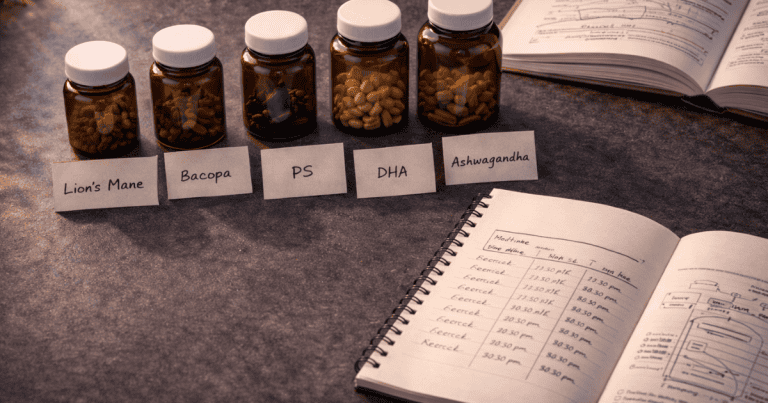
The supplementation layer for brain health addresses three targets not fully covered by lifestyle interventions alone: direct neuroprotection against oxidative stress and neuroinflammation, NGF-driven structural neuroplasticity, and the specific nutritional deficits that most commonly accelerate neurobiological aging in modern populations.
Lion’s Mane Mushroom — NGF and Structural Neuroplasticity
Lion’s Mane at 500–1,000mg daily is the most evidence-supported supplement for directly stimulating the neuroplasticity mechanisms that brain health longevity depends on. Its erinacines and hericenones stimulate NGF production — the primary signal for neuronal growth, dendritic branching, myelination, and synaptic maintenance — with erinacines crossing the blood-brain barrier to stimulate NGF synthesis directly in the brain. The long-term brain health implications are significant: sustained NGF elevation supports the synaptic density and neuronal connectivity that constitutes cognitive reserve against age-related decline.
DHA — The Structural Lipid of Brain Longevity
DHA constitutes approximately 40% of the brain’s polyunsaturated fatty acids and is the structural determinant of neuronal membrane fluidity, receptor density, and synaptic signaling efficiency. DHA deficiency — extremely common in populations not regularly consuming fatty fish — accelerates neuroinflammation, reduces hippocampal neurogenesis, impairs synaptic plasticity, and is associated with significantly increased risk of cognitive decline and dementia. At 1,000–2,000mg daily, DHA supplementation addresses the foundational nutritional requirement for brain cell membrane health that no amount of targeted nootropics can compensate for when it is absent.
Phosphatidylserine — Membrane Health and Cognitive Reserve
Phosphatidylserine at 100–300mg daily is the only cognitive supplement compound for which the FDA has granted a qualified health claim for cognitive dysfunction and dementia risk reduction — reflecting a body of clinical evidence for its role in maintaining neuronal membrane health, cortisol modulation, and the synaptic signaling efficiency that cognitive reserve depends on. PS is the phospholipid that enables the receptor density and membrane fluidity that declines with age and is directly supplementable through evidence-supported compounds at doses that have demonstrated meaningful cognitive outcomes in aging populations.
Bacopa Monnieri — Antioxidant Neuroprotection and Cholinergic Maintenance
Bacopa’s bacosides provide direct antioxidant protection to hippocampal and cortical neurons — reducing the oxidative stress that accumulates with age and accelerates neuronal damage. Its cholinergic enhancement maintains the acetylcholine synthesis and receptor sensitivity that decline with age in the same circuits affected by Alzheimer’s pathology. Bacopa at 300mg daily provides neuroprotective benefits that complement Lion’s Mane’s NGF-driven structural neuroplasticity — addressing both the maintenance of existing neuronal health and the growth of new connections.
Ashwagandha KSM-66 — Cortisol and Hippocampal Protection
As the primary botanical intervention for HPA axis normalization and cortisol reduction, Ashwagandha at 300–600mg daily provides direct hippocampal protection against the glucocorticoid toxicity mechanism through which chronic stress produces measurable brain structural damage. For anyone experiencing chronic stress — and in the modern context, that is the majority of cognitively active adults — Ashwagandha’s HPA axis normalization is one of the most impactful neuroprotective interventions available.
Frequently Asked Questions About Brain Health and Longevity
What is the most important thing you can do for long-term brain health?
Based on the breadth, consistency, and magnitude of the evidence, regular aerobic exercise is the single most impactful intervention for long-term brain health — outperforming diet, supplementation, cognitive training, and any other single lifestyle factor by the standard of the research evidence. Aerobic exercise simultaneously increases BDNF (the primary signal for hippocampal neurogenesis and synaptic growth), reduces neuroinflammatory cytokines, improves cerebral blood flow, increases hippocampal volume, reduces amyloid-beta accumulation, and produces protective effects against virtually every known mechanism of age-related cognitive decline. Research by Erickson and colleagues found measurable hippocampal volume increases of 2% in older adults from a 12-month aerobic exercise intervention — a literal reversal of normal aging-associated hippocampal shrinkage. If you could do only one thing for your brain’s long-term health, 150+ minutes of moderate aerobic exercise per week is the evidence-based answer. Everything else — diet, sleep, supplementation, cognitive engagement, stress management — is important and additive, but aerobic exercise is the non-negotiable foundation.
At what age should you start thinking about brain health?
The neurobiological honest answer is: as early as possible, and certainly by the 30s. Amyloid-beta accumulation begins 15–20 years before cognitive symptoms of Alzheimer’s emerge — meaning that individuals who develop symptomatic Alzheimer’s in their 70s began accumulating pathological burden in their 50s, during a period when they likely felt cognitively normal. The lifestyle behaviors that drive neuroinflammation, accelerate amyloid accumulation, and reduce cognitive reserve — chronic sleep restriction, physical inactivity, poor diet, chronic stress — are most commonly established in the 20s and 30s, making those decades the highest-leverage window for establishing the protective behaviors that compound over subsequent decades. Brain health does not suddenly become relevant at 60 — it is determined by the accumulation of decades of neurobiological choices, beginning when those choices feel least consequential. The good news is that the brain’s neuroplasticity means it is never too late to begin: exercise, sleep improvement, and anti-inflammatory dietary changes produce measurable improvements in hippocampal structure and cognitive function at every age studied.
Can cognitive decline be prevented or reversed?
The distinction between prevention and reversal is important and the evidence supports different conclusions for each. Prevention of age-related cognitive decline — through the lifestyle and supplementation interventions in this guide — is strongly supported by decades of research: the people who maintain aerobic fitness, anti-inflammatory diets, adequate sleep, low chronic stress, and high cognitive engagement across middle age show dramatically better brain health outcomes than those who do not. Mild cognitive impairment and the normal cognitive slowing of aging also show meaningful reversibility with the same interventions — particularly aerobic exercise, sleep optimization, and anti-inflammatory dietary changes. Alzheimer’s disease and other dementias at clinical stages are far less reversible: current evidence does not support the ability to meaningfully reverse established dementia, though some studies show that aggressive lifestyle intervention can slow progression. The most important implication is that the effective window for neuroprotective intervention is the asymptomatic decades before decline appears — not after symptoms emerge. Prevention, applied consistently beginning in the 30s and 40s, is achievable. Reversal of established neurodegenerative disease is largely not — which is precisely why prevention is the strategy this hub focuses on.
Does diet really affect brain health long-term?
Yes — diet affects brain health through several distinct mechanisms that compound across decades. The most direct is neuroinflammation: chronic dietary patterns high in refined carbohydrates, industrial seed oils, and ultra-processed foods produce systemic inflammation that crosses the blood-brain barrier and activates the microglial neuroinflammatory signaling that impairs synaptic plasticity, reduces hippocampal neurogenesis, and accelerates amyloid-beta accumulation. The MIND diet — a hybrid of Mediterranean and DASH dietary patterns specifically designed for neuroprotection — has been associated in longitudinal research with a 53% reduction in Alzheimer’s risk and significantly slower rates of cognitive aging compared to Western dietary patterns. The most impactful dietary variables for brain health are DHA intake (most protective), polyphenol intake from fruits and vegetables (reduces microglial inflammation), glycemic index management (reduces blood glucose spikes that damage cerebral vasculature), and minimization of ultra-processed food consumption (which drives gut dysbiosis and intestinal permeability that increase systemic and neuroinflammation). The effects of dietary improvement on brain health are not visible in weeks but are profound across decades — making dietary pattern one of the highest-leverage long-term neuroprotective interventions available.
What is cognitive reserve and how do you build it?
Cognitive reserve is the brain’s resilience to pathological damage — its capacity to maintain cognitive function in the presence of amyloid-beta plaques, tau tangles, vascular lesions, or neuronal loss that would produce clinical symptoms in a brain with lower reserve. High cognitive reserve explains why some individuals with significant Alzheimer’s pathology at autopsy showed no cognitive symptoms during life: their brains had sufficient synaptic density, network connectivity, and alternative processing routes to compensate for the damage before clinical threshold was crossed. Cognitive reserve is built through lifelong cognitive engagement — continuous learning, education, intellectually challenging work, musical training, language learning — each of which builds synaptic density and neural network complexity that provides the buffer against pathological damage. Physical exercise builds reserve through hippocampal volume increase and synaptic density improvement. Social engagement builds reserve through the sustained cognitive activation of meaningful interpersonal connection. The interventions that build cognitive reserve are not exotic or expensive: they are the same behaviors that constitute an intellectually and physically engaged life, applied consistently across decades. The practical implication is that learning a new language at 50, starting an intellectually demanding project at 60, or maintaining an active social life throughout midlife are not merely enriching — they are directly building the neurological reserve that determines cognitive fate in the 70s and 80s.
Brain Health as a Lifelong Practice, Not a Crisis Response
The most important reframe this guide offers is temporal: brain health decisions made in the 30s and 40s determine cognitive outcomes in the 70s and 80s — not the decisions made after symptoms appear. The amyloid accumulation that precedes Alzheimer’s by 15–20 years, the hippocampal shrinkage that begins in the 40s with chronic stress and physical inactivity, the synaptic density erosion from years of insufficient sleep and disengaged living — these processes are modifiable, but they are most modifiable before they have accumulated significant momentum.
The brain health protocol — aerobic exercise as the non-negotiable foundation, anti-inflammatory nutrition for neuroinflammation management, sleep optimization for glymphatic clearance, mindfulness and stress management for hippocampal protection, and the supplementation stack of Lion’s Mane, DHA, PS, Bacopa, and Ashwagandha — is not a treatment for decline. It is a decades-long investment in the biological substrate of the mind, applied with the same consistency that any meaningful long-term investment requires.
Every article in this hub builds on this foundation. For the neuroplasticity science that explains how the brain changes in response to these interventions, see the neuroplasticity guide. For the neuroprotective supplementation details, see the nootropics for brain health guide. For the anti-inflammatory diet protocols, see the anti-inflammatory diet guide.
References
- Heneka, M.T., et al. (2015). Neuroinflammation in Alzheimer’s disease. The Lancet Neurology, 14(4), 388–405. PubMed
- Xie, L., et al. (2013). Sleep drives metabolite clearance from the adult brain. Science, 342(6156), 373–377. PubMed
- Erickson, K.I., et al. (2011). Exercise training increases size of hippocampus and improves memory. PNAS, 108(7), 3017–3022. PubMed
- McEwen, B.S., & Sapolsky, R.M. (2003). Stress and cognitive function. Current Opinion in Neurobiology, 13(2), 205–216. PubMed
- Mori, K., et al. (2009). Improving effects of the mushroom Yamabushitake on mild cognitive impairment. Phytotherapy Research, 23(3), 367–372. PubMed
- Morris, M.C., et al. (2015). MIND diet associated with reduced incidence of Alzheimer’s disease. Alzheimer’s & Dementia, 11(9), 1007–1014. PubMed
- Stern, Y. (2012). Cognitive reserve in ageing and Alzheimer’s disease. The Lancet Neurology, 11(11), 1006–1012. PubMed
- Lazar, S.W., et al. (2005). Meditation experience is associated with increased cortical thickness. NeuroReport, 16(17), 1893–1897. PubMed
- Slutsky, I., et al. (2010). Enhancement of learning and memory by elevating brain magnesium. Neuron, 65(2), 165–177. PubMed
- Cotman, C.W., & Berchtold, N.C. (2002). Exercise: A behavioral intervention to enhance brain health and plasticity. Trends in Neurosciences, 25(6), 295–301. PubMed
Tags: brain health, brain health and longevity, neuroprotection, cognitive aging, neuroinflammation brain, amyloid beta clearance, hippocampal neurogenesis, BDNF exercise, cognitive reserve, brain health supplements, Lion’s Mane neuroprotection, DHA brain health, Ashwagandha hippocampus, how to prevent cognitive decline, brain health protocol
About Peter Benson
Peter Benson is a cognitive enhancement researcher and certified mindfulness coach with 18+ years of personal and professional experience in nootropics, neuroplasticity, and brain health optimization. He has personally coached hundreds of individuals through integrated cognitive performance programs combining evidence-based lifestyle protocols with targeted supplementation. NeuroEdge Formula is his platform for sharing rigorous, safety-first cognitive enhancement guidance.