Caffeine and L-Theanine: The Science Behind the Most Studied Nootropic Stack
Medical Disclaimer: The information in this article is for educational purposes only and does not constitute medical advice. Always consult a qualified healthcare provider before beginning any supplement regimen. Individual responses to caffeine and L-theanine vary significantly. This guide reflects published research and personal experience and does not substitute for professional medical evaluation.
If you have spent any time researching nootropics, you have encountered the caffeine and L-theanine combination. It is recommended in virtually every beginner guide, discussed in nearly every nootropic forum, and has been referenced throughout this series as the foundational acute focus stack. But the way most people discuss it — as a simple “caffeine smooths out the jitters” story — dramatically undersells what this combination actually does and why the research behind it is more rigorous than the research behind most compounds in this series combined.
Caffeine is the most widely consumed psychoactive substance in human history and the most thoroughly studied. L-theanine is an amino acid found almost exclusively in tea leaves that has been consumed alongside caffeine in green tea for over a thousand years. The combination of the two is not a modern supplement industry invention — it is a naturally occurring pairing that billions of people have consumed daily for centuries, and the reason green tea’s cognitive effects differ qualitatively from those of coffee is almost entirely attributable to this combination.
What the research actually shows about caffeine and L-theanine — individually and in combination — is more nuanced, more interesting, and more practically useful than the popular “stack” narrative conveys. Caffeine’s mechanism is more complex than adenosine blockade alone. L-theanine’s effects extend well beyond anxiety reduction. And the combination produces cognitive effects that neither compound produces independently — synergies that have been documented in multiple double-blind human trials with neuroimaging endpoints.
After nearly two decades of researching cognitive enhancement, I consider caffeine and L-theanine the best-evidenced acute cognitive enhancement strategy available without a prescription. This article explains precisely why, documents the complete human research behind both compounds, and establishes the exact protocol that the evidence supports. It builds on the full series — particularly the 5 best nootropics for beginners, the stacking guide, and the evidence-based dosing protocols.
What Is Caffeine? Beyond the Basic Explanation
Caffeine (1,3,7-trimethylxanthine) is a naturally occurring alkaloid found in coffee beans, tea leaves, cacao, guarana, and approximately 60 other plant species. It is classified as a methylxanthine — a class of compounds that share structural similarities and overlapping pharmacological mechanisms — and it is the world’s most widely consumed psychoactive substance by an extraordinary margin, with an estimated 80% of adults consuming it in some form daily.
The mechanism most people know — adenosine receptor antagonism — is accurate but incomplete. Caffeine’s cognitive effects operate through several complementary pathways that together explain both its potency and its individual variability.
Caffeine’s primary mechanism is competitive antagonism at adenosine A1 and A2A receptors throughout the brain. Adenosine is an inhibitory neuromodulator that accumulates during wakefulness, progressively increasing neural inhibition and producing the subjective experience of fatigue. By blocking adenosine receptors, caffeine prevents this inhibitory signal from reaching its target — maintaining the neurochemical conditions of alertness that would otherwise deteriorate over hours of wakefulness. Research on caffeine’s adenosine receptor pharmacology has established that caffeine’s affinity for A2A receptors in the striatum is particularly relevant to its effects on motivation and the reward salience of cognitively demanding tasks — which is why caffeine improves not just alertness but willingness to engage with difficult work.
The secondary mechanisms — indirect increases in dopamine and norepinephrine signaling that follow from adenosine receptor blockade — explain caffeine’s effects on mood, motivation, and the qualitative character of caffeinated cognition that goes beyond simple wakefulness. Research on caffeine and catecholamine neurotransmission confirmed that caffeine’s dopaminergic effects are real and contribute meaningfully to its cognitive enhancement profile — a distinction relevant to understanding why caffeine produces positive mood effects in most users at moderate doses.
What Is L-Theanine?
L-theanine (γ-glutamylethylamide) is a non-protein amino acid found almost exclusively in the leaves of Camellia sinensis — the tea plant — and in trace amounts in the Bay bolete mushroom. It is not found in meaningful quantities in any other common food source, which makes tea the primary dietary source for virtually all human L-theanine consumption.
L-theanine crosses the blood-brain barrier efficiently — pharmacokinetic research confirmed measurable brain L-theanine concentrations within 30–60 minutes of oral ingestion — and produces its characteristic effects through mechanisms that are partially understood and actively researched.
The primary documented mechanism is L-theanine’s ability to increase alpha wave activity in the brain — the 8–13 Hz oscillation associated with the alert-but-relaxed cognitive state characteristic of meditation, focused creative work, and the cognitive flexibility that allows the mind to engage productively without anxious rumination. EEG research by Nobre and colleagues demonstrated that 50mg L-theanine produced significant increases in alpha band activity within 45 minutes of ingestion — a neuroimaging finding with direct implications for the cognitive state it produces.
L-theanine also modulates glutamate neurotransmission — acting as a partial antagonist at NMDA and AMPA glutamate receptors — which contributes to its anxiolytic effects by reducing excitatory neurotransmission without the sedation associated with GABAergic compounds. Research on L-theanine and glutamate neurotransmission confirmed that L-theanine’s glutamate receptor modulation occurs at doses achievable through normal tea consumption — providing a mechanistic basis for tea’s traditionally recognized calming properties that operates independently of caffeine.
Why the Combination Works: The Synergy Mechanism
The caffeine and L-theanine combination produces cognitive effects that neither compound produces independently — and the mechanism of this synergy is now well enough understood to explain precisely why the combination is more valuable than either compound alone.
Caffeine’s adenosine antagonism produces alertness and reduced fatigue perception — but it also increases sympathetic nervous system activation, elevates cortisol, and in a meaningful subset of users produces anxiety, jitteriness, and the attentional scatter that makes caffeine alone counterproductive for tasks requiring sustained concentration rather than simple vigilance. These are not side effects unique to sensitive users — they are dose-dependent consequences of adenosine antagonism that become increasingly prominent as dose increases above the moderate range.
L-theanine modulates precisely the aspects of caffeine’s profile that limit its cognitive utility. Its alpha wave-promoting and glutamate-modulating effects counteract caffeine’s tendency toward anxious arousal without reducing the alertness that caffeine’s adenosine antagonism produces. The Nobre et al. EEG study examined the caffeine-theanine combination directly and found that the combination produced alpha wave activity significantly greater than either compound alone — a neuroimaging signature of focused, relaxed alertness that neither compound achieves independently.
Research by Owen and colleagues examined the combination’s effects on attention switching tasks and found that the caffeine-theanine combination improved accuracy on attention switching significantly more than either compound alone — a specific finding on a cognitively demanding task type that mirrors the real-world performance situations where the combination’s superiority over caffeine alone is most practically relevant.
The result of this synergy is the cognitive state that experienced users describe as “clean focus” — heightened alertness and motivation without the anxious edge, improved sustained attention without the jitteriness, and the alpha wave activity that supports creative and flexible thinking alongside the dopaminergic engagement that makes demanding cognitive work feel rewarding rather than aversive.
What the Human Clinical Research Actually Shows
The caffeine and L-theanine research base is the most extensive in the nootropic space — hundreds of caffeine trials, dozens of L-theanine trials, and a growing body of combination research that has used neuroimaging endpoints (EEG, fMRI) alongside behavioral cognitive measures to establish the combination’s effects with unusual precision.
The Haskell Combination Trial: The Benchmark Study
The most comprehensive single trial examining the caffeine-theanine combination is the double-blind, placebo-controlled crossover study by Haskell and colleagues, published in Biological Psychology in 2008. This trial examined four conditions — caffeine alone (150mg), L-theanine alone (250mg), the combination (150mg caffeine + 250mg L-theanine), and placebo — in 27 healthy adults across a battery of cognitive tests.
The combination produced statistically significant improvements over placebo in speed of attention switching, accuracy of attention switching, and accuracy of rapid visual information processing. Critically, several of these improvements were significantly greater in the combination condition than in either single-compound condition — providing direct experimental evidence for genuine synergistic effects rather than simple additive contributions.
The combination also produced significantly fewer headaches and significantly less mental fatigue than caffeine alone — a tolerability finding of direct practical relevance, since caffeine-associated headaches and the mental fatigue rebound that follows caffeine’s peak effect are among the most commonly reported limitations of single-compound caffeine use.
The Foxe Neuroimaging Study
Research by Foxe and colleagues examined the combination’s effects using high-density EEG — providing the most neurophysiologically precise window into the combination’s mechanism available in published research. The study found that the caffeine-theanine combination produced significant increases in alpha band power during cognitively demanding task performance, with the combination producing greater alpha activation than caffeine alone. This finding directly confirms the mechanistic model: L-theanine’s alpha-promoting effect persists and is enhanced when combined with caffeine’s arousal-promoting adenosine antagonism — producing a neurophysiological state distinct from either compound alone.
The Sustained Attention Research
Research examining the combination’s effects on sustained attention over extended work periods found that the caffeine-theanine combination significantly outperformed placebo on sustained attention tasks across a three-hour testing session — a finding with direct relevance to the real-world application of extended focused work sessions where attention maintenance over hours rather than minutes is the relevant performance target.
The Anxiety and Cortisol Research
Research on L-theanine’s anxiolytic effects in isolation demonstrated that L-theanine significantly reduced anxiety scores and cortisol response to stress in human subjects — a finding that complements the combination research by establishing L-theanine’s stress-protective contribution as mechanistically real and not merely subjective. When combined with caffeine’s tendency to elevate cortisol through sympathetic nervous system activation, L-theanine’s cortisol-modulating effects help maintain the hormonal environment in which cognitive performance is least impaired by stress — a complementary mechanism to the Rhodiola and Phosphatidylserine approaches detailed in earlier compound guides.
The Meta-Analytic Evidence
A systematic review and meta-analysis of caffeine’s effects on cognitive performance found statistically significant improvements in attention, alertness, reaction time, and learning across the reviewed trials — confirming caffeine as the best-evidenced acute cognitive enhancement compound available and providing the context within which L-theanine’s modulating role is most meaningful.
Free Download
Get the Complete Nootropics Starter Kit
Top 5 Nootropics Guide · Safety Checklist · Dosage Protocols · Quality Source Guide — everything you need to start safely and effectively.
Join 2,000+ readers optimizing their cognitive performance. Unsubscribe anytime.
Caffeine and L-Theanine Dosage: The Evidence-Based Protocol
The caffeine and L-theanine dosing protocol requires more nuanced discussion than most nootropic compounds because caffeine is simultaneously the best-evidenced acute cognitive enhancement compound and the one most subject to individual variation in response, tolerance development, and dependency. The dosing framework below reflects both the research evidence and the practical realities of daily use.
The Evidence-Based Dose Ratio
The most consistently used caffeine-to-theanine ratio in clinical research is 1:2 — one part caffeine to two parts L-theanine. The Haskell trial used 150mg caffeine with 250mg L-theanine (approximately 1:1.7). Most subsequent research has used ratios between 1:1 and 1:2. The 1:2 ratio is the standard recommendation because it provides sufficient L-theanine to meaningfully modulate caffeine’s anxiogenic effects across the full moderate caffeine dose range.
The evidence-based starting doses within this ratio are 100mg caffeine with 200mg L-theanine. This corresponds to approximately the caffeine content of a standard 240ml (8oz) cup of drip coffee, combined with a 200mg L-theanine supplement — a pairing that delivers meaningful cognitive enhancement while maintaining a comfortable safety and tolerability profile for first-time users. More experienced users may find 150–200mg caffeine with 300–400mg L-theanine more effective for extended demanding work sessions, particularly as afternoon cognitive demand increases. The ceiling for most users is 200mg caffeine per dose — above this threshold, the anxiety and jitteriness effects become difficult for L-theanine to fully modulate regardless of dose ratio.
The Critical Timing Framework
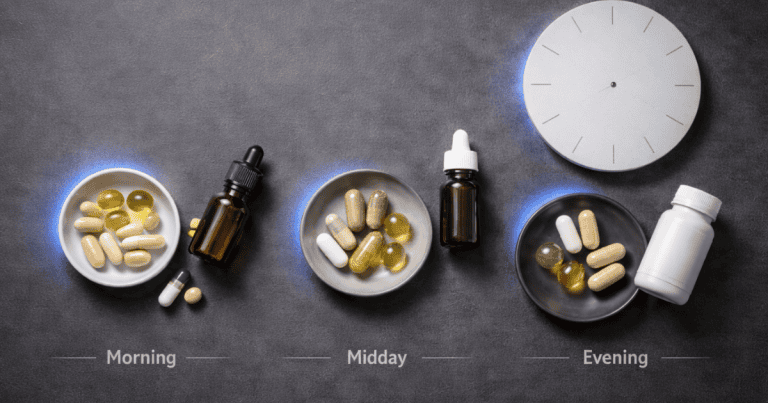
Caffeine timing is the variable most neglected in popular nootropic discussions and the one with the greatest impact on cognitive performance, sleep quality, and long-term protocol sustainability. The evidence-based dosing guide covers this in detail. The essential rules are:
Do not take caffeine immediately upon waking. The cortisol awakening response (CAR) — a natural 50–100% cortisol surge in the first 30–60 minutes after waking — provides endogenous arousal that makes caffeine’s adenosine antagonism redundant and potentially counterproductive during this window. Research on caffeine and the cortisol awakening response suggests that delaying caffeine intake until 60–90 minutes after waking — after the natural cortisol peak has begun to decline — produces more effective and longer-lasting alertness than immediate post-waking consumption, and reduces tolerance development over time.
Establish an absolute caffeine cutoff time. Caffeine’s half-life in humans averages 5–6 hours, with significant individual variation from 2.5 hours (rapid metabolizers) to 9+ hours (slow metabolizers). Research on caffeine and sleep architecture established that caffeine consumed even 6 hours before bedtime produces measurable reductions in total sleep time and slow-wave sleep quality. For a typical 11pm bedtime, the absolute caffeine cutoff should be no later than 1pm for average metabolizers and 12pm for slow metabolizers. Consistent caffeine intake after 1pm is one of the most common and most damaging patterns in cognitive enhancement protocols — creating a cycle of caffeine-impaired sleep, increased next-day fatigue, higher caffeine requirements, and progressive sleep debt that undermines every other compound in the protocol.
Tolerance Management: The Non-Negotiable Cycling Protocol
Caffeine tolerance development is one of the most thoroughly documented pharmacological phenomena in human research. Research on caffeine tolerance and dependence confirmed that regular caffeine consumption produces significant downregulation of adenosine receptors within days to weeks of consistent use — progressively reducing caffeine’s alertness-promoting effects while maintaining its withdrawal-related effects (headache, fatigue, irritability) during abstinence periods.
The practical consequence is familiar to most regular coffee drinkers: the extraordinary alertness and cognitive clarity of initial caffeine use degrades over weeks of daily consumption until caffeine feels necessary just to reach baseline rather than producing enhancement above baseline. This is tolerance — and it makes cycling not optional but pharmacologically necessary for anyone using caffeine as a genuine cognitive enhancement tool rather than a dependency management mechanism.
The evidence-supported cycling approaches for caffeine are: two days off per week (typically Saturday and Sunday, aligning the off days with lower cognitive demand periods), or a monthly 5–7 day complete abstinence period. During abstinence periods, withdrawal symptoms — primarily headache and fatigue — typically peak at 20–51 hours after last consumption and resolve within 2–9 days. Research on caffeine withdrawal has documented these symptoms comprehensively and confirmed they are a reliable indicator of tolerance-level dependence that makes the reset period most necessary. Gradual dose reduction over 5–7 days rather than abrupt cessation minimizes withdrawal severity for daily heavy consumers.
L-theanine does not develop tolerance and does not require cycling. It can be continued throughout caffeine abstinence periods — and doing so may help reduce the subjective severity of caffeine withdrawal by maintaining some degree of alpha wave promotion and glutamate modulation during the transition.
Caffeine and L-Theanine Quality: What to Look For
Caffeine quality is straightforward — pharmaceutical-grade anhydrous caffeine is a well-characterized compound with minimal variation across reputable suppliers. The primary quality consideration for caffeine supplements is accurate dosing: research on supplement label accuracy has identified caffeine as a compound where label dose often differs significantly from actual content in lower-quality products. Third-party testing certification is the same non-negotiable standard that applies to every compound in this protocol.
L-theanine quality has one additional consideration: the distinction between L-theanine and D-theanine. L-theanine is the naturally occurring bioactive form found in tea. D-theanine is the mirror-image stereoisomer with different pharmacological properties and minimal research support. Quality L-theanine supplements specify the L-form explicitly and ideally note the use of Suntheanine — a patented fermentation-derived L-theanine used in most human clinical trials — as an additional quality signal. Products simply labeled “theanine” without specifying the L-form cannot be assumed to contain exclusively the bioactive form.
The combination of caffeine and L-theanine is available as pre-formulated capsules from numerous suppliers — a convenient option that eliminates the need to manage two separate compounds. For users who prefer pre-formulated options, the same quality standards apply: verified caffeine and L-theanine content, third-party testing documentation, and specified L-theanine form.
Caffeine and L-Theanine Benefits: What the Evidence Supports
Supported by Human Clinical Research — Caffeine Alone
Improved alertness and reduced fatigue perception. The most consistently replicated cognitive effect of caffeine across hundreds of trials — statistically significant improvements in subjective alertness and objective measures of vigilance within 30–60 minutes of ingestion, persisting for 3–5 hours at moderate doses.
Improved reaction time and processing speed. Meta-analytic evidence confirms significant improvements in reaction time and information processing speed across the reviewed trials — consistent with caffeine’s adenosine antagonism reducing the neural inhibition that slows response initiation.
Enhanced working memory and sustained attention. Multiple randomized controlled trials have demonstrated significant improvements in working memory capacity and sustained attention maintenance at moderate caffeine doses — the cognitive domains most directly relevant to knowledge work performance.
Supported by Human Clinical Research — L-Theanine Alone
Increased alpha wave activity and focused relaxation. The Nobre et al. EEG study demonstrated significant increases in alpha band activity within 45 minutes of L-theanine ingestion — a neurophysiological signature of the alert-but-relaxed cognitive state that underpins focused creative work.
Reduced anxiety and cortisol response to stress. Research on L-theanine’s anxiolytic effects demonstrated significant reductions in anxiety scores and cortisol response to psychological stress — confirming that L-theanine’s calming effects operate at the hormonal level as well as the subjective experiential level.
Supported by Human Clinical Research — The Combination
Superior attention switching accuracy compared to either compound alone. The Haskell et al. benchmark trial demonstrated statistically significant improvements in attention switching accuracy in the combination condition that exceeded both single-compound conditions — the strongest experimental evidence for genuine synergistic effects in the nootropic literature.
Enhanced alpha wave activity during cognitive task performance. The Foxe et al. neuroimaging study found greater alpha band power in the combination condition than caffeine alone during demanding cognitive tasks — neuroimaging confirmation of the synergistic cognitive state mechanism.
Reduced caffeine-associated headaches and mental fatigue. The Haskell trial found significantly fewer headaches and reduced mental fatigue in the combination condition compared to caffeine alone — tolerability improvements of direct practical relevance for daily users.
Improved sustained attention over extended cognitive work sessions. Extended duration research confirmed significant attention maintenance advantages for the combination over placebo across three-hour demanding cognitive work periods — the most ecologically valid evidence for the combination’s real-world knowledge worker application.
Safety Profile: Caffeine and L-Theanine
L-theanine has an excellent safety profile with no documented serious adverse effects at doses up to 400mg daily in published research. It is classified as Generally Recognized as Safe (GRAS) by the FDA for use in food products and has no documented drug interactions at cognitive enhancement doses. The complete safety framework is in the complete nootropic safety guide.
Caffeine requires more nuanced safety consideration — it is simultaneously the most widely consumed and one of the most pharmacologically complex compounds in the cognitive enhancement toolkit.
Cardiovascular effects: Caffeine transiently increases heart rate and blood pressure in non-habituated users. In habituated daily consumers, these cardiovascular effects are substantially attenuated by tolerance. Research on caffeine and cardiovascular function confirms that moderate caffeine consumption (up to 400mg daily) is safe for most healthy adults with normal cardiovascular function. Individuals with hypertension, cardiac arrhythmias, or established cardiovascular disease should discuss caffeine use with their cardiologist.
Anxiety and panic susceptibility: Individuals with diagnosed anxiety disorders or panic disorder are particularly susceptible to caffeine’s anxiogenic effects, and L-theanine’s modulation may be insufficient to fully counteract caffeine’s anxiety-promoting effects in this population. Clinical assessment is appropriate before using caffeine as a cognitive enhancement tool in the presence of diagnosed anxiety conditions.
Pregnancy: The established safe caffeine threshold during pregnancy is 200mg daily, per guidance from major obstetric organizations. Pregnant individuals should not exceed this threshold and should discuss caffeine intake with their obstetric care provider.
Dependency and withdrawal: Caffeine produces physical dependence with regular daily use — a pharmacologically documented phenomenon that is distinct from addiction but that does produce withdrawal symptoms during abstinence. At moderate doses within a cycling protocol, this dependency is manageable and its withdrawal symptoms are self-limiting. Users who find that caffeine cessation produces disabling symptoms should consider gradual dose tapering rather than abrupt cessation.
How to Stack Caffeine and L-Theanine in a Complete Protocol
Caffeine and L-theanine function as the acute cognitive enhancement layer in a complete protocol — the component that produces immediate, session-specific improvements in alertness, attention, and processing speed that the longer-acting neuroplasticity and cholinergic compounds cannot provide. The complete stacking framework is in the nootropic stacking guide. Key integration points:
Caffeine + L-Theanine as the Beginner Foundation: For users new to nootropics, caffeine and L-theanine are the appropriate starting point before any other compound is introduced. They are the best-evidenced acute enhancement strategy available, their tolerability is well-established, their mechanisms are well-understood, and their effects provide the experiential baseline against which all subsequent compound additions should be measured. As detailed in the beginner guide, establishing this foundation before adding neuroplasticity or cholinergic compounds is the appropriate sequencing for both safety and performance assessment reasons.
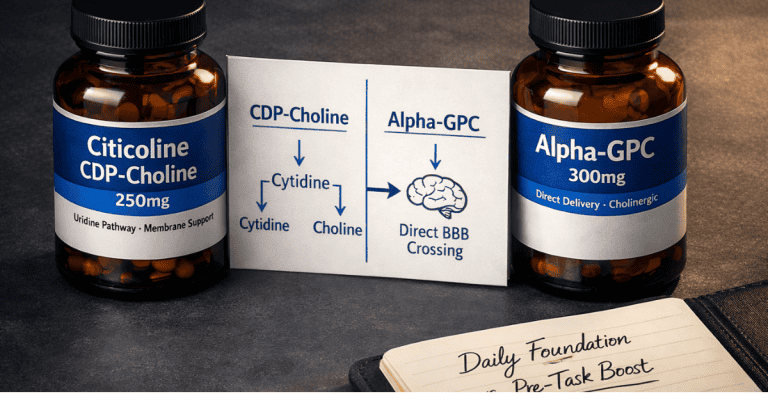
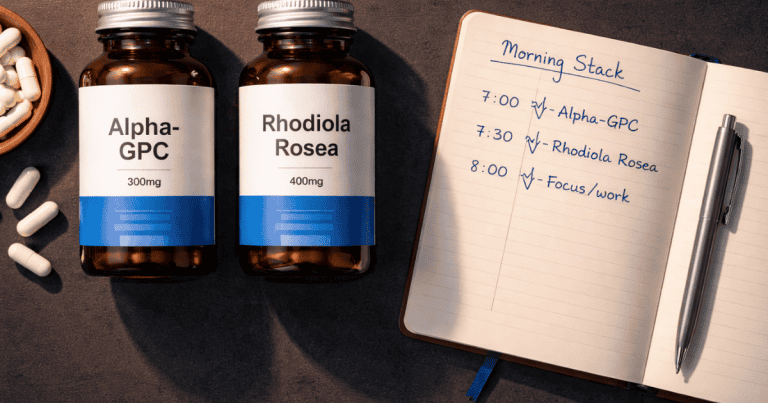
Caffeine + L-Theanine + Alpha-GPC (Full Day Focus Stack): Adding Alpha-GPC’s cholinergic layer to the caffeine-theanine foundation extends the stack’s benefits beyond acute alertness into memory encoding and learning consolidation — transforming a pure focus tool into a complete learning-and-retention system. As detailed in the Alpha-GPC compound guide, the cholinergic and adenosine-blocking mechanisms are non-overlapping and genuinely complementary.
Caffeine + L-Theanine + Rhodiola Rosea (Stress-Resistant Focus Stack): Rhodiola’s HPA axis modulation and monoamine preservation complement caffeine’s adenosine antagonism — with Rhodiola maintaining the neurochemical conditions in which caffeine and L-theanine perform best during the later hours of extended demanding sessions when caffeine’s effects are waning and monoamine depletion would otherwise accelerate cognitive fatigue. As detailed in the Rhodiola compound guide, the two compounds address fatigue through entirely different and non-overlapping mechanisms.
The Complete Intermediate Stack Integration: In the full intermediate protocol — caffeine + L-theanine + Alpha-GPC + Rhodiola + Lion’s Mane + Bacopa + DHA + Phosphatidylserine — caffeine and L-theanine provide the acute session-specific performance layer that sits on top of the structural neuroplasticity and cholinergic foundation. The distinction between acute (caffeine, L-theanine, Rhodiola) and cumulative (Lion’s Mane, Bacopa, DHA, PS, Alpha-GPC) compounds is the most important organizational principle in advanced protocol design — and caffeine-theanine is the clearest example of the acute category.
Frequently Asked Questions About Caffeine and L-Theanine
What is the best caffeine to L-theanine ratio?
The most consistently used and evidence-supported caffeine-to-L-theanine ratio is 1:2 — one part caffeine to two parts L-theanine. The evidence-based starting protocol is 100mg caffeine with 200mg L-theanine. More experienced users may use 150–200mg caffeine with 300–400mg L-theanine for extended demanding work sessions. The 1:2 ratio ensures adequate L-theanine to meaningfully modulate caffeine’s anxiogenic effects across the moderate caffeine dose range. Ratios significantly below 1:1 (more caffeine than theanine) reduce the synergistic anxiolysis that makes the combination superior to caffeine alone.
Does L-theanine cancel out caffeine?
No — L-theanine does not cancel out caffeine. It modulates the aspects of caffeine’s profile that reduce its cognitive utility — primarily anxiety, jitteriness, and attentional scatter — while preserving and in some respects enhancing the alertness, processing speed, and attention benefits that make caffeine effective. Human clinical trials using neuroimaging endpoints have confirmed that the combination produces greater alpha wave activity during cognitive task performance than caffeine alone — evidence that L-theanine enhances rather than diminishes caffeine’s cognitive effects in the combination context.
Does coffee count as the caffeine source, or do I need a supplement?
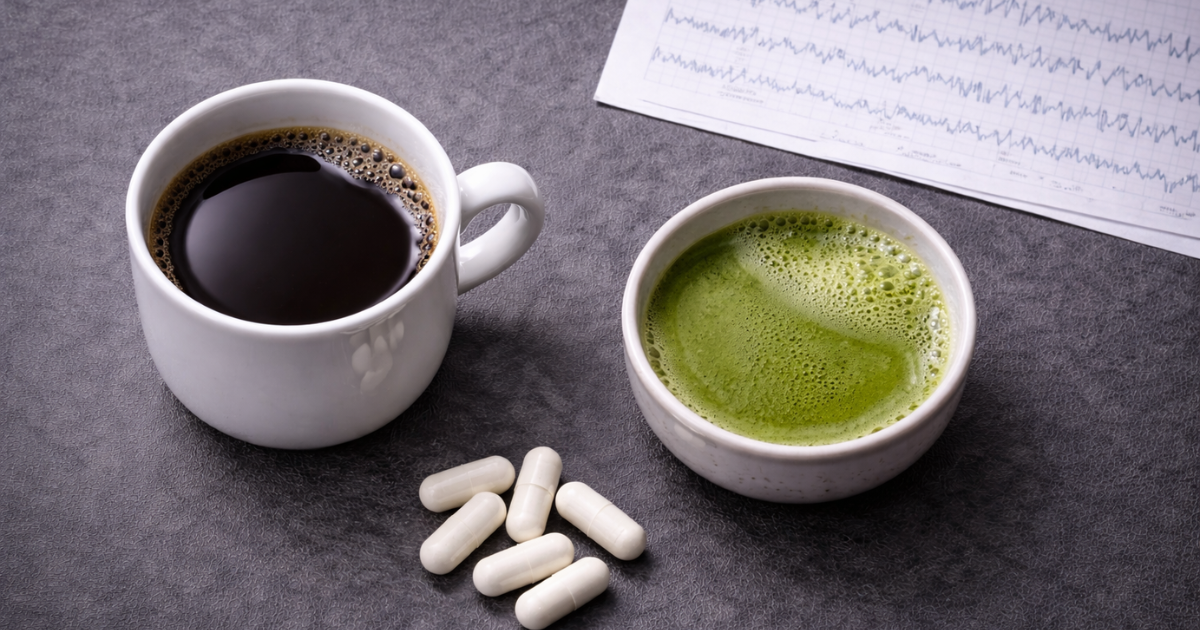
Coffee is a legitimate caffeine source for this protocol — a standard 240ml (8oz) drip coffee contains approximately 80–120mg of caffeine. The limitation of coffee as the sole caffeine source is dose imprecision: caffeine content varies significantly between coffee types, brewing methods, and serving sizes, making consistent dosing more difficult than with anhydrous caffeine supplements. For users who prefer coffee as their caffeine source, the practical approach is to choose a consistent preparation method (e.g., a standard espresso or a measured pour-over) and take a 200mg L-theanine supplement alongside it to achieve the target 1:2 ratio. Green tea — which naturally contains both caffeine and L-theanine — provides the combination in its natural form, though at lower doses than most cognitive enhancement protocols target.
How do I avoid caffeine tolerance?
Caffeine tolerance develops rapidly with daily use and is best managed through consistent cycling — either two days completely caffeine-free per week, or a monthly 5–7 day abstinence period. During caffeine-free days, L-theanine can be continued. The other critical tolerance management strategy is avoiding unnecessary caffeine consumption — using caffeine only when genuine cognitive enhancement is needed rather than as a baseline dependency to reach normal function. Keeping daily doses at or below 200mg and maintaining the post-waking delay of 60–90 minutes before first caffeine consumption both help slow tolerance development by reducing total adenosine receptor exposure and maintaining sensitivity.
Can I take caffeine and L-theanine with other nootropics?
Yes — caffeine and L-theanine are mechanistically compatible with the other compounds in this series and form the acute layer of a complete nootropic protocol. Alpha-GPC pairs particularly well, adding cholinergic memory support to the focus and alertness effects of the caffeine-theanine combination. Rhodiola Rosea complements the stack’s stress-resilience profile without mechanistic overlap. The neuroplasticity compounds — Lion’s Mane, Bacopa, DHA, and Phosphatidylserine — address entirely different timescales and mechanisms and are compatible with daily caffeine-theanine use. The primary caution is avoiding other stimulatory compounds (high-dose ginseng, synephrine, high-dose guarana) that could produce additive cardiovascular or anxiogenic effects when combined with caffeine.
Is the Caffeine and L-Theanine Stack Worth Using? The Evidence-Based Verdict
The caffeine and L-theanine combination has a stronger and more directly applicable human evidence base than any other nootropic stack in this series. Multiple randomized controlled trials, neuroimaging confirmation of the synergistic mechanism, meta-analytic validation of caffeine’s individual effects, and a safety profile supported by decades of population-level consumption data combine to make this the most defensible acute cognitive enhancement strategy available without a prescription.
The honest qualifications: caffeine tolerance is real and requires disciplined cycling to maintain efficacy. Caffeine dependency, though pharmacologically distinct from addiction, is a genuine pharmacological phenomenon that affects most daily users and should be managed rather than normalized. And the quality of sleep that caffeine disrupts when consumed too late is the single most important determinant of cognitive performance the following day — making strict cutoff time adherence not a minor optimization but a foundation-level requirement.
Used correctly — 100–200mg caffeine with 200–400mg L-theanine, taken 60–90 minutes after waking, with an absolute cutoff before 1pm, cycled with consistent caffeine-free days — this combination delivers what the research promises: clean, sustained focus, improved attention switching, faster processing speed, reduced fatigue, and the alert-but-relaxed cognitive state that makes demanding work feel productive rather than aversive.
For the complete beginner protocol built around this combination, see the 5 best nootropics for beginners. For how caffeine and L-theanine integrate into the full intermediate stack, see the nootropic stacking guide. For the timing framework that makes this combination most effective and most sustainable, the evidence-based dosing guide covers every relevant detail. And for the safety context governing caffeine use in the presence of health conditions or other medications, the complete nootropic safety guide addresses every consideration.
References
- Haskell, C.F., et al. (2008). The effects of L-theanine, caffeine and their combination on cognition and mood. Biological Psychology, 77(2), 113–122. PubMed
- Nobre, A.C., et al. (2008). L-theanine, a natural constituent in tea, and its effect on mental state. Asia Pacific Journal of Clinical Nutrition, 17(S1), 167–168. PubMed
- Owen, G.N., et al. (2008). The combined effects of L-theanine and caffeine on cognitive performance and mood. Nutritional Neuroscience, 11(4), 193–198. PubMed
- Foxe, J.J., et al. (2012). Assessing the effects of caffeine and theanine on the maintenance of vigilance during a sustained attention task. Neuropharmacology, 62(7), 2320–2327. PubMed
- Giesbrecht, T., et al. (2010). The combination of L-theanine and caffeine improves cognitive performance and increases subjective alertness. Nutritional Neuroscience, 13(6), 283–290. PubMed
- Nehlig, A. (2010). Is caffeine a cognitive enhancer? Journal of Alzheimer’s Disease, 20(S1), S85–94. PubMed
- McLellan, T.M., et al. (2016). A review of caffeine’s effects on cognitive, physical and occupational performance. Neuroscience & Biobehavioral Reviews, 71, 294–312. PubMed
- Kimura, K., et al. (2007). L-Theanine reduces psychological and physiological stress responses. Biological Psychology, 74(1), 39–45. PubMed
- Drake, C., et al. (2013). Caffeine effects on sleep taken 0, 3, or 6 hours before going to bed. Journal of Clinical Sleep Medicine, 9(11), 1195–1200. PubMed
- Juliano, L.M., & Griffiths, R.R. (2004). A critical review of caffeine withdrawal. Psychopharmacology, 176(1), 1–29. PubMed
Tags: caffeine L-theanine, caffeine and L-theanine stack, L-theanine focus, caffeine alpha waves, L-theanine anxiety, caffeine L-theanine ratio, nootropic caffeine, L-theanine dosage, caffeine L-theanine benefits, green tea L-theanine, caffeine tolerance, L-theanine sleep, best nootropic combination, caffeine jitters L-theanine, cognitive enhancement caffeine
About Peter Benson
Peter Benson is a cognitive enhancement researcher with 18+ years of personal and professional experience in nootropics, neuroplasticity, and brain optimization protocols. He has personally helped hundreds of individuals improve their mental performance through evidence-based supplementation and lifestyle strategies. NeuroEdge Formula is his platform for sharing rigorous, safety-first cognitive enhancement guidance.