
Flow State: The Science of Effortless Focus and How to Enter It
By Peter Benson, Cognitive Enhancement Researcher · Updated October 2026 · Citations re-verified
Short answer: A flow state is deep, absorbed concentration in which time seems to pass quickly and self-consciousness fades. You can’t switch it on, but research points to the conditions that make it likelier: a challenge that matches your skill, clear goals, quick feedback and no interruptions. The brain science is still early.
⚕️ Educational information, not medical advice — full disclaimer. This page contains one affiliate link, in the optional supplement section.
You have probably felt it: a stretch where the work seems to carry itself, distractions fall away and two hours pass like twenty minutes. Psychologists call it flow. It isn’t mystical, and it isn’t reserved for athletes and artists, but it also can’t be produced on demand.
This guide covers what flow is, what the research says about the conditions that make it likelier, how solid the brain science is, and how to set those conditions up. It ends with my own experience. It is part of the Focus & Productivity hub.
What a flow state is
The psychologist Mihály Csíkszentmihályi described flow in the 1970s after artists, athletes and chess players kept reporting the same experience at their best: total absorption, a merging of action and awareness, fading self-consciousness, a sense of control, and time that seems to speed up. The activity also becomes rewarding in itself.
Flow isn’t relaxation. It is a high-engagement state that feels close to effortless, which is what makes it distinctive.
The flow state and the brain: what’s known
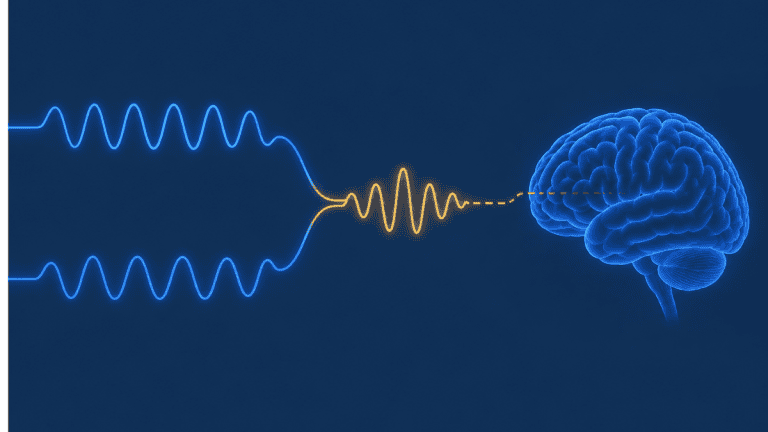
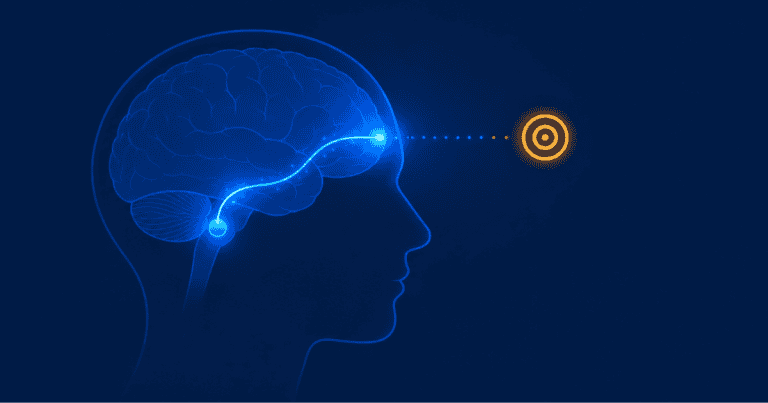
The best-known explanation is the transient hypofrontality hypothesis: during flow, parts of the prefrontal cortex involved in self-monitoring and planning become less active, so the inner critic quietens. It remains a hypothesis. A 2022 systematic review of 25 brain studies with 471 participants found that attention, executive-function and reward systems are involved, but that the activity of these regions during flow was inconsistent across studies, and called the evidence “sparse and inconclusive” (Alameda et al., 2022). No single brain-activity pattern defines flow.
The study most often cited scanned six professional jazz pianists while they improvised. Improvising was linked to reduced activity in the dorsolateral prefrontal cortex, a self-monitoring region, and increased activity in medial prefrontal areas linked to self-expression (Limb & Braun, 2008). The study measured improvisation, not flow, so it is suggestive rather than direct evidence.
A 2020 review of flow neuroscience describes early experiments using mild electrical brain stimulation (tDCS) to encourage flow (Gold & Ciorciari, 2020). The studies are small and their results mixed; treat it as a research direction, not a tool. Part of the difficulty, a 2024 methods paper argues, is that flow was first described in experts doing activities they chose, while lab studies often measure it in unfamiliar, constrained tasks (Durcan et al., 2024).
Conditions that make flow more likely
Challenge matched to skill. The task should demand your full attention without tipping into anxiety or sliding into boredom. A meta-analysis of 28 studies found a moderate relationship between challenge-skill balance and flow, and identified clear goals and a sense of control as other robust contributors. These are associations: they don’t show that adjusting difficulty will reliably produce flow. The link was weaker in work and education settings and in some study designs (Fong et al., 2015).
Meaning. In a study of flow and performance, the link between challenge-skill balance and flow depended on how important the activity felt and on the person’s achievement motive (Engeser & Rheinberg, 2008). Balance alone isn’t the whole story.
Clear goals and quick feedback. Knowing what doing well looks like, and seeing how you’re doing as you go, lets you adjust without breaking concentration. That is one reason climbing, music and coding produce flow so readily. A 2023 framework for flow at work suggests designing tasks with these features (Bartholomeyczik et al., 2023).
No interruptions. Flow builds over a stretch of uninterrupted work, and an interruption can break it. Many people find it takes a while to settle in; how long varies, and it hasn’t been well measured. See deep work.
Flow state vs deep work
Deep work is a practice: sustained, distraction-free concentration on demanding work, which you can do even when it feels effortful. Flow is a state that sometimes appears during deep work. You control the practice; the state arrives on its own terms. Trying to “get into flow” tends to turn your attention back on yourself, which is the opposite of what flow involves.
Conditions associated with the flow state, ranked by evidence
🟢 Stronger or replicated evidence · 🟡 Limited, mixed or preliminary evidence · 🔴 Not established or not supported
Worked example — setting up a hard writing session
Set the challenge. Say you need to write the difficult section of a report. If it feels hopeless, shrink the goal to the first argument; if it feels trivial, raise the bar.
Define the goal. Not “work on the report” but “draft the three paragraphs making the case for X”. Now you know what doing well means minute to minute.
Remove interruptions. Phone in another room, notifications off, one document, and a paper list for stray thoughts.
Keep going through the start. The first stretch usually feels effortful. That’s normal, not failure.
Don’t watch for flow. Engage with the writing. If flow comes, it comes; if not, you still did a focused session, which is the part you control. Judge the output separately from how absorbed you felt: a good session doesn’t need flow, and an absorbing one isn’t automatically better work.
The NeuroEdge Formula Flow Self-Testing Framework
Build the conditions; let the state follow. It can’t guarantee flow.
1. Match the challenge
Stretching but achievable. Too easy breeds boredom; too hard breeds anxiety.
2. One clear goal
A specific target for the session, so attention knows what doing well means.
3. Remove interruptions
Phone away, notifications off, one task, a list for stray thoughts.
4. Notice, don’t chase
Afterwards, jot down which sessions absorbed you and what they had in common.
Peter’s Testing Notes
A personal impression, not tracked data
When it happens. Flow comes for me most often when I’m writing articles for this site, inside my protected morning blocks: phone in another room, notifications off, a distraction list beside the keyboard and brown noise in my headphones. Those habits are described in deep work.
What breaks it. Notifications and interruptions, and checking email “just for a minute”, which rarely stays a minute. Writing the stray thought on the list and going back usually works; when it doesn’t, a short walk helps more than pushing on.
Supplements. I’ve tried caffeine with L-theanine before work sessions. A few sessions felt smoother, but the effect varied, and I wouldn’t credit it with flow.
None of this was measured. An earlier version of this page said I tracked flow with Creyos and an Oura Ring; that was not accurate and has been removed.
Supplements and flow
No supplement has been shown to produce flow. The closest is caffeine with L-theanine, which improved accuracy on an attention-switching task about an hour after a dose in a small trial (Owen et al., 2008). Attention is a precondition for flow, not flow itself. See the L-theanine and caffeine guide.
Performance Lab Caffeine 2 — caffeine and L-theanine together
50mg of caffeine and 100mg of L-theanine per capsule, third-party tested. It also contains 250mg of L-tyrosine and B vitamins, so evidence for the caffeine and L-theanine pair doesn’t establish the effect of this formula.
This is an affiliate link. If you buy through it, NeuroEdge Formula may earn a commission at no extra cost to you. A coffee and a plain L-theanine capsule let you test the same pair.
Key takeaways
| → | Flow is total absorption in a task, with fading self-consciousness and distorted time. |
| → | Challenge-skill balance, clear goals and a sense of control have the best evidence (Fong 2015). |
| → | The brain science is early: a 2022 review found brain findings inconsistent, and tDCS is experimental. |
| → | Set the conditions, then work; watching for flow tends to keep it away. |
| → | No supplement produces flow. |
Frequently asked questions
Is a flow state the same as deep work?
No. Deep work is a practice you choose; flow is a state that sometimes appears during it.
How long does it take to get into flow?
It varies by person and task, and it hasn’t been well measured. Many people find the first stretch of a session feels effortful, so protect enough uninterrupted time to get past it.
Can you force yourself into flow?
Not directly. Watching for flow turns your attention on yourself. Set up a matched challenge, a clear goal and no interruptions, then focus on the work.
What happens in the brain during flow?
A leading hypothesis is that self-monitoring regions of the prefrontal cortex quieten. A 2022 review of 25 studies found attention, executive and reward systems involved, but inconsistent patterns, so there is no settled explanation yet.
What tasks produce flow most easily?
Ones with clear goals and instant feedback, such as climbing, music, sport, games and coding. Any task gets closer when you define a specific goal and a way to see progress.
Get “7 Days to a Sharper Brain” — Free
Peter Benson’s evidence-first starting framework
The habits with the strongest evidence first — sleep, movement, stress and learning — then how to add a single supplement and test whether it actually works for you.
No spam. Unsubscribe anytime.
⚕️ Educational Information, Not Medical Advice
This article is educational and is not medical advice. I’m a cognitive enhancement researcher, not a medical doctor. Caffeine and other supplements can interact with medicines and affect sleep. Consult a qualified healthcare provider before starting one, particularly if you take prescription medicines, have a heart condition or anxiety, or are pregnant or breastfeeding.
Scientific references
1. Csíkszentmihályi, M. (1990). Flow: The Psychology of Optimal Experience. Harper & Row.
2. Fong, C. J., Zaleski, D. J., & Leach, J. K. (2015). The challenge–skill balance and antecedents of flow: a meta-analytic investigation. Journal of Positive Psychology, 10(5), 425–446. Abstract
3. Engeser, S., & Rheinberg, F. (2008). Flow, performance and moderators of challenge-skill balance. Motivation and Emotion, 32(3), 158–172. PDF
4. Limb, C. J., & Braun, A. R. (2008). Neural substrates of spontaneous musical performance: an fMRI study of jazz improvisation. PLoS ONE, 3(2), e1679. Link
5. Alameda, C., Sanabria, D., & Ciria, L. F. (2022). The brain in flow: a systematic review on the neural basis of the flow state. Cortex, 154, 348–364. Repository
6. Durcan, O., Holland, P., & Bhattacharya, J. (2024). A framework for neurophysiological experiments on flow states. Communications Psychology, 2. DOI: 10.1038/s44271-024-00115-3
7. Gold, J., & Ciorciari, J. (2020). A review on the role of the neuroscience of flow states in the modern world. Behavioral Sciences, 10(9), 137. Link
8. Bartholomeyczik, K., Knierim, M. T., & Weinhardt, C. (2023). Fostering flow experiences at work: a framework and research agenda for developing flow interventions. Frontiers in Psychology, 14, 1143654. Link
9. Owen, G. N., Parnell, H., De Bruin, E. A., & Rycroft, J. A. (2008). The combined effects of L-theanine and caffeine on cognitive performance and mood. Nutritional Neuroscience, 11(4), 193–198. PMID: 18681988 (All authors employed by Unilever.)
Cognitive Enhancement Researcher | 18+ Years Independent Research
Peter is not a clinician or a psychologist; this guide is educational. It was rewritten in October 2026 to mark the brain science as early, correct the importance finding, drop the unsourced on-ramp timing, and replace earlier personal claims with his own account. Read about how NeuroEdge Formula evaluates research.
Last reviewed: October 2026 | Educational content only. Not medical advice.