
Binaural Beats
Educational information, not medical advice. Binaural beats are low-risk audio, but they are not a treatment for anxiety, insomnia or any condition. If you’re struggling with focus, mood or sleep, that’s worth discussing with a professional rather than relying on an app. A note on safe listening: keep the volume moderate to protect your hearing.
| What they are | Two slightly different tones, one in each ear, that the brain perceives as a third “beat.” The claim is this beat “entrains” your brainwaves to a chosen frequency for focus, calm or sleep. |
| The shaky part | The “brainwave entrainment” mechanism is the weakest-supported bit. A 2023 review found binaural beats don’t reliably change brain oscillations at all — so the science-sounding rationale is on thin ice. |
| Focus specifically | This is the weakest case. Effects on attention are the most inconsistent in the literature, with several studies finding nothing. “Gamma waves for laser focus” is marketing, not established science. |
| What’s more promising | A meta-analysis found an overall medium effect across cognition, anxiety and pain, but heavily dependent on frequency and timing — and the calmer, anxiety-reducing effects look a little more consistent than the focus ones. |
| Bottom line | Low-risk and free to try, and some people genuinely find them useful — probably as much through ritual, expectation and pleasant background sound as any neural effect. Worth a personal test; not worth the hype. |
Binaural Beats and Focus: What the Evidence Actually Says
By Peter Benson, Cognitive Enhancement Researcher | 18+ Years Independent Research · Last Updated: September 2026
Search “focus music” and you’ll drown in binaural beats: hours-long tracks promising “gamma waves for deep concentration,” apps that claim to tune your brain like a radio, and a whole genre of study-with-me audio built on the idea. The pitch is seductive because it sounds scientific — play the right frequency, entrain your brainwaves, unlock a mental state on demand. The reality is messier and a good deal less impressive. Binaural beats are a real perceptual phenomenon, and they’re not nonsense — but the evidence that they reliably sharpen focus is thin, inconsistent, and weakest exactly where the marketing is loudest.
This guide separates what binaural beats actually do from what they’re sold as: whether the “entrainment” mechanism holds up, what the cognition research really shows, why focus is the shakiest claim of all, and why some people still find them genuinely useful. It’s a biohacking staple that rewards a sceptical read.
What Binaural Beats Are — and the Big Claim
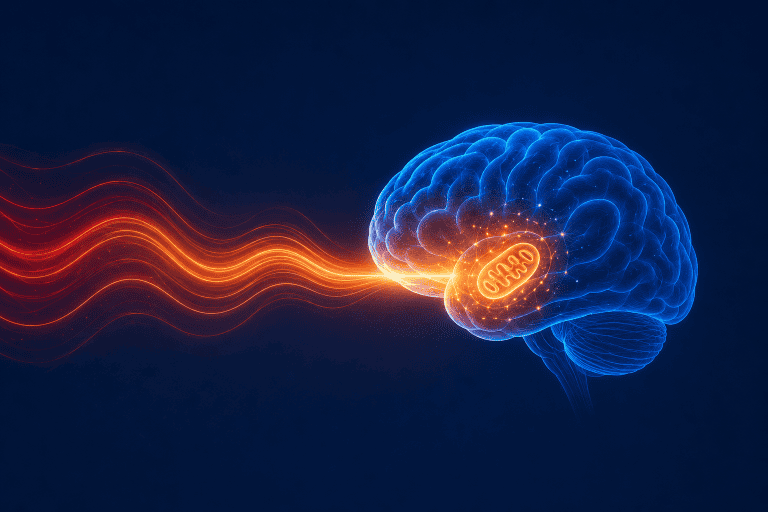
The phenomenon itself is genuine and rather elegant. Play a 300 Hz tone into your left ear and a 310 Hz tone into your right, and instead of hearing two tones you perceive a single tone pulsing at 10 Hz — the difference between them. That 10 Hz pulse is the “binaural beat,” and it isn’t in the audio at all; your brain constructs it from the mismatch. You need headphones for it to work, because each ear has to receive a different tone.
The big claim is the leap from there. Proponents argue that because your brain has its own electrical rhythms — associated loosely with different states, like beta and gamma with alertness, alpha with relaxation, theta and delta with drowsiness and sleep — playing a beat at one of those frequencies will “entrain” your brainwaves to match, pulling you into the corresponding state. Want focus? Play a beta or gamma beat. Want calm? Play alpha. It’s a tidy, appealing story. The trouble is that almost every part of it, once you test it, turns out to be shakier than it sounds.
Does Your Brain Actually “Entrain”? The Shaky Foundation
Start where the whole edifice rests: does listening to a binaural beat actually make your brainwaves synchronise to that frequency? This is the load-bearing assumption, and it’s surprisingly weak. A 2023 systematic review by Ingendoh and colleagues looked specifically at whether binaural beats change brain oscillatory activity — the thing “entrainment” is supposed to mean — and concluded that the evidence does not reliably show it. The brainwave-tuning mechanism that gives binaural beats their scientific sheen largely fails to appear when you measure it directly.
Other work points the same way: when researchers compare binaural beats with monaural beats (where the two tones are mixed before reaching the ears), binaural beats entrain the cortex only weakly, if at all. This matters because it inverts the usual order of a health claim. Normally the mechanism is the solid part and the real-world benefit is uncertain. Here, the mechanism everyone cites is the least established part — which means any benefits binaural beats do produce probably aren’t happening the way the marketing says they are.
The Cognition Evidence: Real, but Messy and Inconsistent
So do they do anything, mechanism aside? Here it gets more interesting. A 2019 meta-analysis by Garcia-Argibay and colleagues pooled 22 studies and found an overall medium, statistically significant effect across cognition, anxiety and pain. That’s not nothing, and it’s why binaural beats can’t simply be dismissed. But the same analysis flagged the catch: the effect depended heavily on the frequency used, how long people listened, and when they listened relative to the task — with exposure before a task tending to beat exposure during it.
A more recent systematic review focused on memory and attention echoed this exactly: encouraging but mixed, with benefits showing up only in specific combinations of frequency, timing and conditions (Basu & Banerjee, 2023). When an effect only appears under particular settings and vanishes under others, that’s the signature of a weak, fragile phenomenon — not a reliable tool you can count on. Individual studies bear this out, with some reporting gains in working memory or creativity and others finding nothing at all. The honest summary is that binaural beats may nudge some cognitive measures under the right conditions, but the effect is small, inconsistent, and far from guaranteed.
Focus Is the Shakiest Claim — Calm Is a Better Bet
Now the irony. The single most-marketed use — binaural beats for focus and attention — is where the evidence is weakest. Attention tasks are exactly where studies most often fail to find an effect, which sits awkwardly against the endless “concentration” and “gamma focus” tracks. If you’re reaching for binaural beats specifically to sharpen your attention during work or study, you’re betting on the least-supported application. The genuine drivers of focus — sleep, environment, task design, managing distraction — do far more.
Where the case is a little stronger is calm. Some evidence suggests lower-frequency (theta and delta) binaural beats can modestly reduce subjective anxiety, and this is the domain where results look somewhat more consistent. Even here, though, two cautions apply: the evidence base is small, and subjective relaxation is precisely the kind of outcome that expectation and placebo can produce on their own. So if binaural beats have a genuine niche, it’s more plausibly as a mild relaxation aid than as a focus enhancer — close to the opposite of how they’re usually sold.
Why They Might Still “Work” for You — and Why That’s Fine
If the entrainment mechanism is shaky and the focus evidence is weak, why do so many people swear by them? Probably because several ordinary, non-magical things are doing the work. There’s expectation: if you press play believing this will help you focus, that belief alone can shift how you feel and perform. There’s ritual: putting on headphones and starting your “focus track” is a cue that tells your brain it’s time to work — a start-of-session trigger that’s genuinely useful, regardless of the audio’s frequency. And there’s simple sound-masking: a steady, unobtrusive audio bed can cover distracting background noise, which helps concentration for reasons that have nothing to do with brainwaves.
None of that is a knock. If a binaural-beats track reliably helps you settle into work, it doesn’t much matter whether the benefit comes from entrainment or from ritual and masking — the practical result is real for you. The point is just to be honest about why it works, because that changes what you should expect and what you should pay. A free track that cues your focus ritual is great; a premium subscription sold on neuroscience that the neuroscience doesn’t support is a different matter.
How to Use Them Sensibly (If You Want To)
Because binaural beats are low-risk and free, there’s no reason not to experiment — just do it with clear eyes. Treat it as a personal n-of-1 experiment: try them for a couple of weeks, pay attention to whether your work sessions actually go better, and be willing to conclude they do nothing for you. If you do use them, the parameter with the best (if modest) support is exposure of around 15 to 30 minutes, ideally starting a few minutes before the task rather than only during it. Keep the volume moderate to protect your hearing.
Most importantly, keep them in their place: a possible minor add-on, never the main event. The things that reliably improve focused work — protected time, deep-work structure, good sleep and removing distractions — do the heavy lifting, and they belong to the wider focus and productivity toolkit. And keep your expectations realistic: if a track helps you start and settle, that’s a genuine win — just don’t expect it to rewire your brain into a state of effortless concentration, because the evidence says it won’t.
Say you’ve seen the “gamma for focus” tracks and want to know whether they’ll help your exam prep. Here’s the difference between using them like the marketing wants and using them like a sceptic.
The hype way: you buy a premium “focus frequency” subscription, believe it’s tuning your brain to a high-performance state, and credit any good session to the audio. You never actually check whether it helps, and you may skip the boring fundamentals because the app feels like the edge. You’ve paid for a neuroscience claim the neuroscience doesn’t support, and you can’t even tell if it’s doing anything.
The sceptic’s way: you grab a free track, and run a two-week test — some study blocks with it, some without — noticing honestly whether your focus and output actually differ. You start it a few minutes before each block (the parameter with the best support) and keep the volume sensible. Whatever you conclude, you keep the real drivers in place: sleep, a distraction-free desk, and a deep-work structure doing the actual work.
The likely outcome? Either the track helps you settle into sessions (great — probably ritual and masking, and worth keeping for free) or it makes no real difference (also useful to know). Both beat paying a premium for an effect you never verified. The lesson is the article in miniature: test it, don’t trust the pitch, and never let the audio crowd out the things that genuinely move the needle.
Binaural Beats — Evidence Ranked
🟢 Well supported | 🟡 Real but qualified | 🔴 Commonly claimed, not supported
| Claim | Evidence | Basis |
|---|---|---|
| Binaural beats are a real perceptual phenomenon | 🟢 Established | The perceived “beat” from two ear-specific tones is well-documented; safe, low-risk audio |
| They can affect some cognitive/anxiety measures | 🟡 Small & inconsistent | Meta-analysis overall medium effect, but highly parameter-dependent (Garcia-Argibay 2019; Basu & Banerjee 2023) |
| Modest reduction in subjective anxiety (theta/delta) | 🟡 The better case | Somewhat more consistent, but small evidence base; placebo hard to exclude |
| “Brainwave entrainment” reliably tunes your brain | 🔴 Not supported | 2023 review found no reliable change in brain oscillations; weak cortical entrainment (Ingendoh 2023) |
| They reliably improve focus & attention | 🔴 Weakest claim | Attention is where studies most often find no effect — despite being the most-marketed use |
| Benefits some people feel (ritual, expectation, masking) | 🟡 Real, but not the claimed mechanism | Legitimate placebo/ritual/noise-masking effects — worth it if free, not if premium-priced on false science |
The NeuroEdge Binaural Beats Reality Check
A sensible way to engage with a low-risk, over-hyped tool. Updated September 2026.
The entrainment mechanism is unproven, so don’t pay a premium sold on neuroscience. Free tracks are plentiful and just as evidence-based.
Run a two-week n-of-1: some sessions with, some without. Judge by real output, and be willing to conclude it does nothing for you.
The best-supported pattern is ~15–30 minutes, starting a few minutes before the task rather than only during it. Keep the volume moderate.
Sleep, structure and removing distractions do the real work. Let the audio be a ritual cue at most — never a substitute for the fundamentals.
Peter’s Notes — Binaural Beats
First-person, n=1 — impressions, not measurements · Updated September 2026
I’ve used binaural beats on and off for years, and my honest experience lines up almost perfectly with the “it’s probably ritual and masking” reading. Putting on headphones and starting a track does seem to help me drop into a work session — but so does any consistent start-of-session cue, and a steady audio bed that covers background noise would plausibly do the same job. When I’ve paid attention, I can’t confidently separate the “beat” from those ordinary effects.
What reading the research changed for me was the spending and the story I told myself. I stopped treating any track as a brain-tuning tool and stopped paying for premium “frequencies,” because the entrainment claim underneath them doesn’t hold up when it’s measured. A free track does whatever a paid one does, as far as I can tell — which is to say, provides a pleasant, distraction-covering backdrop and a cue to begin.
So I still occasionally use them, with no illusions. They’re a harmless, mildly useful ritual, not a nootropic you listen to. If they help you start — and for me they sometimes do — that’s a real, if unglamorous, benefit. Just don’t expect the gamma-powered focus the thumbnails promise. (These notes are direction-only impressions, not measured results.)
Key Takeaways — Binaural Beats
| ✓ | The mechanism is the weak link. The “brainwave entrainment” story that gives binaural beats their scientific appeal doesn’t hold up — a 2023 review found they don’t reliably change brain oscillations (Ingendoh 2023). |
| ✓ | Cognitive effects are real but messy. A meta-analysis found an overall medium effect, but heavily dependent on frequency, duration and timing, with later reviews echoing “encouraging but inconsistent” (Garcia-Argibay 2019; Basu & Banerjee 2023). |
| ✓ | Focus is the shakiest use. Attention is where studies most often find nothing — yet it’s the most-marketed application. Calm/anxiety is a slightly better (still small) bet than focus. |
| ✓ | They may still help — for ordinary reasons. Expectation, a start-of-session ritual, and noise-masking are legitimate benefits. Fine if the track is free; not worth a premium sold on neuroscience that doesn’t support it. |
| ✓ | Low-risk — so test it, don’t trust it. Run a two-week n-of-1, start ~15–30 min before a task, keep the volume moderate, and keep the real drivers (sleep, structure, fewer distractions) doing the heavy lifting. |
Binaural Beats — FAQ
Do binaural beats really improve focus?
The evidence for focus is weak — and ironically it’s the most-marketed use. Attention tasks are where studies most often fail to find any effect. A meta-analysis did find a small overall effect across cognition, anxiety and pain, but it was highly dependent on frequency, duration and timing, and later reviews describe the results as encouraging but inconsistent (Garcia-Argibay et al. 2019; Basu & Banerjee 2023). So binaural beats might nudge some measures under specific conditions, but they’re not a reliable focus tool, and “gamma waves for concentration” is marketing rather than established science.
Do binaural beats actually change your brainwaves?
This is the shakiest part of the whole idea. The “brainwave entrainment” claim — that your neural rhythms synchronise to the beat frequency — is not reliably supported. A 2023 systematic review examining whether binaural beats change brain oscillatory activity concluded the evidence doesn’t hold up (Ingendoh et al. 2023), and binaural beats appear to entrain the cortex only weakly, if at all. So the science-sounding mechanism behind the marketing is precisely the least-established part.
Are binaural beats better for anxiety or relaxation?
Relaxation is actually the stronger case. Some evidence suggests lower-frequency (theta and delta) binaural beats can modestly reduce subjective anxiety, and results here look somewhat more consistent than for focus. Two caveats, though: the evidence base is small, and subjective calm is exactly the kind of outcome that expectation and placebo can produce on their own. So if binaural beats have a genuine niche, it’s more plausibly as a mild relaxation aid than a concentration booster — roughly the opposite of how they’re usually sold.
If the science is weak, why do they seem to work for me?
Probably for ordinary, non-magical reasons — which is completely fine. Expectation (believing it’ll help genuinely shifts how you feel and perform), ritual (headphones and a “focus track” cue your brain that it’s time to work), and sound-masking (a steady audio bed covers distracting noise) all help concentration without any brainwave effect. If a track reliably helps you settle into work, that benefit is real for you. The only thing to be careful about is paying a premium for a neuroscience claim that the neuroscience doesn’t support — a free track does the same job.
How should I use binaural beats if I want to try them?
They’re low-risk, so experimenting is fine — just do it with clear eyes. Treat it as a personal test: try them for a couple of weeks, some sessions with and some without, and judge honestly by whether your work actually improves. If you use them, the best-supported pattern is around 15 to 30 minutes, ideally starting a few minutes before the task rather than only during it, at a moderate volume to protect your hearing. Above all, keep them a minor add-on — sleep, structure and removing distractions do the real work, and no audio track substitutes for those.
Get “7 Days to a Sharper Brain” — Free
Peter Benson’s personal daily protocol, rebuilt from 18 years of testing
Seven evidence-based interventions, in the exact order that makes each one more effective — from sleep foundation to neuroplasticity and Lion’s Mane.
Join 2,000+ readers optimising their cognitive performance. Unsubscribe anytime.
Scientific References
- Garcia-Argibay M, Santed MA, Reales JM. (2019). Efficacy of binaural auditory beats in cognition, anxiety, and pain perception: a meta-analysis. Psychological Research, 83(2):357–372. DOI: 10.1007/s00426-018-1066-8
- Ingendoh RM, Posny ES, Heine A. (2023). Binaural beats to entrain the brain? A systematic review of the effects of binaural beat stimulation on brain oscillatory activity, and the implications for psychological research and intervention. PLoS ONE, 18(5):e0286023. DOI: 10.1371/journal.pone.0286023
- Basu S, Banerjee B. (2023). Potential of binaural beats intervention for improving memory and attention: insights from meta-analysis and systematic review. Psychological Research. DOI: 10.1007/s00426-022-01706-7

Peter Benson
Cognitive Enhancement Researcher | 18+ Years Independent Research
Peter has spent 18+ years separating genuine cognitive science from wellness marketing. He treats binaural beats the way the evidence warrants — a low-risk, over-hyped tool whose real value, if any, comes from ritual and expectation rather than the brainwave-tuning it’s sold on.
Last reviewed: September 2026 | Educational content only. Not medical advice.