Nootropics for Brain Health and Neuroprotection: The Evidence-Based Stack
Medical Disclaimer: The information in this article is for educational purposes only and does not constitute medical advice. Cognitive decline, dementia, and neurological conditions require professional evaluation and treatment. Supplements interact with medications — consult a qualified healthcare provider before beginning any regimen, particularly if you have pre-existing conditions or take medications. Individual responses vary significantly.
Most conversations about nootropics focus on acute cognitive enhancement — the compounds that sharpen focus today, improve memory recall this week, or provide the mental energy to push through a demanding afternoon. Those applications are valuable and covered in depth throughout the Nootropics hub. But there is a second category of nootropic application that receives far less attention and arguably matters more across a lifetime: the compounds that support long-term brain health — neuroprotection against the mechanisms of cognitive aging, structural neuroplasticity that builds cognitive reserve, and the maintenance of the neurochemical and neurobiological systems that sustain cognitive function into the decades when it matters most.
The distinction between acute cognitive enhancement and neuroprotective supplementation is not merely semantic — it determines which compounds are appropriate, what timelines to expect, and how to evaluate whether an intervention is working. Acute cognitive enhancement compounds are measured in hours; neuroprotective compounds are measured in months and years. Acute compounds operate through neurochemical modulation; neuroprotective compounds operate through structural neuroplasticity, antioxidant protection, neuroinflammation reduction, and the maintenance of the molecular systems that cognitive aging progressively degrades.
After 18+ years of personal testing and research, the neuroprotective compound category is the one I consider most important for anyone in midlife who is thinking seriously about long-term cognitive trajectory. This guide covers the complete evidence-based neuroprotective stack — the compounds with the strongest evidence for supporting brain health across the dimensions that matter most for cognitive aging: neuroplasticity, neuroprotection, neuroinflammation, and vascular brain health. It builds directly on the brain health guide, neuroplasticity guide, and cognitive decline prevention guide, and connects to the individual compound guides throughout the Nootropics hub.
The Evidence Framework: Neuroprotection vs. Acute Enhancement
Before reviewing compounds, the evaluation framework for neuroprotective nootropics differs in three important ways from acute cognitive enhancement evaluation. First, the mechanisms are structural rather than neurochemical — relevant evidence involves changes in neuronal architecture, neuroinflammatory markers, oxidative stress biomarkers, and neurogenesis rates rather than acute receptor activation. Second, the timelines are extended — structural neuroplasticity compounds require 8–16 weeks to produce their primary effects, meaning that trials shorter than this duration are insufficient to evaluate neuroprotective efficacy. Third, the endpoint is different — neuroprotective compounds are evaluated against the trajectory of cognitive aging over years, not against acute task performance in hours.
This guide uses a four-dimension neuroprotection assessment for each compound: NGF/BDNF pathway support (structural neuroplasticity), antioxidant and anti-inflammatory protection (reducing the oxidative and inflammatory mechanisms of neuronal aging), neurochemical system maintenance (preserving the receptor density, membrane health, and transmitter synthesis capacity that decline with age), and clinical evidence quality (the standard of human research supporting the neuroprotective claims). Compounds are included only when they have meaningful evidence across at least two of these four dimensions with a plausible mechanism supported by primary research.
Tier 1 — The Neuroprotective Foundation: Highest Evidence, Structural Mechanisms
Lion’s Mane Mushroom — NGF-Driven Structural Neuroprotection
Lion’s Mane Mushroom at 500–1,000mg daily is the most evidence-supported botanical compound for directly stimulating the neuroplasticity mechanisms that neuroprotection depends on — and the only commonly available supplement with demonstrated ability to stimulate NGF synthesis in the brain through compounds that cross the blood-brain barrier.
The neuroprotective mechanisms are multiple and complementary. Hericenones and erinacines stimulate NGF production — the primary growth factor for neuronal survival, dendritic branching, synaptic maintenance, and myelination. NGF is the same molecular signal that the brain’s own neuroplasticity machinery uses to support neuronal health across aging; supplementation that elevates NGF is therefore working through the same system the brain has evolved to use for self-maintenance. The erinacines that cross the blood-brain barrier directly stimulate NGF synthesis in hippocampal and cortical neurons — producing the dendritic growth and synaptic density increases that constitute structural cognitive reserve. Lion’s Mane additionally demonstrates direct antioxidant and anti-neuroinflammatory activity through its polysaccharide compounds, providing a second neuroprotective mechanism independent of the NGF pathway.
Clinical research by Mori and colleagues found that Lion’s Mane supplementation significantly improved cognitive function scores in older adults with mild cognitive impairment after 16 weeks — with complete reversal of improvement after discontinuation, confirming mechanism-dependent effects rather than placebo. Animal research has additionally shown Lion’s Mane to reduce amyloid-beta-induced neuronal damage and support peripheral nerve regeneration — extending its neuroprotective profile to the Alzheimer’s pathology mechanism.
Neuroprotection dimensions: NGF pathway ✓✓ | Antioxidant/anti-inflammatory ✓ | Neurochemical maintenance ✓ | Clinical evidence ✓
Dose: 500–1,000mg standardized extract daily, morning with food
Timeline: 8–16 weeks for structural effects; 4–6 weeks for early functional improvements
Full protocol: Lion’s Mane guide
Bacopa Monnieri — Antioxidant Neuroprotection and Cholinergic Maintenance
Bacopa Monnieri at 300mg of a standardized extract (45% bacosides) provides neuroprotective effects through a distinctly different mechanism set from Lion’s Mane — making the two compounds synergistic rather than redundant in a combined neuroprotective stack.
The bacoside compounds in Bacopa are among the most well-characterized botanical antioxidants for neuronal protection, with research demonstrating significant reduction of lipid peroxidation in hippocampal and cortical tissue — the oxidative membrane damage mechanism that accumulates with age and underlies progressive neuronal dysfunction. Bacopa additionally stimulates hippocampal dendritic branching in CA3 neurons through a mechanism distinct from the NGF pathway — providing structural neuroplasticity support through complementary molecular signaling. The cholinergic enhancement effects — increased acetylcholine synthesis and reduced acetylcholinesterase activity — are directly relevant to Alzheimer’s neuroprotection, given that cholinergic system integrity is among the earliest casualties of Alzheimer’s pathology and that maintaining cholinergic tone in the presymptomatic decades is mechanistically sound prevention.
Meta-analysis of Bacopa clinical trials found consistent improvements in delayed recall and verbal learning across studies — with effects developing over 12 weeks consistent with structural neuroplasticity timelines rather than acute neurochemical modulation. The 8–12 week minimum trial requirement is essential: Bacopa’s primary neuroprotective and cognitive effects are structural and emerge gradually rather than acutely.
Neuroprotection dimensions: NGF/BDNF support ✓ | Antioxidant/anti-inflammatory ✓✓ | Neurochemical maintenance ✓✓ | Clinical evidence ✓✓
Dose: 300mg (45% bacoside extract) daily, taken with food (fat enhances absorption; reduces nausea)
Timeline: 8–12 weeks for primary cognitive effects; antioxidant protection ongoing
Full protocol: Bacopa guide
Phosphatidylserine — FDA-Recognized Membrane Health and Neuroprotection
Phosphatidylserine at 100–300mg daily is the only supplement compound with an FDA qualified health claim specifically for cognitive dysfunction risk reduction — a regulatory distinction that reflects a body of clinical evidence sufficient for the FDA to acknowledge a credible structural basis for the neuroprotective claim, without meeting the full efficacy standard required for approved health claims.
PS is a phospholipid that constitutes approximately 15% of brain cell membrane phospholipids and is specifically concentrated in neuronal inner membranes where it modulates the density and sensitivity of neurotransmitter receptors, ion channel function, and the intracellular signaling that neurons use to communicate. Age-associated PS depletion from both reduced dietary intake and reduced endogenous synthesis contributes to the progressive receptor sensitivity decline and signal transduction inefficiency that underlie many age-related cognitive changes. Supplemental PS restores membrane PS content to more youthful levels — with measurable effects on cortisol modulation (providing secondary HPA axis neuroprotection), acetylcholine release, and the glucose metabolism efficiency that neuronal energy production requires.
Neuroprotection dimensions: NGF/BDNF support ✓ | Antioxidant/anti-inflammatory ✓ | Neurochemical maintenance ✓✓ | Clinical evidence ✓✓
Dose: 100–300mg daily, divided across morning and midday with food
Timeline: 4–6 weeks for initial effects; 8–12 weeks for full membrane incorporation
Full protocol: Phosphatidylserine guide
DHA — The Foundational Neuronal Membrane Nutrient
DHA at 1,000–2,000mg daily is not a nootropic in the traditional sense — it is a foundational nutritional requirement for neuronal membrane health that the neuroprotective stack cannot function without. As the dominant polyunsaturated fatty acid in neuronal membranes (approximately 40% of brain PUFA content), DHA determines the membrane fluidity that governs receptor density, LTP induction efficiency, BDNF receptor sensitivity, and the synaptic signaling efficiency that cognitive performance and neuroplasticity both depend on.
DHA deficiency — extremely common in populations not regularly consuming fatty fish — produces measurable neuroinflammation elevation (by shifting prostaglandin balance toward pro-inflammatory eicosanoids), reduced hippocampal neurogenesis, impaired BDNF pathway signaling, and reduced LTP induction threshold — all direct impairments of the neuroplasticity mechanisms that neuroprotection depends on. Epidemiological evidence consistently associates lower plasma DHA with higher dementia risk and faster cognitive aging. At 1,000–2,000mg daily, DHA supplementation addresses the nutritional substrate deficiency that undermines every other neuroprotective intervention in this guide.
Neuroprotection dimensions: NGF/BDNF support ✓✓ | Antioxidant/anti-inflammatory ✓✓ | Neurochemical maintenance ✓✓ | Clinical evidence ✓
Dose: 1,000–2,000mg DHA daily with the largest meal (fat enhances absorption)
Timeline: 4–8 weeks for membrane incorporation effects; ongoing maintenance
Free Download
Get the 7-Day Brain Optimization Protocol
The evidence-based diet, sleep, and supplement framework for your first week of cognitive enhancement — completely free.
Join 2,000+ readers optimizing their cognitive performance. Unsubscribe anytime.
Tier 2 — Supporting Neuroprotection: Targeted Applications
Ashwagandha KSM-66 — HPA Axis and Hippocampal Protection
Ashwagandha KSM-66 at 300–600mg daily occupies a specific niche in the neuroprotective stack: it is the primary intervention for the chronic cortisol mechanism that is simultaneously one of the most damaging drivers of hippocampal structural damage and one of the most consistently unaddressed in typical supplement stacks. Chronic HPA axis activation and the sustained cortisol elevation it produces directly suppresses BDNF, inhibits hippocampal neurogenesis, induces dendritic retraction, and over years produces the measurable hippocampal volume reduction associated with chronic stress and depression. Ashwagandha’s withanolide compounds normalize HPA axis reactivity and reduce basal cortisol through a mechanism distinct from any of the Tier 1 compounds — making it additive rather than redundant to the Lion’s Mane, Bacopa, and PS already in the stack.
For individuals experiencing chronic stress — which in the current cultural environment means the majority of cognitively active midlife adults — Ashwagandha addresses the primary biological obstacle to the Tier 1 compounds’ neuroprotective effects functioning at their potential. Elevated cortisol directly suppresses the BDNF pathway through which Lion’s Mane’s NGF stimulation operates and directly inhibits the hippocampal neurogenesis that Bacopa’s dendritic support facilitates. Normalizing the cortisol substrate allows the structural neuroprotective compounds to achieve their full effects.
Neuroprotection dimensions: BDNF pathway support ✓ | Anti-inflammatory ✓ | Neurochemical maintenance ✓ | Clinical evidence ✓✓
Dose: 300–600mg KSM-66, evening (aligns with cortisol normalization and sleep protection)
Timeline: 4–6 weeks for cortisol reduction; 8–10 weeks for full HPA normalization
Full protocol: Ashwagandha guide
Magnesium L-Threonate — Synaptic Density and NMDA Optimization
Magnesium L-Threonate at 1,500–2,000mg daily provides neuroprotection through its unique capacity to elevate brain magnesium levels — the only magnesium form with demonstrated blood-brain barrier penetrance sufficient to meaningfully raise intraneuronal magnesium concentrations. Brain magnesium is a critical cofactor for NMDA receptor function — the coincidence detector through which LTP induction occurs and synaptic strengthening is gated. Insufficient brain magnesium reduces synaptic density, impairs LTP induction, and reduces the cognitive reserve that synaptic density provides against aging-associated pathological damage.
Research by Slutsky and colleagues found that MgT supplementation elevated brain magnesium 15% above the ceiling achievable with conventional magnesium — increasing synaptic density in hippocampal and prefrontal regions, improving LTP induction, and producing learning and memory improvements in aging animals that were directly correlated with the synaptic density changes. The sleep spindle enhancement described in the Sleep hub is an additional neuroprotective benefit: sleep spindle density correlates with cognitive reserve and the memory consolidation function that long-term brain health depends on.
Neuroprotection dimensions: BDNF/NGF support ✓ | Anti-inflammatory ✓ | Neurochemical maintenance ✓✓ | Clinical evidence ✓
Dose: 1,500–2,000mg daily split — 1,000mg morning, 500–1,000mg evening before bed
Timeline: Sleep quality improvements within 1–2 weeks; synaptic density effects at 8–12 weeks
Full protocol: Magnesium L-Threonate guide
The Complete Neuroprotective Stack: Integration and Timing
🧬 Complete Neuroprotective Stack — Daily Protocol
MORNING — with breakfast
• Lion’s Mane 500–1,000mg (NGF structural neuroplasticity)
• Bacopa Monnieri 300mg (antioxidant neuroprotection, cholinergic maintenance)
• Phosphatidylserine 100–200mg (membrane health, cortisol modulation)
• DHA 1,000–2,000mg (neuronal membrane foundation, anti-inflammatory)
• Magnesium L-Threonate 1,000mg (NMDA optimization, synaptic density)
EVENING — 60–90 minutes before bed
• Ashwagandha KSM-66 300–600mg (HPA normalization, hippocampal protection)
• Magnesium L-Threonate 500–1,000mg (SWS depth, sleep spindle enhancement)
• L-theanine 200–400mg (sleep onset quality, cortisol reduction — optional)
All compounds support distinct, non-overlapping neuroprotective mechanisms — no redundancy in this stack.
The 12-Week Introduction Sequence
Introducing the complete stack simultaneously makes it impossible to identify which compounds are producing which effects — and creates an unnecessarily large supplement load before establishing which individual compounds are well-tolerated. The sequenced approach builds the stack systematically while maintaining clear attribution of effects.
Weeks 1–2: DHA 1,000–2,000mg + MgT at full daily dose. Establishes the nutritional and NMDA substrate that all subsequent compounds operate on. Most people notice sleep quality improvement from MgT within the first week.
Weeks 3–4: Add Lion’s Mane 500–1,000mg. The NGF-driven effects take 4–6 weeks to become perceptible — beginning now ensures the full timeline is underway. Some people notice subtle mental clarity improvements within the first 2 weeks; structural effects require longer.
Weeks 5–6: Add Bacopa 300mg with the largest meal (essential for tolerance — nausea on an empty stomach is common). Early effects on anxiety reduction and mild cognitive clarity; primary memory and neuroprotective effects at weeks 8–12.
Weeks 7–8: Add Phosphatidylserine 100–200mg. Membrane incorporation develops over 4–6 weeks — beginning now ensures the full PS cycle reaches completion within the 12-week assessment window.
Weeks 9–12: Add Ashwagandha KSM-66 if chronic stress is present. At 12 weeks, the complete stack is operating — with the structural neuroplasticity compounds (Lion’s Mane, Bacopa), membrane health foundation (DHA, PS), NMDA optimization (MgT), and HPA normalization (Ashwagandha) all in full effect simultaneously.
Frequently Asked Questions About Nootropics for Brain Health
What is the best nootropic for long-term brain health?
For long-term brain health and neuroprotection, Lion’s Mane Mushroom has the strongest evidence for structural neuroplasticity benefit through a mechanism — NGF stimulation via blood-brain barrier-crossing erinacines — that directly addresses the synaptic density and neuronal maintenance mechanisms that cognitive aging progressively degrades. No other commonly available supplement stimulates the brain’s own NGF production through compounds that cross the blood-brain barrier. At 500–1,000mg daily for a minimum of 12–16 weeks, Lion’s Mane produces structural changes that compound with consistent use — making it the most appropriate single compound if only one neuroprotective supplement is to be chosen. That said, the most compelling evidence for neuroprotection comes from combining Lion’s Mane with Bacopa Monnieri (complementary antioxidant and cholinergic neuroprotection), Phosphatidylserine (membrane health), and DHA (the neuronal membrane foundation) — a four-compound stack that addresses the four primary mechanisms of neurobiological aging through non-overlapping mechanisms.
Can nootropics reverse cognitive decline?
The evidence supports that neuroprotective nootropics can meaningfully slow, partially reverse, and in some cases significantly improve mild cognitive impairment — while the evidence for reversing established dementia is far weaker. The Mori clinical trial found that Lion’s Mane supplementation significantly improved cognitive function scores in adults with mild cognitive impairment over 16 weeks, with effects reversing after discontinuation — demonstrating that the improvement was mechanism-dependent and ongoing supplementation was required to maintain it. Bacopa meta-analyses show consistent improvements in delayed recall and verbal learning in older adults. Phosphatidylserine trials in adults with age-associated memory impairment found meaningful improvements in tasks of daily memory relevance. These are meaningful improvements in clinically measured cognitive function — not cure or full reversal, but genuine, mechanism-based improvements in the cognitive decline trajectory. For individuals with established Alzheimer’s disease at moderate to severe stages, the evidence for meaningful cognitive reversal from any supplement is weak. The most powerful application of these compounds is preventive and early-intervention: applied consistently before significant pathological burden accumulates, the neuroprotective stack slows the trajectory of cognitive aging in ways that compound over years and decades.
How long do neuroprotective supplements take to work?
Neuroprotective supplements operate on structural timelines that differ significantly from acute cognitive enhancement compounds. The general timelines by compound: DHA and Magnesium L-Threonate begin showing sleep quality and early cognitive effects within 1–2 weeks, with full membrane incorporation and synaptic density effects at 4–8 weeks. Phosphatidylserine shows initial effects at 4–6 weeks and reaches full membrane incorporation at 8–12 weeks. Bacopa Monnieri shows early anxiety reduction and mild clarity within weeks 3–5, with primary memory and neuroprotective effects emerging at weeks 8–12 — making a 12-week minimum assessment window essential before evaluating Bacopa’s efficacy. Lion’s Mane shows the longest structural timeline: some individuals notice subtle cognitive clarity improvements within 3–4 weeks, but the NGF-driven dendritic branching and synaptic growth that constitute the primary neuroprotective effects require 8–16 weeks to mature. Ashwagandha’s cortisol reduction effects begin within 2–4 weeks, with full HPA normalization typically achieved at 8–10 weeks. The practical implication is that neuroprotective supplementation must be assessed on compound-appropriate timelines — evaluating Lion’s Mane after 4 weeks and concluding it does not work is equivalent to evaluating whether a savings account is generating returns after two weeks of contributions.
Is Lion’s Mane really effective for brain health?
Lion’s Mane has the most credible mechanistic profile of any botanical compound for direct brain structural neuroprotection — and the clinical evidence, while still developing, is consistent with that mechanism. The mechanism is the most important consideration: hericenones and erinacines stimulate NGF production, with erinacines specifically crossing the blood-brain barrier to stimulate NGF synthesis directly in hippocampal and cortical neurons. NGF is not a peripheral growth factor that happens to affect the brain — it is the brain’s own primary molecular signal for neuronal growth, synaptic maintenance, and myelination. A compound that stimulates its production in brain tissue is therefore working through the brain’s own maintenance system, making the neuroprotective logic mechanistically sound rather than speculative. The clinical evidence includes the Mori double-blind RCT showing significant cognitive improvements in adults with mild cognitive impairment over 16 weeks; multiple animal studies showing amyloid-beta protection, nerve regeneration, and hippocampal structural changes; and a growing body of observational and human supplementation research. The limitation is that long-term large-scale human trials for dementia prevention specifically have not yet been conducted — but the mechanism, animal evidence, and available human studies together make Lion’s Mane the most evidence-supported botanical for neuroprotection currently available.
Neuroprotective Supplementation as Long-Term Investment
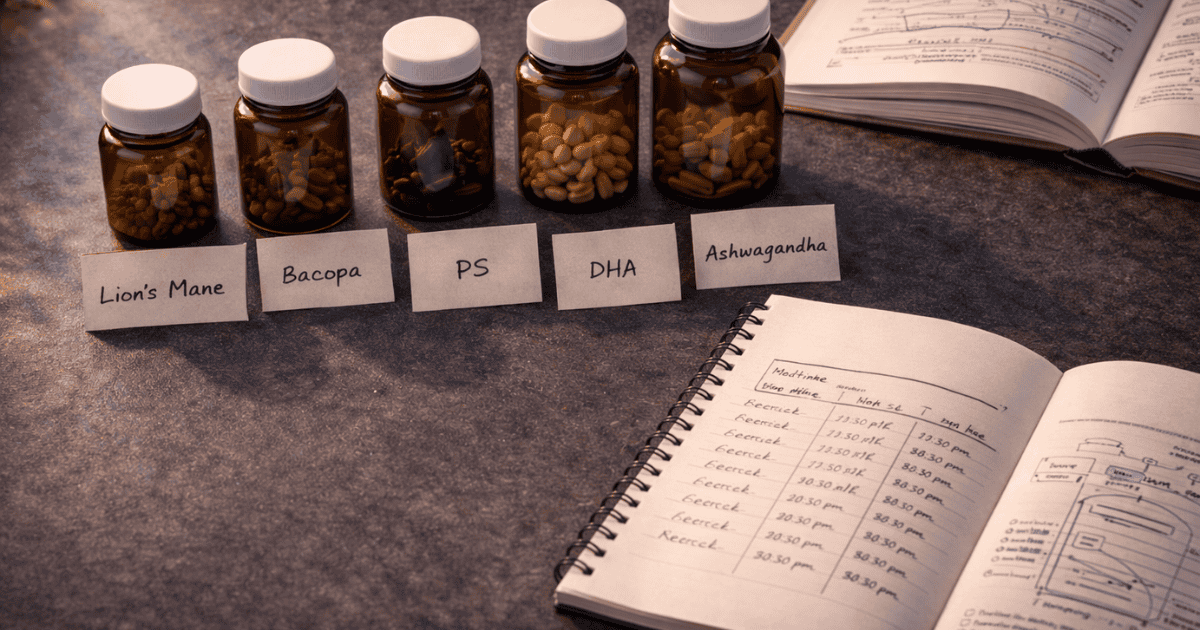
The neuroprotective stack in this guide — Lion’s Mane for NGF-driven structural neuroplasticity, Bacopa for antioxidant protection and cholinergic maintenance, Phosphatidylserine for membrane health, DHA for the neuronal membrane foundation, Ashwagandha for cortisol-driven hippocampal protection, and MgT for synaptic density and sleep quality — is not designed to produce dramatic acute cognitive improvements. It is designed to systematically address the six most well-characterized modifiable mechanisms of neurobiological aging over months and years.
The compound that matters most in this stack is the one you take consistently for years, not the one you feel most acutely in the first week. Neuroprotection compounds, by definition, produce their most important benefits across the timescales of cognitive aging — which means that a 12-week introduction period is not the end of an experiment but the beginning of a practice.
Applied alongside the aerobic exercise, sleep optimization, anti-inflammatory nutrition, mindfulness practice, and cognitive engagement protocols throughout NeuroEdge Formula, this supplement stack provides the neurochemical and structural substrate for a brain health trajectory that diverges meaningfully from the population average — producing the cognitive reserve that determines whether cognitive aging follows the trajectory of decline or the trajectory of maintained function into the decades when it matters most.
For the complete brain health context, see the brain health pillar guide. For the individual compound profiles in full detail, see the relevant guides throughout the Nootropics hub. For the anti-inflammatory dietary foundation that supports this stack, see the anti-inflammatory diet guide — the next and final article in this hub.
References
- Mori, K., et al. (2009). Improving effects of Yamabushitake on mild cognitive impairment. Phytotherapy Research, 23(3), 367–372. PubMed
- Phan, C.W., et al. (2015). Therapeutic potential of culinary-medicinal mushrooms for the management of neurodegenerative diseases. Critical Reviews in Biotechnology, 35(3), 355–368. PubMed
- Aguiar, S., & Borowski, T. (2013). Neuropharmacological review of Bacopa monnieri. Rejuvenation Research, 16(4), 313–326. PubMed
- Morgan, A., & Stevens, J. (2010). Does Bacopa monnieri improve memory performance in older persons? Journal of Alternative and Complementary Medicine, 16(7), 753–759. PubMed
- Slutsky, I., et al. (2010). Enhancement of learning and memory by elevating brain magnesium. Neuron, 65(2), 165–177. PubMed
- Crook, T.H., et al. (1991). Effects of phosphatidylserine in age-associated memory impairment. Neurology, 41(5), 644–649. PubMed
- Langade, D., et al. (2019). Efficacy and safety of Ashwagandha root extract in insomnia and anxiety. Cureus, 11(9), e5797. PubMed
- Yehuda, S., et al. (2002). The role of polyunsaturated fatty acids in restoring the aging neuronal membrane. Neurobiology of Aging, 23(5), 843–853. PubMed
- Erickson, K.I., et al. (2011). Exercise training increases size of hippocampus and improves memory. PNAS, 108(7), 3017–3022. PubMed
- Bhattacharya, S.K., et al. (2000). Anxiolytic-antidepressant activity of Withania somnifera. Phytomedicine, 7(6), 463–469. PubMed
Tags: nootropics for brain health, neuroprotective nootropics, brain health supplements, Lion’s Mane neuroprotection, Bacopa Monnieri neuroprotection, Phosphatidylserine brain health, DHA brain health, Magnesium L-Threonate neuroprotection, Ashwagandha brain health, cognitive aging supplements, nootropics cognitive decline, neuroprotection stack, NGF nootropics, best nootropics long-term brain health, prevent cognitive decline supplements
About Peter Benson
Peter Benson is a cognitive enhancement researcher and certified mindfulness coach with 18+ years of personal and professional experience in nootropics, neuroplasticity, and brain health optimization. He has personally coached hundreds of individuals through integrated cognitive performance programs combining evidence-based lifestyle protocols with targeted supplementation. NeuroEdge Formula is his platform for sharing rigorous, safety-first cognitive enhancement guidance.