Neuroplasticity: How to Rewire Your Brain at Any Age
⚕️ Medical Disclaimer
This article is for educational purposes only and is not intended as medical advice. It reflects independent research and personal experimentation, not clinical guidance. Neuroplasticity-related protocols — exercise, supplementation and lifestyle interventions — affect individuals differently. Consult a qualified healthcare provider before beginning any new supplement, exercise or health protocol, particularly if you have a pre-existing condition, take medication, or are managing a neurological concern.
| What it is | The brain’s capacity to reorganise itself by forming, strengthening and pruning synaptic connections in response to experience, learning and environmental change. It spans synaptic plasticity (LTP/LTD), structural plasticity (dendritic-spine and axonal growth), and neurogenesis (new neurons, chiefly in the hippocampus). |
| The master regulator | Brain-Derived Neurotrophic Factor (BDNF) — supports neuron growth and survival, promotes long-term potentiation (the cellular basis of learning) and drives dendritic branching. It is the most modifiable neuroplasticity variable available through lifestyle, and aerobic exercise produces the largest increases. |
| Strongest BDNF stimulators | Aerobic exercise (the most potent stimulus — a single bout raises circulating BDNF acutely), sleep (consolidates the day’s plastic changes), novelty and learning challenge (drives use-dependent LTP), and, more tentatively, caloric challenge (fasting/restriction raises BDNF in animal models; human evidence is limited and mixed). |
| Supplements with plasticity evidence | Lion’s Mane (human MCI cognition RCT; NGF mechanism shown in vitro/animal, not yet directly in the human brain), DHA (membrane substrate for LTP; human cognitive data mixed), Magnesium L-Threonate (synaptic density in animal models), Bacopa Monnieri (human memory RCTs; dendritic branching from animal histology). All need 8–16 weeks minimum. |
| What inhibits plasticity | Chronic stress and cortisol (suppress BDNF and hippocampal neurogenesis), sleep deprivation (disrupts consolidation and pruning), chronic heavy alcohol use, prolonged social isolation (reduced dendritic complexity in animal models), and a sedentary lifestyle (absence of the exercise BDNF stimulus). |
| “Use it or lose it” | Plasticity runs both ways. Synaptic pruning — eliminating weak or unused connections — is as important as forming new ones. Passive consumption maintains existing circuitry; generation and problem-solving are what drive the synaptic strengthening that builds capacity. |
Neuroplasticity: How the Brain Changes, and How to Support It
By Peter Benson, Cognitive Enhancement Researcher | 18+ Years Independent Research · Last Updated: August 2026
Neuroplasticity — the adult brain’s ability to physically change itself — was genuinely controversial in neuroscience until the 1990s. The dominant 20th-century view held that adult brain structure was essentially fixed and that neurons, once formed, were never replaced. The evidence that overturned that view produced one of the most practically useful insights in cognitive science: the brain’s structure and function are continuously reshaped by experience, and those changes can be deliberately influenced through specific behaviours, environmental conditions and, to a lesser degree, targeted supplementation.
Understanding neuroplasticity mechanistically changes how you approach cognitive enhancement. The common mistake is to work only at the acute performance layer — caffeine, L-theanine, stimulants — without addressing the structural layer that sets long-term capacity. Acute compounds improve performance on the architecture you already have; neuroplasticity interventions improve the architecture itself. Both matter, but the architecture comes first. For the wider framework, see the Brain Health & Longevity hub.
This guide covers the core mechanisms — LTP, BDNF, synaptic pruning, neurogenesis — the behavioural interventions with the strongest evidence for promoting them, and the supplement layer with genuine structural-change data (and its limits). The individual compound guides supply the depth; this one is the map that connects them.
The Core Mechanisms — How the Brain Actually Changes
Long-Term Potentiation (LTP) — The Cellular Basis of Learning
Long-term potentiation is the persistent strengthening of a synapse that follows repeated simultaneous activation of the pre- and post-synaptic neurons — captured in Hebb’s principle, “neurons that fire together, wire together.” When a synapse is repeatedly activated, the postsynaptic neuron inserts more AMPA receptors, dendritic spines enlarge, and the connection becomes more responsive to future input. LTP is the primary cellular mechanism by which memories are encoded and skills learned. It depends on the NMDA receptor acting as a coincidence detector, and that receptor is gated by magnesium — which sets the threshold for LTP induction. This is the mechanistic reason brain-magnesium elevation is relevant to plasticity, though the direct evidence (Slutsky et al. 2010) comes from animal models.
BDNF — The Master Regulator
Brain-Derived Neurotrophic Factor supports the survival, growth and differentiation of neurons, promotes LTP, and drives the dendritic branching that increases how many connections a neuron can form. Crucially, BDNF is released in an activity-dependent way — produced in response to neural activity, not as a background signal. The practical implication is that BDNF must be earned: the activities that generate neural activity (aerobic exercise, learning challenge, novelty) are the ones that stimulate it. In a landmark model, van Praag et al. (1999) showed that voluntary running in mice roughly doubled the number of new hippocampal cells while improving spatial learning and enhancing dentate-gyrus LTP — establishing the exercise-neuroplasticity chain. One honest caveat runs through the human BDNF literature: most human studies measure BDNF in blood (serum or plasma), and how well peripheral BDNF reflects what is happening in the brain is still debated. The behavioural signal is robust; the blood marker is a proxy.
Synaptic Pruning — The Other Half of Plasticity
Plasticity is not only about forming connections — it is equally about eliminating weak or unused ones. Synaptic pruning removes redundant connections to increase the efficiency and specificity of what remains. It is most active during development but continues throughout adult life, and sleep is a primary pruning window: slow-wave sleep is when the brain performs the synaptic housekeeping that consolidates used connections and clears unused ones. This is part of why sleep deprivation produces genuine cognitive impairment rather than mere fatigue — the consolidation-and-pruning cycle is disrupted, leaving the architecture poorly configured for the next day’s learning.
Adult Hippocampal Neurogenesis
The hippocampus — central to memory encoding and spatial navigation — can generate new neurons in adulthood, a process called adult hippocampal neurogenesis. Eriksson et al. (1998) first demonstrated it in human tissue. It is worth being candid that the extent and functional significance of this process in the adult human brain remains debated — some post-mortem studies question how much persists into later life, while others support its continuation — so this is an area of active science rather than settled fact. What is consistent is that, to the degree it occurs, neurogenesis is modulated by the same variables as BDNF: aerobic exercise (the strongest stimulator), chronic stress (a strong inhibitor, via glucocorticoids), sleep quality, and caloric balance.
Neuroplasticity Interventions — Evidence Ranked
🟢 Strong human evidence | 🟡 Moderate / mechanism largely animal | 🔴 Confirmed inhibitor
| Intervention | Evidence | Primary mechanism |
|---|---|---|
| Aerobic exercise (≈150 min/week) | 🟢 Strongest evidence | BDNF elevation, hippocampal neurogenesis, dendritic growth, +2% hippocampal volume in humans (Erickson 2011) |
| Sleep quality (N3 + REM) | 🟢 Essential for consolidation | Synaptic homeostasis and pruning; hippocampal-cortical memory transfer |
| Learning challenge (skill acquisition) | 🟢 Use-dependent LTP | LTP at challenged circuits; cortical remapping through repeated novel performance |
| Stress management / cortisol control | 🟢 Hippocampal protection | Chronic cortisol suppresses BDNF and neurogenesis; human imaging shows hippocampal volume loss |
| Lion’s Mane | 🟡 One MCI RCT (Mori 2009) | Cognitive improvement in MCI; NGF mechanism shown in vitro/animal, not directly in the human brain; 8–16 weeks |
| Omega-3 DHA (1–2g daily) | 🟡 Mixed human cognition | Membrane fluidity for LTP; BDNF upregulation shown mainly in animals; human trials mixed (Yurko-Mauro 2010) |
| Bacopa Monnieri (300mg daily) | 🟡 Human memory RCTs | Improves memory in human RCTs (Roodenrys 2002); dendritic-branching evidence is animal histology; 8–12 weeks |
| Magnesium L-Threonate | 🟡 Animal mechanism; limited human | Raises brain Mg; NMDA/LTP gating and synaptic density increased in rats (Slutsky 2010); human data limited |
| Social isolation / sedentary lifestyle | 🔴 Confirmed inhibitors | Reduced dendritic complexity; suppressed neurogenesis; absent BDNF stimulus — a passive lifestyle actively lowers plasticity |
The Neuroplasticity Hierarchy — What Works, and How Much
1. Aerobic Exercise — The Most Potent Stimulus
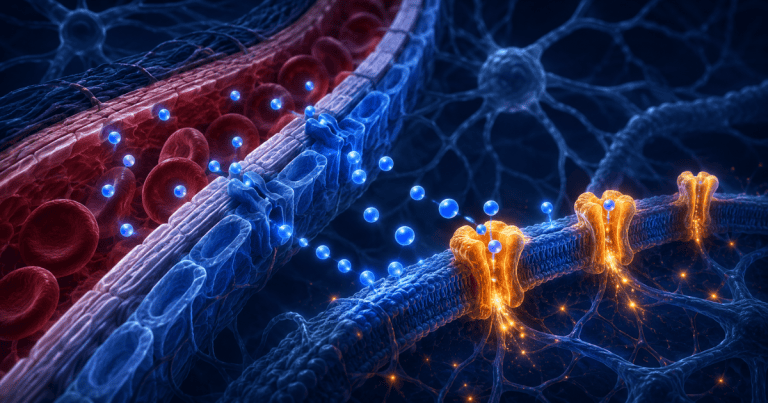
Acute aerobic exercise raises circulating BDNF within minutes, and consistent training (around 150 minutes per week of moderate activity) produces measurable hippocampal changes. Erickson et al. (2011) documented roughly a 2% increase in hippocampal volume in older adults after a year of aerobic exercise — effectively reversing the 1–2% per year atrophy that typically occurs. No supplement produces effects of that magnitude on hippocampal structure. The proposed mechanisms: exercise-induced BDNF, VEGF-driven new blood-vessel formation, and exercise-produced lactate, which can cross the blood-brain barrier and appears to stimulate BDNF expression. For the mechanism in depth, see the exercise and BDNF guide.
2. Learning Challenge — Use-Dependent Plasticity
Plasticity is use-dependent — synapses are strengthened by the specific activities that activate them. The practical consequence: passive consumption (reading, watching, listening without generating output or solving problems) does little to drive LTP, because it doesn’t demand the effortful firing patterns LTP depends on. Active generation — solving problems, producing output, retrieval practice rather than re-reading, learning skills that require novel cognitive or motor sequences — is what drives use-dependent plasticity. The challenge-skill balance from the flow literature applies: the most plastic activities sit at the edge of current competence. Comfort produces maintenance; the frontier produces change.
3. Sleep — Plasticity Happens Overnight
The plastic changes stimulated while awake are consolidated during sleep. Slow-wave sleep supports hippocampal-cortical memory transfer — moving learned associations from temporary hippocampal storage toward distributed cortical representation — while REM sleep integrates new learning with prior knowledge. Without adequate sleep, the day’s plasticity is not fully consolidated: the changes stay temporary rather than becoming structural. Sleep is not just recovery; it is the completion of the plasticity cycle. For the detail, see the sleep architecture guide and the broader Sleep & Recovery hub.
4. Stress Management — Protecting the Hippocampus
Chronically elevated cortisol is damaging to hippocampal neurons. Chronic stress is associated with measurable hippocampal volume reduction in humans — the opposite of exercise-induced growth. Glucocorticoids suppress BDNF expression, reduce neurogenesis, impair LTP and, over time, drive dendritic retraction in hippocampal neurons. So stress management is not a soft add-on but genuine plasticity protection: interventions that normalise cortisol — exercise, sleep, social connection, and adaptogens such as Ashwagandha — protect the very structure that makes learning possible. The cortisol reduction in the Chandrasekhar (2012) Ashwagandha trial is relevant here, not just to mood.
Illustrative example, not a real individual or testimonial. A method-only composite for explanation. It is not a prescription and does not represent guaranteed or typical results — individual responses vary, and anyone with a health condition should speak to a doctor first.
The single most useful thing this framework does is impose an order. Because supplements act on a foundation rather than in isolation, the sequence matters more than the shopping list. Here is how the layers stack for someone building a plasticity habit over a year.
Months 1–2, exercise only. Establish roughly 150 minutes a week of aerobic work before changing anything else — it is the BDNF signal everything else depends on. Months 2–3, protect sleep. A consistent schedule and a cool, dark, alcohol-free wind-down, so the plasticity that exercise stimulates actually consolidates overnight. Months 3–4, add the learning stimulus: one genuinely difficult skill practised at the edge of competence — generation, not consumption. Only then, the supplement layer, introduced one compound at a time every four to eight weeks so any effect is attributable — with cortisol control (stress routines, and the exercise already in place doing double duty) running underneath the whole thing.
The reason to build in this order is that adding a structural supplement to a sedentary, sleep-deprived foundation delivers a fraction of its potential — you would be paying for scaffolding with nothing to attach it to. The behavioural layers do most of the work; the supplements are support, not substitute.
The NeuroEdge Neuroplasticity Protocol
A four-layer system — behaviour first, supplementation second — for sustainable, measurable structural change over 12 months. The NeuroEdge recommended framework. Updated August 2026.
150 min/week aerobic minimum. Roughly 30-minute sessions, 5 days/week, at moderate intensity (conversation possible but effortful). The non-negotiable first step — no supplement matches consistent aerobic exercise for hippocampal structure. Add resistance training for additional benefit.
7–9 hours, architecture protected — cool room (~18°C), alcohol-free, consistent wake time. The plasticity stimulated by exercise and learning is consolidated during sleep; without it, the changes stay temporary. See the sleep architecture guide.
Lion’s Mane (NGF pathway) + DHA (LTP membrane) + Bacopa (memory) + Magnesium L-Threonate (NMDA/LTP). Introduce one compound every 4–8 weeks with tracking. Support, not foundation.
Chronic cortisol erodes the gains of every other layer. Ashwagandha KSM-66 where appropriate, plus a genuine stress-management routine — and exercise again, doing double duty as both BDNF stimulus and cortisol regulator.
Peter’s Testing Notes — Neuroplasticity
First-person, n=1 — impressions, not measurements · Creyos tracking · Updated August 2026
The most important thing 18+ years of tracking my own cognition has taught me is about hierarchy. Aerobic exercise is not the most convenient plasticity intervention — it costs time, effort and scheduling. But nothing else I’ve tested moves the structural metrics I care about (memory and sustained attention) the way it does. When I run consistently for a couple of months, my tracked baseline improves in a direction I can see; when I go sedentary for several weeks through travel or work pressure, it drifts back. The effect is reproducible and larger than any supplement combination I’ve tried. I’m keeping this direction-only rather than quoting figures, because n=1 self-tracking is hopelessly entangled with expectation, season and effort.
On the supplement layer: of my own documented stack, the two most relevant to plasticity are Lion’s Mane and Bacopa, both of which I’ve used long-term alongside the exercise-and-sleep foundation. I can’t cleanly attribute a specific gain to either, because they were never the only variable changing — and I won’t pretend otherwise. What I’ll say honestly is that the complete system — exercise, sleep and a small supported supplement layer — feels more durable than any single component, and that the behavioural foundation is where the real work happens.
The compound I’d most like to test more rigorously in isolation is Lion’s Mane — during one stretch where I paused it while holding everything else steady, my subjective learning speed felt duller, and seemed to recover when I resumed. That is a single uncontrolled personal impression, not evidence, but it is at least consistent with the slow, structural onset the Mori (2009) MCI trial would predict. (These notes are direction-only pending my real logged data.)
Key Takeaways — Neuroplasticity
| ✓ | Aerobic exercise is the strongest plasticity lever — measurable hippocampal volume increase in humans (Erickson 2011: +2% from walking) and acute BDNF elevation no supplement matches. It’s the non-negotiable foundation. |
| ✓ | BDNF is activity-dependent — it must be earned — produced in response to exercise, learning challenge and novelty. Passive consumption doesn’t drive the BDNF or LTP that builds capacity. (Most human BDNF data are from blood, a proxy for what happens in the brain.) |
| ✓ | Sleep completes the cycle — the changes stimulated while awake are consolidated during slow-wave sleep. Without adequate sleep, exercise- and learning-driven LTP stays temporary rather than structural. |
| ✓ | Chronic cortisol is the most damaging inhibitor — it suppresses BDNF and neurogenesis and is linked to hippocampal volume loss. Stress management is plasticity protection, not a secondary concern. |
| ✓ | Supplements work on a foundation, not in place of one — Lion’s Mane, DHA, Bacopa and Magnesium L-Threonate each support specific mechanisms, but their human evidence is more modest than exercise or sleep, and much of the structural data is animal. On a sedentary, sleep-deprived base they deliver a fraction of their potential. |
Neuroplasticity — FAQ
Can you improve neuroplasticity as an adult?
Yes — adult neuroplasticity is well established. The adult brain retains the capacity for synaptic strengthening through LTP and structural plasticity through dendritic branching (and, to a debated extent, hippocampal neurogenesis). The rate is lower than in childhood and needs more deliberate stimulation, but it is real and can be promoted through aerobic exercise, sleep quality, learning challenge and, secondarily, targeted supplements. Erickson et al. (2011) showed it directly in older adults: a year of aerobic exercise reversed age-related hippocampal atrophy.
What is the best supplement for neuroplasticity?
No supplement rivals exercise and sleep, so treat this as a secondary question. Lion’s Mane is the most discussed: it has a human RCT for cognitive improvement in mild cognitive impairment (Mori 2009), and its NGF-stimulating mechanism is shown in vitro and in animals — though NGF elevation has not been directly confirmed in the human brain. DHA provides the membrane substrate LTP requires (human cognitive data are mixed); Bacopa improves memory in human RCTs with dendritic-branching data from animals; Magnesium L-Threonate optimises NMDA/LTP gating, mostly on animal evidence. All four work best on a foundation of exercise and adequate sleep.
How long does it take to see neuroplasticity effects?
Acute BDNF elevation from aerobic exercise happens within minutes, but structural change is slow. Hippocampal volume changes took a year in the Erickson trial. Supplement effects are gradual: Lion’s Mane and Bacopa generally need 8–12 weeks before measurable cognitive effects, DHA membrane enrichment takes months, and Magnesium L-Threonate develops over weeks. Plan plasticity protocols in months and years, not days — the timeline is consistent with structural change, not an acute drug effect.
Does stress really damage the brain?
Chronic stress — sustained HPA-axis activation with elevated cortisol over weeks to months — is associated with measurable structural change, not just subjective impairment. Chronically elevated glucocorticoids suppress BDNF, reduce neurogenesis, impair LTP and drive dendritic retraction in hippocampal neurons, and neuroimaging of chronically stressed and PTSD populations shows hippocampal volume reductions consistent with those mechanisms. Acute, episodic stress with recovery has different and sometimes positive effects — it is specifically the chronic, unresolved variety that does structural harm. Stress management is therefore fundamental to a plasticity protocol.
Is brain training effective for neuroplasticity?
Commercial brain-training programmes (Lumosity, BrainHQ and similar) show near-transfer — you improve at the trained task — but limited far-transfer to general cognition or real-world performance. That fits the use-dependent model: LTP strengthens the specific circuits a task activates, not general capacity. Learning skills that are genuinely novel and demanding — a language, a musical instrument, complex problem-solving — engages a wider range of circuits and tends to produce more broadly useful plasticity. If general plasticity is the goal, real skill acquisition outperforms brain-training games.
Get “7 Days to a Sharper Brain” — Free
Peter Benson’s personal daily protocol, rebuilt from 18 years of testing
Seven evidence-based interventions, in the exact order that makes each one more effective — from sleep foundation to neuroplasticity and Lion’s Mane.
Join 2,000+ readers optimising their cognitive performance. Unsubscribe anytime.
Scientific References
- Eriksson PS, Perfilieva E, Björk-Eriksson T, et al. (1998). Neurogenesis in the adult human hippocampus. Nature Medicine, 4(11):1313–1317. doi:10.1038/3305. nature.com
- van Praag H, Christie BR, Sejnowski TJ, Gage FH. (1999). Running enhances neurogenesis, learning, and long-term potentiation in mice. PNAS, 96(23):13427–13431. PMID 10557337
- Erickson KI, et al. (2011). Exercise training increases size of hippocampus and improves memory. PNAS, 108(7):3017–3022. PMID 21208450
- Mori K, et al. (2009). Improving effects of the mushroom Yamabushitake (Hericium erinaceus) on mild cognitive impairment: a double-blind placebo-controlled clinical trial. Phytotherapy Research, 23(3):367–372. PMID 18844328
- Roodenrys S, et al. (2002). Chronic effects of Brahmi (Bacopa monnieri) on human memory. Neuropsychopharmacology, 27(2):279–281. PMID 12093601
- Slutsky I, et al. (2010). Enhancement of learning and memory by elevating brain magnesium. Neuron, 65(2):165–177. (Animal model.) PMID 20152124
- Yurko-Mauro K, et al. (2010). Beneficial effects of docosahexaenoic acid on cognition in age-related cognitive decline. Alzheimer’s & Dementia, 6(6):456–464. PMID 20434961
- Chandrasekhar K, et al. (2012). A prospective, randomized double-blind, placebo-controlled study of ashwagandha root in reducing stress and anxiety. Indian Journal of Psychological Medicine, 34(3):255–262. PMID 23439798

Peter Benson
Cognitive Enhancement Researcher | 18+ Years Independent Research
Peter has spent 18+ years researching cognitive performance and neuroplasticity through systematic self-experimentation, including cognitive tracking via Creyos. He writes about plasticity the way he tests it — foregrounding the behavioural levers that hold up in humans and being candid about where the supplement evidence is still mostly animal.
Last reviewed: August 2026 | Educational content only. Not medical advice.