L Tyrosine for Stress and Cognitive Performance
By Peter Benson, Cognitive Enhancement Researcher · Updated October 2026 · Citations re-verified
Short answer: L-tyrosine for stress has a narrow evidence base: in small trials, single large doses helped protect working memory and vigilance during cold, sleep loss and heavy multitasking. It does little under ordinary conditions, has impaired performance in some studies, and must not be combined with MAO-inhibitor drugs.
⚕️ Educational information, not medical advice — full disclaimer. Do not take tyrosine with an MAO-inhibitor medicine. Check with your doctor first if you have a thyroid condition or take thyroid medicine or levodopa, or are pregnant or breastfeeding. This page contains no affiliate links.
L-tyrosine is often sold as a daily focus supplement. The research points somewhere narrower: most of the positive studies gave a single large dose before a demanding or stressful situation, such as cold, a night without sleep or a heavy multitasking load. Under ordinary conditions it does little, and in some people and tasks it has made performance worse.
This guide covers how it is thought to work, what the trials found and where they were run, the doses used, the findings that cut against it, and the interactions that matter. It sits in the Nootropics & Supplements hub.
On this page
How is tyrosine thought to work?
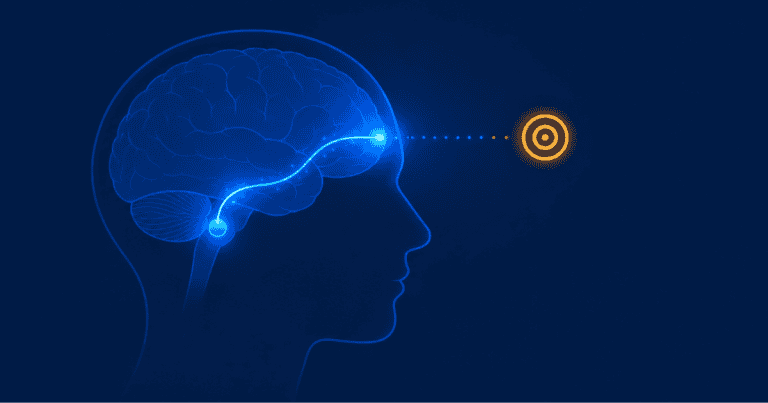
Tyrosine is converted to L-DOPA, then dopamine, then noradrenaline. The idea behind supplementing it is that during acute stress or heavy demand, the brain uses these messengers faster than usual, and extra tyrosine may help it keep up with production. The trials measured performance, not this depletion-and-refill process directly, so it remains a proposed mechanism.
A major review put it this way: tyrosine seems to enhance cognition mainly when dopamine or noradrenaline is temporarily depleted by stress or demand, and only when the underlying brain chemistry is intact. Its potential to treat clinical disorders seems limited (Jongkees et al., 2015). That is why its effects tend to appear under demand and fade without it.
L-tyrosine for stress: what did the trials find?
Cold. In a double-blind US Army study, 19 volunteers did two 90-minute cold-water immersions per session. Cold reduced correct responses on a working-memory task; with 150mg/kg of tyrosine before each immersion, performance was better than with placebo (Mahoney et al., 2007).
Sleep loss. During a night of continuous work, people given 150mg/kg of tyrosine showed a smaller decline on a psychomotor task and fewer lapses on a vigilance task than those on placebo, for about three hours. The authors called it a relatively benign treatment at that dose and said other doses and timings needed testing (Neri et al., 1995).
Heavy multitasking. A single dose of tyrosine improved working memory during a demanding multitask battery compared with placebo, without any external stressor (Thomas et al., 1999).
Military training. 21 cadets on a combat training course took a drink containing 2g of tyrosine or a carbohydrate drink with the same calories, five times a day. By day six, the tyrosine group did better on memory and tracking tasks and had lower systolic blood pressure (Deijen et al., 1999). The groups were small, and the tyrosine drink was also protein-rich, which complicates the comparison. An earlier laboratory study reported similar effects under stress (Deijen & Orlebeke, 1994).
Task switching. In 22 fasted volunteers, 2g of tyrosine in orange juice made switching between tasks faster when people had time to prepare (Steenbergen et al., 2015).
A rapid evidence assessment for the US military found that all six studies testing cognition during stressors such as sleep loss, extreme climate or combat training showed some benefit (Attipoe et al., 2015). These are small, mostly short studies, so the overall picture is promising but not settled.
When can tyrosine make things worse?
Older adults. In 17 adults aged 60 to 75 given 100, 150 or 200mg/kg, working-memory performance fell as the dose rose, most in those whose blood tyrosine rose most (van de Rest et al., 2017). In another study of 24 older adults, tyrosine produced no overall change in response inhibition, but the oldest participants showed a less favourable effect on one specific measure (Bloemendaal et al., 2018). These small studies support caution about individual differences rather than showing that tyrosine generally impairs cognition in older adults.
Some demanding tasks. In 70 healthy volunteers, 2g of tyrosine under high cognitive load worsened cognitive flexibility on a card-sorting test instead of improving it (Robson et al., 2019). So “demand” doesn’t guarantee a benefit; the type of stress and task seems to matter.
Mood. In 78 military personnel during severe survival-school stress, 300mg/kg of tyrosine increased anger compared with placebo, with no effect on other moods, cortisol or heart rate (Lieberman et al., 2015). It isn’t established as a treatment for anxiety or distress. If stress relief is the goal, sleep, workload and appropriate clinical care come first; other supplements have their own, separate evidence and risks, covered on pages such as Rhodiola and ashwagandha.
How much tyrosine did the studies use?
Most stress trials used single doses of about 100–150mg/kg, sometimes repeated, which is roughly 7–12g for a 70–80kg adult. Some cognitive-load studies used a flat 2g. That is far more than a typical capsule, so results at small supplement doses may differ. Doses were usually given about an hour before testing, and in several studies on an empty stomach or away from a protein meal. These are research doses, not a recommendation.
Studies used free-form L-tyrosine. N-acetyl-L-tyrosine (NALT) is sold as more soluble, but none of the trials here used it, so it isn’t clear that it reproduces their results.
Tyrosine claims ranked by evidence
🟢 Stronger or replicated evidence · 🟡 Limited, mixed or preliminary evidence · 🔴 Not established or not supported
Worked example — reading the evidence for one situation
Take a healthy adult with a demanding meeting after a night of poor sleep, wondering whether tyrosine would help.
Does the situation match the studies? Partly: sleep loss was studied, though over a full night awake and at doses of about 150mg/kg, much higher than a capsule.
Do the safety checks pass? Not on an MAO inhibitor, no thyroid condition or thyroid medicine, not on levodopa, not pregnant. If any applies, the answer is to skip it or ask a doctor.
What is a realistic expectation? At best, holding on to some of the vigilance lost to poor sleep, not performing better than when rested. Noticing nothing is a likely outcome, and the more reliable fix is the sleep itself; see sleep and cognitive performance.
The NeuroEdge Formula Tyrosine Self-Testing Framework
A way to think about tyrosine if a clinician agrees it is appropriate. Not a prescription.
1. Safety first
No MAO inhibitors. Check with a doctor if you have a thyroid condition, take thyroid medicine or levodopa, are pregnant, or have bipolar disorder or PKU.
2. Match the situation
The studies tested specific stressors: cold, sleep loss, heavy multitasking. Expect little on an ordinary day.
3. Don’t escalate
Research doses were large, and higher doses worsened working memory in older adults. More is not better.
4. Judge it fairly
One unblinded morning proves nothing either way. If you need it often, look at sleep and workload first.
Peter’s Testing Notes
A personal impression, not tracked data
I’ve tried L-tyrosine but don’t use it now. The clearest memory I have is a mistake: once I took tyrosine, Rhodiola and caffeine all before noon and ended up wired and anxious, unable to wind down until midnight, and foggy the next day. With three things at once, I couldn’t tell which was responsible, which is the case for adding one thing at a time; see the stacking guide.
An earlier version of this page described a regular routine of taking tyrosine before poor-sleep mornings and cold winter starts. That was not accurate and has been removed.
What to look for in a tyrosine product
If you and your doctor decide to try it, look for free-form L-tyrosine with the amount per serving clearly stated and independent testing or verifiable batch results. A plain powder or simple capsule makes it easier to know your dose than a blend. This page has no shopping links: for a commodity amino acid, the checklist matters more than the brand.
Who should not take tyrosine?
MAO inhibitors. Tyrosine may increase the blood-pressure-raising effect of MAO inhibitors such as phenelzine, tranylcypromine, isocarboxazid and selegiline; avoid the combination (Drugs.com). Discuss any MAOI use in the past two weeks with your doctor (WebMD). Direct clinical interaction data are limited, so treat these as precautions rather than proof that every combination causes harm, but don’t start tyrosine on these medicines without your prescriber’s advice.
Thyroid. Tyrosine is used to make thyroid hormone and may change thyroid hormone levels. It is contraindicated in hyperthyroidism and Graves’ disease, and calls for caution with levothyroxine or liothyronine (Drugs.com; WebMD).
Levodopa. Large amounts of amino acids can compete with levodopa for absorption and entry into the brain, as protein-rich meals can. If you take levodopa, talk to your neurologist before trying tyrosine; spacing the doses apart hasn’t been shown to prevent an interaction.
Others. Safety in pregnancy and breastfeeding isn’t established. People with phenylketonuria need specialist advice on amino acids, and because tyrosine feeds dopamine, people with bipolar disorder should ask first. Tyrosine generally seems well tolerated, but there isn’t enough research to know its common side effects, and interactions with medicines aren’t fully understood (WebMD).
Key takeaways
| → | Tyrosine is a building block for dopamine and noradrenaline, not a stimulant. |
| → | Small trials found it protected some cognition during cold, sleep loss and heavy multitasking, at large single doses. |
| → | It does little in ordinary conditions, and has worsened working memory in older adults and flexibility in one study. |
| → | It isn’t a calming supplement; it increased anger under severe stress. |
| → | Never combine it with MAO inhibitors, and check first if you have a thyroid condition or take thyroid medicine or levodopa. |
Frequently asked questions
Does L-tyrosine work if I’m not stressed?
Probably not much. The positive studies tested stressors such as cold, sleep loss and heavy multitasking; a major review concluded its benefits appear mainly in short-term stressful or demanding situations.
L-tyrosine or N-acetyl-L-tyrosine (NALT)?
The studies used free-form L-tyrosine. NALT is marketed as more soluble, but none of the trials here used it, so it isn’t clear it reproduces their results.
Can I take L-tyrosine every day?
The evidence doesn’t support daily use for focus, and in older adults higher doses were linked to worse working memory. Long-term daily safety hasn’t been well studied.
Does L-tyrosine help with ADHD or depression?
The direct evidence is thin, and a major review judged its potential for clinical disorders limited. It isn’t a substitute for proper assessment and treatment.
Is L-tyrosine safe?
It generally seems well tolerated short term, but side effects haven’t been well studied. Avoid it with MAO inhibitors and with an overactive thyroid, and check with a doctor if you take thyroid medicine or levodopa, or are pregnant.
Get “7 Days to a Sharper Brain” — Free
Peter Benson’s evidence-first starting framework
The habits with the strongest evidence first — sleep, movement, stress and learning — then how to add a single supplement and test whether it actually works for you.
No spam. Unsubscribe anytime.
⚕️ Educational Information, Not Medical Advice
This article is educational and is not medical advice. I’m a cognitive enhancement researcher, not a medical doctor. Tyrosine must not be combined with MAO-inhibitor medicines and may affect thyroid hormone. Consult a qualified healthcare provider before use, particularly if you have a thyroid condition, take thyroid medicine or levodopa, or are pregnant or breastfeeding.
Scientific references
1. Jongkees, B. J., Hommel, B., Kühn, S., & Colzato, L. S. (2015). Effect of tyrosine supplementation on clinical and healthy populations under stress or cognitive demands: a review. Journal of Psychiatric Research, 70, 50–57. PMID: 26424423
2. Attipoe, S., Zeno, S. A., Lee, C., et al. (2015). Tyrosine for mitigating stress and enhancing performance in healthy adult humans, a rapid evidence assessment of the literature. Military Medicine. PMID: 26126245
3. Mahoney, C. R., Castellani, J., Kramer, F. M., Young, A., & Lieberman, H. R. (2007). Tyrosine supplementation mitigates working memory decrements during cold exposure. Physiology & Behavior, 92(4), 575–582. PMID: 17585971
4. Neri, D. F., Wiegmann, D., Stanny, R. R., et al. (1995). The effects of tyrosine on cognitive performance during extended wakefulness. Aviation, Space, and Environmental Medicine, 66(4), 313–319. PMID: 7794222
5. Thomas, J. R., Lockwood, P. A., Singh, A., & Deuster, P. A. (1999). Tyrosine improves working memory in a multitasking environment. Pharmacology Biochemistry and Behavior, 64(3), 495–500. PMID: 10548261
6. Deijen, J. B., Wientjes, C. J., Vullinghs, H. F., Cloin, P. A., & Langefeld, J. J. (1999). Tyrosine improves cognitive performance and reduces blood pressure in cadets after one week of a combat training course. Brain Research Bulletin, 48(2), 203–209. PMID: 10230711
7. Deijen, J. B., & Orlebeke, J. F. (1994). Effect of tyrosine on cognitive function and blood pressure under stress. Brain Research Bulletin, 33(3), 319–323. DOI: 10.1016/0361-9230(94)90200-3
8. Steenbergen, L., Sellaro, R., Hommel, B., & Colzato, L. S. (2015). Tyrosine promotes cognitive flexibility: evidence from proactive vs. reactive control during task switching performance. Neuropsychologia, 69, 50–55. DOI: 10.1016/j.neuropsychologia.2015.01.022
9. van de Rest, O., Bloemendaal, M., de Heus, R., & Aarts, E. (2017). Dose-dependent effects of oral tyrosine administration on plasma tyrosine levels and cognition in aging. Nutrients. PMC5748730
10. Bloemendaal, M., Froböse, M. I., Wegman, J., et al. (2018). Neuro-cognitive effects of acute tyrosine administration on reactive and proactive response inhibition in healthy older adults. eNeuro, 5(2), ENEURO.0035-17.2018. DOI: 10.1523/ENEURO.0035-17.2018
11. Robson, A., Lim, L. W., & Aquili, L. (2019). Tyrosine negatively affects flexible-like behaviour under cognitively demanding conditions. Journal of Affective Disorders, 260, 329–333. DOI: 10.1016/j.jad.2019.09.031
12. Lieberman, H. R., Thompson, L. A., Caruso, C. M., et al. (2015). The catecholamine neurotransmitter precursor tyrosine increases anger during exposure to severe psychological stress. Psychopharmacology, 232(5), 943–951. DOI: 10.1007/s00213-014-3727-7
13. Drugs.com. Tyrosine (professional monograph). drugs.com
14. WebMD. Tyrosine: uses, side effects and interactions. webmd.com
Cognitive Enhancement Researcher | 18+ Years Independent Research
Peter is not a clinician; this guide is educational, not medical advice. It was rewritten in October 2026 to add the studies where tyrosine impaired performance, the military evidence assessment and interaction sources, and to remove a personal routine that was not accurate. Read about how NeuroEdge Formula evaluates research.
Last reviewed: October 2026 | Educational content only. Not medical advice.