
Dopamine Detox Myth
Educational content, not medical advice. This article discusses the neuroscience of dopamine and everyday habits for general education. If you are struggling with compulsive gambling, gaming, substance use or other behaviours that feel out of control, please speak to your doctor or a qualified mental-health professional.
Quick Summary
- A “dopamine detox” cannot lower, reset or flush your dopamine — that is not how the system works.
- Dopamine signals the gap between expected and actual reward, and drives wanting rather than enjoyment.
- The idea began as a behavioural technique for cutting specific compulsive habits, not as brain chemistry.
- Trials of cutting back a specific behaviour — such as social media — show real but modest benefits.
- Keep the useful part: add friction to cheap rewards and make focused work the easiest option.
The Dopamine Detox Myth: What Actually Works for Focus
By Peter Benson — Cognitive Enhancement Researcher | 18+ Years Independent Research · Last reviewed: September 2026
The dopamine detox promises something irresistible: spend a day avoiding your phone, snacks, music and even conversation, and your brain’s reward chemistry will reset, making hard work feel satisfying again. The neuroscience does not support that story. Dopamine is not a reservoir you drain with pleasure and refill with boredom. And yet many people who try a detox report that it helps. This article explains why both things can be true, separates the chemistry myth from the behavioural idea underneath it, and shows how to keep the part that works. It sits within our Focus & Productivity hub.
The short version: the name is wrong, the extreme versions are counterproductive, and the original idea — deliberately reducing specific, compulsive, easy-reward habits — is sound behavioural psychology.
Where the Dopamine Detox Came From
The concept was popularised by California psychiatrist Cameron Sepah, who based it on cognitive behavioural therapy. His aim was to help people cut back specific stimulus-driven behaviours by taking planned breaks from them — including emotional eating, excessive internet use and gaming, gambling and shopping, and thrill-seeking. As Harvard Medical School’s Peter Grinspoon notes, the viral version that followed misread the science: avoiding stimulating activities does not actually decrease dopamine, and avoiding people, eye contact and conversation was never part of Sepah’s idea (Grinspoon, Harvard Health).
In other words, the technique was about behaviour, and the word “dopamine” was shorthand. The problem began when the shorthand was taken literally.
What Dopamine Actually Does
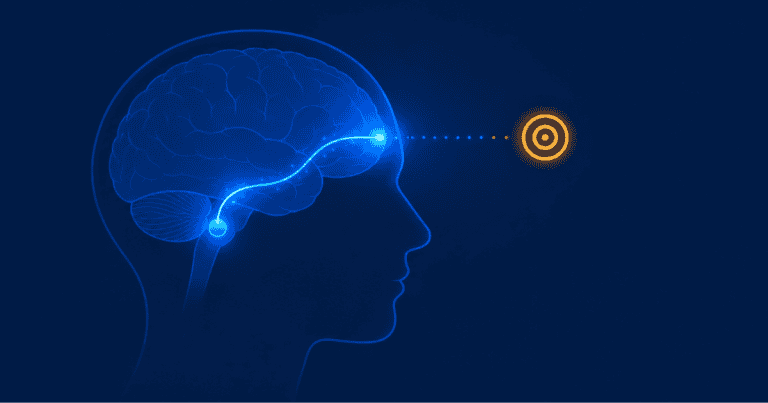
Dopamine is best understood as a learning and motivation signal, not a pleasure chemical. In landmark recordings, dopamine neurons fired a burst when a reward arrived unexpectedly. Once an animal learned that a cue predicted the reward, the burst moved to the cue and the reward itself no longer triggered it. And when an expected reward failed to arrive, dopamine activity dipped below its normal baseline at exactly the moment the reward should have come (Schultz et al., 1997). Dopamine, in this view, signals the difference between what you expected and what you got — a prediction error that drives learning.
A second line of research separates wanting from liking. Animals with severely depleted dopamine still showed normal pleasure reactions to sweet tastes; what they lost was the drive to pursue rewards. The authors concluded that dopamine systems are necessary for “wanting” incentives but not for “liking” them (Berridge & Robinson, 1998). Our guide to dopamine and motivation explores this in more depth.
Neither finding supports the idea that a day of boredom lowers dopamine or restores “sensitivity”. What they do support is something more useful: cues that reliably predict easy rewards become powerful pulls on attention, because the brain learns to want them.
Why a Detox Can Still Feel Like It Works
If the chemistry is wrong, why do people feel better after a detox? The most likely explanation is ordinary behavioural psychology. Removing a cue — the phone on the desk, the open social tab — removes the prompt that triggers the habit. Adding friction makes the easy option slightly harder. And with fewer high-intensity alternatives competing for attention, slower, more effortful activities such as reading or deep work face less competition. That is consistent with the prediction-error account of dopamine, but it is a change in what you learn to expect and pursue, not a chemical reset.
This is the logic of stimulus control, a long-standing behavioural technique, and it is what Sepah’s original version was built on. Our guide to digital distraction and the brain covers how interruptions and cues fragment attention.
What the Evidence Shows About Cutting Back
The strongest evidence comes from trials that reduced one specific behaviour rather than “all stimulation”. In a large randomised experiment, deactivating Facebook for the four weeks before the 2018 US midterm election reduced online activity, increased offline activities including socialising with family and friends, increased subjective wellbeing, and led to a large, lasting reduction in Facebook use after the experiment ended (Allcott et al., 2020). It also reduced factual news knowledge — a reminder that cutting back has trade-offs as well as benefits.
A smaller trial randomised 143 university students either to their usual social-media use or to a limit of 10 minutes per platform per day, about 30 minutes in total, for three weeks. The limited group showed significant reductions in loneliness and depression, with the largest benefits among those who started with more depressive symptoms (Hunt et al., 2018). It was a small, student-only sample, so the result is encouraging rather than conclusive.
Note what these studies tested: moderating a specific habit, not abstaining from pleasure in general. They support the behavioural core of the detox idea, not its dopamine explanation.
The Phone-on-the-Desk Claim: Weaker Than You’ve Heard
A widely shared 2017 study reported that the mere presence of your own smartphone reduces available cognitive capacity, even when it is switched off. It has become a staple of detox advice. But a pre-registered direct replication of its key experiment, with 383 participants, found no difference in performance across any phone location condition (Ruiz Pardo & Minda, 2022).
A meta-analysis of 22 studies did find an overall negative effect of phone presence, but a small one (g = −0.14). It was clearest for memory, weaker and non-significant for attention, and not significant in North American studies at all (Böttger et al., 2023). Putting your phone in another room is a sensible, cheap habit — but the benefit is more likely to come from removing the temptation to check it than from any invisible drain on your brain.
The Problem With Extreme Detoxes
Some versions of the trend go well beyond Sepah’s idea: no talking, no eye contact, no music, no exercise, even avoiding food for pleasure. Grinspoon describes this as treating dopamine as if it were a drug to be avoided, and points out that it deprives people of healthy activities on the basis of faulty science (Grinspoon, Harvard Health). Cutting out social contact, in particular, removes one of the better-supported protective habits for long-term brain health.
The practical risk is also simpler: an all-or-nothing day of deprivation is easy to fail and does little to change the cues you face on an ordinary Monday. Targeted, sustainable changes to your environment are more likely to last. For building the positive side — protected blocks of focused work — see our guide to deep work.
Worked Example: A One-Week Friction Audit
Here is the behavioural core of the idea turned into a method. It targets the specific easy-reward habits that pull you away from focused work, rather than depriving you of everything. This is a method illustration, not a clinical programme — anyone struggling with a genuinely compulsive behaviour should seek professional support.
Days 1–2 — Observe
Note each time you reach for an easy reward during work hours: the app or site, what you were doing just before, and how you felt (bored, stuck, anxious). Don’t change anything yet. The aim is to identify your two or three biggest cues.
Day 3 — Pick one habit
Choose the single habit that costs you most focused time. Following the trials, target one specific behaviour rather than “all screens”.
Day 4 — Add friction
Make that habit harder: log out of the app, move it off your home screen, put the phone in another room during focus blocks, or use a site blocker for set hours.
Day 5 — Make focus easier
Remove friction from the work you want to do: have the document open, the first step written down, and a fixed start time. The goal is for the hard task to be the easiest option available.
Days 6–7 — Replace, don’t just remove
Decide in advance what you will do when the urge appears during a break: a short walk, a glass of water, a few minutes of stretching. Then compare your notes with days 1–2 and keep what worked.
This is essentially what Sepah described: identify the specific behaviour, reduce the cues and access, and replace it with something better. If procrastination is the underlying pattern, our guide to the neuroscience of procrastination explains why the brain chooses the easy task, and how to shift that balance.
Evidence Hierarchy: What the Dopamine Detox Does and Doesn’t Do
| Rating | Claim | What the evidence shows |
|---|---|---|
| 🟢 Well supported | Dopamine encodes reward prediction and “wanting” | Landmark recordings of prediction-error signalling; dopamine depletion removed wanting but not liking |
| 🟢 Well supported | Cutting back one specific habit can improve wellbeing | Randomised trials of Facebook deactivation and social-media limits showed benefits, with trade-offs |
| 🟡 Real but qualified | A phone nearby drains your focus | Meta-analysis: small effect (g = −0.14), clearest for memory; a direct replication found no effect |
| 🟡 Real but qualified | Short breaks from easy rewards make hard work feel easier | Plausible through cue removal and learned expectations; supported by behavioural studies, not by trials of dopamine fasting itself |
| 🔴 Commonly claimed, not supported | That a detox lowers, resets or flushes your dopamine | Avoiding stimulation does not deplete or reset dopamine levels |
| 🔴 Commonly claimed, not supported | That dopamine is the “pleasure chemical” | Dopamine drives wanting and learning; enjoyment survives even severe dopamine depletion |
| 🔴 Commonly claimed, not supported | That avoiding people, music and conversation helps | Never part of the original idea, and it removes healthy, protective activities |
Named Protocol
The NeuroEdge Friction Protocol
1 · Name the habit: Target one specific easy-reward behaviour, not “all stimulation”.
2 · Find the cue: Note what triggers it — location, time, feeling, device.
3 · Add friction: Log out, move it, block it, or put it in another room during focus blocks.
4 · Remove friction from focus: Make the important task the easiest thing to start.
5 · Keep what’s healthy: Conversation, exercise, music and good food stay — this is not a deprivation diet.
Peter’s Testing Notes
I have never been persuaded by the strict, all-day version of the dopamine fast. A day of enforced boredom looks more like a test of willpower than a change in habit, and it does nothing about the cues waiting on an ordinary working day.
What has stuck is the targeted version: identifying the one or two habits that genuinely erode my focus and making them slightly harder to reach during work hours. The direction has been consistent — fewer reflexive checks and easier starts on hard work — but these are impressions, not measurements, and I’d encourage anyone to judge it by a simple written log rather than by how one day feels.
Illustrative Scenarios
Illustrative examples, not real individuals or testimonials. These are composite scenarios built to show how the evidence applies to different situations. Individual responses vary, and these are not typical results.
The inbox-and-feeds knowledge worker
Checks email and social feeds every few minutes and struggles to start long writing tasks. The evidence points to targeting the single most frequent habit during focus blocks, with blockers and phone placement, rather than an all-day fast.
The student preparing for exams
Considering a full weekend of total deprivation before revision. A better-supported approach is a sustainable limit on the specific apps that eat study time — similar to the 30-minutes-a-day design used in one trial — while keeping sleep, exercise and friends.
The person whose gaming feels out of control
Using a detox to manage a habit that is affecting work, sleep and relationships. This is where professional support matters: Sepah’s technique came from clinical practice, and compulsive patterns deserve proper assessment rather than a self-directed fad.
Key Takeaways
- A dopamine detox cannot lower or reset dopamine; the chemistry behind the trend is wrong.
- Dopamine signals prediction errors and wanting — which is why cues for easy rewards pull so hard on attention.
- Trials support cutting back specific habits, with modest benefits and some trade-offs.
- The phone-presence effect is small and inconsistently replicated; the bigger gain is removing the temptation to check.
- Keep the behavioural core — friction for cheap rewards, ease for focused work — and drop the extreme deprivation.
Frequently Asked Questions
Does a dopamine detox actually work?
It does not lower or reset dopamine, so the chemical claim is wrong. But reducing specific easy-reward habits can help, because it removes cues and makes focused work face less competition. Trials of cutting back social media found modest improvements in wellbeing.
What does dopamine actually do?
Dopamine acts mainly as a learning and motivation signal. It responds to the difference between the reward you expected and the reward you got, and it drives wanting rather than enjoyment.
Is dopamine the pleasure chemical?
No. Research in animals with severely depleted dopamine found they still enjoyed sweet tastes but lost the drive to pursue rewards. Dopamine is more about wanting than liking.
Should I keep my phone out of the room when I work?
It is a sensible, low-cost habit. The evidence that a phone’s mere presence drains focus is weaker than often claimed — a meta-analysis found a small effect and a direct replication found none — but removing it also removes the temptation to check.
What should I do instead of a dopamine detox?
Target one specific habit that costs you focus, add friction to it, remove friction from the work you want to do, and plan what you will do instead when the urge appears. Keep healthy pleasures like conversation, exercise and music.
Get “7 Days to a Sharper Brain” — Free
Peter Benson’s personal daily protocol, rebuilt from 18 years of testing.
- ✓ Day 1 — Sleep foundation + Magnesium Glycinate
- ✓ Day 2 — L-Theanine + Caffeine focus stack
- ✓ Day 3 — Brain nutrition timing for stable energy
- ✓ Day 4 — BDNF movement protocol
- ✓ Day 5 — 90-60-30 sleep environment sequence
- ✓ Day 6 — Stress resilience + cognitive load framework
- ✓ Day 7 — Neuroplasticity, Lion’s Mane + your complete assembled daily stack
Join 2,000+ readers optimising their cognitive performance. Unsubscribe anytime.

Peter Benson
Cognitive Enhancement Researcher | 18+ Years Independent Research
Peter reviews the clinical evidence behind cognitive-performance supplements and protocols, separating what the research supports from what the marketing claims. This content is educational and not medical advice.
Last reviewed: September 2026
References
- Grinspoon P. Dopamine fasting: misunderstanding science spawns a maladaptive fad. Harvard Health Blog, Harvard Medical School. 26 February 2020. View source
- Schultz W, Dayan P, Montague PR. A neural substrate of prediction and reward. Science. 1997;275(5306):1593–1599. PMID: 9054347. View source
- Berridge KC, Robinson TE. What is the role of dopamine in reward: hedonic impact, reward learning, or incentive salience? Brain Res Rev. 1998;28(3):309–369. View source
- Ruiz Pardo AC, Minda JP. Reexamining the “brain drain” effect: a replication of Ward et al. (2017). Acta Psychol (Amst). 2022;230:103717. PMID: 36007374. View source
- Böttger T, Poschik M, Zierer K. Does the brain drain effect really exist? A meta-analysis. Behav Sci (Basel). 2023;13(9):751. PMID: 37754029. View source
- Allcott H, Braghieri L, Eichmeyer S, Gentzkow M. The welfare effects of social media. Am Econ Rev. 2020;110(3):629–676. doi:10.1257/aer.20190658. View source
- Hunt MG, Marx R, Lipson C, Young J. No more FOMO: limiting social media decreases loneliness and depression. J Soc Clin Psychol. 2018;37(10):751–768. doi:10.1521/jscp.2018.37.10.751. View source