Alcohol and the Brain
Educational information, not medical advice. This article summarises research on alcohol and cognition; it isn’t personalised guidance, and it isn’t a judgement of anyone’s choices. If you’re concerned about your own or someone else’s drinking, support is available — speak with your doctor or a dedicated alcohol support service.
| The story has changed | The old “moderate drinking is good for you” idea (the J-curve) has largely fallen apart — it rested on confounded data. For the brain specifically, no clearly safe level has been identified. |
| Heavy drinking | Clearly and seriously harms the brain — shrinkage, cognitive impairment, and alcohol-related dementia. This part isn’t controversial. |
| Even moderate | Moderate drinking is associated with measurable brain changes, dose-dependently. In one study, drinking 14–21 units a week tripled the odds of hippocampal atrophy, with no protective effect of light drinking (Topiwala 2017). |
| Keep it in proportion | At low intake the effects are real but small, and a small brain change isn’t the same as noticeable impairment. This isn’t “one glass causes dementia” — but there’s no brain benefit, and less is better. |
| The everyday cost | Even a couple of evening drinks disrupt your sleep, which quietly taxes next-day thinking — often the most noticeable cognitive effect of moderate drinking. |
Alcohol and the Brain: How Much Really Affects Cognition?
By Peter Benson, Cognitive Enhancement Researcher | 18+ Years Independent Research · Last Updated: September 2026
For years, the comfortable consensus was that a moderate amount of alcohol — the proverbial glass of red wine — might actually be good for you, including your brain. That reassuring story has quietly collapsed. As the research has improved, the “moderate drinking protects you” narrative has been substantially overturned, and for the brain specifically, scientists have struggled to find any level of drinking that’s clearly safe. This isn’t a call for alarm or abstinence lectures; it’s an honest update on what the current evidence actually shows — which is more sobering, and more nuanced, than either the old cheerful story or a simple “alcohol is poison” headline.
This guide walks through how the science changed, what heavy and moderate drinking each do to the brain, how worried you should genuinely be, and the everyday cognitive cost most people overlook. It’s part of the wider Brain Health & Longevity picture, and it’s written to inform your own choices, not to make them for you.
The Old Story — and Why It Fell Apart
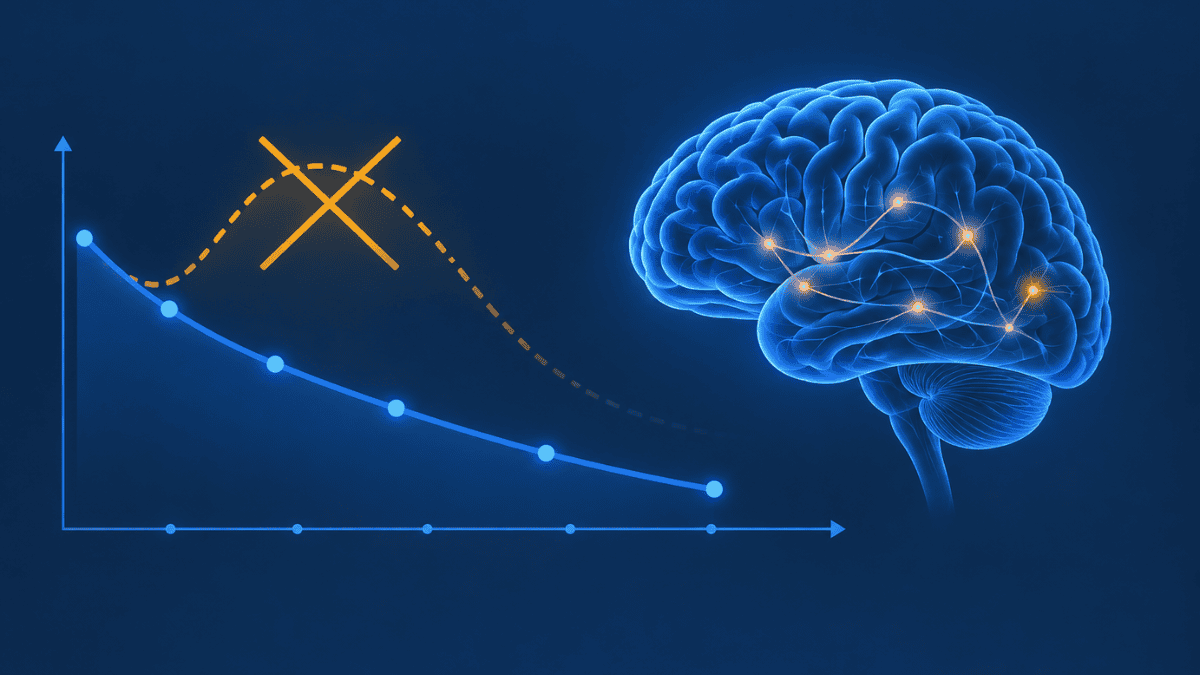
The “moderate drinking is healthy” idea came from a real observation: in many studies, moderate drinkers appeared to have better health outcomes — including lower dementia risk — than both heavy drinkers and non-drinkers. Plotted on a graph, risk formed a “J-curve,” dipping lowest for moderate drinkers. It was an appealing finding, and the wine industry was happy to amplify it. The problem is that it was largely an artefact of how the studies were built.
Two flaws did most of the damage. The first is the “sick quitter” effect: the non-drinker comparison groups often included people who had stopped drinking because they were already ill — making abstainers look unhealthy for reasons that had nothing to do with the benefits of alcohol. The second is healthy-drinker confounding: moderate drinkers tend to be wealthier, more socially connected and healthier in general, so their better outcomes reflected their lifestyles, not their wine. When newer studies accounted for these problems — and when researchers used genetic methods that sidestep this kind of confounding — the apparent protective effect faded. The J-curve, for the brain at least, was mostly a mirage.
Heavy Drinking: The Clear, Serious Harm
Start with the part no one disputes. Chronic heavy drinking is unambiguously bad for the brain. It’s associated with substantial brain-volume loss, meaningful cognitive impairment, and its own category of alcohol-related dementia. At the extreme, heavy drinking combined with the poor nutrition that often accompanies it can cause Wernicke-Korsakoff syndrome — a severe, sometimes irreversible memory disorder driven by thiamine (vitamin B1) deficiency. Excessive alcohol is also a recognised, modifiable risk factor for dementia in major expert reviews.
The dose-response is stark. In a 30-year study of brain imaging, Topiwala and colleagues (2017) found that people drinking more than 30 units a week had nearly six times the odds of hippocampal atrophy — shrinkage of a brain region central to memory — compared with abstainers. Heavy drinking harming the brain isn’t the controversial or newsworthy part of this topic. What’s changed, and what deserves attention, is how far down the drinking scale measurable effects now appear to reach.
Even Moderate Drinking Shows Up in the Brain
This is the genuinely new and uncomfortable finding. In that same 2017 study, the effect wasn’t confined to heavy drinkers. People drinking at moderate levels — 14 to 21 units a week, roughly a large glass of wine a night — had about three times the odds of hippocampal atrophy compared with abstainers. And critically, there was no protective effect of light drinking (under 7 units a week) over not drinking at all. The old idea that a little is better than none simply didn’t hold up.
Larger studies have reinforced the pattern. Drawing on brain scans from tens of thousands of UK Biobank participants, Topiwala and colleagues (2022) found that alcohol intake was associated with reductions in both grey and white matter, in a dose-dependent way that began at low levels and showed no clear safe threshold — every extra drink tracked with a little more. The consistent message across this newer, better-controlled research is that the brain doesn’t seem to have a “free” allowance of alcohol. The effects scale with the amount, all the way down.
How Worried Should You Actually Be?
Here’s where honesty has to cut against alarm as well as complacency. Yes, the evidence now points to no clearly safe level — but that does not mean a single glass of wine gives you dementia, and it’s important not to overstate what these findings show. The brain changes seen at low intake are real but small, and a modest reduction in brain volume on a scan is not the same as noticeable cognitive impairment in daily life. The 2017 study, tellingly, found the structural changes without a matching drop in most cross-sectional cognitive tests. So the effect at light-to-moderate levels is better understood as a subtle, long-term risk signal than as immediate damage you’ll feel.
The honest, proportionate conclusion is this: there is no good evidence that drinking benefits your brain, and there is reasonable evidence that it carries some cost that rises with the amount, with no safe floor identified. That reframes the decision. It doesn’t demand panic or abstinence; it just removes “it’s good for me” from the ledger entirely and replaces it with “less is better for my brain, and none is the lowest-risk option.” What you do with that is a personal choice — but it should be an informed one, made without the outdated health halo alcohol used to enjoy. It fits the broader logic of reducing modifiable risk where you reasonably can — the same logic that makes treating hearing loss or managing blood sugar worthwhile: no single lever decides your brain’s future, but each one you can adjust is worth adjusting.
The Everyday Cost: Sleep and Next-Day Cognition
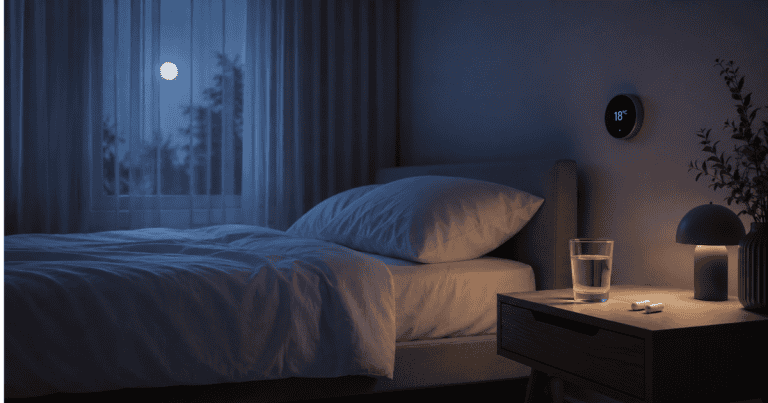
While the long-term brain-volume story plays out over decades, there’s a much more immediate cognitive cost to drinking that most people underrate: sleep. Alcohol is a popular nightcap because it helps you fall asleep faster — but it then degrades sleep quality badly, fragmenting the night and suppressing REM sleep, the stage important for memory and emotional processing. Even a couple of evening drinks can measurably worsen your sleep, and because sleep is the foundation of next-day thinking, that translates directly into feeling foggier, less focused and more forgetful the following day.
For many people, this indirect route — alcohol wrecking sleep, poor sleep dulling cognition — is the most noticeable brain effect of moderate drinking by far, well before any long-term structural change. At higher doses the acute effects are more obvious still: alcohol impairs the formation of new memories, which at the extreme produces the blackouts where events simply aren’t encoded. It’s also worth noting that people often drink to cope with stress — and the resulting poor sleep and rebound anxiety can quietly worsen the very problem they were trying to soothe.
What This Means for You
The practical takeaways are straightforward and, deliberately, not preachy. First, drop the idea that drinking does your brain any favours — the “red wine is good for you” line is outdated, and there’s no cognitive reason to drink. Second, for the brain, less is genuinely better, with no safe threshold identified, so reducing intake — in frequency or amount — is a reasonable lever if brain health matters to you. Third, heavy drinking is in a different category altogether: the harm there is clear and serious, and cutting down carries the biggest benefit.
If you do drink, the single most actionable point is probably the sleep one: keeping alcohol away from the hours before bed protects the sleep that your next-day cognition depends on. And there’s no need to frame any of this as all-or-nothing — like most of brain health, it’s about direction and dose, not perfection. Finally, and importantly: if any of this prompts worry about your own drinking, that’s worth taking seriously and easy to get help with — a conversation with your doctor is a good, judgement-free place to start.
Consider someone who has a glass or two of wine most evenings and has long assumed it’s fine — even mildly beneficial — for their brain. Here’s how the current evidence reframes that, without demanding they quit.
The outdated frame: “Moderate drinking is heart-healthy and probably fine for my brain, so a couple of glasses a night is a positive or at worst neutral habit.” Two glasses most nights lands around 14 or more units a week — squarely in the range the 2017 study linked to roughly triple the odds of hippocampal atrophy, and with the “it’s protective” premise now removed.
The updated frame: “There’s no brain benefit here to bank, there’s a small long-term cost that scales with how much I drink, and — the part I actually notice — it’s fragmenting my sleep and making me foggier the next morning.” That doesn’t have to mean stopping. It might mean fewer nights, smaller pours, or simply moving the drink earlier so it’s out of the system before sleep.
The point of the example isn’t guilt — it’s accuracy. Once “good for me” is off the table and the sleep cost is visible, the same person can make a genuinely informed decision about a habit they’d previously filed under “healthy.” Some will change little; some will cut back; either way, they’re choosing with the real evidence rather than the marketing.
Alcohol and the Brain — Evidence Ranked
🟢 Well supported | 🟡 Real but qualified | 🔴 Commonly claimed, not supported
| Claim | Evidence | Basis |
|---|---|---|
| Heavy drinking harms the brain (atrophy, impairment, dementia) | 🟢 Well established | Consistent; heaviest drinkers ~6-fold hippocampal atrophy odds (Topiwala 2017) |
| Moderate drinking is associated with adverse brain changes | 🟢 Supported | 14–21 units/wk about 3-fold atrophy odds; dose-dependent (Topiwala 2017, 2022) |
| Even moderate evening drinking disrupts sleep & next-day cognition | 🟢 Well supported | Fragments sleep, suppresses REM; the most noticeable everyday effect |
| A single drink causes noticeable brain damage | 🟡 Overstated | Low-intake changes are small; a risk signal, not felt impairment |
| Moderate/light drinking protects the brain (the J-curve) | 🔴 Not supported | Confounded (sick-quitter/healthy-drinker bias); no protective light-drinking effect |
| There’s a known “safe” level of alcohol for the brain | 🔴 None identified | Effects scale down to low intake with no clear threshold (Topiwala 2022) |
The NeuroEdge Alcohol Stance
An honest, non-preachy way to think about drinking and your brain. Updated September 2026.
There’s no brain benefit to drinking — the “good for you” story is outdated. Take that off the ledger entirely.
No safe brain threshold has been found, and effects scale with amount. Reducing frequency or quantity is a real lever — direction over perfection.
If you drink, keep it away from the hours before bed. The sleep hit is the most noticeable next-day cognitive cost of moderate drinking.
Heavy drinking carries clear, serious harm, and cutting down helps most. If you’re worried about your drinking, your doctor is a good, judgement-free place to start.
Peter’s Notes — Alcohol
First-person, n=1 — impressions, not measurements · Updated September 2026
Alcohol is a topic where I had to update against something I’d have preferred to keep believing. For a long time I filed a glass of wine under “harmless, maybe even helpful,” and the collapse of the J-curve was an unwelcome but necessary correction. I try to follow the evidence even when it takes away a comfortable story, and this was one of those times.
The change that actually stuck for me, though, wasn’t the long-term brain-volume research — it was the sleep connection, because that one I can feel. Once I paid attention, the link between an evening drink and a foggier, less sharp next morning was obvious and consistent. That immediate, personal feedback did more to shift my habits than any dementia statistic ever could, precisely because I wasn’t relying on a study to notice it.
So my honest stance is un-dramatic: I don’t treat alcohol as a brain tool of any kind, I keep it well away from bedtime when I do drink, and I hold the whole thing as a “less is better” dial rather than a moral pass/fail. No health halo, no panic — just an accurate picture, and a decision that’s mine to make with it. (These notes are direction-only impressions, not measured results.)
Key Takeaways — Alcohol and the Brain
| ✓ | The “moderate drinking is good” story is outdated. The J-curve was largely an artefact of confounding (sick-quitter and healthy-drinker bias). Better-controlled research finds no protective effect for the brain. |
| ✓ | Heavy drinking clearly harms the brain. Volume loss, cognitive impairment and alcohol-related dementia are well-established; the heaviest drinkers had ~6-fold the odds of hippocampal atrophy (Topiwala 2017). This part isn’t in doubt. |
| ✓ | Even moderate drinking shows up, with no safe floor. 14–21 units a week tripled hippocampal-atrophy odds, and larger studies find dose-dependent brain changes down to low intake (Topiwala 2017, 2022). |
| ✓ | Keep it proportionate. At low intake the effects are small and don’t mean immediate impairment — this isn’t “one glass causes dementia.” But there’s no brain benefit, so “good for me” simply comes off the table. |
| ✓ | The sleep cost is what you’ll feel. Even a couple of evening drinks fragment sleep and dull next-day thinking — the most noticeable effect of moderate drinking. Keep alcohol away from bedtime, and less is better overall. |
Alcohol and the Brain — FAQ
Is moderate drinking bad for your brain?
The current evidence suggests it carries some cost, and no clear benefit. In a 30-year imaging study, drinking 14–21 units a week (roughly a large glass of wine a night) was linked to about three times the odds of hippocampal atrophy, with no protective effect from light drinking (Topiwala et al. 2017), and larger studies show dose-dependent brain changes down to low intake. Importantly, at these levels the effects are small — a subtle long-term risk signal, not immediate damage you’ll notice. So “moderate drinking is bad” overstates it, but “moderate drinking is good for the brain” is no longer supported.
Isn’t a glass of red wine good for you?
That idea has largely fallen apart, at least for the brain. It came from observational studies where moderate drinkers looked healthier — but that was mostly confounding: the non-drinker comparison groups often included people who’d quit because they were already ill (the “sick quitter” effect), and moderate drinkers tend to be healthier and better-off in general. When researchers corrected for these issues and used genetic methods that avoid the confounding, the apparent protective effect faded. There’s no good evidence that red wine, or any alcohol, benefits your brain.
Is there a safe amount of alcohol for the brain?
No clearly safe level has been identified for brain structure. Studies find that alcohol’s associated brain changes scale down to low intake without an obvious threshold below which risk disappears — every extra drink tracks with a little more (Topiwala et al. 2022). That said, “no safe level” doesn’t mean any drinking is dangerous in a way you’ll feel; at low intake the effects are small. The honest framing is that less is lower-risk and none is lowest-risk, so it’s a dial to turn down if brain health matters to you, not a cliff edge.
How does alcohol affect memory and next-day thinking?
In two ways. Directly, alcohol impairs the brain’s ability to form new memories while you’re drinking — which at high doses produces blackouts, where events simply aren’t encoded. Indirectly, and more relevant to everyday moderate drinking, alcohol badly disrupts sleep: it may help you fall asleep but then fragments the night and suppresses REM sleep, so you wake less rested and think less clearly the next day. For most moderate drinkers, this sleep-driven next-day fog is the most noticeable cognitive effect — well before any long-term change.
If I don’t want to stop drinking, what’s the most useful thing to change?
Probably two things. First, timing: keep alcohol away from the hours before bed so it doesn’t wreck the sleep your next-day cognition depends on — this is the change with the most immediate, noticeable payoff. Second, amount and frequency: since the effects scale with how much you drink and there’s no safe floor, gently reducing either is a real benefit, and it doesn’t have to be all-or-nothing. And if you find cutting back harder than expected, that’s genuinely worth mentioning to your doctor — it’s a common, treatable thing, and asking for help is a sign of good sense, not weakness.
Get “7 Days to a Sharper Brain” — Free
Peter Benson’s personal daily protocol, rebuilt from 18 years of testing
Seven evidence-based interventions, in the exact order that makes each one more effective — from sleep foundation to neuroplasticity and Lion’s Mane.
Join 2,000+ readers optimising their cognitive performance. Unsubscribe anytime.
Scientific References
- Topiwala A, Allan CL, Valkanova V, et al. (2017). Moderate alcohol consumption as risk factor for adverse brain outcomes and cognitive decline: longitudinal cohort study. BMJ, 357:j2353. DOI: 10.1136/bmj.j2353
- Topiwala A, Ebmeier KP, Maullin-Sapey T, et al. (2022). Alcohol consumption and MRI markers of brain structure and function: cohort study of 25,378 UK Biobank participants. NeuroImage: Clinical, 35:103066. Read on PMC
- Sabia S, Fayosse A, Dumurgier J, et al. (2018). Alcohol consumption and risk of dementia: 23 year follow-up of Whitehall II cohort study. BMJ, 362:k2927. DOI: 10.1136/bmj.k2927

Peter Benson
Cognitive Enhancement Researcher | 18+ Years Independent Research
Peter has spent 18+ years following the evidence on cognition even when it overturns a comfortable belief. He reads the alcohol research the way it now reads — no brain benefit, a dose-dependent cost with no safe floor, and a real everyday hit to sleep — presented without alarm or moralising.
Last reviewed: September 2026 | Educational content only. Not medical advice.