
The Neuroscience of Learning: How Long-Term Memory Is Forme
Medical Disclaimer: The information in this article is for educational purposes only and does not constitute medical advice. Always consult a qualified healthcare provider before beginning any supplement regimen or making significant changes to your health protocols. Individual responses vary. This guide reflects published research and 18+ years of personal experience and does not substitute for professional medical evaluation.
Most people learn the way they were taught to learn — by re-reading notes, highlighting text, and reviewing material repeatedly until it feels familiar. The problem is that familiarity and memory are neurologically different things. Familiarity is a recognition signal that fires when previously encountered information is processed again — it requires no retrieval, no reconstruction, and produces no strengthening of the underlying memory trace. Memory is the ability to reconstruct information independently, from scratch, without environmental cues. The strategies that produce familiarity feel productive. The strategies that build memory are often uncomfortable, cognitively demanding, and distinctly unsatisfying in the moment — which is precisely why the research shows they work, and why most people avoid them.
Understanding the neuroscience of how long-term memories are actually formed — at the cellular level, at the systems level, and at the neurochemical level — is what allows learning strategies to be chosen intelligently rather than by habit or intuition. It explains why certain widely used study techniques consistently underperform despite the effort invested in them, why the most effective learning strategies feel harder than passive review, and why the biological variables of sleep, stress, and neurochemical state are as important to learning outcomes as the study strategies themselves.
This guide covers the complete neuroscience of learning: from the cellular mechanism of long-term potentiation through the systems-level processes of memory consolidation, to the neurochemical conditions that determine how effectively each stage of learning operates. It builds directly on the foundations in the complete memory guide and connects to the practical protocols in the spaced repetition guide, the sleep and memory consolidation guide, and the supplementation strategies throughout the Nootropics hub.
The Cellular Mechanism of Learning: Long-Term Potentiation
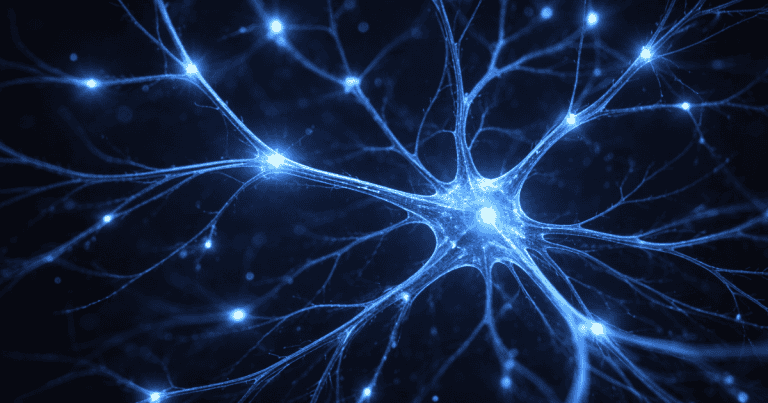
Learning begins at the synapse — the junction between two neurons where information is transmitted through neurotransmitter release. The cellular mechanism that converts a transient synaptic event into a lasting structural change — and therefore into a durable memory — is long-term potentiation (LTP), one of the most important discoveries in modern neuroscience.
How LTP Works: The Coincidence Detection Mechanism
Research on NMDA receptors and long-term potentiation established that LTP is triggered by a specific coincidence detection mechanism at the NMDA receptor — a glutamate receptor that acts as a molecular gate for synaptic strengthening. The NMDA receptor requires two simultaneous conditions to open: glutamate binding from the pre-synaptic neuron, and sufficient depolarization of the post-synaptic membrane. This dual requirement means that NMDA receptor activation — and therefore LTP — only occurs when two neurons are firing simultaneously, implementing at the molecular level what Donald Hebb proposed theoretically: neurons that fire together wire together.
When both conditions are met and the NMDA receptor opens, calcium floods into the post-synaptic neuron, triggering a cascade of molecular events that ultimately produce two forms of synaptic strengthening. In the short term, existing AMPA receptors at the synapse are phosphorylated, increasing their conductance and making the synapse more responsive to future signals. Over hours, gene expression changes drive the synthesis of new proteins and the physical growth of additional synaptic connections — converting the transient electrical event of neural firing into the permanent structural change that constitutes a durable long-term memory.
Why Attention Is Neurologically Mandatory for Learning
The NMDA receptor’s dual activation requirement explains why attention is not merely helpful for learning — it is neurologically mandatory. Sufficient post-synaptic depolarization to open the NMDA receptor requires strong, coherent activity from multiple inputs converging on the post-synaptic neuron simultaneously — precisely the pattern that focused attention produces through cholinergic modulation of cortical and hippocampal circuits. Research on acetylcholine and synaptic plasticity established that acetylcholine release during focused attention enhances post-synaptic depolarization and increases NMDA receptor sensitivity — effectively lowering the threshold for LTP induction in attended circuits while simultaneously suppressing activity in unattended circuits.
The practical implication is direct and non-negotiable: divided attention during learning — reading while checking email, listening while scrolling, studying with a phone visible — produces insufficient cholinergic signal and insufficient post-synaptic depolarization for robust LTP. The information may reach the sensory cortex. It does not become a durable memory. The neurological cost of divided attention is not reduced efficiency — it is fundamentally different memory architecture, producing weak traces that are vulnerable to forgetting within hours rather than strong traces that survive weeks and months.
The Role of Dopamine in Memory Encoding: Novelty and Reward
LTP at the hippocampal synapse is not sufficient on its own to produce long-term memory — it requires a second signal that marks the encoded information as worth retaining. That signal is dopamine. Research on dopamine and hippocampal long-term memory formation found that dopamine release in the hippocampus — triggered by novelty, reward, and emotional significance — converts early-phase LTP (lasting hours) into late-phase LTP (lasting days and weeks) through the activation of protein kinase signaling cascades that drive the gene expression changes underlying structural synaptic growth.
This is the neurobiological explanation for why information learned in emotionally significant contexts, during periods of genuine curiosity, or immediately following a surprising or novel experience is retained dramatically better than information learned in routine, emotionally neutral contexts. The dopamine signal from novelty and reward is not a motivational adjunct to learning — it is a biological switch that determines whether LTP becomes a durable structural memory or fades within hours. Engineering curiosity, connecting learning to personally meaningful goals, and creating genuine interest in the material being studied are not motivational strategies — they are neurobiological memory formation strategies.
Systems Consolidation: How the Brain Builds Long-Term Memory Networks
LTP at individual synapses is the cellular foundation of memory. But durable long-term memories are not stored at single synapses — they are distributed across large-scale neural networks through a process of systems consolidation that occurs primarily during sleep and unfolds over days, weeks, and months after the initial encoding event.
The Hippocampus as Memory Index
The hippocampus does not store long-term memories — it indexes them. Research on hippocampal-cortical memory consolidation established that during encoding, the hippocampus rapidly forms a compressed representation of the experience — binding together the distributed cortical activity patterns that represent the different features of the memory (visual, auditory, emotional, semantic) into a coherent episodic trace. This hippocampal index serves as a pointer to the distributed cortical representations, allowing the complete memory to be reconstructed by reactivating the cortical patterns from the hippocampal binding signal.
During the initial days and weeks after encoding, memories remain hippocampus-dependent — their retrieval requires hippocampal reactivation of the cortical index. Over time, through repeated reactivation during sleep and subsequent retrieval, the cortical representations become increasingly directly connected to each other — gradually reducing hippocampal dependence and producing the neocortically stored long-term memories that persist for years or decades. This gradual shift from hippocampal to cortical storage is systems consolidation, and it is why recently learned information is more vulnerable to disruption (by sleep deprivation, stress, head injury) than information learned months or years previously.
Sleep and the Consolidation Dialogue
Systems consolidation occurs primarily during sleep — specifically through a precisely choreographed interaction between hippocampal sharp-wave ripples, thalamo-cortical sleep spindles, and cortical slow oscillations during non-REM slow-wave sleep. Research on sleep spindles and memory consolidation found that sleep spindles — bursts of 12–15 Hz oscillatory activity generated by the thalamus during NREM sleep — coordinate the hippocampal replay of encoded memories with periods of cortical excitability, enabling the hippocampal index to strengthen its connections to the distributed cortical representations that constitute the long-term memory network.
REM sleep serves a complementary consolidation function — integrating newly encoded memories with existing knowledge structures, extracting abstract rules and patterns from episodic experiences, and processing emotional memories by replaying them in a reduced noradrenergic environment that preserves the informational content while reducing the emotional intensity. The result of a complete sleep cycle is not merely rest — it is a qualitatively different memory: more integrated with existing knowledge, more abstracted to general principles, and more durable against subsequent interference.
The Reconsolidation Window: Why Retrieval Strengthens Memory
Every time a memory is retrieved, it re-enters a labile state — a brief window of vulnerability in which the memory trace is temporarily destabilized before being restabilized through a process of reconsolidation. Research on memory reconsolidation established that this reconsolidation process is not merely a return to the original memory state — it is an updating process in which new information can be integrated into the retrieved memory, errors can be corrected, and the memory’s neural connections can be strengthened through the same LTP mechanisms that produced the original encoding. Each successful retrieval — particularly retrieval that requires effortful reconstruction — produces a stronger, more connected, and more durable memory than the one that was retrieved. This is the neurobiological mechanism underlying the testing effect and the superiority of retrieval practice over passive review.
The Neurochemical Conditions for Optimal Learning
LTP induction, systems consolidation, and reconsolidation all depend on specific neurochemical conditions — conditions that can be deliberately optimized through behavioral choices, supplementation strategies, and lifestyle variables. Understanding these conditions explains why learning in suboptimal states produces qualitatively inferior memories even when identical study strategies are applied.
Cortisol: The Learning Antagonist
Acute mild stress — producing moderate cortisol elevation — can slightly enhance encoding of emotionally significant information through the arousal and norepinephrine mechanisms that mark information as important. Chronic stress and high acute cortisol, however, are among the most damaging neurobiological conditions for learning. Research on cortisol and hippocampal function found that elevated glucocorticoids reduce hippocampal NMDA receptor sensitivity — directly impairing the LTP induction mechanism that memory formation requires. Chronic cortisol exposure additionally suppresses hippocampal neurogenesis, reduces dendritic branching in CA3 hippocampal neurons, and impairs the hippocampal-cortical dialogue during sleep that consolidation depends on. Stress management — through the Ashwagandha and mindfulness protocols throughout this site — is therefore directly and specifically a learning optimization strategy.
BDNF: The Molecular Switch for Neuroplastic Learning
Brain-derived neurotrophic factor (BDNF) is the primary molecular signal for synaptic growth and neuroplasticity — the neurotrophic factor that converts LTP from a functional strengthening of existing synapses into the structural growth of new synaptic connections. Research on BDNF and hippocampal neuroplasticity established that BDNF is necessary for late-phase LTP — the structural memory consolidation that produces durable long-term memories — and that BDNF levels are directly modulated by aerobic exercise, sleep quality, cognitive challenge, caloric restriction, and several supplementation compounds. Consistent aerobic exercise is the most potent available BDNF upregulator — producing acute BDNF elevation of 200–300% that persists for hours post-exercise, creating a post-exercise neuroplasticity window during which learning that occurs is encoded with greater structural strength than learning at rest.
Acetylcholine: The Attentional Gate to Memory Formation
As established above, acetylcholine is the neurochemical gate that determines whether attended information undergoes the LTP required for strong memory formation. Research on the cholinergic system and learning found that acetylcholine release during learning serves three simultaneous functions: it enhances the signal-to-noise ratio of sensory cortical processing (making attended information more distinctly represented), it increases hippocampal NMDA receptor sensitivity (lowering the threshold for LTP induction), and it suppresses recurrent cortical activity (reducing interference from previously stored memories during new encoding). Optimizing acetylcholine availability during learning — through Alpha-GPC supplementation and the attentional focus strategies from the Focus hub — directly supports all three functions simultaneously.
Free Download
Get the 7-Day Brain Optimization Protocol
The evidence-based diet, sleep, and supplement framework for your first week of cognitive enhancement — completely free.
Join 2,000+ readers optimizing their cognitive performance. Unsubscribe anytime.
Applying the Neuroscience: What Effective Learning Actually Looks Like
The neuroscience of learning is not merely academically interesting — it has direct, specific implications for how learning sessions should be structured to produce the strongest possible memory formation. Every recommendation below is derived directly from the neurobiological mechanisms described above.
Optimize the Pre-Learning Neurochemical State
Before any significant learning session, the neurochemical environment should be deliberately prepared. Aerobic exercise 30–60 minutes before a learning session produces BDNF elevation and dopamine-norepinephrine increases that directly enhance LTP induction capacity during the session. The caffeine and L-theanine combination taken 60–90 minutes before the session optimizes PFC catecholamine signaling, supporting the attentional focus that cholinergic LTP gating requires. Alpha-GPC taken 30–60 minutes before the session provides the acetylcholine precursor that directly supports the cholinergic attentional enhancement of NMDA receptor function. This pre-learning preparation takes 10 minutes and produces a measurably different neurochemical environment for encoding than an unprepared learning session.
Eliminate Divided Attention Completely
Given the neurological dependency of LTP on sufficient post-synaptic depolarization through cholinergic attention mechanisms, divided attention is not merely inefficient during learning — it is neurologically incompatible with strong memory formation. Phone removed from the learning environment, not silenced. Notifications eliminated, not reduced. Single-task engagement with the learning material. The same environmental architecture from the deep work guide applies with equal force to learning sessions — because the neurological requirement is identical.
Engineer Dopaminergic Engagement: Curiosity and Meaning
Because dopamine release is the biological switch that converts early-phase to late-phase LTP — converting temporary synaptic strengthening into permanent structural memory — engineering genuine curiosity and personal meaning into learning sessions is a direct memory formation intervention. Before beginning any learning session, spending 2 minutes identifying why the material is personally meaningful, what questions it answers, and what would change in your thinking or practice if you deeply understood it — this is not motivational priming, it is dopaminergic priming that directly enhances the LTP consolidation signal for everything learned in the session.
Use Retrieval Practice, Not Re-Reading
Given the reconsolidation mechanism — that each retrieval strengthens the memory through the same LTP mechanisms that produced the original encoding — the dominant learning strategy should be retrieval practice, not passive review. After every learning episode, close the source material and reconstruct what was learned from memory. Use the gaps revealed to direct targeted restudy. Then retrieve again. This pattern — encode, retrieve, identify gaps, restudy gaps, retrieve again — produces the repeated LTP strengthening at the specific memory traces that need it most, while avoiding the illusion of learning that passive re-reading produces through familiarity rather than memory.
Sleep After Learning: Protect the Consolidation Window
Given that systems consolidation occurs primarily during sleep, the hours immediately following a significant learning session are the most neurobiologically critical for whether newly encoded memories consolidate into durable long-term representations or remain fragile and vulnerable. Avoiding new interfering learning immediately after a session, avoiding alcohol (which profoundly disrupts slow-wave sleep and REM sleep and therefore directly impairs consolidation), and ensuring adequate sleep quality the night after any important learning episode — these are not optional lifestyle factors. They are the biological completion of the learning process that began during the session.
Frequently Asked Questions About the Neuroscience of Learning
What is long-term potentiation and why does it matter for learning?
Long-term potentiation (LTP) is the cellular mechanism by which learning creates lasting changes in the brain — the strengthening of synaptic connections between neurons that underlies the formation of all long-term memories. LTP is triggered when NMDA receptors at the synapse detect simultaneous firing of pre- and post-synaptic neurons, causing calcium influx that triggers molecular cascades strengthening the synapse both functionally (immediately) and structurally (over hours, through new protein synthesis and synaptic growth). LTP matters for learning because it is the literal physical substrate of memory — without LTP, neural activity during learning produces no lasting change. Understanding LTP explains why attention is neurologically mandatory for learning (divided attention produces insufficient post-synaptic activation for LTP), why dopamine from novelty and reward enhances memory formation (dopamine converts early-phase LTP into durable late-phase LTP), and why specific supplements like Magnesium L-Threonate enhance learning (by optimizing NMDA receptor function, the molecular trigger for LTP).
Why is sleep so important for learning and memory?
Sleep is the primary memory consolidation mechanism — not a rest period that passively allows memories to persist, but an active neurological process that converts newly encoded hippocampal memory traces into durable distributed cortical representations. During slow-wave sleep, hippocampal sharp-wave ripples replay the day’s encoded memories in coordination with thalamo-cortical sleep spindles, progressively strengthening the hippocampal-cortical connections that constitute long-term memory storage. During REM sleep, these memories are integrated with existing knowledge, abstract patterns are extracted, and emotional memories are processed in a way that preserves content while reducing emotional intensity. A single night of poor sleep significantly impairs consolidation of memories encoded the previous day, and this deficit cannot be fully recovered by subsequent sleep. For anyone who learns anything worth retaining, protecting sleep quality the night after a significant learning session is the single most impactful post-learning action available — more important than any review strategy or supplement.
Does exercise before studying actually improve learning?
Yes — aerobic exercise before a learning session produces measurable improvements in learning outcomes through well-documented neurobiological mechanisms. Acute aerobic exercise elevates BDNF by 200–300%, creating a post-exercise neuroplasticity window in which LTP induction is more readily triggered and more likely to convert to structural late-phase LTP. Exercise also elevates dopamine, norepinephrine, and serotonin in the hippocampus and prefrontal cortex — directly supporting the neurochemical conditions for encoding strength. Research has found that learning occurring in the post-exercise BDNF elevation window produces significantly stronger long-term retention than equivalent learning at rest. The optimal protocol is 20–30 minutes of moderate aerobic exercise (running, cycling, brisk walking) 30–60 minutes before a learning session, allowing BDNF and catecholamine levels to peak during the session itself. This pre-learning exercise is one of the highest-leverage free interventions available for improving learning efficiency — requiring no additional time if incorporated into the morning protocol described in the morning routine guide.
Why does re-reading feel effective but actually produce poor retention?
Re-reading feels effective because it produces familiarity — the recognition signal that fires when previously encountered information is processed again. Familiarity is neurologically distinct from memory: it is a surface-level recognition response that requires no retrieval, strengthens no memory trace, and produces no reconsolidation. The fluency with which familiar material is processed creates the subjective impression that it is well-learned — what researchers call the “fluency illusion.” Meanwhile, retrieval practice — which feels harder and less satisfying — forces the brain to reconstruct memories from internal representations rather than environmental cues, triggering the reconsolidation process that strengthens the memory trace through the same LTP mechanisms that produced the original encoding. Research consistently shows that retrieval practice produces 40–50% superior long-term retention compared to re-reading with identical study time. The discomfort of retrieval practice — the effort of reconstruction, the experience of forgetting — is not a sign that the strategy is failing. It is the neurological signal that the memory-strengthening mechanism is operating.
How does stress affect learning and memory formation?
Stress has a complex, dose-dependent relationship with learning and memory. Mild acute stress — producing moderate cortisol and norepinephrine elevation — can slightly enhance encoding of emotionally significant information by increasing arousal and activating the dopaminergic tagging mechanism that marks information as important. However, high acute stress and chronic stress produce the opposite effect: elevated glucocorticoids reduce hippocampal NMDA receptor sensitivity, directly impairing the LTP induction that memory formation requires. Chronic cortisol exposure suppresses hippocampal neurogenesis, reduces dendritic branching in hippocampal neurons, and impairs the sleep-dependent consolidation process — producing a comprehensive degradation of memory formation capacity across encoding, consolidation, and retrieval stages simultaneously. For anyone undertaking serious learning, chronic stress management is not a lifestyle consideration to be addressed after optimizing study strategies — it is a direct prerequisite for the neurobiological capacity to form durable long-term memories in the first place.
Learning as Deliberate Neurobiological Practice
The neuroscience of learning reveals that effective learning is not about the volume of information processed — it is about the quality of the neurobiological events that occur during and after processing. LTP induction requires focused attention and adequate neurochemical conditions. Late-phase LTP requires dopaminergic engagement and BDNF elevation. Systems consolidation requires sleep. Reconsolidation strengthening requires retrieval practice. Every one of these requirements is addressable through deliberate protocol.
The learner who understands this neuroscience approaches each learning session differently: optimizing the pre-session neurochemical state, protecting full attentional engagement, engineering genuine curiosity for the dopaminergic encoding signal, applying retrieval practice rather than passive review, and protecting sleep quality as the non-negotiable completion of each learning episode. This is not more effort — it is more intelligent effort, directed at the specific biological mechanisms that determine learning outcomes.
For the practical behavioral system that implements these principles, see the spaced repetition guide. For the sleep consolidation mechanisms in depth, see the sleep and memory guide. For the supplementation stack that optimizes the neurochemical learning environment, see the nootropics for memory guide and the complete memory guide.
References
- Bliss, T.V., & Collingridge, G.L. (1993). A synaptic model of memory: Long-term potentiation in the hippocampus. Nature, 361(6407), 31–39. PubMed
- Hasselmo, M.E. (2006). The role of acetylcholine in learning and memory. Current Opinion in Neurobiology, 16(6), 710–715. PubMed
- Lisman, J., et al. (2011). Dopaminergic modulation of synaptic plasticity and memory. Nature Reviews Neuroscience, 12(2), 65–78. PubMed
- Stickgold, R. (2005). Sleep-dependent memory consolidation. Nature, 437(7063), 1272–1278. PubMed
- Lüthi, A., & McCormick, D.A. (2013). Sleep spindles: Where they come from, what they do. Neuroscientist, 16(4), 391–398. PubMed
- Nader, K., & Hardt, O. (2009). A single standard for memory: The case for reconsolidation. Nature Reviews Neuroscience, 10(3), 224–234. PubMed
- Arnsten, A.F. (2009). Stress signalling pathways that impair prefrontal cortex structure and function. Nature Reviews Neuroscience, 10(6), 410–422. PubMed
- van Praag, H., et al. (1999). Running enhances neurogenesis, learning, and long-term potentiation in mice. PNAS, 96(23), 13427–13431. PubMed
- Roediger, H.L., & Karpicke, J.D. (2006). Test-enhanced learning: Taking memory tests improves long-term retention. Psychological Science, 17(3), 249–255. PubMed
Tags: neuroscience of learning, how memory is formed, long-term potentiation, NMDA receptor learning, memory consolidation neuroscience, hippocampus learning, systems consolidation, sleep memory consolidation, BDNF neuroplasticity, acetylcholine learning, dopamine memory formation, reconsolidation memory, retrieval practice neuroscience, cortisol memory impairment, exercise learning BDNF
About Peter Benson
Peter Benson is a cognitive enhancement researcher and mindfulness coach with 18+ years of personal and professional experience in nootropics, neuroplasticity, and attention optimization protocols. He has personally coached hundreds of individuals through integrated cognitive improvement programs combining evidence-based learning strategies with targeted supplementation. NeuroEdge Formula is his platform for sharing rigorous, safety-first cognitive enhancement guidance.