Forgetting Curve
Educational Disclaimer: This article is for educational purposes only and is not medical advice. A sudden or marked change in your memory beyond ordinary everyday forgetting deserves proper assessment — consult a qualified healthcare provider. Peter Benson is a cognitive enhancement researcher, not a medical doctor.
| What the forgetting curve is | A mathematical description, first mapped by Hermann Ebbinghaus in the 1880s, of how fast newly learned information decays when you make no effort to retain it. Memory loss is steepest immediately after learning and slows over time. |
| How fast you forget | Without reinforcement, a large share of new material can be lost within the first day, and the decline continues over the following days. The exact numbers vary with the material and person, but the shape — a sharp early drop that levels off — is robust and has been replicated. |
| The modern replication | A 2015 replication reproduced Ebbinghaus’s curve closely and found the decline isn’t perfectly smooth — there’s an upward jump around the 24-hour mark, consistent with sleep helping to consolidate memory overnight (Murre & Dros, 2015). |
| Why re-reading fails | Re-reading and highlighting feel productive but do little to flatten the curve. They create an illusion of competence — the material feels familiar — without building the durable retrieval strength that resists forgetting. |
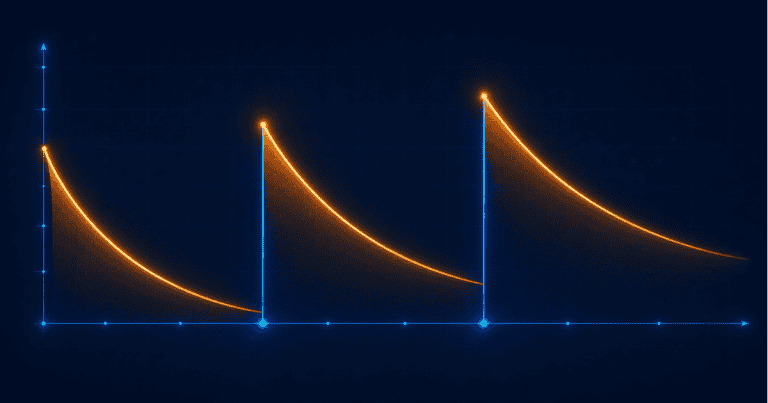
| What flattens the curve | Retrieving the information from memory (active recall) and spacing that retrieval over time (spaced repetition). Each successful retrieval resets and flattens the curve, so the same material is forgotten more slowly each time. |
| The single biggest lever | Timing the first review before you would otherwise forget — typically within a day — then reviewing at expanding intervals. Reviewing at the right moments beats reviewing more often. |
The Forgetting Curve: Why You Lose Most of What You Learn Within a Day
By Peter Benson — Cognitive Enhancement Researcher | 18+ Years Independent Research · Last reviewed: July 2026
You sit through a lecture, read a chapter, or finish a training course and feel like you have learned it. A week later, most of it is gone — and you quietly conclude you have a bad memory. You almost certainly don’t. What you are experiencing is the forgetting curve: a well-documented, mathematically predictable pattern of memory decay that applies to nearly everyone. The information didn’t fail to stick because you’re not clever enough. It faded because that is what memories do when nothing is done to hold on to them — and once you understand the curve, you can bend it.
In 18+ years of researching cognitive performance and testing learning methods on myself — including relearning Mandarin Chinese in my forties — the forgetting curve is the single most useful concept I have encountered for understanding why some study works and most doesn’t. This article covers what the curve actually is, how fast you really forget, why the study methods most people rely on barely touch it, and the two evidence-backed techniques that flatten it. It sits within the Memory & Learning Enhancement framework, and it is the foundation for everything else in that pillar — because you cannot build a memory system without first understanding what you are fighting.
One note before we start: ordinary forgetting is universal and healthy — a brain that retained everything equally would be overwhelmed. This article is about ordinary forgetting of things you want to keep. A sudden, marked decline in memory that is out of character is a different matter and deserves proper assessment.
What the Forgetting Curve Actually Is
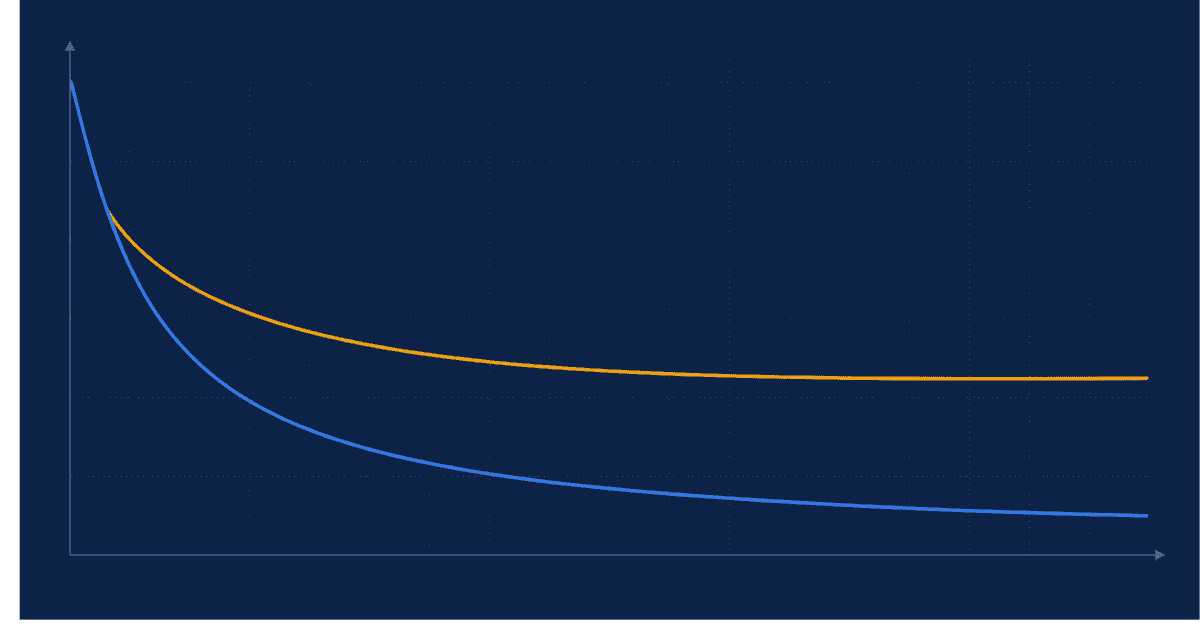
In the 1880s the German psychologist Hermann Ebbinghaus ran one of the first rigorous experiments in the history of psychology — on himself. He memorised long lists of nonsense syllables (deliberately meaningless, so no prior knowledge could help), then measured how much he could relearn at various delays afterwards, from twenty minutes to a month. From this he plotted the first forgetting curve: retention on the vertical axis, time on the horizontal. Its shape was striking. The loss was fastest right after learning, then slowed — a steep initial drop that flattens into a long, shallow tail.
That shape is the crucial insight, and it is more robust than any single percentage. Forgetting is not linear — you do not lose a steady amount each day. You lose the most in the hours and first day after learning, when the memory is at its most fragile. New information first occupies fragile short-term stores — your working memory — before consolidation can move it toward durable long-term storage, and it is during that vulnerable early window that most forgetting happens. This is why cramming the night before produces a grade and then near-total loss a week later: the material was never carried through the steep early part of the curve.
The curve is not a historical curiosity. In 2015, researchers Murre and Dros repeated Ebbinghaus’s experiment under modern conditions and successfully replicated his forgetting curve, confirming a finding more than a century old. They also noticed something Ebbinghaus’s coarser data had missed: the decline is not perfectly smooth. Retention shows a small upward jump around the 24-hour point — exactly what you would expect if a night of sleep helps consolidate the memory, a link explored in the guide on sleep and memory.
Why Re-Reading and Highlighting Barely Help
Here is the uncomfortable part. The study methods most people rely on — re-reading notes, highlighting a textbook, watching a lecture again — do almost nothing to flatten the forgetting curve. They feel effective, which is precisely the trap. When you re-read a passage, it becomes fluent and familiar, and your brain interprets that fluency as knowing. Cognitive scientists call this the illusion of competence: the material feels learned, so you stop studying it, and then it evaporates on schedule because familiarity is not the same as retrievability.
The evidence on this is unusually clear. In a well-known experiment, Roediger and Karpicke found that students who tested themselves on material retained substantially more a week later than students who simply restudied it the same number of times — even though the restudy group felt more confident. Testing beat re-reading at delay, and the gap widened the longer the wait. The students who re-read predicted they would remember more; they were wrong. This is one of the most important study-habit findings in cognitive psychology, and it points directly at what actually works.
The Two Techniques That Flatten the Curve
If re-reading fails, what works? Two techniques, and they work together. The first is active recall — retrieving information from memory rather than reviewing it. Every time you successfully pull a fact out of your own head (rather than reading it again), you strengthen the memory and reset the forgetting curve to a shallower slope. The act of retrieval is itself the learning event, not the reading that preceded it — it physically strengthens the memory trace, a process explored in our guide to the neuroscience of learning. This is why testing yourself, using flashcards, or closing the book and writing down what you remember does far more than re-reading ever could. It is covered in depth in the companion guide on active recall.
The second is spaced repetition — timing those retrievals across expanding intervals rather than cramming them together. Each time you review material just as you are about to forget it, the curve flattens further, so the next interval before forgetting is longer. Review after a day, then a few days, then a week, then a month, and the same information becomes progressively more durable. This is the spacing effect, one of the most reliable findings in learning research: a meta-analysis of hundreds of experiments found that the optimal gap between reviews grows as the length of time you want to remember something grows (Cepeda et al., 2006). The technique is not about reviewing more; it is about reviewing at the right moments. The full method is covered in the guide on spaced repetition.
How they combine: active recall is what you do (retrieve, don’t re-read); spaced repetition is when you do it (at expanding intervals, timed to just before forgetting). Active recall without spacing is inefficient; spacing without recall is just re-reading on a schedule. Together, they are the most evidence-backed learning strategy in existence — and both are simply ways of refusing to let the forgetting curve run its course.
The NeuroEdge Curve-Flattening Review Schedule
A default spacing schedule for anything you want to keep long term. Each review is an active recall attempt — close the source and retrieve first, then check. The intervals expand because each successful retrieval flattens the curve.
Same day (within a few hours)
Catch the material at the top of the steep initial drop, before the fastest forgetting happens.
Next day (after a night’s sleep)
Reinforce after overnight consolidation — the 24-hour point where sleep has already helped.
3 days later, then ~1 week
Expanding gaps as the curve flattens — each retrieval buys a longer interval before the next.
~1 month, then as needed
Once material survives a month, it is largely durable. A spaced-repetition app can automate the timing.
Keeping a set of terms you learned today
Say you’ve just studied a batch of new terms — a chapter’s key vocabulary, a set of anatomy labels, twenty foreign words. Here’s the Curve-Flattening Review Schedule applied to it, so you can see how each step maps onto the curve rather than just reading the rule.
This afternoon (Review 1). A few hours after learning, cover the definitions and try to produce each one from the term alone. You’ll stumble on several — good. That stumble is you catching the material near the top of the steep drop, before the fastest forgetting has run its course. Mark the ones you missed; those, not the easy ones, lead tomorrow’s session.
Tomorrow (Review 2). After a night’s sleep — the 24-hour point where consolidation has already helped — retrieve the whole set again, leading with yesterday’s misses. Notice how a few that felt impossible yesterday now surface with effort. That’s the overnight jump working in your favour.
In 3 days, then a week (Review 3). Retrieve again at widening gaps. Each successful recall flattens the curve a little more, so you can leave longer before the next pass without losing the material. You’re spending fewer minutes and holding more.
In a month (Review 4+). One more retrieval and most of the set is durable. Compare this to the alternative — re-reading the list five times today — which would have felt more productive and left almost nothing a month later. The difference isn’t effort; it’s timing the retrievals to land just as forgetting was about to win.

Peter’s Testing Notes — Fighting the Curve with Mandarin
18+ years testing cognitive protocols · Updated July 2026
I learned the forgetting curve the hard way. When I started studying Mandarin Chinese in my forties, my instinct was to review vocabulary the way most people do — reading through lists again and again. It felt like studying, and I retained almost nothing. Characters I had “learned” on Monday were gone by Thursday, and I assumed the problem was my age. It wasn’t. The problem was that re-reading a character list gives you the fluent, familiar feeling of knowing without any of the retrieval that actually builds memory. I was riding the forgetting curve straight down every week.
The change that turned it around was switching entirely to recall-based, spaced review — testing myself on a character before checking, and letting an interval system decide when each one came back. The difference was not subtle. Characters I retrieved at expanding intervals stuck for weeks and then months, where re-read ones had lasted days. What made it click for me was the felt experience of the curve flattening: a character that I had to strain to recall on day one came back almost effortlessly by the third spaced review, and that ease was the memory becoming durable in real time.
The honest caveat: this is effortful in a way re-reading is not. Retrieval feels harder — sometimes uncomfortably so — precisely because it is doing more work. That difficulty is the point, not a sign you are doing it wrong. The mild strain of trying to remember something you almost can’t is the exact moment the memory is being strengthened. If your studying feels easy, it probably isn’t working.
Key Takeaways — The Forgetting Curve
Forgetting is fastest right after learning. The curve drops steeply in the first hours and day, then levels off. Cramming loses most of its value within a week because the material never survives the steep early phase.
The curve is real and replicated. Ebbinghaus mapped it in the 1880s; a 2015 study reproduced it and found a jump at ~24 hours, consistent with sleep consolidating memory overnight.
Re-reading creates an illusion of competence. Familiarity feels like knowing but doesn’t build retrievability. Self-testing beat restudying substantially at a one-week delay, even though re-readers felt more confident.
Active recall + spaced repetition flatten the curve. Retrieve (don’t re-read) at expanding intervals timed to just before you’d forget. Each successful retrieval makes the next interval longer.
Timing beats frequency. Reviewing at the right moments matters more than reviewing more often. The first review within a day is the highest-leverage move you can make.
The Forgetting Curve — FAQ
How much do we forget according to the forgetting curve?
A large proportion of newly learned information can be lost within the first day if nothing is done to retain it, with the decline continuing more slowly afterwards. The precise figure varies considerably with the type of material, how well it was learned initially, and the individual — Ebbinghaus used deliberately meaningless syllables, which are forgotten faster than meaningful material. What matters more than any single percentage is the shape of the curve: loss is steepest immediately after learning and slows over time. This is why the timing of your first review matters so much.
Is the forgetting curve scientifically valid?
Yes. Hermann Ebbinghaus first documented it in the 1880s, and in 2015 Murre and Dros published a successful modern replication that reproduced his curve closely. The replication also refined it, showing the decline is not perfectly smooth but includes a small upward jump around the 24-hour mark — consistent with sleep consolidating the memory overnight. The general shape — rapid initial forgetting that slows over time — is one of the most robust and repeatedly confirmed findings in memory research, and it holds across many types of material.
How do you beat the forgetting curve?
With two techniques used together: active recall and spaced repetition. Active recall means retrieving information from memory — testing yourself, using flashcards, writing down what you remember — rather than re-reading it, because the act of retrieval is what strengthens the memory. Spaced repetition means timing those retrievals across expanding intervals, reviewing just before you would otherwise forget. Each successful retrieval flattens the curve so the material is forgotten more slowly next time. Re-reading and highlighting, by contrast, create a feeling of familiarity without durable retention and barely affect the curve.
Why do I forget so quickly after studying?
Because rapid forgetting immediately after learning is normal and expected — it is the steep early part of the forgetting curve, not a sign of a poor memory. It is made worse by the study methods most people use: re-reading and highlighting produce a feeling of familiarity that masks how little is actually retrievable, so you stop reviewing too soon and the material fades on schedule. The fix is not to study harder but to study differently — retrieve the information from memory and space your reviews over expanding intervals, which is what genuinely slows the forgetting.
When should I do my first review to prevent forgetting?
As a rule of thumb, review new material within the first day — ideally the same day and again after a night’s sleep — because that is when forgetting is fastest and a review has the most protective effect. After that, expand the intervals: a few days later, then about a week, then roughly a month. Each review should be an active-recall attempt, retrieving the information before checking it. Reviewing at these expanding, well-timed intervals is far more effective than reviewing frequently at random, because you are reinforcing the memory precisely when it is about to fade.
7 Days to a Sharper Brain
Peter Benson’s personal daily protocol, rebuilt from 18 years of testing
Seven evidence-based interventions, in the exact order that makes each one more effective — from sleep foundation to neuroplasticity and Lion’s Mane.
Join 2,000+ readers optimising their cognitive performance. Unsubscribe anytime.
Scientific References
- Ebbinghaus, H. (1885). Memory: A Contribution to Experimental Psychology (trans. Ruger & Bussenius, 1913). The original documentation of the forgetting curve.
- Murre, J. M. J., & Dros, J. (2015). Replication and Analysis of Ebbinghaus’ Forgetting Curve. PLOS ONE, 10(7), e0120644. PLOS ONE
- Roediger, H. L., & Karpicke, J. D. (2006). Test-Enhanced Learning: Taking Memory Tests Improves Long-Term Retention. Psychological Science, 17(3), 249–255. PMID 16507066
- Cepeda, N. J., Pashler, H., Vul, E., Wixted, J. T., & Rohrer, D. (2006). Distributed practice in verbal recall tasks: A review and quantitative synthesis. Psychological Bulletin, 132(3), 354–380. DOI
Peter Benson
Cognitive Enhancement Researcher | 18+ Years Independent Research
Peter Benson has spent 18+ years researching cognitive performance and testing memory and learning techniques through systematic self-experimentation, including relearning Mandarin Chinese in his forties. He writes about the mechanisms behind learning rather than the myths that surround them.
Last reviewed: July 2026 | Educational content only. Not medical advice.