The Memory Palace: How the Method of Loci Actually Works
By Peter Benson, Cognitive Enhancement Researcher · Updated October 2026 · Citations re-verified
Short answer: The memory palace, or method of loci, means placing vivid images of what you want to remember along a familiar route, then mentally walking it to recall them. Meta-analyses suggest a medium-to-large benefit over rehearsal for remembering lists in order, though certainty is low, and it doesn’t improve understanding.
📘 Educational information about a memory technique, not a guarantee of results — full disclaimer. Results depend on practice and the material. This page contains no affiliate links.
The memory palace sounds like a party trick, but it’s ancient and holds up reasonably well in modern research. Most competitive memorisers use some version of it. In a 2003 study, leading memory competitors didn’t differ significantly from controls on the brain-structure measures or general cognitive tests examined; their performance was associated with learned strategies and activity in spatial-memory regions.
This guide to the memory palace covers what the method of loci is, why it may work, what the evidence shows, how to build one, and what it can’t do. It sits in the Memory & Learning hub and complements spaced repetition and active recall: the palace helps get information in, in order; those help you keep it.
On this page
- What is the memory palace?
- Why might the memory palace work?
- What does the research show about the memory palace?
- Memory palace claims ranked by evidence
- How do you build a memory palace?
- What is the memory palace good for, and what isn’t it?
- How does the memory palace fit with spaced repetition and active recall?
- Frequently asked questions
What is the memory palace?
The method of loci (Latin for “places”) has a founding legend: the Greek poet Simonides is said to have identified victims of a collapsed banquet hall by remembering where each guest had sat. Whether or not the story is true, Greek and Roman orators later used the method to deliver long speeches without notes, mentally walking through a building and collecting each point from the place they’d left it.
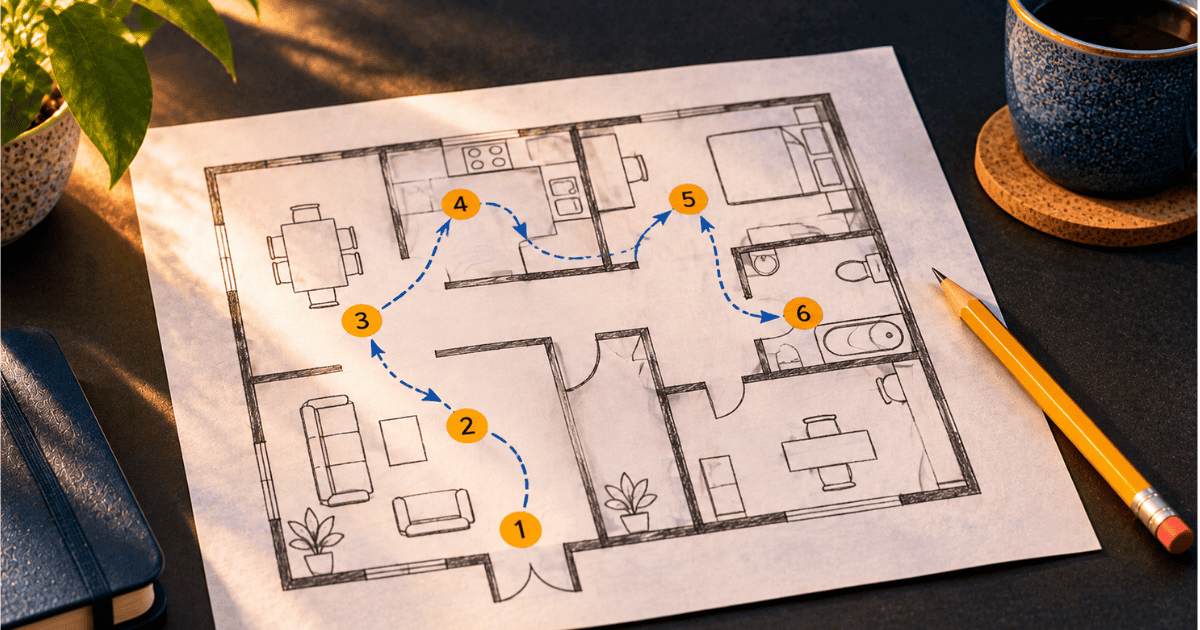
It has two phases. To encode, you choose a route you know well, such as the path through your home, pick a series of distinct stops in a fixed order, and place a vivid image of each item at one stop. To recall, you walk the route again in your mind, and each stop prompts the image you left there. Because the route has a fixed order, the order of the items comes with it.
Why might the memory palace work?
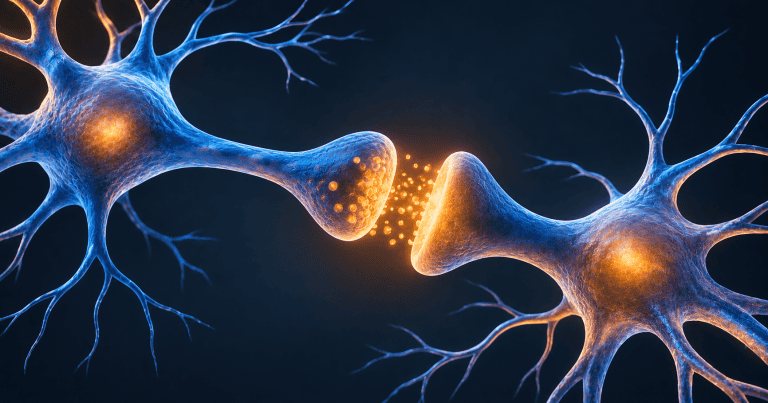
People are generally good at remembering places and routes: you can probably picture the layout of a childhood home decades later. The hippocampus and nearby regions support this spatial memory; the 2014 Nobel Prize in Physiology or Medicine was awarded for discovering the place and grid cells involved. The method borrows that strength by attaching hard-to-hold, abstract items to locations you already know, and by turning them into vivid images, which are usually easier to remember than words.
Brain imaging fits this. When researchers scanned ten leading memorisers while they memorised, they found greater activity in regions involved in spatial memory and navigation, consistent with route-based strategies. They didn’t differ significantly from controls on the structural brain measures or general cognitive tests examined (Maguire et al., 2003). A 2025 review likewise found imaging studies consistently show activation of the hippocampus, parahippocampal and retrosplenial cortex (Ondřej, 2025). These are correlations with using the method, not proof of exactly how it works.
One proposed explanation is that a familiar route provides an organised set of retrieval cues, so you don’t have to hold the whole list in working memory at once. Imaging shows engagement of spatial and navigation regions, but no single mechanism has been established that explains all of the method’s benefits. More on how memories are formed is in the neuroscience of learning.
What does the research show about the memory palace?
Against rehearsal. In a classic comparison of four mnemonic strategies, imagery-based methods including the method of loci beat simple rehearsal, especially when words had to be recalled in order (Roediger, 1980).
Meta-analyses. A meta-analysis of 13 randomised trials, mostly with university students, found a medium effect (g = 0.65), stable across sensitivity analyses, though most studies were at high risk of bias (Twomey & Kroneisen, 2021). A 2025 systematic review found strong evidence for a large effect on immediate ordered recall compared with rehearsal (d = 0.88), but rated the quality of evidence low to very low (Ondřej, 2025).
Training ordinary adults. In a study of 51 adults with no memory training, those who practised the method of loci for 30 minutes a day over 40 days improved from recalling about 26 to about 62 of 72 words. Four months later, they still recalled more than 22 words above their starting point, while groups doing other training or none had smaller gains. Their brain-connectivity patterns also became more like those of memory athletes (Dresler et al., 2017). These figures describe one training study, not a typical or guaranteed improvement; results may differ with the material, training intensity, starting ability and testing conditions, and a four-month follow-up doesn’t show gains last indefinitely.
How specific the gains are. In a famous case study, one student practised for more than 230 hours and raised his digit span from about 7 to 79 by recoding digits into meaningful groups. When tested on letters, his span fell back to normal (Ericsson et al., 1980). That’s a different mnemonic from the method of loci, but it shows the general pattern: trained memory skills are powerful and narrow.
Memory palace claims ranked by evidence
🟢 Stronger or replicated evidence · 🟡 Limited, mixed or preliminary evidence · 🔴 Not established or not supported
How do you build a memory palace?
1. Choose a place you know well. Your home is the usual first choice. You need to be able to walk through it in your mind without hesitating, so use a real place rather than an invented one.
2. Fix a route and its stops. Pick a consistent path, such as front door, hallway, kitchen counter, sofa, and a set of distinct stops in order. Five to ten is plenty to start. Always walk it the same way.
3. Turn each item into a vivid image. Make images exaggerated, moving and a little absurd; distinctive images are easier to recall. “Buy milk” becomes a cow flooding the hallway with milk.
4. Place one image at each stop. Spend a few unhurried seconds on each, making it interact with the location. Rushing this step is a common reason a palace fails.
5. Walk the route to recall. Mentally walk the route and read off each image. Check against the original list the first few times.
6. Reuse carefully. You can refill a palace with new material, or keep several (home, office, a familiar walk) for different subjects so images don’t get mixed up.
Worked example — the first six elements
The list: hydrogen, helium, lithium, beryllium, boron, carbon. The route: front door, hallway, kitchen, sofa, bathroom sink, bed.
The images: a giant balloon with “hydrogen” printed on it blocking the front door; a squeaky-voiced helium tank lifting the coat rack in the hallway; a giant leaking battery on the kitchen counter (lithium); a crowned berry, “berry-llium”, sitting on the sofa; a wild boar drinking from the sink (boron); a lump of coal smearing the bed sheets (carbon).
Recall: walk door, hallway, kitchen, sofa, sink, bed, and the six elements come back in order. To keep them, walk the route again the next day and a few days later.
What is the memory palace good for, and what isn’t it?
It’s well suited to ordered or list-like material: the sequence of a talk, vocabulary, names, steps in a procedure, dates, anatomical lists. Where order or completeness matters, the route does much of the work.
It has real limits. It doesn’t create understanding: you can memorise the steps of a proof without knowing why it’s true. Encoding takes effort, so for a few items a simpler approach may be quicker. And the skill tends to be specific to what you practise. Most trials test immediate recall of word lists in university students, so evidence for everyday use, long delays and other groups is thinner.
How does the memory palace fit with spaced repetition and active recall?
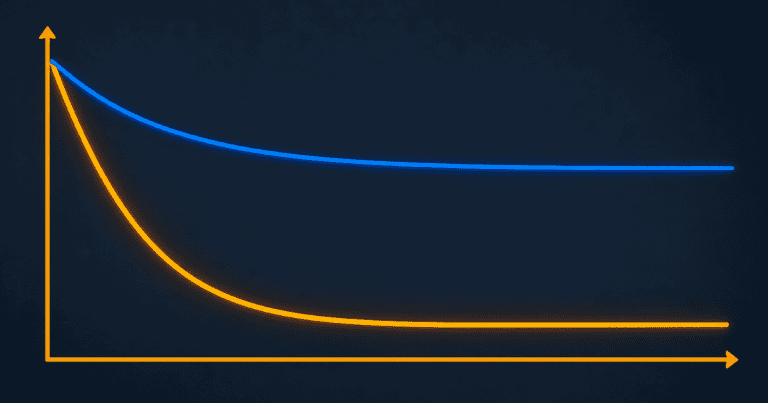
The palace is mainly an encoding technique. Like any memory, its contents fade if you never revisit them, following the forgetting curve. Walking the route to recall is a form of active recall, and doing that at widening intervals is spaced repetition. Combining them is a sensible way to keep palace contents for longer, though this specific combination hasn’t been tested as a package.
The NeuroEdge Formula Memory Palace Self-Testing Framework
A practical routine based on the research, not a tested formula.
1. Build one route
Map about ten stops through a place you know well and walk the empty route until it’s automatic.
2. Use real material
Try it on something you need, such as a talk or a set of terms, with vivid images and a few seconds per stop.
3. Walk it to recall
Recall by walking the route from memory, not by rereading the list.
4. Revisit when needed
If you need the material over time, recall it again after a delay and adjust later reviews to how well you recall. A next-day review is a practical start; no single schedule has been validated for memory palaces.
Peter’s Testing Notes
A personal note, not tracked data
I’ve used a memory palace once, mapping a talk onto my living room. It worked for that talk, but I found it too much effort to keep up as a regular habit. That fits the research: it’s effective for ordered material, and the encoding cost is real.
An earlier version of this page described using the technique regularly over years. That was not accurate and has been removed.
Key takeaways
| → | The memory palace links items to places on a familiar route, recalled by mentally walking it. |
| → | It beats rehearsal for ordered lists, with medium-to-large effects in meta-analyses, though study quality is low. |
| → | Ordinary adults can learn it with practice, and gains can last months. |
| → | Its gains are specific: it doesn’t build understanding or general intelligence. |
| → | Revisit what you store with recall at widening intervals, or it fades like any memory. |
Frequently asked questions
Does the memory palace technique work?
For remembering lists in order, yes: meta-analyses find medium-to-large benefits over rehearsal, and a training study found large gains in ordinary adults that partly lasted four months. The trials are mostly small and at high risk of bias, and the method doesn’t help with understanding.
Do you need a special memory to use it?
Probably not. In one brain-imaging study, leading memorisers didn’t differ from controls on the structural and general cognitive measures examined; their performance was linked to learned strategies and practice.
What is the memory palace best used for?
Ordered or list-like material: the flow of a talk, vocabulary, names, numbers, dates and steps. It’s less useful for a couple of quick items or for material you need to understand.
Can I have more than one memory palace?
Yes. Many people use several familiar places for different subjects, which helps stop images from getting mixed up. You can also clear and refill a palace.
Do things stay in a memory palace permanently?
No. Palace contents fade like any memory. To keep them, walk the route again to recall them, at widening intervals.
Get “7 Days to a Sharper Brain” — Free
Peter Benson’s evidence-first starting framework
The habits with the strongest evidence first — sleep, movement, stress and learning — then how to add a single supplement and test whether it actually works for you.
No spam. Unsubscribe anytime.
⚕️ Educational Information, Not Medical Advice
This article is educational and is not medical advice. I’m a cognitive enhancement researcher, not a medical doctor. The guide covers lifestyle habits as well as supplements. Supplements can interact with medicines; consult a qualified healthcare provider before use, particularly if you take prescription medicines or are pregnant or breastfeeding.
Scientific references
1. Dresler, M., Shirer, W. R., Konrad, B. N., et al. (2017). Mnemonic training reshapes brain networks to support superior memory. Neuron, 93(5), 1227–1235.e6. PMID: 28279356
2. Maguire, E. A., Valentine, E. R., Wilding, J. M., & Kapur, N. (2003). Routes to remembering: the brains behind superior memory. Nature Neuroscience, 6(1), 90–95. PMID: 12483214
3. Twomey, C., & Kroneisen, M. (2021). The effectiveness of the loci method as a mnemonic device: meta-analysis. Quarterly Journal of Experimental Psychology, 74(8), 1317–1326. DOI: 10.1177/1747021821993457
4. Ondřej, J. (2025). The method of loci in the context of psychological research: a systematic review and meta-analysis. British Journal of Psychology, 116(4). DOI: 10.1111/bjop.12799
5. Roediger, H. L. (1980). The effectiveness of four mnemonics in ordering recall. Journal of Experimental Psychology: Human Learning and Memory, 6(5), 558–567. PDF
6. Ericsson, K. A., Chase, W. G., & Faloon, S. (1980). Acquisition of a memory skill. Science, 208(4448), 1181–1182. DOI: 10.1126/science.7375930
7. Yates, F. A. (1966). The Art of Memory. University of Chicago Press. (History of the method of loci.)
Cognitive Enhancement Researcher | 18+ Years Independent Research
Peter is not a clinician; this guide is educational, not medical advice. It was rewritten in October 2026 to add two meta-analyses and their quality ratings, give the Dresler training figures exactly, separate correlation from mechanism in the brain-imaging findings, and correct an overstated personal account. Read about how NeuroEdge Formula evaluates research.
Last reviewed: October 2026 | Educational content only. Not medical advice.