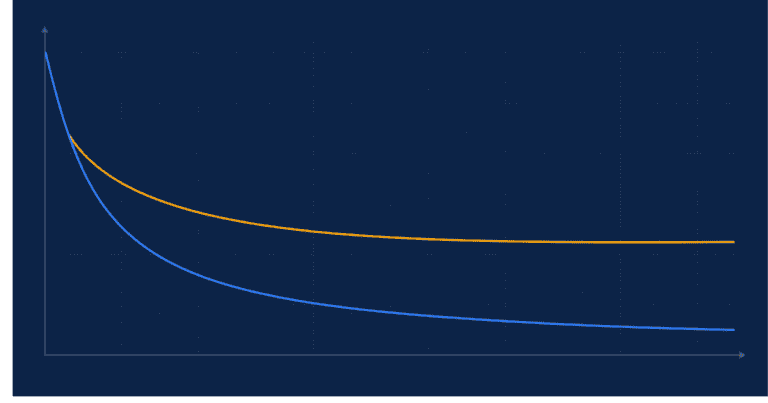

Learning Styles Myth
Educational information. This article examines what the research does and doesn’t support about learning styles. It reflects independent analysis of the evidence, not personal or medical advice — and it’s meant to free you up to learn any subject, not to box you in.
| The myth, precisely | Not “preferences don’t exist” — they do. The myth is the meshing hypothesis: that matching teaching to your preferred style (visual, auditory, kinaesthetic) makes you learn better. That specific claim fails when tested. |
| What the evidence shows | Well-designed studies find no benefit from matching instruction to a learner’s style, and some flatly contradict it (Pashler 2008; Rogowsky 2015). Certain methods just work better for almost everyone. |
| Why it persists | Around nine in ten people still believe it. Preferences feel real, the idea is intuitive and flattering, and questionnaires make it feel scientific. |
| Why it’s harmful | It quietly limits people — “I’m a visual learner, so this subject isn’t for me” — and diverts effort from techniques that genuinely work. |
| What to do instead | Match the method to the content, not to yourself, and use techniques proven to help everyone: retrieval practice, spacing and interleaving. |
The Learning Styles Myth: Why “Matching Your Style” Doesn’t Work
By Peter Benson, Cognitive Enhancement Researcher | 18+ Years Independent Research · Last Updated: September 2026
Almost everyone “knows” their learning style. You’ve probably been told you’re a visual learner, or an auditory one, or that you learn by doing — and that if teaching is delivered in your style, you’ll learn better. It’s one of the most widely believed ideas in all of education: around nine in ten people endorse it. It’s also, in the specific form that matters, wrong. Decades of research have tested whether matching instruction to a person’s preferred style actually improves learning, and the answer keeps coming back the same: it doesn’t.
This isn’t a “nothing works” article, and it’s important to be precise about what the myth is and isn’t — because the truth is more useful than the myth. Understanding why learning styles fail points you straight at the techniques that genuinely work, the ones covered across memory and learning. Debunking the myth is really about redirecting your effort to where it pays off.
What the Theory Actually Claims — and What It Doesn’t
Getting this precise matters, because the myth is usually attacked in the wrong place. Nobody sensible disputes that people have preferences — plenty of us would rather watch a diagram than read a paragraph, or vice versa. That part is real. The claim under scrutiny is a much stronger and more specific one, which researchers call the meshing hypothesis: that you learn better when instruction is delivered in your preferred style, and worse when it isn’t. In other words, that a “visual learner” will actually retain more from a picture than from words, while an “auditory learner” retains more from words spoken aloud.
Notice the leap that’s hiding in there. As the researchers who dismantled the theory pointed out, people routinely conflate a preference (what you enjoy or feel comfortable with) with an aptitude (what actually helps you learn). The whole industry of style questionnaires measures the former and quietly assumes it tells you the latter. That assumption — preference equals better learning when matched — is the specific thing that has been tested, and the specific thing that has failed.
How You’d Actually Test It — and What Happens When You Do
The definitive analysis is a 2008 review by Pashler, McDaniel, Rohrer and Bjork, who did something clarifying: they specified exactly what evidence would prove the theory. To show that matching helps, a study has to find a particular pattern called a crossover interaction — visual learners must do better with visual instruction and auditory learners must do better with auditory instruction. Both halves are essential. If one teaching method turns out to be better for everyone, or if it makes no difference, the meshing hypothesis is contradicted, not supported.
When they combed the enormous literature for studies that actually met this standard, they found almost none — and of the few that did, several produced results that flatly contradicted meshing. Their conclusion was blunt: there is no adequate evidence to justify building instruction around learning-style assessments. Later work designed specifically to Pashler’s standard reached the same place. In one such study, Rogowsky and colleagues (2015) classified 164 adults as auditory or visual learners and taught them through both an audiobook and an e-text — and found no meshing benefit whatsoever.
What studies reliably do find is telling: some methods are simply better for most people, regardless of their supposed style. When researchers taught “visual” and “verbal” learners with both pictures and words, a clear presentation format tended to win for both groups. There’s no crossover — just methods that work broadly. That’s not a small technicality; it’s the whole ballgame, and it points to a very different way of thinking about how to learn.
So Why Does Almost Everyone Believe It?
A myth this durable survives for reasons, and they’re worth understanding. A 2020 systematic review confirmed that belief in learning styles remains near-universal among educators and the public alike. The first reason is that preferences are genuinely real — you do feel more comfortable with certain formats, so the theory has a kernel of true experience to grow from. The second is that it’s intuitive and flattering: it offers a tidy explanation for why some subjects felt hard (“that teacher just wasn’t teaching to my style”) and hands you an identity. The third is commercial and institutional momentum — style questionnaires, training programmes and teaching materials built around the concept lend it a veneer of scientific legitimacy that the underlying evidence never earned.
Put those together and you get a belief that feels obviously true, is pleasant to hold, and comes pre-packaged in official-looking assessments. That’s a potent combination — potent enough to survive decades of contrary evidence. But feeling true and being true are different things, and this is a textbook case of the gap between them.
The Hidden Harm of the Myth
It’s tempting to treat this as harmless — so what if people believe a comforting story? But the myth does real damage, and the worst of it is subtle. When you accept a fixed learning-style label, it can quietly become a ceiling. Educators report students who conclude that whole subjects are closed to them: the person who decides that because they’re a “visual learner,” studying something text-heavy is pointless, or who drops a statistics course convinced that as a “right-brained” person the material is simply beyond them. A label meant to describe a preference gets used as a verdict about ability — and people limit themselves accordingly.
There’s a second, quieter cost. The theory shifts the locus of control in unhelpful ways — “I failed because it wasn’t taught in my style” — and it consumes real effort. Time spent diagnosing styles and building style-matched materials is time not spent on approaches that actually move the needle. For a field with limited attention and energy, chasing a myth has a genuine opportunity cost. The good news is that the alternative is clear, and it works for everyone.
What Actually Works Instead
If matching to your style is the wrong question, what’s the right one? Two answers. First, match the format to the content, not to the person. Some material genuinely has a best modality: you learn geography better with maps, anatomy better with images, and music better by listening — and that’s true for everyone, regardless of preference. Choosing the format that fits what you’re learning is sensible; choosing it to fit a label you’ve given yourself is not.
Second, and far more powerful, put your effort into the techniques that improve learning for essentially everyone. Retrieval practice — testing yourself rather than re-reading — is one of the most robust findings in the science of learning. Spacing your study over time beats cramming — it works with your forgetting curve rather than against it — and interleaving different problem types builds flexible skill. These aren’t matched to a style — they work because of how memory itself operates, a topic explored in the neuroscience of learning. The liberating message underneath the whole debunk is this: you’re not locked into a style, and you can learn anything — you just need the methods that actually work rather than the ones that merely feel comfortable.
Picture someone who has always been told they’re a visual learner, now facing a dense, text-heavy subject — say, learning to code, or a law module. Watch how the myth versus the evidence sends them down two very different paths.
The myth-driven path: they conclude the material “isn’t suited to how I learn,” hunt for videos and diagrams to avoid the text, and quietly assume they’ll always be at a disadvantage here. Some of that avoidance shades into giving up — the label has become a ceiling. Worse, they skip the effortful bits (reading carefully, working problems) precisely because those feel uncomfortable, mistaking discomfort for “wrong style.”
The evidence-driven path: they drop the label entirely and ask two better questions. What format fits this content? (Code is best learned by reading and writing it; diagrams help for structure — use whatever the material demands.) And what techniques work regardless? They test themselves on concepts instead of re-reading, space their practice across days, and mix problem types. None of that depends on being “visual.”
The lesson is the article in miniature: the style label predicted nothing useful and mostly got in the way, while matching method to content plus proven techniques carried the actual learning. Dropping “I’m a visual learner” wasn’t a loss — it removed a self-imposed limit.
Learning Styles — Evidence Ranked
🟢 Well supported | 🟡 Real but qualified | 🔴 Commonly claimed, not supported
| Claim | Evidence | Basis |
|---|---|---|
| People have format preferences | 🟢 Real | Preferences exist — but a preference is not an aptitude |
| Matching teaching to your style improves learning (meshing) | 🔴 Not supported | No crossover interaction; well-designed studies contradict it (Pashler 2008; Rogowsky 2015) |
| Some methods work better for almost everyone | 🟢 What studies find | Clear formats help both “visual” and “verbal” groups; no style interaction |
| Matching format to the content helps | 🟡 Sensible (not the myth) | Maps for geography, audio for music — true for everyone, not a personal “style” |
| You have a fixed style that limits what you can learn | 🔴 Harmful & false | Labels become self-imposed ceilings; unsupported by evidence |
| Retrieval, spacing & interleaving improve learning | 🟢 Well supported | Robust across learners; where effort should actually go |
The NeuroEdge Learn-Anything Framework
Drop the label, and replace it with what actually predicts learning. Updated September 2026.
Stop sorting yourself into a style. It predicts nothing useful about how well you’ll learn, and it can quietly cap what you attempt.
Choose the modality the material demands — maps for geography, audio for music — not the one that matches a label you gave yourself.
Retrieval practice, spacing and interleaving improve learning for essentially everyone. Put your effort here — this is the real lever.
The methods that feel easiest are often the weakest. Effort during study is usually a sign it’s working, not a sign of the “wrong style.”
Peter’s Notes — Learning Styles
First-person, n=1 — impressions, not measurements · Updated September 2026
I believed the learning-styles story for years, and I suspect I even used it as a quiet excuse. It’s a comfortable place to hide: if a subject won’t stick, blaming a mismatch with “how I learn” is far easier than admitting I was using weak methods — re-reading, highlighting, passively watching — that feel productive but barely work.
What changed things for me wasn’t discovering my “real” style — it was letting go of the idea entirely and testing techniques instead. Once I switched to retrieving rather than reviewing, and spacing rather than cramming, the difference was obvious in a way no style-matching ever produced. The uncomfortable part was accepting that the methods that felt hardest were the ones doing the work.
So the honest takeaway I’d pass on is almost the opposite of what the myth promises. You’re not a fixed type with built-in limits; you’re someone who can learn nearly anything with the right methods. That’s a more demanding message than “find your style” — and a far more freeing one. (These notes are direction-only impressions, not measured results.)
Key Takeaways — The Learning Styles Myth
| ✓ | The myth is specific. It’s not “preferences don’t exist” — they do. It’s the meshing hypothesis: that matching teaching to your preferred style improves learning. That claim fails when properly tested. |
| ✓ | Well-designed studies find no benefit. The proper test — a crossover interaction — almost never appears, and some studies contradict meshing outright (Pashler 2008; Rogowsky 2015). Certain methods just work better for everyone. |
| ✓ | It persists because it feels true. Around nine in ten people still believe it — preferences are real, the idea is flattering, and questionnaires lend false scientific weight (Newton & Salvi 2020). |
| ✓ | The label can become a ceiling. “I’m a visual learner, so this subject isn’t for me” turns a preference into a false verdict about ability — and wastes effort that could go to real methods. |
| ✓ | Match method to content, then use what works. Fit the format to the material, and put your effort into retrieval practice, spacing and interleaving — the techniques proven to help everyone. |
Learning Styles — FAQ
Are learning styles real?
It depends what you mean. People genuinely have preferences — you might enjoy diagrams more than text — and that part is real. What’s not supported is the stronger claim that matching instruction to your preferred style makes you learn better (the “meshing hypothesis”). Well-designed studies find no benefit from that matching, and some contradict it outright (Pashler et al. 2008). So preferences exist; the idea that catering to them improves learning does not hold up.
What does the research actually say?
The landmark 2008 review by Pashler and colleagues specified the exact evidence needed to prove learning styles — a “crossover interaction,” where visual learners beat auditory learners on visual material and vice versa — and found that almost no studies met the standard, while several that did contradicted the theory. Later work built to that standard, such as Rogowsky et al. (2015) with 164 adults, found no matching benefit. What studies reliably find instead is that some methods work better for most people, regardless of style.
If it’s a myth, why do so many people believe it?
Because it’s intuitive, flattering and has a kernel of truth. Preferences are real, so the theory feels right; it offers a tidy explanation for why some subjects were hard; and style questionnaires give it a scientific-looking veneer. A 2020 systematic review found belief in learning styles remains near-universal among educators and the public. But widespread belief isn’t evidence — this is a classic example of an idea that feels true without being true.
Is it harmful to believe in learning styles?
It can be. The biggest harm is self-limitation: people use a style label as a verdict about ability — “I’m a visual learner, so I can’t do this text-heavy subject” — and avoid or abandon things they could actually learn. It also shifts blame (“it wasn’t taught in my style”) and consumes effort diagnosing styles and building matched materials that could go toward methods that genuinely work. Letting go of the label tends to be freeing, not limiting.
What should I do instead of using my learning style?
Two things. First, match the format to the content, not to yourself — learn geography with maps and music by listening, because that fits the material, not a label. Second, use the techniques that improve learning for essentially everyone: retrieval practice (testing yourself instead of re-reading), spacing your study over time, and interleaving different problem types. These work because of how memory operates, not because of any personal style — and they’re where your effort actually pays off.
Get “7 Days to a Sharper Brain” — Free
Peter Benson’s personal daily protocol, rebuilt from 18 years of testing
Seven evidence-based interventions, in the exact order that makes each one more effective — from sleep foundation to neuroplasticity and Lion’s Mane.
Join 2,000+ readers optimising their cognitive performance. Unsubscribe anytime.
Scientific References
- Pashler H, McDaniel M, Rohrer D, Bjork R. (2008). Learning styles: Concepts and evidence. Psychological Science in the Public Interest, 9(3):105–119. PMID 26162104
- Rogowsky BA, Calhoun BM, Tallal P. (2015). Matching learning style to instructional method: Effects on comprehension. Journal of Educational Psychology, 107(1):64–78. DOI: 10.1037/a0037478
- Newton PM, Salvi A. (2020). How common is belief in the learning styles neuromyth, and does it matter? A pragmatic systematic review. Frontiers in Education, 5:602451. DOI: 10.3389/feduc.2020.602451

Peter Benson
Cognitive Enhancement Researcher | 18+ Years Independent Research
Peter has spent 18+ years separating evidence-based learning strategies from popular myths. He writes about learning styles the way the research demands — a comforting idea that fails testing — and points readers toward the techniques that actually work for everyone.
Last reviewed: September 2026 | Educational content only. Not medical advice.