Cost of Multitasking
⚕️ Educational Information
This guide to the cost of multitasking reflects independent research into attention and cognitive performance, not medical or psychological advice. I’m a cognitive enhancement researcher, not a clinician. If persistent focus difficulties are disrupting your work or life, that’s worth discussing with a qualified professional rather than self-diagnosing from an article.
The Cost of Multitasking: What Task-Switching Does to Focus
By Peter Benson, Cognitive Enhancement Researcher | 18+ Years Independent Research · Last Updated: August 2026
There’s a comfortable story we tell ourselves about multitasking: that with enough practice, some of us can genuinely juggle several demanding things at once. After 18 years of studying attention — and years of tracking my own focus while trying to do exactly that — I’ve come to a blunter conclusion. For anything that requires active thought, you are not multitasking at all. You are switching, very fast, and paying a small tax on every switch. This article is about what that tax actually is, what the evidence does and doesn’t support, and how to stop paying it needlessly.
I want to do this honestly, because the multitasking conversation is full of scary numbers that don’t survive scrutiny. Some of the cost is real and well established. Some of the most-repeated claims are far shakier than they sound. Sorting one from the other is the whole point — and it fits the wider approach in our Focus & Productivity optimisation guide.
Multitasking is mostly a naming error
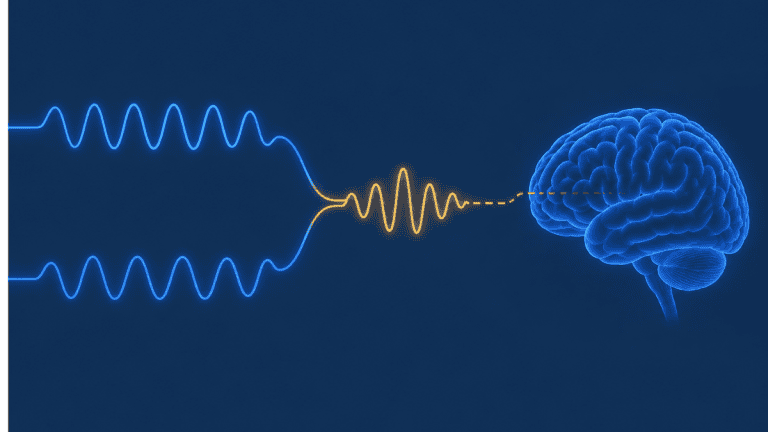
Start with what the brain is physically doing. When two activities each demand conscious attention, you can’t run them in parallel — attention is close to a single-channel resource for effortful processing. What you experience as doing both at once is your focus jumping between them. As the Cleveland Clinic puts it, when we think we’re multitasking we’re usually performing individual actions in rapid succession rather than genuinely simultaneously. The word “multitasking” is borrowed from computing, and it flatters us — it implies parallel processing the human attention system doesn’t really do.
The genuine exceptions are automatic activities. You can walk while holding a conversation, or fold laundry while listening to a podcast, because at least one task is running on autopilot and barely touches your executive attention. The moment both tasks need decisions, language or working memory, the illusion collapses and you’re back to switching. So the honest reframing is this: the interesting question isn’t “how well can I multitask?” — it’s “what does each switch cost me, and how often am I choosing to pay it?”
The switch cost: what happens in the gap
The best-established part of this whole topic is the switch cost itself. In a set of four experiments, Rubinstein, Meyer and Evans had people alternate between tasks — classifying shapes, solving arithmetic under different rules — and measured the time lost purely to switching. They found that switching between tasks carried a consistent time cost that grew as the rules became more complex (Rubinstein et al., 2001). Crucially, they described the switch as a two-stage mental operation: a goal-shifting stage (“now I’m doing this instead of that”) and a rule-activation stage (loading the rules for the new task and shutting down the old ones). That second stage is the hidden tax — your brain has to reconfigure before it can work well on the new task.
You might assume the cost vanishes if you know the switch is coming. It doesn’t. In classic work by Rogers and Monsell, participants switched between two tasks on a fully predictable schedule, and a residual switch cost stubbornly remained even with time to prepare (Rogers & Monsell, 1995). Preparation shrinks the tax; it doesn’t abolish it. And there’s a subtler version of the same problem that anyone who works at a screen will recognise: part of your attention tends to stay stuck on the task you just left, a lingering drag that researchers call attention residue. The practical upshot is that the cost of a switch isn’t only the second or two of reconfiguration — it’s the reduced quality of thinking for a while afterwards.
This is why switching hurts complex work far more than simple work. Answering a one-word message mid-task is cheap; returning to a half-built argument, a debugging session or a delicate piece of writing is expensive, because the rule-activation you have to redo is heavy. It also explains a finding echoed by Brown University Health: constant switching taxes the brain and leaves it working less efficiently, drawing more effort to complete the same task. If you want to understand why this drains you specifically, our piece on working memory covers the limited mental workspace that each switch disrupts.
Does chronic multitasking damage your focus? The honest answer
Here’s where I have to push back on the internet’s favourite version of this story. You’ve probably read that people who chronically multitask across media suffer lasting damage to their attention. That claim traces to a genuinely influential 2009 Stanford study by Ophir, Nass and Wagner, which found that heavy media multitaskers were more susceptible to interference from irrelevant information and performed worse on a task-switching test (Ophir et al., 2009). It’s a striking, counterintuitive result — the people who switch most were the worst at switching — and it launched a decade of alarming headlines.
But a good researcher follows a claim past its famous first study, and here the follow-up is sobering. When Wiradhany and Nieuwenstein ran two direct replications and pooled every published study into a meta-analysis, the dramatic effect shrank to a small and inconsistent association between media multitasking and distractibility (Wiradhany & Nieuwenstein, 2017). The specific task-switching deficit from the original study did not reliably replicate — several later studies found nothing, and one found the opposite. The honest position in 2026 is that we do not have solid evidence that multitasking permanently erodes your ability to focus. It might nudge it slightly; the strong “it’s rewiring your brain for the worse” narrative is not supported.
I dwell on this because it matters for how you should feel. The reason to single-task is not fear that you’ve broken your brain — you almost certainly haven’t. The reason is the in-the-moment cost: switching makes this hour of work slower, more error-prone and more effortful. That’s a much better motivation than a shaky claim of permanent harm, and it points at practical fixes rather than panic.
Interruptions: the real cost isn’t always lost time
One more myth deserves dismantling, because it’s quoted everywhere: the idea that a single interruption costs you a fixed chunk of minutes to recover from. The most careful study on interrupted work found something more interesting and less tidy. Mark, Gudith and Klocke interrupted people during a task and, surprisingly, found they completed the interrupted work in less time, with no drop in quality — but at a cost (Mark et al., 2008). People compensated for interruptions by working faster, and paid for that speed with significantly more stress, frustration, time pressure and effort.
Read that carefully, because it reframes the whole problem. The cost of fragmented work often isn’t the clock — it’s the toll on you. You can hit your deadlines while multitasking and still end the day frazzled, depleted and more prone to the kind of mistakes that show up later. That’s the honest cost of multitasking for most knowledge workers: not that the work doesn’t get done, but that it gets done at a higher price in stress and cognitive strain than the same work done in focused blocks. It’s also why chronic switching is corrosive to deep, satisfying work — the sort of undistracted engagement covered in our guides to deep work and flow state.
Working with your attention instead of against it
If switching is the problem, the solution isn’t to switch more skilfully — it’s to switch less, and to make the switches you do take cheaper. Three principles do most of the work. First, batch: group similar tasks so you reconfigure once and stay in a mode, rather than flipping between writing, email and admin every few minutes. Second, protect single-task blocks for anything genuinely demanding, because that’s where the switch cost is heaviest and the residue longest. Third — and most powerful — remove the triggers: most of our switching isn’t chosen, it’s provoked by a notification. Cutting the interruptions at the source does more than any amount of willpower, which is the theme of our guide to digital distraction and the brain, with more tactics in how to improve focus at work.
Worked example — rebuilding a fragmented morning
Take a common setup: a three-hour morning in which you owe a report, a batch of emails, and you’re on a team chat that pings all day. Here’s how to apply the three principles to that exact block, and what to expect.
The default (high-switch) version. You open the report, write two lines, glance at a chat ping, dash off a reply, notice an email, answer it, return to the report — and re-read the last paragraph to work out where you were. Repeat for three hours. Every return to the report pays the rule-activation cost again, and attention residue from the chat keeps a slice of your mind elsewhere. The report gets written, but slowly, and you finish tense.
Step 1 — Batch the cheap work. Email and chat are the same mode: short, reactive, low-reconfiguration. Group them. Decide they get two windows — say the first 20 minutes and a 15-minute window before lunch — and nothing in between.
Step 2 — Protect one block for the expensive work. The report is the heavy, rule-rich task, so it gets the longest unbroken run — roughly 90 minutes in the middle. This is where switching would cost the most, so it’s where you defend hardest.
Step 3 — Remove the trigger, don’t just resist it. During the report block, chat notifications are closed, not merely ignored — a status message (“heads-down till 11, back then”) pre-empts the guilt. You’re not relying on willpower to not-look; you’ve removed the thing that provokes the look.
Step 4 — Catch stray thoughts on paper. When “I must reply to Dana” surfaces mid-report, it goes on a capture list beside you, not into an open reply. The thought is safely parked, so it stops pulling — and you deal with it in the next comms window.
The point of the exercise: the total work is identical — same report, same emails, same chat. All you’ve changed is the number of switches, from dozens to a handful. You haven’t found more time or more discipline; you’ve stopped paying the switch tax on the one task where it’s most expensive. That’s the whole game.
Evidence hierarchy: the cost of multitasking
The immediate switch cost is solid. The claim of lasting damage is not.
The NeuroEdge Protocol
The NeuroEdge Single-Tasking Protocol
Batch
Group same-mode tasks (all comms, all admin) so you reconfigure once and stay in the mode — not dozens of times an hour.
Protect
Give your hardest, most rule-rich task one unbroken block. That’s where the switch cost and attention residue bite hardest.
Remove triggers
Close notifications rather than resisting them. Most switching is provoked, not chosen — kill the prompt at the source.
Capture
Park stray thoughts on a list instead of acting on them. A parked thought stops pulling; you clear it in the next batch.

Peter’s Testing Notes
First-person, n=1 — reported honestly
The single change that made the biggest difference to my own working day wasn’t a supplement or a technique — it was moving communications into two fixed windows and closing them the rest of the time. What I notice is less about raw output and more about how I feel at the end of a working block: markedly less of the frazzled, scattered depletion that the interruption research describes, when I’ve genuinely protected a single-task run rather than letting the day fragment.
I hold this loosely, as I do all n=1 observations — it’s my subjective experience, not a controlled result, and the placebo of “doing something deliberate about focus” is real. But it lines up with the evidence in a satisfying way: the benefit I feel most clearly is exactly the stress-and-effort cost that Mark and colleagues measured, not some dramatic jump in speed. That match between what the research predicts and what I actually feel is, for me, the most convincing part.
⚠️ Illustrative example, not a real individual or testimonial. The scenario below is a composite written to show how the principles play out. It is not a real person, contains no real quotes or outcomes, and individual results vary and are not typical.
Picture a project manager who prides herself on responsiveness — she answers every message within minutes, all day, while also trying to write the quarterly plan. She hits her deadlines, so she assumes the system works. What she can’t see is the trade she’s making: because the plan is the rule-rich task, every message she answers mid-draft forces a fresh reconfiguration, and she consistently ends those days tense and mentally flat, mistaking the depletion for “a hard day” rather than a self-inflicted switch tax.
The instructive part isn’t a dramatic before-and-after — it’s the realisation itself. Nothing about her workload is impossible; the responsiveness is a choice she never examined. Moving the plan into a protected block and her replies into windows doesn’t add hours to her day. It simply stops charging her the heaviest version of the switch cost on the one task that can least afford it — which is the entire lesson of this article, applied to a life.
Key takeaways
| → | For attention-demanding work, multitasking is really fast task-switching — the brain runs effortful tasks one at a time. |
| → | Each switch carries a reconfiguration cost that grows with task complexity and persists even when the switch is predictable (Rubinstein et al., 2001; Rogers & Monsell, 1995). |
| → | The real cost of interruptions is often stress and effort, not lost minutes — you can finish on time and still be depleted (Mark et al., 2008). |
| → | The claim that multitasking permanently damages focus is not well supported — the famous effect shrank on meta-analysis (Wiradhany & Nieuwenstein, 2017). |
| → | Fix it by switching less: batch similar tasks, protect single-task blocks, and remove notification triggers rather than resisting them. |
Frequently asked questions
Is multitasking always bad?
No. It’s fine, and even efficient, when at least one task is automatic — walking while chatting, or doing the dishes while listening to a podcast. The cost appears specifically when two tasks each demand conscious attention, decisions, language or working memory. Then you’re not doing both at once; you’re switching between them and paying a reconfiguration cost each time (Rubinstein et al., 2001). So the rule of thumb is simple: combine an effortful task only with an automatic one, never with another effortful one.
Does it really take 23 minutes to refocus after an interruption?
That specific figure is not a robust peer-reviewed finding, and it’s worth retiring. The most careful study of interrupted work actually found people completed interrupted tasks in less time, not more — but compensated by working faster and paid for it with more stress and effort (Mark et al., 2008). The honest takeaway isn’t a fixed recovery time; it’s that interruptions extract a real toll, mostly in strain rather than a tidy number of lost minutes. Treat any confident “X minutes to refocus” statistic with suspicion.
Has my multitasking permanently damaged my attention?
Almost certainly not, on current evidence. The influential 2009 study that suggested heavy media multitaskers had worse attention (Ophir et al., 2009) did not hold up well: a meta-analysis of all the follow-up work found only a small, inconsistent association, and the specific task-switching deficit failed to replicate (Wiradhany & Nieuwenstein, 2017). The reason to switch less is the immediate cost to today’s work — slower, more error-prone, more stressful — not a fear of lasting harm.
Why does switching feel fine in the moment but leave me exhausted?
Because the cost is mostly hidden from you in the moment. Each switch requires your brain to reconfigure — load the new task’s rules, shut down the old ones — and a slice of attention lingers on the task you left. You don’t perceive each small reconfiguration, but they accumulate as effort, and interrupted work reliably produces more stress and cognitive strain even when the output looks fine (Mark et al., 2008). The exhaustion is the bill for all those switches, arriving at the end of the day.
What’s the single most effective change to reduce switching?
Remove the triggers rather than trying to resist them. Most switching isn’t a deliberate choice — it’s provoked by a notification. Turning off alerts during a focus block does more than any amount of willpower, because you’re eliminating the prompt instead of fighting it dozens of times an hour. Pair that with batching your communications into a couple of fixed windows, and you’ve cut the majority of avoidable switches at the source.
Get “7 Days to a Sharper Brain” — Free
Peter Benson’s personal daily protocol, rebuilt from 18 years of testing.
✓ Day 1 — Sleep foundation + Magnesium Glycinate
✓ Day 2 — L-Theanine + Caffeine focus stack
✓ Day 3 — Brain nutrition timing for stable energy
✓ Day 4 — BDNF movement protocol
✓ Day 5 — 90-60-30 sleep environment sequence
✓ Day 6 — Stress resilience + cognitive load framework
✓ Day 7 — Neuroplasticity, Lion’s Mane + your complete assembled daily stack
Join 2,000+ readers optimising their cognitive performance. Unsubscribe anytime.
Scientific references
1. Rubinstein, J. S., Meyer, D. E., & Evans, J. E. (2001). Executive control of cognitive processes in task switching. Journal of Experimental Psychology: Human Perception and Performance, 27(4), 763–797. DOI: 10.1037/0096-1523.27.4.763
2. Rogers, R. D., & Monsell, S. (1995). The costs of a predictable switch between simple cognitive tasks. Journal of Experimental Psychology: General, 124(2), 207–231. DOI: 10.1037/0096-3445.124.2.207
3. Ophir, E., Nass, C., & Wagner, A. D. (2009). Cognitive control in media multitaskers. Proceedings of the National Academy of Sciences, 106(37), 15583–15587. PMID: 19706386 · PMC2747164
4. Wiradhany, W., & Nieuwenstein, M. R. (2017). Cognitive control in media multitaskers: Two replication studies and a meta-analysis. Attention, Perception, & Psychophysics, 79(8), 2620–2641. DOI: 10.3758/s13414-017-1408-4 · PMC5662702
5. Mark, G., Gudith, D., & Klocke, U. (2008). The cost of interrupted work: More speed and stress. Proceedings of the SIGCHI Conference on Human Factors in Computing Systems (CHI ’08), 107–110. DOI: 10.1145/1357054.1357072
6. Cleveland Clinic. Why Multitasking Doesn’t Work. health.clevelandclinic.org
7. Brown University Health. Multitasking and How It Affects Your Brain Health. brownhealth.org
Peter Benson
Cognitive Enhancement Researcher | 18+ Years Independent Research
Peter has spent 18+ years studying attention, focus and cognitive performance through systematic self-experimentation, tracking his own focus and recovery data as part of an ongoing research practice. NeuroEdge Formula is his platform for sharing rigorous, evidence-first cognitive enhancement guidance.
Last reviewed: August 2026