Red Light Therapy and the Brain
Educational information, not medical advice. Transcranial photobiomodulation for cognition is an experimental, early-stage area of research — not an established treatment for any condition. Nothing here is a recommendation to treat a brain injury, dementia or any illness. Lasers and high-power light sources carry eye-safety risks; consult a qualified professional before use.
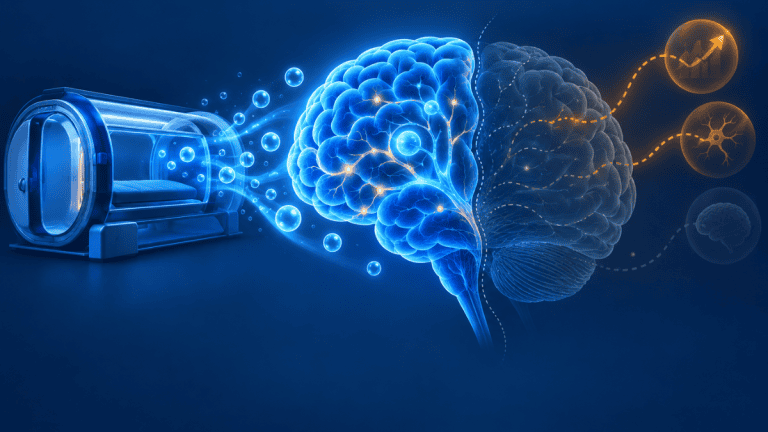
| What it is | Shining red or near-infrared light at the head (transcranial photobiomodulation) to try to boost brain function. The light is absorbed by mitochondria, which is a genuinely plausible mechanism. |
| What the science shows | Small human pilots report improved attention, memory and executive function — but they’re mostly tiny, single-session studies. It’s an encouraging early signal, not proof. |
| The big caveat | The consumer red-light panels and LED face masks sold for “brain” benefits are not the skull-targeted near-infrared devices used in studies. Buying a mask for cognition isn’t evidence-based. |
| Clinical uses | Trials in TBI, mild cognitive impairment and dementia are early and experimental — promising enough to keep studying, nowhere near an established therapy. |
| Bottom line | Real science worth watching, not a proven cognitive enhancer. Interesting to follow; too early to spend serious money or hype on. |
Red Light Therapy and the Brain: What the Science Actually Shows
By Peter Benson, Cognitive Enhancement Researcher | 18+ Years Independent Research · Last Updated: August 2026
Red light therapy for the brain sits in an unusual spot: the underlying science is more legitimate than most biohacks, and the marketing around it is more overblown than most biohacks. Both things are true at once. Shining near-infrared light at the head — properly called transcranial photobiomodulation — has a genuinely plausible biological mechanism and a growing set of intriguing pilot studies. It also has an industry of red-light panels and LED face masks making brain claims those studies don’t remotely support. Sorting the real signal from the sales pitch is the whole job here.
This guide walks through what the mechanism is, what the human evidence does and doesn’t show, why the device you’d buy probably isn’t the device that was studied, and where this all honestly stands. It belongs in the biohacking category precisely because it’s the kind of early-stage tool that rewards a sceptical, evidence-first read.
The Mechanism: Why Light Might Help at All
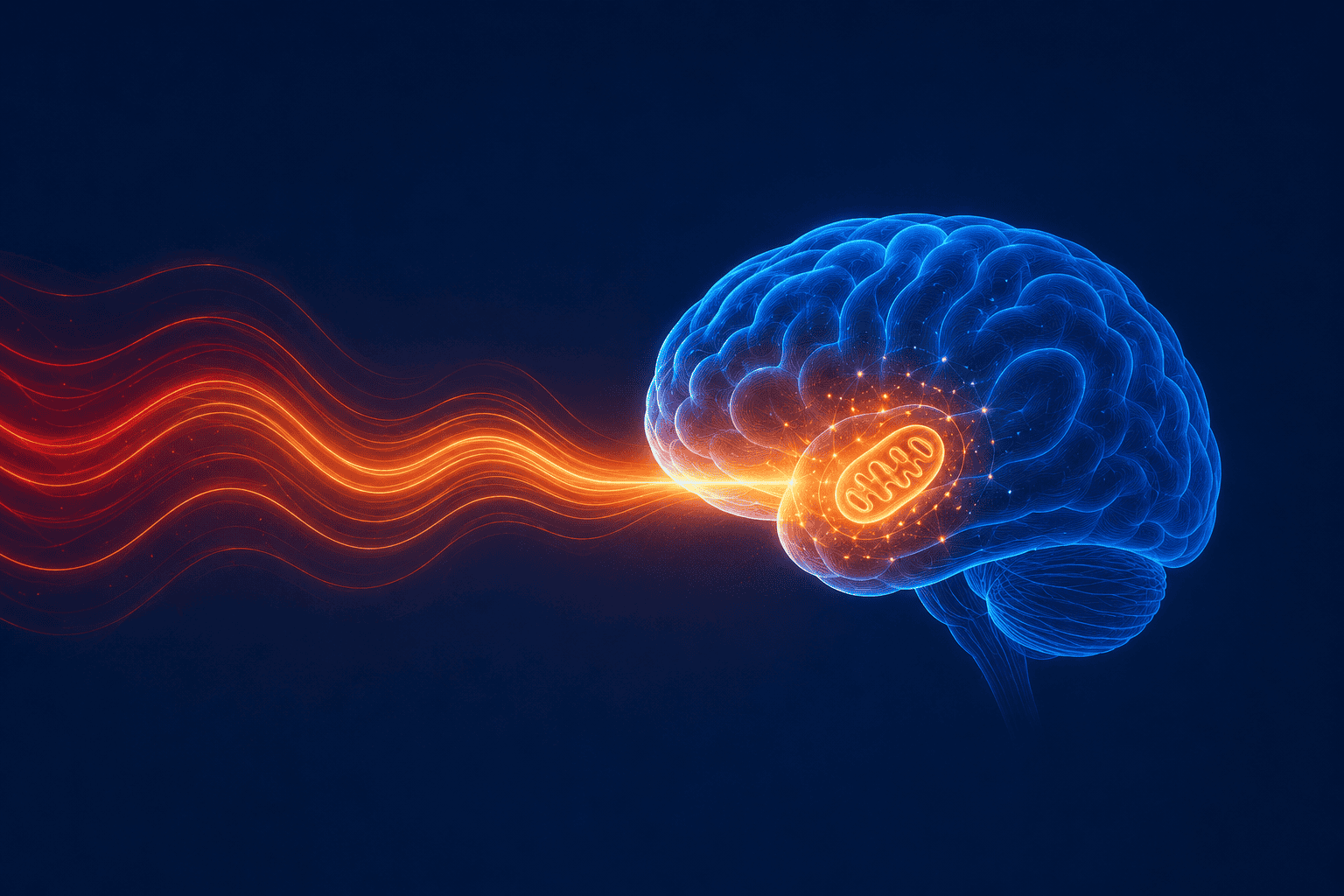
This is the part that’s genuinely well-founded. Red and near-infrared light — roughly in the 600 to 1100 nanometre range — penetrates tissue and is absorbed by an enzyme in your mitochondria called cytochrome c oxidase. That enzyme sits at the end of the chain that produces ATP, the cell’s energy currency. Stimulate it with the right wavelength of light and, in theory, you nudge mitochondria to produce more energy, along with knock-on effects on blood flow, inflammation and oxidative stress. In brain tissue, more mitochondrial energy and better blood flow are reasonable things to want.
This isn’t purely theoretical, either. Studies using near-infrared spectroscopy have shown that transcranial light can actually increase cytochrome c oxidase activity and cerebral blood flow in humans, not just in a dish (Wang et al., 2017). So the mechanism clears a bar a lot of biohacks never reach: there’s a real, measurable biological effect, and a coherent story for why it might support cognition. The harder question — the one the mechanism can’t answer on its own — is whether that translates into you actually thinking better.
The Human Evidence: Promising, but Early and Small
Here’s where honesty has to do the heavy lifting. There genuinely are human studies, and they’re genuinely encouraging. The foundational one had healthy adults receive a single session of near-infrared laser to the forehead, and found improvements in sustained attention, short-term memory and mood compared with a sham (Barrett & Gonzalez-Lima, 2013). Later small studies reported gains in executive function and rule-based learning from the same approach. On paper, that’s a promising pattern.
But look closely at what these studies are. They’re small — often a few dozen people or fewer. Many test a single session and measure the effect minutes to hours later, not weeks of real-world cognitive benefit. A 2023 systematic review of human studies found that a striking 83% reported cognitive improvements — which sounds like a slam dunk until you notice that a near-uniform positive rate across dozens of tiny, varied pilot studies is exactly the pattern you’d expect from publication bias and small samples, not from a robust, well-replicated effect. When almost everything is positive and almost nothing is large or rigorously controlled, the honest interpretation is “encouraging early signal,” not “established.”
What’s missing is what would actually settle it: large, well-blinded, randomised trials measuring durable cognitive gains in everyday life. Until those exist, red light for the brain is a hypothesis with supportive pilot data — a genuinely different thing from a proven intervention like exercise.
The Device Gap Nobody Advertises
This is the single most important practical point, and the one the marketing quietly skips. The studies above used specific, purpose-built transcranial devices: particular near-infrared wavelengths (often around 810 or 1064 nm), defined power densities, and placement designed to get light through the skull to the cortex. Getting meaningful near-infrared light past the scalp and skull to brain tissue is hard, and these devices are engineered specifically to attempt it.
The red-light panel in a wellness studio, or the LED face mask sold for skin and “brain health,” is generally a different animal. Many emit mostly visible red light tuned for skin, at wavelengths and intensities that were never shown to deliver a relevant dose to the brain — and they’re aimed at your face, not positioned to penetrate the skull. Using a skincare-grade red-light device and expecting the cognitive effects seen in transcranial near-infrared studies is a category error. If a product markets brain benefits by gesturing at photobiomodulation research, the fair question is always: is this actually the wavelength, dose and placement that was studied? Usually, it isn’t.
Clinical Uses: Real Research, Still Experimental
Beyond healthy cognition, transcranial photobiomodulation is being studied in traumatic brain injury, mild cognitive impairment and dementia, where the mitochondrial-support rationale is especially appealing. Early work — small open studies and pilot trials — has reported cognitive improvements in chronic mild TBI (Naeser et al., 2014) and in older adults with memory complaints. It’s a legitimately active and hopeful research area.
But “active and hopeful research area” is not the same as “treatment.” These are early-stage studies, often without the large randomised controls that establish a therapy, and the conditions involved demand real medical care rather than a home light device. This fits the broader, well-evidenced picture of how to protect the brain as you age, where the proven levers remain the fundamentals — and where an experimental light therapy is, at best, something to watch, not something to rely on.
So Where Does That Leave You?
Honestly, in a wait-and-see position — which is a perfectly respectable place for a genuinely early technology to be. The mechanism is real, the pilot data is encouraging, the safety profile in studies has looked reasonable, and larger trials may yet confirm a meaningful effect. None of that is nothing. But none of it yet justifies treating red light as a reliable cognitive enhancer, and certainly not paying premium prices for consumer devices that don’t match the studied ones.
The disciplined move is to keep your foundations — sauna, cold exposure and the rest of the biohacking toolkit have their own honest evidence pages worth reading — and treat red light as an interesting experiment to follow, not a settled tool to build your routine around. If you do choose to try it, do so with clear eyes: as an n-of-1 experiment on unproven ground, not as a purchase backed by the science.
Red light for the brain is a perfect test case for a skill worth more than any single biohack: how to evaluate an exciting-but-unproven intervention before it takes your money. Run it through four questions.
1. Is the mechanism plausible? Here, yes — light to mitochondria via cytochrome c oxidase, with measurable human effects on brain metabolism and blood flow. This clears the first bar. (Many biohacks fail right here.)
2. What’s the quality of the human evidence? Small pilots, mostly single-session, near-uniformly positive — which signals early promise and likely publication bias, with no large randomised trials yet. So: interesting, not established.
3. Does the product match the study? This is the question that saves the most money. The studied devices are skull-targeted near-infrared units; a red-light face mask is not the same wavelength, dose or placement. If the answer is “no,” the study evidence doesn’t transfer to the product.
4. Can you test it honestly yourself? If you proceed anyway, treat it as an experiment — define what you’d expect to change, and check it the way you’d track any intervention. Applied to red light, this framework lands you exactly where the evidence does: worth watching, not worth betting on.
Red Light Therapy for the Brain — Evidence Ranked
🟢 Well supported | 🟡 Real but qualified | 🔴 Commonly claimed, not supported
| Claim | Evidence | Basis |
|---|---|---|
| Near-infrared light affects brain mitochondria & blood flow | 🟢 Mechanism supported | Cytochrome c oxidase + haemodynamics measured in humans (Wang 2017) |
| Transcranial NIR can acutely improve attention/memory | 🟡 Promising, preliminary | Small, often single-session pilots (Barrett & Gonzalez-Lima 2013; Blanco 2017) |
| It’s a proven, reliable cognitive enhancer | 🔴 Not established | No large blinded RCTs of durable benefit; ~83% positive rate signals publication bias (2023 review) |
| Consumer red-light panels/masks give the studied brain benefits | 🔴 Not supported | Wrong wavelength/dose/placement vs skull-targeted study devices |
| It’s an established treatment for TBI or dementia | 🔴 Experimental only | Early pilot trials (Naeser 2014); not a standard therapy |
The NeuroEdge Early-Tech Stance
Not a usage protocol — this technology isn’t proven enough for one. A stance for engaging with it honestly. Updated August 2026.
The mitochondrial rationale is real and measurable — this isn’t pseudoscience. Take the underlying science seriously.
Small, single-session, near-uniformly positive pilots are early signal, not proof. Wait for large blinded trials before believing big claims.
A skincare red-light mask is not a skull-targeted near-infrared study device. Don’t pay for cognitive claims a consumer product can’t deliver.
Sleep, exercise and nutrition have the strong evidence. Let an unproven light therapy be a curiosity on top, never a foundation.
Peter’s Testing Notes — Red Light
First-person, n=1 — impressions, not measurements · Updated August 2026
Red light is the topic where I most have to police my own enthusiasm. The mechanism is elegant, the early studies are the kind I find genuinely exciting, and it would be easy to let that excitement outrun the evidence — which is precisely the trap this whole site exists to avoid. When I catch myself wanting something to be true, that’s my cue to slow down, and red light triggers exactly that reaction.
The thing that keeps me honest is the device-gap question. Most of what’s marketed to consumers for “brain” benefits is not what the transcranial studies used, and once you internalise that, a lot of the shopping temptation evaporates. I’d rather follow the research than buy a panel that borrows the research’s credibility without matching its parameters.
So my stance is deliberately patient: I treat red light as one of the more interesting things to watch in this space, not as part of my actual routine. If the large trials land well, I’ll happily revisit. Until then it stays in the “promising, unproven” column — and I’m comfortable saying that plainly rather than pretending to a certainty the data doesn’t support. (These notes are direction-only impressions, not measured results.)
Key Takeaways — Red Light Therapy and the Brain
| ✓ | The mechanism is real. Near-infrared light reaches mitochondria via cytochrome c oxidase and measurably affects brain metabolism and blood flow in humans (Wang 2017) — a higher bar than most biohacks clear. |
| ✓ | The evidence is promising but early. Human studies report attention and memory gains (Barrett & Gonzalez-Lima 2013), but they’re small, often single-session, and lack the large blinded RCTs that would make it established. |
| ✓ | The device you’d buy isn’t the device studied. Consumer red-light panels and face masks use different wavelengths, doses and placement than skull-targeted transcranial units. Their brain claims don’t inherit the research. |
| ✓ | Clinical uses are experimental. Trials in TBI, MCI and dementia are early and hopeful (Naeser 2014), not established treatments — and those conditions need real medical care. |
| ✓ | Watch it; don’t build on it. Keep your proven foundations — sleep, exercise, nutrition — and treat red light as an interesting experiment to follow, not a tool to anchor your routine or budget. |
Red Light Therapy and the Brain — FAQ
Does red light therapy actually improve brain function?
The honest answer is “maybe, and it’s too early to be sure.” Small human studies of transcranial near-infrared light report improvements in attention, memory and executive function, and the mechanism — light stimulating mitochondria — is genuinely plausible and measurable. But these studies are small, often single-session, and there are no large, well-blinded randomised trials confirming durable, real-world benefits. It’s an encouraging early signal, not a proven cognitive enhancer.
How does light on the head affect the brain?
Red and near-infrared light (roughly 600–1100 nm) can penetrate tissue and is absorbed by cytochrome c oxidase, an enzyme in mitochondria involved in producing cellular energy (ATP). Stimulating it is thought to increase mitochondrial energy production, along with effects on blood flow and inflammation. Human studies using near-infrared spectroscopy have shown transcranial light can increase cytochrome c oxidase activity and cerebral blood flow (Wang et al. 2017), so the biological effect is real — the open question is how much it improves actual thinking.
Will a red light panel or LED face mask give brain benefits?
Probably not the ones seen in research. The cognitive studies used purpose-built transcranial devices with specific near-infrared wavelengths (often around 810 or 1064 nm), defined doses, and placement designed to get light through the skull to the cortex. Consumer red-light panels and skincare face masks typically use different wavelengths and intensities aimed at the skin, and weren’t shown to deliver a meaningful dose to the brain. Expecting the studied brain effects from a skincare-grade device is a category error.
Is transcranial photobiomodulation safe?
In the studies conducted so far it has generally appeared well-tolerated, but “appears safe in small trials” is not the same as a full long-term safety profile, and this remains experimental. Lasers and high-power light sources carry genuine eye-safety risks and must be used with proper protection. Because it’s early-stage and not an approved treatment for any condition, anyone considering it — especially for a medical issue like brain injury — should speak with a qualified professional rather than self-treating.
Should I try red light therapy for cognition?
There’s no strong evidence-based reason to yet, and no reason to prioritise it over proven fundamentals like sleep, exercise and nutrition. If you’re drawn to it anyway, approach it as an experiment on unproven ground rather than a purchase backed by science: be sceptical of consumer devices that borrow research credibility without matching the studied parameters, mind the eye-safety cautions, and keep your expectations modest. The most reasonable position today is to watch the research, not build your routine around it.
Get “7 Days to a Sharper Brain” — Free
Peter Benson’s personal daily protocol, rebuilt from 18 years of testing
Seven evidence-based interventions, in the exact order that makes each one more effective — from sleep foundation to neuroplasticity and Lion’s Mane.
Join 2,000+ readers optimising their cognitive performance. Unsubscribe anytime.
Scientific References
- Barrett DW, Gonzalez-Lima F. (2013). Transcranial infrared laser stimulation produces beneficial cognitive and emotional effects in humans. Neuroscience, 230:13–23. DOI: 10.1016/j.neuroscience.2012.11.016
- Wang X, Tian F, Reddy DD, et al. (2017). Up-regulation of cerebral cytochrome-c-oxidase and hemodynamics by transcranial infrared laser stimulation: a broadband near-infrared spectroscopy study. Journal of Cerebral Blood Flow & Metabolism, 37(12):3789–3802. PMID 28178873
- Blanco NJ, Maddox WT, Gonzalez-Lima F. (2017). Improving executive function using transcranial infrared laser stimulation. Journal of Neuropsychology, 11(1):14–25. PMID 25546498
- Lee TL, Ding Z, Chan AS. (2023). Can transcranial photobiomodulation improve cognitive function? A systematic review of human studies. Ageing Research Reviews, 83:101786. PMID 36371017
- Naeser MA, Zafonte R, Krengel MH, et al. (2014). Significant improvements in cognitive performance post-transcranial, red/near-infrared light-emitting diode treatments in chronic, mild traumatic brain injury: open-protocol study. Journal of Neurotrauma, 31(11):1008–1017. DOI: 10.1089/neu.2013.3244

Peter Benson
Cognitive Enhancement Researcher | 18+ Years Independent Research
Peter has spent 18+ years separating genuine cognitive science from wellness marketing. He writes about red light therapy the way he approaches any early-stage tool — taking the mechanism seriously, holding the hype at arm’s length, and being honest that “promising” is not the same as “proven.”
Last reviewed: August 2026 | Educational content only. Not medical advice.