Memory Palace Method of Loci
Educational information. This article explains a learning technique and the research behind it. It reflects independent research, not medical or clinical advice. Memory techniques are skills — results depend on how consistently you practise them, and individual outcomes vary.
| What it is | The memory palace — or method of loci — is a technique for remembering information by placing vivid mental images of it along a familiar route (your home, a walk to work). You recall the items by mentally walking the route again. It’s roughly 2,500 years old and is still what nearly every competitive memory champion uses. |
| Why it works | It hijacks the brain’s unusually strong machinery for spatial memory and navigation. Abstract lists are hard to hold; a route through a place you know is almost effortless — so anchoring facts to locations borrows that strength. |
| What the evidence shows | Strong. Controlled studies find it beats rote rehearsal for ordered recall (Roediger 1980); champions using it aren’t anatomically special or generally smarter (Maguire 2003); and six weeks of training roughly doubled recall in ordinary adults, with gains lasting months (Dresler 2017). |
| Best for | Ordered or list-like material: speeches, vocabulary, names and faces, sequences, exam facts, numbers. Anything you need to recall in order or verbatim. |
| What it won’t do | It doesn’t build conceptual understanding, transfer to general intelligence, or work without effort — encoding each image takes a few deliberate seconds, and the skill is specific to what you practise. It’s a retention tool, not a shortcut to being smarter. |
The Memory Palace: How the Method of Loci Actually Works
By Peter Benson, Cognitive Enhancement Researcher | 18+ Years Independent Research · Last Updated: August 2026
The memory palace is the rare cognitive technique that sounds like a party trick, is genuinely ancient, and also holds up under modern neuroscience. Nearly every competitor at the World Memory Championships uses it to memorise the order of shuffled card decks and hundreds of random digits — and when researchers scan those people, they turn out to have ordinary brains and ordinary general intelligence. What they have is a method. This guide explains what that method is, why it works on the hardware you already own, exactly how to build your first one, and — just as importantly — what it can’t do, because the honest limits are the part most tutorials skip.
The method of loci (Latin for “places”) is one of the oldest and best-evidenced tools in the whole memory and learning toolkit. It sits alongside spaced repetition and active recall not as a rival but as a complement — a way to get information in quickly and in order, which the other techniques then help you keep.
What the Method of Loci Actually Is
The technique has a founding story. Around 2,500 years ago the Greek poet Simonides of Ceos stepped out of a banquet moments before the roof collapsed, killing everyone inside beyond recognition. Asked to identify the dead, he found he could — by picturing the table and recalling who had sat in each seat. The insight he drew from it became the method of loci: if you attach things you want to remember to locations you already know, the locations pull the memories back for you. Greek and Roman orators then used it for centuries to deliver hour-long speeches without notes, walking an imagined building in their mind and “collecting” each argument from the room where they had left it.
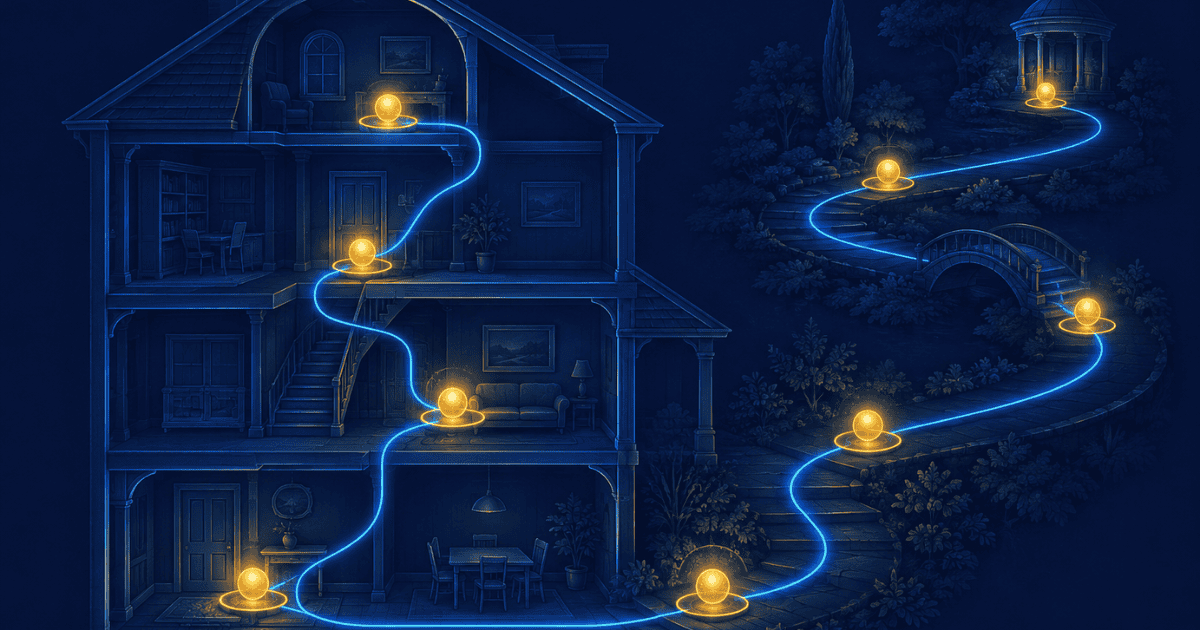
Mechanically it has two phases. During encoding, you take a route you know intimately — the path through your home, your commute, a familiar street — and pick a series of distinct stopping points along it, in a fixed order. Then you turn each thing you want to remember into a vivid, exaggerated mental image and “place” it at one of those points. During retrieval, you simply take the walk again in your mind; each location hands back the image you left there, and the fixed order of the route preserves the order of your items. That is the entire trick: you are not trying to memorise a list, you are taking a walk through a place you can’t forget, and letting the place do the remembering.
Why It Works: Your Brain’s Spatial Machinery
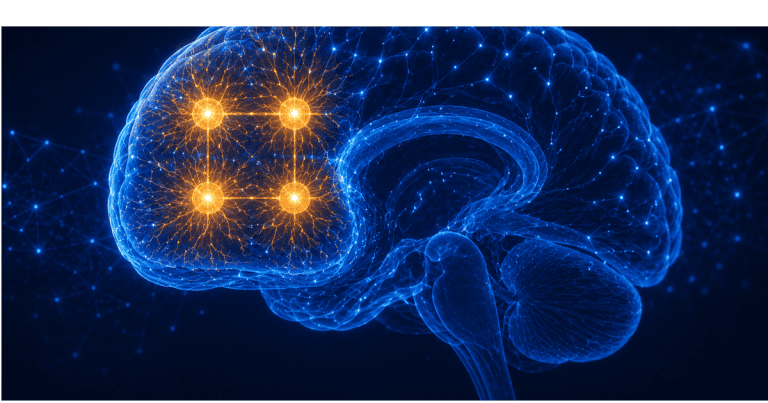
The reason the method is so effective is that it doesn’t fight your memory — it borrows from your strongest system. Human beings are extraordinarily good at spatial memory. You can picture the layout of your childhood home decades later, navigate a familiar route on autopilot, and instantly notice when a piece of furniture has moved. That capacity is supported by dedicated circuitry in and around the hippocampus — the brain builds an internal “cognitive map” of space, an achievement so fundamental that the discovery of the place cells underlying it earned a Nobel Prize in 2014. Abstract information — a list of twenty unrelated words — has nothing to hook onto and slips away. A journey through a place you know is held almost effortlessly. The method of loci is a bridge between the two: it converts fragile abstract material into durable spatial material.
This isn’t just a nice metaphor — it shows up in the brain. When Eleanor Maguire and colleagues (2003) scanned ten of the world’s best memorisers while they worked, the memorisers recruited regions involved in spatial memory and navigation — exactly the areas the method of loci should engage — even when the material they were memorising (like strings of digits) had nothing spatial about it. They were, quite literally, turning numbers into places. The same study delivers the finding that makes this technique so encouraging: those champions scored no higher than ordinary people on general cognitive tests and showed no structural brain differences. The superpower was the strategy, not the hardware — which means it’s learnable. There’s more on the underlying encoding mechanisms in the neuroscience of learning.
It also sidesteps a hard limit of working memory, which can only juggle a handful of items at once. By offloading each item onto a stable location in long-term spatial memory, the palace removes the bottleneck — which is how memory athletes hold sequences far longer than the famous “seven, plus or minus two” that constrains raw short-term memory.
What the Evidence Actually Shows
This is a technique with a genuinely good evidence base — but it pays to be precise about what has been shown. Three strands matter most.
It beats rote repetition, in controlled tests. When Roediger (1980) compared four memory strategies head to head, imagery-based mnemonics — the method of loci among them — clearly outperformed simply repeating the words, especially when people had to recall the material in order. Earlier classic work by Bower (1970) had found loci users recalling roughly twice as many items as controls. Ordering is the technique’s home turf: the fixed route is itself a record of sequence.
Ordinary people can learn it, fast, and the gains stick. The most important modern study is Dresler and colleagues (2017). They took people with no memory training and had them practise the method of loci for about half an hour a day over six weeks. Recall on a word-list task roughly doubled, and — crucially — the improvement was still largely there at a four-month follow-up, long after training stopped. Their brain-connectivity patterns even began to shift toward those seen in elite memory athletes. This is as close as this field gets to a clean demonstration that the technique causes durable improvement rather than merely correlating with it.
Mnemonic systems can expand functional memory dramatically — but specifically. In a famous case study, Ericsson, Chase and Faloon (1980) trained a single participant who, over more than 230 hours of practice, pushed his digit span from the normal 7 up to 79. He did it not with a better brain but by building a mnemonic system that recoded digits into meaningful associations. Two honest lessons come with it: the gains take real practice, and they are domain-specific — when tested on letters instead of digits, his span dropped straight back to normal. That specificity is the key to reading this whole literature correctly.
Which points to the honest boundary. As memory researchers themselves note, champions excel at set-piece memory tasks — lists, digits, cards — not at general intelligence, reasoning, or understanding. The method of loci makes you dramatically better at holding structured information you deliberately encode. It does not make you smarter in general, and it was never supposed to.
How to Build Your First Memory Palace
You can build a working palace in a single sitting. The steps are simple; the skill is in the practice.
1. Choose a place you know cold. Your home is the classic first palace. It must be somewhere you can walk in your mind without hesitation — familiarity is the whole foundation, so don’t invent a fantasy castle you don’t actually know.
2. Fix a route and its stops. Decide a consistent path through it — front door, hallway, kitchen counter, sofa, and so on — and settle on a set order of distinct locations (start with 5–10). Always travel them the same way. The fixed order is what encodes sequence.
3. Turn each item into a vivid image. Abstract facts don’t stick; strange pictures do. Make each image exaggerated, moving, absurd, even a little rude — the more distinctive and multisensory, the better it holds. “Buy milk” becomes a cow flooding your hallway with milk, not the word “milk.”
4. Place one image at each stop, in order. Walk the route in your mind and set each image down at its location, interacting with the scene. Spend a few deliberate seconds on each — this is the encoding cost, and it’s real; rushing is the main reason a palace fails.
5. Retrieve by walking the route. To recall, take the walk again and read off each image in turn. The first few times, check yourself against the original list; the route quickly becomes automatic.
6. Reuse and expand. A palace can be cleared and refilled for new material, and you can build a stable of them (home, office, a familiar walk) for different subjects. Keeping separate palaces for separate topics prevents images bleeding into each other.
Suppose you want the first six elements of the periodic table in order — hydrogen, helium, lithium, beryllium, boron, carbon. Take the route through your home: front door → hallway → kitchen → sofa → bathroom sink → bed.
At the front door, a giant hydrogen bomb is wedged in it (hydrogen). In the hallway, a helium balloon lifts your coat rack to the ceiling. On the kitchen counter, a lithium battery the size of a loaf is leaking. On the sofa, a cartoon berry sits wearing a crown — a “beryl queen” for beryllium. At the bathroom sink, a wild boar is drinking (boron). And in the bed, a lump of coal (carbon) has left black smears on the sheets.
Now walk it: door, hallway, kitchen, sofa, sink, bed — bomb, balloon, battery, berry-queen, boar, coal — hydrogen, helium, lithium, beryllium, boron, carbon. Notice what happened: you didn’t memorise a list at all. You took a ten-second walk through your own home and the order came for free, because the route is the order. That is the method in miniature — and it scales to hundreds of items the same way, one location at a time.
The Method of Loci — Evidence Ranked
🟢 Strong evidence | 🟡 Real but qualified | 🔴 Commonly claimed, not supported
| Claim | Evidence | Basis |
|---|---|---|
| Beats rote rehearsal for ordered recall | 🟢 Strong | Controlled comparisons (Roediger 1980; Bower 1970) |
| Ordinary adults can learn it, with durable gains | 🟢 Strong | 6-week training roughly doubled recall, held at 4 months (Dresler 2017) |
| Works via spatial-memory brain systems | 🟢 Strong | fMRI of champions shows navigation-region engagement (Maguire 2003) |
| Can hugely expand functional memory span | 🟡 Yes, but specific | Digit span 7→79 — but domain-specific, needs heavy practice (Ericsson 1980) |
| Requires no special talent or unusual brain | 🟡 Correct, with effort | Champions score normally on general cognition (Maguire 2003) — but skill takes practice |
| Makes you generally smarter / boosts understanding | 🔴 Not supported | Gains are set-piece and material-specific; no transfer to reasoning or comprehension |
What It’s Good For — and What It Isn’t
The method of loci is superb for anything ordered or list-like: the sequence of a speech, foreign vocabulary, names and faces at an event, a shopping or packing list, historical dates, the cranial nerves, a deck of cards. If you need to reproduce structured information reliably and in order, it is close to the best tool available.
It is a poor fit for a few things, and being clear-eyed about them saves frustration. It doesn’t create understanding — you can memorise the steps of a proof without grasping why it’s true, and the palace won’t close that gap. It carries a real encoding cost: each image takes a few deliberate seconds to fix, so it’s not free, and for a handful of items a simpler approach may be faster. And the skill is specific to what you drill; getting fluent at memorising digits doesn’t automatically make you good at memorising faces. Treat it as a precise instrument for retention, not a general upgrade to your mind.
How It Fits With Spaced Repetition and Active Recall
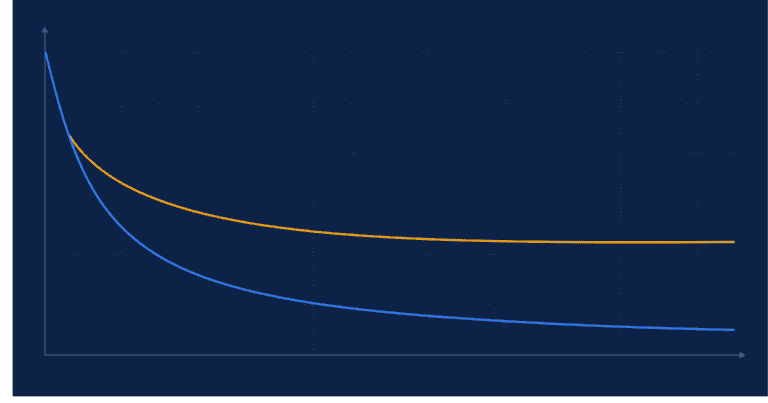
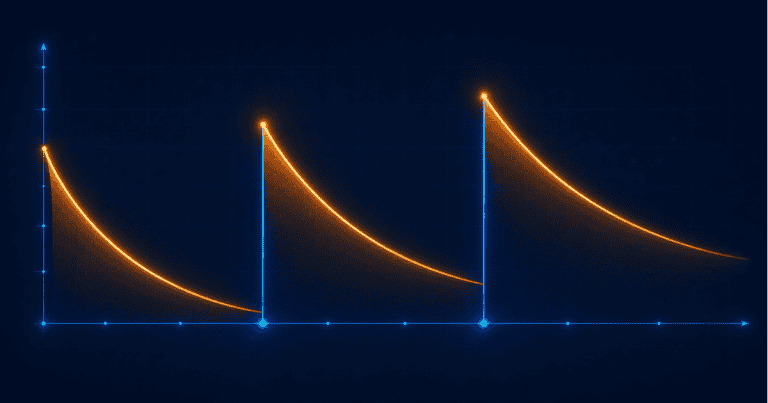
The memory palace is an encoding technique — it gets information in fast and in order. But like any memory, palace contents fade if you never revisit them, following the usual forgetting curve. That’s where the other techniques earn their place. Reviewing your palace on a widening schedule — the logic of spaced repetition — is what turns a vivid one-day memory into a durable one.
And the act of walking your palace to recall the items is a form of active recall — effortful retrieval, which is itself one of the most powerful drivers of long-term retention. So the three fit together cleanly: the palace encodes, active recall strengthens on each walk-through, and spaced repetition schedules those walk-throughs so the material lasts. Used together they’re far stronger than any one alone.
The NeuroEdge Memory Palace Protocol
A four-step way to go from “read about it” to actually using it — and to make what you memorise last. Updated August 2026.
Map a fixed 10-stop route through your home and rehearse the empty route until it’s automatic. One reliable palace beats five vague ones.
Use it on genuine material this week — a talk, a vocab set, a list — not toy words. Make each image absurd and multisensory, and give each a few unhurried seconds.
Retrieve by re-walking the route from memory, not by re-reading. The retrieval effort is active recall, and it strengthens the trace each time.
Re-walk anything you need to keep on a widening schedule — next day, a few days, a week, a month — so it survives the forgetting curve instead of fading.
Peter’s Testing Notes — The Memory Palace
First-person, n=1 — impressions, not measurements · Updated August 2026
Of all the techniques I’ve tested over the years, the memory palace is the one that most reliably produces a genuine “that shouldn’t be possible” moment the first time it works — you take one slow mental walk and a list you’d normally fumble comes back in perfect order. What surprised me is how much the quality of the images matters versus the route. A boring image at a good location still slips; a ridiculous, moving, slightly absurd image sticks almost involuntarily. The instinct to be tasteful and literal is the enemy here.
The honest friction is the encoding cost. It is not effortless in the moment — placing images deliberately takes real attention, and when I’ve rushed to save time, that’s exactly when a palace has fallen apart on recall. My practical rule is that the palace earns its keep for structured, ordered material I actually need to reproduce — a talk, a sequence, a set of terms — and that for a quick five-item errand list it’s often overkill.
The other thing experience taught me is that a palace is not permanent unless you revisit it. Vivid encoding buys you a day or two for free; keeping something for months has always meant walking it again on a spacing schedule. Encode with the palace, keep it with spaced review — that pairing is what actually holds for me. (These notes are direction-only impressions, not measured results.)
Key Takeaways — The Memory Palace
| ✓ | It borrows your strongest system. The method of loci converts fragile abstract lists into durable spatial memories by anchoring images to a familiar route — using the brain’s powerful navigation machinery instead of fighting it. |
| ✓ | The evidence is genuinely strong. It beats rote rehearsal in controlled tests (Roediger 1980), champions using it have ordinary brains (Maguire 2003), and six weeks of training roughly doubled recall with gains lasting months (Dresler 2017). |
| ✓ | Anyone can learn it — with practice. No special talent or unusual brain is required, but it isn’t magic: each image takes a few seconds to encode, and fluency comes from drilling, not reading. |
| ✓ | Know its lane. It’s superb for ordered, list-like material and useless for building understanding or general intelligence. The gains are set-piece and specific to what you practise — a retention tool, not a smart-pill. |
| ✓ | Pair it to make it last. The palace encodes; active recall (walking it) strengthens; spaced repetition schedules the reviews. Together they turn a one-day feat into a lasting memory. |
Memory Palace — FAQ
Does the memory palace technique actually work?
Yes, and it’s one of the better-evidenced techniques in the field. Controlled studies find it outperforms simple rehearsal for recalling material in order (Roediger 1980), and a 2017 training study found that six weeks of practice roughly doubled recall in ordinary adults, with the gains still present four months later (Dresler et al.). Nearly all competitive memory champions rely on it. The important caveat is scope: it’s excellent for memorising structured, ordered information, not for understanding concepts or raising general intelligence.
Do you need a special memory or a “photographic” brain to use it?
No. When researchers scanned ten of the world’s top memorisers, they found ordinary brain anatomy and ordinary general cognitive ability — the difference was strategy, not hardware (Maguire et al. 2003). What separates champions from beginners is practice with the method, not a rare gift. Anyone can build a working palace in one sitting; getting fast and reliable simply takes drilling it on real material.
What is the memory palace best used for?
Ordered or list-like material where sequence or completeness matters: the flow of a speech or presentation, foreign vocabulary, names and faces, numbers, historical dates, anatomical lists, a deck of cards. Because the fixed route encodes order automatically, it shines exactly where plain rehearsal struggles. It’s less useful for one or two quick items (a simpler trick is faster) and for material you need to understand rather than reproduce.
How many memory palaces can I have, and can I reuse them?
You can build as many as you have familiar places — home, office, a regular walk, a relative’s house. Keeping separate palaces for separate subjects stops images from bleeding together. A palace can also be cleared and refilled with new material; if you want to keep the old contents and add new ones, use a different palace rather than overwriting. Most people accumulate a small stable of reliable ones over time.
Will the things I store in a palace stay there permanently?
Not by themselves. Vivid encoding gives you a strong memory for a day or two, but palace contents fade like any memory if never revisited. To keep something long-term, re-walk the palace on a spacing schedule — the next day, a few days later, a week, a month. That combination of vivid encoding plus spaced retrieval is what turns a short-lived feat into durable knowledge.
Get “7 Days to a Sharper Brain” — Free
Peter Benson’s personal daily protocol, rebuilt from 18 years of testing
Seven evidence-based interventions, in the exact order that makes each one more effective — from sleep foundation to neuroplasticity and Lion’s Mane.
Join 2,000+ readers optimising their cognitive performance. Unsubscribe anytime.
Scientific References
- Dresler M, Shirer WR, Konrad BN, et al. (2017). Mnemonic Training Reshapes Brain Networks to Support Superior Memory. Neuron, 93(5):1227–1235.e6. PMID 28279356
- Maguire EA, Valentine ER, Wilding JM, Kapur N. (2003). Routes to remembering: the brains behind superior memory. Nature Neuroscience, 6(1):90–95. PMID 12483214
- Ericsson KA, Chase WG, Faloon S. (1980). Acquisition of a Memory Skill. Science, 208(4448):1181–1182. DOI: 10.1126/science.7375930
- Roediger HL. (1980). The effectiveness of four mnemonics in ordering recall. Journal of Experimental Psychology: Human Learning and Memory, 6(5):558–567. full text (PDF)
- Bower GH. (1970). Analysis of a mnemonic device. American Scientist, 58(5):496–510.
- Yates FA. (1966). The Art of Memory. University of Chicago Press. (Historical account of the method of loci from Simonides onward.)

Peter Benson
Cognitive Enhancement Researcher | 18+ Years Independent Research
Peter has spent 18+ years testing learning and memory techniques through systematic self-experimentation. He writes about the method of loci the way he uses it — as a precise, well-evidenced tool for retaining structured information, honest about both its power and its limits.
Last reviewed: August 2026 | Educational content only. Not medical advice.