
Sauna and Cognitive Performance
⚕️ Educational Information, Not Medical Advice
This article reflects independent research, not clinical guidance. I’m a cognitive enhancement researcher, not a medical doctor. Sauna use is not safe for everyone. It carries real risks for people with certain cardiovascular conditions, during pregnancy, in combination with alcohol, and alongside some medications — all covered in detail below. If you have a heart condition, are pregnant, or take regular medication, speak to a qualified healthcare provider before starting sauna use.
Sauna and Cognitive Performance: What the Evidence Really Says
Few topics in the heat-therapy world attract bolder claims than sauna cognitive performance, and the headline finding is genuinely arresting: a large Finnish study found that men who used a sauna most frequently had roughly a third of the dementia risk of those who used it rarely. That’s the sort of number that launches a thousand cold-plunge-and-sauna routines. It’s also, on its own, a misleading basis for the confident claims you’ll see — and understanding why is more useful than the headline itself.
Here’s the honest version, which took me a while to accept because I like my sauna: the long-term data is promising but observational, the acute effect of being hot is often to make your thinking slightly worse, and the whole thing sits on top of a real safety profile that most enthusiastic coverage skips entirely. This article walks through all three. It’s part of our Biohacking & Advanced Protocols guide, and it pairs naturally with our look at cold exposure and cognition, which has its own evidence problems worth knowing.
The Finnish dementia finding, in full
Let’s start with the study everyone quotes, stated properly. Researchers followed 2,315 apparently healthy Finnish men aged 42–60 for a median of nearly 21 years, as part of the long-running Kuopio Ischaemic Heart Disease study (Laukkanen et al., 2017). Compared with men who used a sauna once a week, those who used one 4–7 times a week had a hazard ratio of 0.34 for dementia and 0.35 for Alzheimer’s disease — very roughly a two-thirds lower risk — after adjusting for factors like age, alcohol, blood pressure and smoking.
That is a real, striking, dose-dependent association, and I don’t want to wave it away. The same cohort has produced similar findings for cardiovascular mortality and stroke, so this isn’t a lone fluke. But three features of the study define exactly how much weight it can bear, and they rarely make it into the summary.
It was observational: nobody was assigned to use a sauna. It studied only middle-aged Finnish men, in a culture where sauna use is lifelong and habitual, which limits how far it generalises to women, other ages, or occasional users elsewhere. And it measured dementia diagnoses decades later, not cognitive performance you’d notice next week. Keep those three in mind and the finding stays interesting without becoming something it isn’t.
Why “observational” matters so much here
Observational studies can adjust for confounders they measured, but not for the ones they didn’t — and sauna frequency is unusually tangled up with other things. Consider who, in 1980s Finland, was able to use a sauna four to seven times a week. Broadly, people healthy enough to, with the leisure time and social stability to make it routine, and without the illnesses that keep you away. Frequent sauna use is partly a marker of a life that already protects the brain: good health, social connection, relaxation, routine.
This is the phenomenon where early observational data suggested benefits that later randomised trials couldn’t confirm, because the behaviour was standing in for a healthier underlying population. It doesn’t mean sauna does nothing — the dose-dependent pattern and plausible mechanisms genuinely argue for something real. It means the true effect is very likely smaller than a raw two-thirds risk reduction, because some of that gap reflects who saunas rather than what saunas do. Honest interpretation lands on “promising, probably beneficial, magnitude unknown,” not “proven brain protection.”
The part biohackers get backwards: acute heat impairs thinking
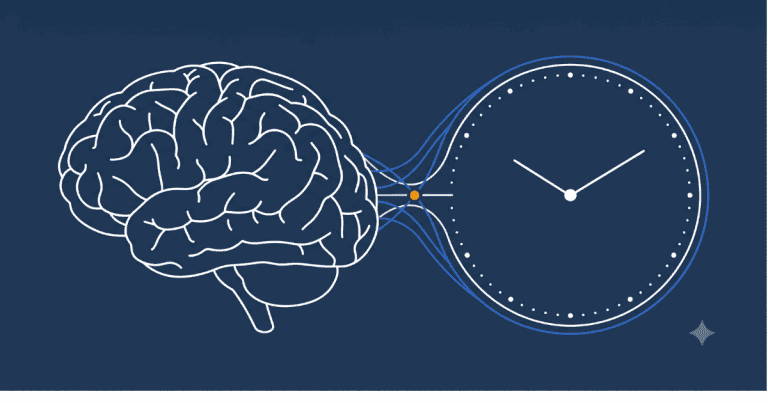
Here’s where the popular framing quietly inverts the evidence. The implication of most sauna content is that heat sharpens the mind. When researchers have actually tested cognition during heat exposure, they’ve generally found the opposite. In a randomised crossover trial, two hours at 32°C decreased processing speed by 13.6% and impaired response inhibition, alongside reduced neural activity in relevant brain regions (Environment & Health, 2025).
A separate randomised crossover study of passive heat found slower response times on the Stroop and visual-search tasks in hot conditions compared with moderate ones (Taylor et al., 2018). The authors of that work note the wider literature is genuinely equivocal — heat helps some measures and harms others depending on task and intensity — but the direction for complex, effortful tasks under real thermal strain is usually downward, not upward.
So if you’re picturing the sauna as a place to do your best thinking, the evidence says no. Whatever benefit exists shows up as long-term adaptation, not in-the-moment enhancement. Interestingly, a small study on post-sauna recovery found improved neural relaxation and cognitive efficiency after cooling down — which fits the pattern: the value, if any, is in the recovery and the repeated adaptation, not the heat itself.
How it might work — and why that’s still unsettled
The most plausible route from sauna to brain runs through the cardiovascular system. Repeated heat exposure raises heart rate and challenges the circulation in a way that loosely resembles moderate exercise, and the same Finnish cohort links frequent sauna use to lower blood pressure, reduced cardiovascular mortality and lower stroke risk. Since vascular health is one of the strongest modifiable influences on long-term brain health, a cardiovascular pathway is the leading candidate — this overlaps with why exercise supports the brain so robustly.
Other proposed mechanisms include heat shock proteins, which help cells manage damaged proteins, and reductions in inflammatory markers seen in the same cohort over time. These are biologically reasonable. But a note of caution: when researchers measured whether a typical Finnish sauna session acutely improved blood-vessel function, it did not (Bailey et al., 2019), which tells you the mechanistic story isn’t as settled as confident explanations imply. We have a robust long-term association and a plausible pathway, but the connecting links are still being worked out.
Safety: the section most articles skip
A sauna is heat stress, and heat stress is not universally benign. For most healthy adults it’s well tolerated, but there are specific situations where it becomes genuinely dangerous, and these deserve more than a footnote.
Alcohol is the big one. Combining alcohol with sauna use raises the risk of sudden death, which is why sauna use should be avoided around drinking (Poison Control). Finnish sauna culture, for all its enthusiasm, treats this as a firm rule. Alcohol impairs thermoregulation, promotes dehydration and destabilises blood pressure and heart rhythm — exactly the systems heat is already stressing.
Pregnancy is a clear caution. Raising core body temperature in early pregnancy — hyperthermia — has been linked to an increased risk of neural tube defects, so major guidance advises pregnant women avoid saunas or seek medical advice first. Cardiovascular conditions matter too: the heart-rate and blood-pressure swings a sauna produces can push an already compromised system too far, and unstable angina, recent heart attack and severe aortic stenosis are treated as reasons to stay out. And medications are an underappreciated factor — diuretics, beta-blockers, some antidepressants and antihistamines can all impair your body’s ability to regulate heat, increasing the risk of fainting or overheating.
Even for healthy users, the basics matter: hydrate before and after, since a session can cost around a pound of fluid; keep sessions to 15–20 minutes rather than pushing endurance; cool down gradually rather than plunging straight into cold if you have any cardiovascular concern; and get out immediately if you feel dizzy, faint or your heart races. None of this is meant to frighten you off — it’s meant to keep a genuinely pleasant habit on the right side of the risk line.
Evidence hierarchy: sauna and the brain
What’s well supported, what’s promising, and what runs the other way.
The NeuroEdge Protocol
The NeuroEdge Sauna Protocol
Built around the habituated Finnish pattern the research studied — and around not hurting yourself. Clear it with your doctor first if any caution below applies to you.
Dose
Traditional sauna ~80–100°C, 15–20 minutes per session. The cohort’s strongest associations sat at 4–7 sessions weekly — but build up gradually rather than starting there.
Timing
Not before demanding cognitive work — you’ll be slower while hot and for a while after. Evening suits most people, and may aid the wind-down toward sleep.
Non-negotiables
No alcohol. Hydrate before and after. Exit at any dizziness or palpitations. Cool down gradually if you have any cardiovascular concern.
Honest expectation
Treat it as a pleasant cardiovascular and stress-recovery habit that may support long-term brain health — not as a same-day cognitive enhancer.

Peter’s Testing Notes
First-person, n=1 — reported honestly
I use a sauna two or three times a week, and I want to be careful to separate what I can actually claim from what I’d like to be true. What I can say confidently: it’s the most reliable off-switch for a wound-up day I’ve found, and my Oura data shows a calmer overnight heart rate on evenings I’ve used it. That’s a real, measurable effect on my recovery, and it’s why I keep the habit.
What I can’t claim is any sharpening of my thinking. If anything, I’m mildly foggy for an hour afterwards — which, once I’d read the acute-heat studies, made complete sense. I used to try to schedule reading or Mandarin practice right after a sauna, on the theory that I was “primed.” Looking at my own notes, those sessions were consistently among my least productive. I stopped doing it. Now I sauna in the evening and let it feed sleep instead.
On the dementia data specifically, I hold it the way I hold all long-range observational findings about my own habits: as a reason to feel good about something I’d do anyway, not as a reason to believe I’ve bought myself decades of protection. If a decent randomised trial ever tests heat therapy against cognitive endpoints, I’ll update. Until then, I sauna because it feels good and helps me sleep, and I let the brain-health question stay genuinely open.
Key takeaways
| → | Frequent sauna use is associated with substantially lower dementia and Alzheimer’s risk — but the data is observational, from a single cohort of middle-aged Finnish men (Laukkanen et al., 2017). |
| → | Association isn’t causation: frequent sauna use partly marks a healthier life, so the true brain effect is likely smaller than the headline number. |
| → | Acutely, heat tends to impair cognition — controlled trials show slower processing and worse inhibition while hot. Don’t sauna before demanding mental work. |
| → | The likely pathway is cardiovascular and long-term — closer to how exercise helps the brain than to a same-day nootropic effect. |
| → | Never combine sauna with alcohol; avoid in pregnancy and with unstable cardiac conditions; check medications that impair heat regulation. |
Frequently asked questions
Does using a sauna improve cognitive performance?
Not in the immediate sense most people assume. Controlled trials show that during heat exposure, cognition often gets worse — one randomised crossover study found processing speed dropped 13.6% and response inhibition was impaired at 32°C (Environment & Health, 2025). The optimistic evidence is entirely long-term: frequent sauna users in a large Finnish cohort had lower dementia risk over two decades (Laukkanen et al., 2017), but that’s an observational association, not proof of a cognitive boost. The honest summary is that a sauna may support long-term brain health via cardiovascular pathways, while temporarily reducing sharpness in the moment.
How often should you use a sauna for brain health?
In the Finnish research, the strongest associations appeared at 4–7 sessions per week, with a clear dose-dependent pattern compared with once-weekly use (Laukkanen et al., 2017). Sessions were typically 15–20 minutes in a traditional sauna at roughly 80–100°C. That said, this reflects a habituated population, so if you’re new to sauna use, build up gradually rather than starting at daily frequency — and clear it with your doctor first if you have any cardiovascular condition, take regular medication, or are pregnant. There’s no evidence that pushing beyond this pattern adds further benefit.
Is the sauna-dementia link actually proven?
No, and it’s important to be clear about that. The evidence is a strong, dose-dependent association from an observational study — the Kuopio cohort of 2,315 middle-aged Finnish men followed for around 21 years (Laukkanen et al., 2017). Observational studies can’t establish causation, because frequent sauna users may differ from infrequent ones in ways that independently protect the brain: better baseline health, more leisure, greater social connection. No randomised controlled trial has tested whether sauna use causes lower dementia risk. The finding is genuinely promising and biologically plausible, but “associated with” is doing important work in that sentence.
Who should not use a sauna?
Several groups should avoid saunas or seek medical advice first. Anyone who has been drinking alcohol should not use one — the combination raises the risk of sudden death. Pregnant women are generally advised to avoid them, because raising core temperature in early pregnancy is linked to increased risk of neural tube defects. People with unstable cardiovascular conditions — recent heart attack, unstable angina, severe aortic stenosis, uncontrolled blood pressure or arrhythmias — face real risk from the heart-rate and blood-pressure swings heat produces. And certain medications, including diuretics, beta-blockers, some antidepressants and antihistamines, impair heat regulation. If any of these apply, talk to a doctor before starting.
Is an infrared sauna as good as a traditional one for the brain?
We don’t really know, and it’s worth being honest about the gap. All of the notable long-term brain and cardiovascular data comes from traditional Finnish saunas — dry heat at roughly 80–100°C (Laukkanen et al., 2017). Infrared saunas operate at much lower air temperatures, typically 45–60°C, warming the body differently and producing less cardiovascular strain per session. That gentler profile may be easier to tolerate, but it also means the specific findings from Finnish sauna research can’t simply be transferred across. If the mechanism is genuinely cardiovascular, a milder heat stress might produce a milder effect. For now, the evidence base points at traditional saunas.
Get “7 Days to a Sharper Brain” — Free
The exact daily protocol I use — biohacking stack sequence, HRV tracking, cold exposure, and a 4-week testing methodology to measure what actually works for you.
Join 2,000+ readers optimising their cognitive performance. Unsubscribe anytime.
Scientific references
1. Laukkanen, T., Kunutsor, S., Kauhanen, J., & Laukkanen, J. A. (2017). Sauna bathing is inversely associated with dementia and Alzheimer’s disease in middle-aged Finnish men. Age and Ageing, 46(2), 245–249. PMID: 27932366. Link
2. Cui, F., et al. (2025). A comprehensive assessment of physiological and neural changes underlying cognitive performance after heat stress: A randomized clinical trial. Environment & Health. Link
3. Taylor, L., et al. (2018). Passive heat exposure alters perception and executive function. Frontiers in Physiology, 9, 687. Link
4. Bailey, T. G., et al. (2019). Acute effect of Finnish sauna bathing on brachial artery flow-mediated dilation and reactive hyperemia in healthy middle-aged and older adults. Physiological Reports, 7(13), e14166. Link
5. Cleveland Clinic / Poison Control. Are saunas good for you? (safety overview: alcohol, dehydration, blood pressure). Link
6. Kunutsor, S. K., Laukkanen, T., & Laukkanen, J. A. (2018). Sauna bathing reduces the risk of stroke in Finnish men and women: A prospective cohort study. Neurology, 90(22), e1937–e1944. Link
Peter Benson
Cognitive Enhancement Researcher | 18+ Years Independent Research
Peter has personally tested every protocol in this guide over 18+ years of systematic self-experimentation, tracking sleep, HRV and cognitive performance data as part of his ongoing research practice. NeuroEdge Formula is his platform for sharing rigorous, safety-first cognitive enhancement guidance.
Last reviewed: July 2026